 Bellingham Exterior
 Siding Replacement in Sunnyland: What an Established Bellingham Neighborhood Needs
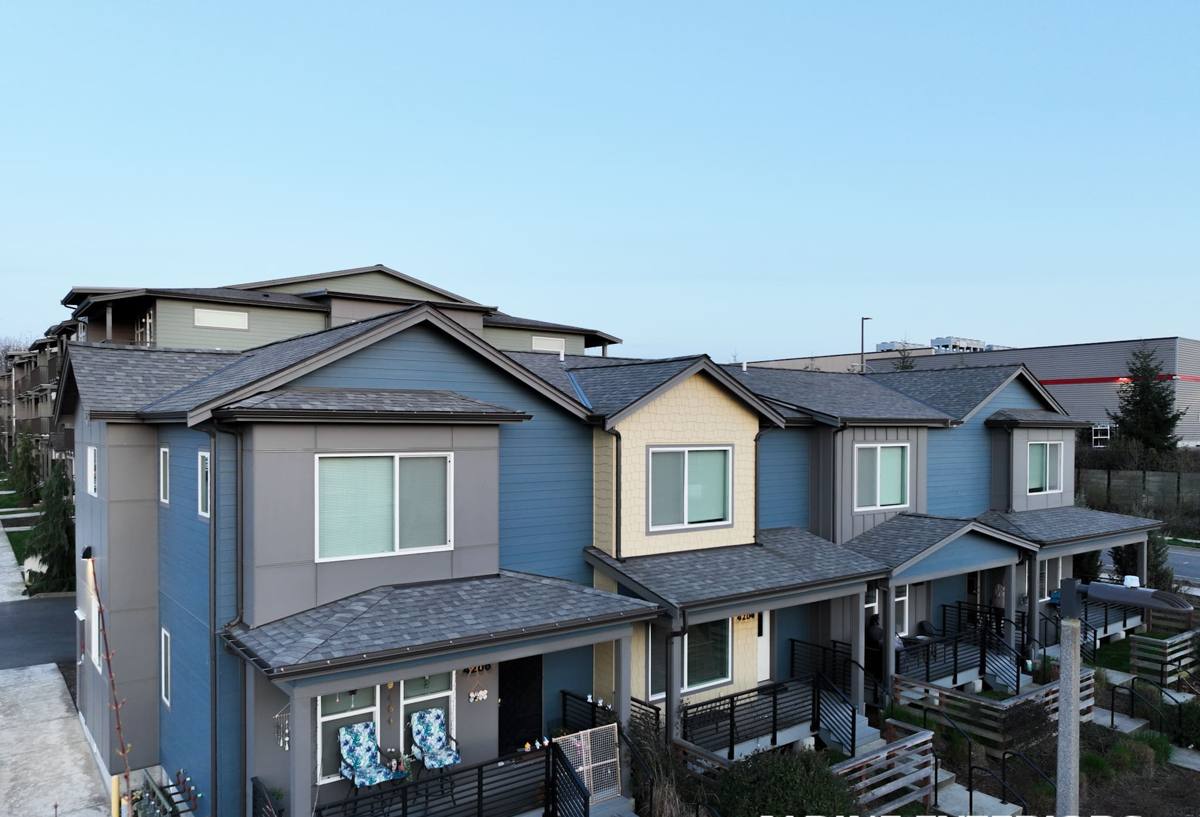
Sunnyland is one of Bellingham's older, established residential neighborhoods, with housing stock that spans several decades — early-to-mid-century homes sitting alongside newer infill construction, many under mature tree cover that shades roofs and walls for a good part of the day. That age range matters when it comes to siding. A lot of the original siding on Sunnyland's older homes is well past the point where a coat of paint or a patch job buys any real time, and the newer builds in the neighborhood are starting to hit the age where their first siding system is showing real wear. Either way, a straight replacement, done correctly, is usually the honest answer rather than another round of maintenance.
This page is specifically about siding replacement for Sunnyland homes — not a general overview of every exterior service we offer. We'll cover what this neighborhood's climate does to siding over time, what a correct replacement actually involves, and why we've standardized on one material — James Hardie fiber cement — instead of offering the wider menu of siding products a lot of contractors still install.
What Bellingham's Climate Does to Siding Over Time
Salt-Tinged Marine Air
Bellingham sits on Bellingham Bay, and the marine air moving inland off the water carries a mild salt content that reaches well beyond the immediate shoreline, including inland neighborhoods like Sunnyland. It's not the heavy salt exposure a beachfront property deals with, but it's a steady, year-round presence that works on fasteners, caulk, and finishes slowly and continuously. Over ten or fifteen years, that low-grade exposure adds up — it shows up as premature fastener corrosion, chalking paint, and finishes that dull faster than the manufacturer's rating suggests they should.
Driving Rain
Whatcom County gets a lot of rain, and a meaningful share of it doesn't fall straight down — wind pushes it sideways into walls, especially on more exposed elevations. Driving rain finds any weakness in a siding system faster than a straight-down shower would: a lap joint that isn't sealed right, a butt joint without proper flashing, a nail head that's backed out slightly. On an aging siding system, those small failure points are usually already there. Driving rain is just what turns them into actual water intrusion instead of a cosmetic flaw.
A Moss Season That Runs Most of the Year
Between the marine humidity, regular rainfall, and the tree cover common throughout Sunnyland, exterior surfaces here rarely get a long, uninterrupted dry stretch for much of the year. That's exactly the environment moss and mildew need to establish themselves, and shaded or north-facing siding runs are usually the first places it shows up. Siding materials that hold moisture at the surface rather than shedding it stay in that damp window longer, which gives moss and mildew more time to take hold before the next dry spell arrives.
Signs Your Sunnyland Home's Siding Has Reached the End of Its Life
Not every siding problem means a full replacement — some issues are legitimately repairable. But a homeowner weighing repair versus replacement should know which signs point toward the latter:
- Soft or spongy spots when you press on the siding, especially near the bottom courses or around window and door trim
- Visible warping, cupping, or buckling across multiple boards or panels, not just one isolated spot
- Paint that won't hold anymore no matter how often it's redone, or finish that's chalking heavily
- Persistent moss or mildew staining that returns quickly after cleaning, particularly on shaded walls
- Cracked, delaminating, or crumbling siding at edges, corners, and butt joints
- Rot or soft framing discovered once a section of siding is pulled back for repair
- Rising energy bills alongside visibly aging siding, which can point to a wall assembly that's no longer sealing the way it should
If you're seeing more than one of these, it's usually worth having someone look at the whole wall system, not just the spot that's bothering you — by the time damage is visible at the surface, it's often been developing underneath for a while.
What a Correct Siding Replacement Actually Involves
A siding replacement is more than pulling off the old material and nailing up new panels. Done right, it's a full wall-assembly job, and skipping steps is exactly how a brand-new siding system ends up with the same moisture problems as the one it replaced, just a few years later instead of decades. A correct replacement in this climate includes:
- Full removal of the old siding, not installation over top of an existing layer
- Inspection of the sheathing underneath for rot, soft spots, or existing moisture damage before anything new goes up
- Repair or replacement of any damaged sheathing and framing found during tear-off
- Installation of a proper weather-resistant barrier (house wrap) over the sheathing, lapped and taped correctly at every seam
- Correct flashing at every window, door, and roofline transition — this is one of the most common places a siding job fails when it's rushed
- Fastener type, spacing, and penetration depth matched to the manufacturer's published specifications, not a generic install pattern
- Proper clearance from grade, decks, and roof lines so siding isn't sitting in standing water or debris
- Correctly lapped and sealed joints throughout, sized for the wettest wall on the house, not an average across all four sides
Every one of those steps happens behind the finished surface, which is exactly why they're easy for a homeowner to miss when comparing bids. A quote that skips tear-off, sheathing inspection, or proper house wrap will almost always come in lower — and it will almost always cost more over the life of the house.
Why We Only Install James Hardie Fiber Cement Siding
We used to install a broader range of siding products. We narrowed that down after seeing, repeatedly, which materials actually held up to Whatcom County's marine air, driving rain, and long moss season — and which ones quietly developed problems within a handful of years, regardless of how well they were installed.
We don't install LP SmartSide, vinyl siding, Cemplank, Allura, primed spruce, or cedar. Each has a legitimate place in the broader siding market, and plenty of homeowners elsewhere are satisfied with them. Engineered wood products like LP SmartSide perform well in drier climates but are more sensitive to sustained moisture at cut edges and joints — exactly the condition this climate creates. Vinyl is inexpensive and low-maintenance in the sense that it doesn't need painting, but it can trap moisture behind panels in damp walls and doesn't offer the same fire performance or dimensional stability as fiber cement. Cedar and primed spruce look excellent when new and well cared for, but both demand ongoing refinishing to hold up here, and both absorb and release moisture more readily than a lot of homeowners want to keep up with year after year. We made a professional decision to stand fully behind one system rather than offer a lower-cost option that shifts long-term maintenance and moisture risk back onto the homeowner.
What Correct Hardie Installation Requires
James Hardie fiber cement only performs the way it's engineered to when it's installed to Hardie's published specifications. That means the right HZ product line for this climate zone, correct fastener spacing and penetration, proper clearance and drainage detailing, and joints that are lapped and sealed correctly rather than just butted together. A quality material installed loosely will still develop moisture problems in a climate like this one — the product and the installation have to both be right.
Comparing Siding Materials for a Sunnyland Home
| Material | Moisture Behavior | Maintenance in This Climate | Typical Longevity Here |
|---|---|---|---|
| James Hardie fiber cement | Dimensionally stable; resists swelling, warping, and moisture intrusion | Low; factory finish resists fading and salt-tinged air | 30+ years with correct installation |
| Vinyl siding | Can trap moisture behind panels in damp, poorly ventilated walls | Low upfront cost, but seams stay damp longer through a long wet season | Variable; shorter on more exposed walls |
| LP SmartSide / engineered wood | Wood-based core is moisture-sensitive at cut edges and joints | Moderate to high; edge sealing is critical in sustained dampness | Depends heavily on installation quality and upkeep |
| Cedar / primed spruce | Absorbs and releases moisture readily | High; needs regular refinishing, especially on shaded walls | Shorter without consistent, disciplined maintenance |
Our Siding Replacement Process
We start with an on-site walk of the house, looking at how exposure varies wall by wall — a shaded, tree-covered elevation and a more open, weather-facing wall on the same Sunnyland home can be dealing with very different moisture loads, and that affects the details, not just the material choice. We'll look at the current siding condition, check for signs of underlying rot or sheathing damage, and talk through what's actually driving the need for replacement.
From there we put together a clear, written scope of work and timeline before anything begins, including how we're pricing tear-off, any sheathing repair we expect to find, house wrap, flashing, and the Hardie product line and profile you choose. Once work starts, tear-off and sheathing inspection come first, followed by house wrap, flashing at every penetration and transition, and then the Hardie siding itself, installed to the manufacturer's fastening and clearance specifications. We finish with a walkthrough covering what the finished siding needs going forward — which, with a correctly installed Hardie system, is genuinely minimal.
Why It Matters That We Already Work in Sunnyland
A crew that mostly works newer subdivisions on the edge of town can still install siding competently, but Sunnyland's mix of home ages brings up questions that don't come up as often elsewhere — what's actually underneath decades-old siding once it comes off, how much of the original sheathing is salvageable versus needs replacing, and how tree cover and shade on a given lot affect which walls need the most attention to moss and drainage detailing. Working this neighborhood regularly means we're not guessing at those answers on your project. We've opened up enough older Sunnyland walls to have a realistic sense of what's likely underneath, and we price and plan accordingly instead of being surprised mid-job.
That familiarity also shows up in smaller judgment calls — which walls on a shaded lot need extra drainage attention, or being straightforward with a homeowner about what their existing siding actually needs versus what's just an upsell.
Ready to Talk About Your Siding?
If your Sunnyland home's siding is showing its age — soft spots, persistent moss, paint that won't hold, or just enough years on it that you're wondering if it's time — we're happy to take a look and give you a straight answer about what it actually needs. Reach out below for a free, no-pressure estimate.