 Bellingham Exterior
 Windows in Ferndale Face a Different Set of Problems
Ferndale sits close enough to the water and low enough in the valley that its homes take a specific kind of beating. Salt-laden air off the Strait works into metal hardware and fastener heads. Driving rain off Bellingham Bay pushes sideways into wall assemblies during winter storms. And the long stretch of gray, wet months every year gives moss and mildew months to colonize anything that stays damp — including window sills, frame corners, and the caulk lines around glass. A window that was installed correctly for a drier inland climate can still fail here, not because the product was bad, but because the installation didn't account for what this specific stretch of Whatcom County throws at a house.
This page is about one job, done right, in one place: window installation for homes in and around Ferndale. Not a general overview of every window product on the market — just what actually matters for a house that has to survive a Pacific Northwest coastal winter every single year.
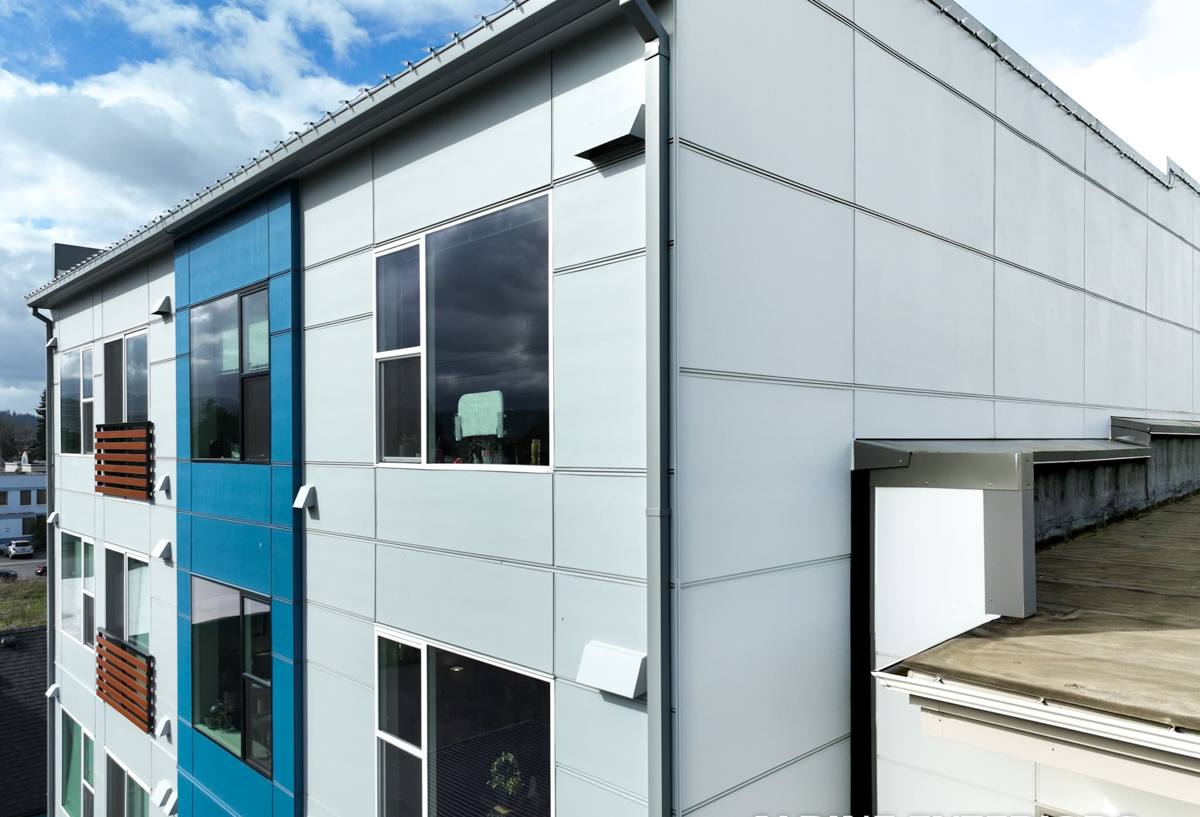
What the Local Climate Actually Does to a Window Over Time
Salt Air and Hardware
Homes closer to the water deal with airborne salt settling on window hardware — hinges, locks, balance mechanisms — long before it's visible on the glass. Left unaddressed, this accelerates corrosion on lower-grade hardware and can make locks and cranks stiff or unreliable years before the glass itself shows any wear.
Wind-Driven Rain
Rain in this part of Washington rarely falls straight down. Storms push it at an angle into wall assemblies, which means the flashing and sealing details around a window matter more here than they would in a drier climate. A window that's watertight when tested from the front can still leak at the sill or the head if wind-driven water finds a path around the frame rather than through the glass.
Moss, Mildew, and Prolonged Moisture
Long wet seasons give organic growth time to establish itself anywhere water sits or wood stays damp. On windows, that shows up as black streaking on sills, softening at exposed wood trim, and degraded caulk that no longer sheds water the way it should. It's a slow problem, which is exactly why it gets ignored until it isn't.
Signs a Ferndale Home Needs Window Replacement, Not Just Repair
Not every problem window needs to come out. But there's a point where patching stops being worth it. Here's what tells us the frame and unit itself — not just a seal or a piece of trim — needs to be replaced:
- Visible fogging or moisture between panes (the seal has failed and can't be repaired)
- Soft or spongy wood at the sill or jamb when pressed
- Persistent drafts even after weatherstripping has been replaced
- Windows that are difficult to open, close, or lock — often from swelling, warping, or corroded hardware
- Visible daylight or gaps around the frame from outside
- Condensation forming on interior glass regularly during cold months
- Paint or finish that keeps failing on the interior trim near the window, even after repainting
If you're only seeing one of these and the frame is otherwise solid, a repair may be all that's needed. Several of these together usually means the window has reached the end of its service life.
What a Correct Window Installation Actually Involves
Window installation gets treated like a simple swap — old unit out, new unit in — but the parts that actually determine whether a window performs for the next twenty years happen before the new window ever goes into the opening.
Opening Inspection and Repair
Before anything new goes in, the rough opening gets checked for rot, soft framing, or prior water damage. In this climate, it's common to find some degree of moisture damage around older windows, especially on north- and west-facing walls that catch the worst of the weather. Any damaged framing needs to be addressed before a new window is installed into it — otherwise you're sealing a problem behind a brand-new unit.
Flashing, Not Just Caulk
Caulk is a backup, not a strategy. Proper flashing — sill pan flashing, house wrap integration, and correctly lapped weather-resistive barrier — directs water that gets past the exterior trim back out of the wall, rather than trapping it inside. This is the single biggest factor in whether a window leaks during a wind-driven storm five years from now.
Air Sealing and Insulation
The gap between the window frame and the rough opening needs to be sealed and insulated correctly — not overpacked with expanding foam, which can bow a frame out of square, and not left with gaps that turn into cold drafts and condensation points in winter.
Interior and Exterior Finish
Trim, caulk lines, and paint or finish on the interior all get restored properly, and exterior trim gets sealed in a way that sheds water rather than holding it against the wood.
Choosing the Right Window for a Ferndale Home
There's no single "best" window — the right choice depends on the wall assembly, the home's exposure, and what you're trying to solve. Here's how the common frame materials compare for a coastal Whatcom County home specifically:
| Frame Material | Behavior in This Climate | Maintenance Burden |
|---|---|---|
| Vinyl | Handles moisture well, doesn't corrode from salt air, stable in temperature swings | Low — occasional cleaning, no repainting |
| Fiberglass | Very stable dimensionally, resists warping from wet/dry cycles better than vinyl or wood | Low — durable finish, rarely needs attention |
| Wood (unclad) | Classic appearance but most vulnerable to the moisture and moss issues common here | High — needs regular refinishing and moisture monitoring |
| Wood-clad (aluminum or vinyl exterior) | Protects the wood from direct weather exposure while keeping a wood interior look | Moderate — interior wood still needs occasional care |
| Aluminum | Strong and slim-profile, but conducts cold and can show condensation without a thermal break | Low, but check for a proper thermal break in this climate |
For most Ferndale homes dealing with direct weather exposure, we lean toward vinyl or fiberglass for lower-maintenance, higher-moisture-tolerance situations, and reserve unclad wood for interior-facing or well-protected openings where its appearance matters more than its weather exposure. That's a maintenance and moisture-behavior judgment, not a knock on wood windows generally — they just ask more of the homeowner in a wet coastal climate.
Glass Options Worth Knowing
Double-pane with a low-E coating is the standard baseline for this region and handles our temperature range well. Triple-pane adds extra insulation and sound dampening, which is worth considering on street-facing rooms or homes further from tree cover that get more wind exposure, but it adds cost and weight that isn't always necessary on a typical Ferndale lot.
Cost Factors for Window Installation in Ferndale
We won't quote a number without seeing the home, but these are the variables that actually move the price up or down:
| Factor | Why It Matters |
|---|---|
| Number and size of openings | More or larger windows means more material and labor |
| Frame material chosen | Fiberglass and premium vinyl cost more upfront than basic vinyl |
| Condition of the existing opening | Rot or water damage found during removal adds repair time before the new window goes in |
| Access and height | Second-story or hard-to-reach windows take longer and may need extra staging |
| Full-frame vs. insert replacement | Removing down to the studs costs more than replacing into an existing, sound frame |
| Trim and finish work | Matching existing interior trim or restoring exterior siding around the opening adds labor |
Generally, straightforward vinyl replacements in sound openings sit at the lower end of the range, while full-frame replacements with rot repair, custom sizing, or premium materials sit at the higher end. An in-person look at the openings is the only honest way to get a real number.
Our Process for Ferndale Window Installation Jobs
- On-site assessment of each window opening, including a check for hidden moisture damage
- A written estimate that breaks out material, labor, and any anticipated repair work
- Scheduling that accounts for weather — we don't leave openings exposed longer than necessary during our wet season
- Removal of the old unit and inspection/repair of the rough opening before the new window goes in
- Installation with proper flashing, air sealing, and insulation, not just a caulk bead around the trim
- Interior and exterior finish work to match the surrounding wall
- A final walk-through so you can see and operate every window before we consider the job done
Why a Crew That Already Works in Ferndale Makes a Difference
A contractor based in Bellingham who regularly works Ferndale jobs isn't guessing about how this area's weather behaves — they've already seen what happens to window installations that didn't account for wind-driven rain off the bay or didn't detail the flashing for a long wet season. That familiarity shows up in small decisions: which side of a house typically takes the worst weather, how much moisture damage to expect when opening up an older wall, and which details are worth the extra time versus which are overkill for a given wall assembly.
It also matters for accountability. A local crew is easy to reach if a question comes up after the job, and has a reputation in the community worth protecting — not a one-time job in a town they won't be back in.
Keeping New Windows Performing After Installation
A correctly installed window still benefits from basic upkeep in this climate:
- Rinse salt residue and grime off frames and hardware a couple of times a year, especially on sides facing open water or wind
- Check and clear window wells and sills of debris so water has somewhere to go
- Inspect exterior caulk lines annually and re-caulk any spots that have cracked or pulled away
- Keep gutters and downspouts clear so water isn't sheeting down past upper windows
- Address any moss or dark staining on sills promptly rather than letting it sit through another wet season
None of this is complicated, but skipping it is how a well-installed window ends up with an avoidable problem five or ten years down the road.
If you're weighing repair versus replacement, or just want an honest read on what your Ferndale home's windows actually need, we're glad to take a look. The estimate is free, there's no pressure, and you'll get a straight answer about what's worth doing now versus what can wait — just fill out the form below to get started.