 Bellingham Exterior
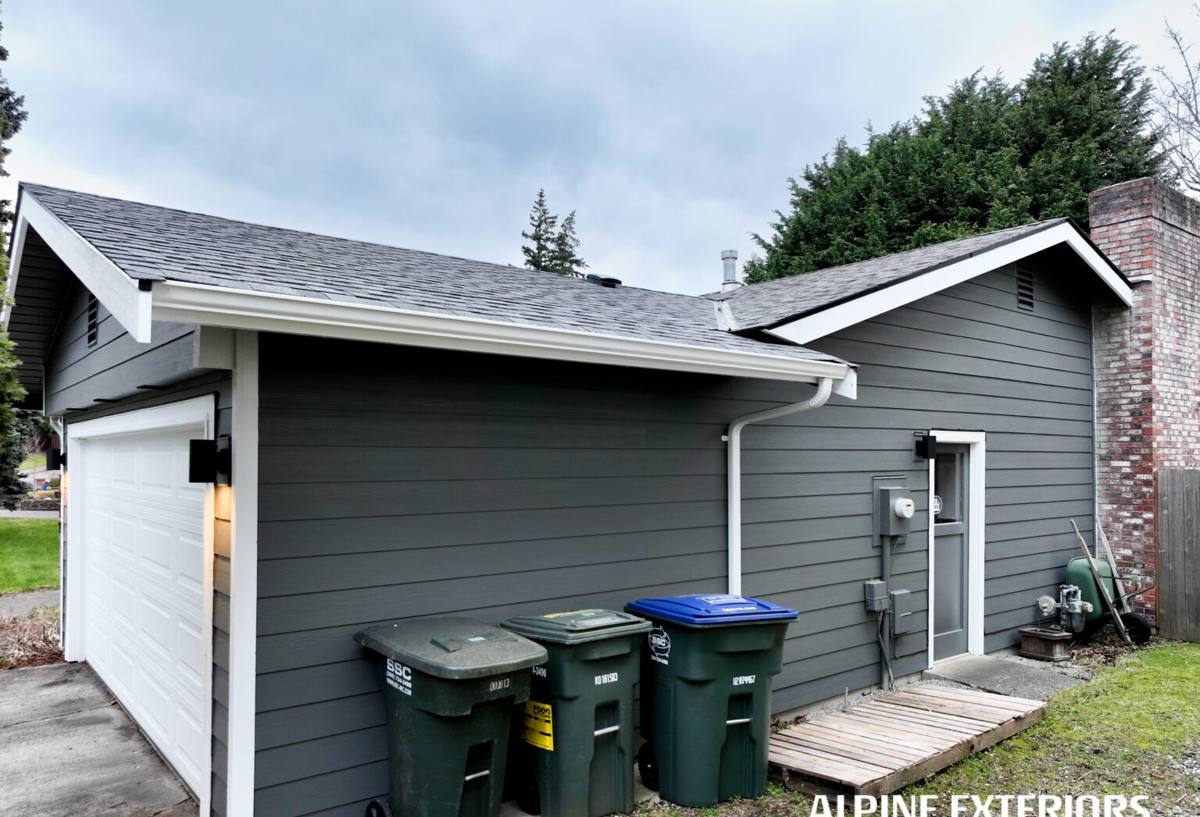
 Board & Batten Siding in York: A Style That Fits This Neighborhood
York is one of Bellingham's older, established neighborhoods, with a mix of early-century homes, mid-century updates, and newer remodels tucked under a mature tree canopy. Board and batten siding — wide vertical panels with narrower strips covering the seams — shows up often here because it suits so many of the architectural styles already present, from farmhouse and craftsman detailing to cleaner modern remodels. It reads as simple, but it's a different water-management problem than the horizontal lap siding on most of the block, and it needs to be treated that way.
Because the boards run vertically, water doesn't just sheet down and off the wall the way it does with overlapping lap siding — it can run straight down a seam, following gravity right toward every horizontal joint, window head, and penetration in its path. In a neighborhood like York, with a lot of tree cover and older wall assemblies, getting those details right is what separates a board and batten system that lasts thirty-plus years from one that starts showing streaking, staining, or soft spots within a decade.
Why Bellingham's Climate Puts Extra Demands on Vertical Siding
Driving Rain and Vertical Seams
Whatcom County gets a lot of rain, and a good share of it doesn't fall straight down — wind off the water pushes it sideways and up under laps and joints. Board and batten has fewer horizontal laps than traditional siding, but every vertical seam between panels, and every point where a batten meets a window or corner, is a place water can be driven if it isn't flashed and gapped correctly.
Salt Air and Marine Exposure
Being close to Bellingham Bay means a certain amount of airborne salt in the mix, which accelerates corrosion on fasteners, hardware, and unprotected finishes over time. It's not dramatic, but it's constant — and it's one more reason we don't rely on generic fasteners or field-applied paint to be the only thing standing between the wall and the weather.
Moss Season and Shaded, Damp Walls
York's tree canopy is part of what gives the neighborhood its character, but shaded north- and east-facing walls stay damp far longer after a rain than a wall in full sun. That's exactly the environment moss and algae need to take hold, especially on organic materials that hold moisture at the surface. A siding system that dries out quickly and doesn't feed growth matters more here than in a more exposed, sun-drenched part of Bellingham.
What a Correctly Installed Board & Batten System Actually Involves
A Drainage Gap Behind the Battens
Any wall in this climate needs a way for the small amount of moisture that gets past the outer surface to drain and dry out. On a board and batten install, that means furring strips or an engineered drainage mat creating a real gap behind the panels — not just panels nailed flat against the weather-resistive barrier. Skip this step and you're trusting caulk and paint alone to keep a damp Whatcom County wall dry, which they won't do forever.
Flashing at Every Horizontal Joint and Penetration
Wherever a panel run stops — at a window head, a horizontal joint, a light fixture, a hose bib — there needs to be metal or engineered flashing directing water back out, not just a bead of sealant. Sealant fails; properly lapped flashing doesn't depend on staying intact to do its job.
Fastener Pattern and Batten Spacing
The wide panels get blind-nailed where possible, and the battens are face-nailed directly into the framing at a consistent spacing — not just into the panel — so the whole assembly can expand, contract, and shed water without working loose. Fastener depth matters too: overdriven nails crack fiber cement and underdriven ones leave gaps that trap water. This is detail work that's easy to rush and hard to fix once it's covered.
Why We Install James Hardie for Board & Batten — and Not Other Materials
For board and batten specifically, we use James Hardie's fiber cement panel and trim systems — HardiePanel vertical siding paired with HardieTrim battens, or the Hardie Artisan line for a more refined board profile. It's non-combustible, dimensionally stable in wet weather, and comes with a factory-applied ColorPlus finish that's baked on rather than field-painted, which matters a lot in a climate that doesn't give paint much of a chance to fully cure between rain events.
We get asked why we don't offer vinyl or engineered-wood board and batten instead, and it's worth answering honestly rather than just saying no. Vinyl board and batten panels are affordable and low-maintenance in the sense that they never need painting, but they're thin, they can look visibly flat or "oil-canned" in certain light, and their seams and end joints are a real vulnerability against the kind of wind-driven rain York sees — water finds its way behind vinyl more easily than most homeowners expect. Engineered wood products like LP SmartSide perform reasonably well when every cut edge is sealed and painted perfectly and stays that way, but that's a big ask over decades of Whatcom County weather; a single missed touch-up at a cut edge or fastener can let moisture in, and the strand-based substrate doesn't recover well once it's wet. Real cedar board and batten is genuinely beautiful, but it needs regular refinishing, it cups and checks as it moves with humidity, and shaded, damp walls like the ones common in York are exactly where wood siding struggles most with rot and insect activity.
None of that means those products are junk — it means we've made a professional call that for the water exposure and shade conditions in this area, fiber cement with a factory finish is the system that holds up with the least ongoing risk to the homeowner.
Comparing Board & Batten Material Options
| Material | Moisture/Rot Resistance | Maintenance | Fire Rating | Typical Warranty |
|---|---|---|---|---|
| James Hardie fiber cement | Excellent; won't rot or swell | Occasional rinse; no repainting for years | Non-combustible | Long transferable warranty |
| Vinyl board and batten panels | Fair; seams and joints are weak points | Low, but can't be repainted easily if faded | Combustible, can deform in heat | Prorated, shorter effective coverage |
| Engineered wood (LP-type) | Fair to good if perfectly sealed and maintained | Regular inspection of cut edges and fasteners | Combustible | Moderate, often conditional on maintenance |
| Cedar / primed spruce | Fair; vulnerable in shaded, damp conditions | High — refinishing on a regular cycle | Combustible | Typically none beyond materials defect |
Our Board & Batten Process for York Homes
Inspection and Assessment
We start by looking at what's actually there — existing siding condition, signs of past moisture intrusion, and the state of the sheathing underneath, which is especially important on York's older housing stock where wall assemblies vary from what's typical in newer construction.
Tear-Off and Prep
Old siding comes off, any compromised sheathing gets identified and addressed before anything new goes on, and a proper weather-resistive barrier goes down as the drainage plane behind the whole system.
Installation
Furring strips or drainage mat, panels, flashing at every joint and penetration, then battens — each step done in order, not skipped or combined to save time.
Finish Detailing
Trim, corners, and any sealant get applied only where the system calls for it — not as a substitute for flashing — followed by a final walk-through before we consider the job done.
What to Ask Before Hiring for a Board & Batten Project
- Will there be a real drainage gap behind the battens, or are panels going flat against the wall?
- How will horizontal joints and window heads be flashed — metal, or sealant alone?
- What fastener type and spacing will be used, and are they corrosion-resistant for a marine-influenced climate?
- Is the sheathing being inspected before new siding goes on, not just covered up?
- What's the manufacturer's warranty, and does it stay valid with this installation method?
- Has this crew installed board and batten in shaded, damp conditions like York's before?
Maintenance and Longevity in Whatcom County's Climate
A properly installed Hardie board and batten system doesn't ask much of a homeowner. An occasional rinse to clear off pollen, dust, or early moss growth, keeping gutters clear so water isn't sheeting down the wall, and trimming back tree limbs that keep a wall in constant shade will do more for long-term appearance than anything else. It's worth a quick look at caulking around penetrations every couple of years, since sealant is a maintenance item even on a system that isn't relying on it to do the heavy lifting.
Why a Crew That Already Works in York Matters
Older neighborhoods like York often have wall construction that doesn't match the assumptions in a generic installation manual — different framing spacing, sheathing that's thinner or absent in places, or prior repairs that changed how water moves behind the wall. A crew that's worked on homes in this specific part of Bellingham has already seen those variations and knows what to check for before the first panel goes up, rather than discovering it mid-project. That familiarity, combined with knowing how York's shade and moisture patterns behave through a wet Whatcom County winter, is what keeps a board and batten install from becoming a callback in a few years.
If you're considering board and batten siding for a home in York, we're happy to take a look and give you a straightforward, no-pressure estimate — just fill out the form below.