 Bellingham Exterior
 Building Decks for York's Particular Climate
York is one of Bellingham's older, established neighborhoods, and that history shows up in the decks we get called out to repair or replace. Many were built decades ago to a standard that made sense at the time but doesn't hold up well against what Whatcom County weather actually does to exposed wood and metal year after year. Salt-laden air off the Sound, long stretches of driving rain, and a moss season that can stretch from October well into spring all put real, cumulative stress on a deck's structure, fasteners, and surface.
A deck built for York needs to handle three things at once: constant moisture cycling, airborne salt that accelerates corrosion on anything metal, and shade patterns from mature trees that keep certain sections of decking wet and green far longer than a homeowner expects. None of this is exotic knowledge, but it does change which materials, fasteners, and framing details actually make sense for this specific neighborhood versus a generic build.
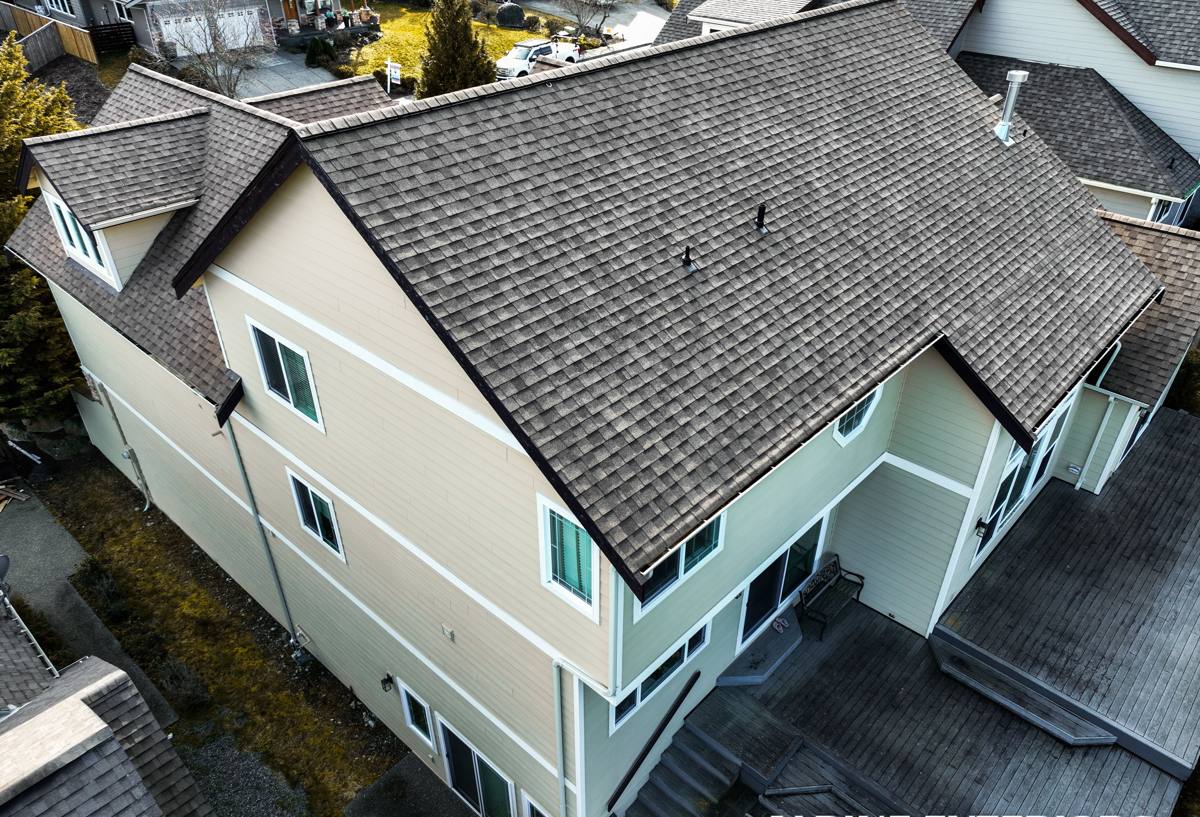
What "Custom" Should Actually Mean
We use the word "custom" to mean the deck is designed around your lot, not pulled off a standard template. In York, that usually comes down to a handful of real-world factors:
Site and Sun Exposure
Older York lots often have mature trees and established landscaping that block direct sun on part of the yard for most of the day. Shaded, low-airflow areas dry out slowly after rain, which is exactly where moss, algae, and rot get a foothold first. A custom layout accounts for this by orienting the deck, spacing the boards, and choosing materials differently depending on how much sun and airflow a given section actually gets.
House Age and Attachment Points
Many York homes predate current ledger-attachment and flashing standards. When we tie a new deck into an older house, we're not just matching the old bolt pattern — we're re-evaluating the wall assembly behind it so water can't work its way into the house framing at the point where the deck meets the wall. This is one of the most common failure points we find on decks in this neighborhood, and it's almost always hidden until the siding or framing is opened up.
Grade and Drainage
Sloped or uneven yards, which are common throughout Bellingham, change how a deck's footings and support posts need to be set, and how water sheds away from the structure once it's built. Getting this wrong doesn't show up as a problem in year one — it shows up as soft framing and standing water three or four years later.
Decking Material Options for a Salt Air, High-Rain Climate
There's no single "best" decking material — there's a best material for your budget, your sun exposure, and how much upkeep you actually want to do. Here's how the common options hold up under York's conditions specifically:
| Material | Moisture & Rot Resistance | Salt Air Performance | Maintenance Needed |
|---|---|---|---|
| Cedar | Naturally decay-resistant if finished and maintained; softer wood, dents and weathers faster in constant damp | Handles it reasonably well but the finish breaks down faster near salt air, requiring more frequent resealing | Annual or biennial cleaning and sealing to prevent graying, moss growth, and splintering |
| Pressure-Treated Fir/Hem-Fir | Good rot resistance from the treatment, but cut ends and fastener holes need field treatment or they become entry points for moisture | Fasteners are the weak link — untreated or under-rated hardware corrodes faster in salt air than the wood itself degrades | Periodic cleaning, refastening checks, and resealing every few years |
| Composite | Very good — doesn't absorb water or rot, though lower-quality composites can still support surface mold/algae growth in shade | Performs well; no wood fibers to break down, though the color and finish can fade faster under harsher coastal exposure | Low — periodic washing to keep moss and algae from taking hold in shaded areas |
| PVC / Capped Polymer | Excellent — fully sealed surface resists moisture absorption | Best of the group for salt exposure since there's no wood substrate to corrode fasteners into | Lowest — occasional washing, no sealing or staining ever required |
We don't push one material on every job. A shaded, moss-prone section of yard often steers us toward composite or PVC even if the rest of the deck is a natural wood look, simply because that's the section that will fight moisture the hardest.
What's Underneath Matters More Than the Boards
The decking surface is what you see, but the framing, footings, and fasteners underneath are what actually determine how long the deck lasts in this climate. This is where corners get cut on older or lower-bid builds, and it's the part a homeowner can't easily inspect themselves once the deck is finished.
Footings and Posts
Footings need to be set below frost depth and sized for the actual load of the deck, not a generic minimum. On sloped Bellingham lots, that sometimes means deeper or more numerous footings than a flat-lot deck of the same size would need.
Fasteners and Hardware
This is the single biggest difference between a deck that ages well near salt air and one that doesn't. Standard galvanized fasteners can start corroding within a few years in coastal-influenced air; we spec hot-dip galvanized or stainless-rated hardware and connectors rated for the treated lumber and exposure involved, not whatever is cheapest at the yard.
Ledger Flashing
Where the deck attaches to the house, proper flashing keeps water from tracking behind the siding and into the wall framing. On older York homes this often means correcting a flashing detail that was never done to current standards in the first place, not just replicating what was there before.
Railings, Stairs, and Code Basics
Railing height, baluster spacing, and stair geometry aren't style choices once a deck reaches a certain height — they're safety requirements. In many jurisdictions, including here in Whatcom County, a deck built more than about 30 inches above grade typically triggers permitting and guardrail requirements, though the exact threshold and process depend on your specific site and the local building department's current rules. We handle the permit application and inspection scheduling as part of the job so you're not tracking that down yourself.
Beyond code minimums, railing material choice matters for the same climate reasons as decking: wood railings need the same maintenance attention as wood decking, while metal or composite rail systems hold up with less upkeep but should still use corrosion-rated hardware given the salt air.
How We Approach a York Deck Project
- On-site assessment — we look at sun exposure, drainage, tree cover, and the condition of the house wall where the deck will attach.
- Design and material selection — layout, decking material, and railing style are chosen based on how that specific yard behaves, not a standard package.
- Permitting — we prepare and submit what's required for your project and coordinate inspections.
- Framing and structural work — footings, posts, joists, and ledger attachment are built first and inspected before decking goes down.
- Decking, railing, and finish work — surface materials, railings, and stairs are installed and detailed.
- Final walkthrough — we go over the finished deck with you, including what maintenance it will and won't need going forward.
Living With a Deck Through Moss Season
Even a well-built deck needs some seasonal attention in this climate — the difference is how much. Here's a practical checklist for keeping a York deck in good shape through the wet months:
- Sweep leaves and debris off the deck surface regularly in fall — trapped organic matter holds moisture and feeds moss growth
- Rinse shaded sections periodically through winter to keep moss and algae from establishing, especially under tree canopy
- Check that gaps between boards haven't filled with debris, which blocks drainage and traps water against the framing
- Inspect visible fasteners and connectors annually for early rust staining, particularly on older wood decks
- Confirm downspouts and grading near the deck are still directing water away from footings, not toward them
- Reseal or re-stain wood decking and railings on the schedule appropriate to the product — don't wait until it's visibly gray and dry
Why Local Experience in York Specifically Matters
A deck contractor who works across Bellingham and Whatcom County regularly sees how differently neighborhoods age. York's mix of older homes, mature trees, and established lot layouts means the failure points we watch for here — ledger flashing on older wall assemblies, shaded moss-prone corners, fastener corrosion from years of coastal-influenced weather — are patterns we recognize quickly rather than discover partway through a build. That translates into fewer surprises once framing is opened up and a design that accounts for your yard's real conditions from the start, not a generic layout adjusted after the fact.
Get a Free Estimate
If you're planning a new deck or replacing one that's showing its age, we're happy to come take a look, walk the site with you, and put together a straightforward, no-pressure estimate. Use the form below to get started.