 Bellingham Exterior
 Metal Roofing Built for York's Corner of Bellingham
Homes in and around York sit close enough to the water and the weather patterns that roll in off Bellingham Bay that roofing decisions here can't be generic. This part of Whatcom County gets a specific combination of punishment: salt-laden air drifting in from the coast, long stretches of driving rain that comes in sideways as much as down, and a moss season that can run most of the year in shaded, north-facing sections of a roof. A roofing material that performs fine in a drier inland climate can underperform here. Metal roofing, installed correctly, is one of the few systems that stands up to all three of those stresses at once — but "installed correctly" is doing a lot of work in that sentence, and it's the part most homeowners never get a straight answer on.
This page is about metal roofing specifically for York-area homes — what the local climate actually does to a roof over time, what a correct installation looks like, and what to expect if you bring us in to do the work.
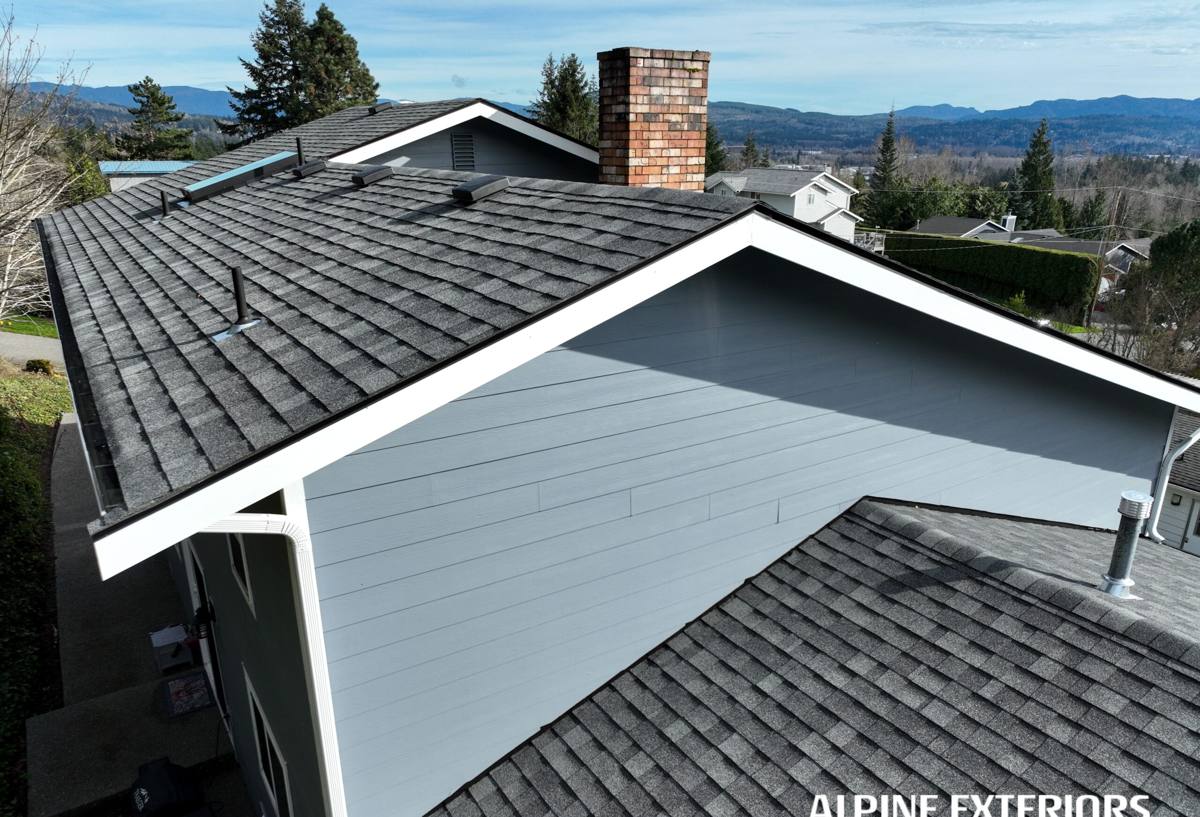
What Bellingham's Weather Does to a Roof Over Time
Salt Air and Metal Fatigue
Proximity to salt water means airborne salt settles on every exterior surface, including roofing. On metal roofing, this matters mainly at fasteners, cut edges, and any spot where the protective coating has been scratched or worn through during installation. Bare steel exposed to salt air corrodes faster than the same steel inland. This is a coating and detailing issue, not a reason to avoid metal roofing — it just means the coating quality, edge treatment, and fastener selection matter more here than they would forty miles inland.
Driving Rain and Wind-Driven Water
Bellingham doesn't just get rain, it gets rain pushed sideways by wind off the water. That changes how water behaves on a roof. It can work its way up under lapped seams, around flashing, and into fastener penetrations that would stay dry in a straight vertical downpour. A roof system here needs underlayment and flashing details that assume water will try to travel uphill and sideways, not just down.
Moss and Moisture Retention
Shaded roof sections — under fir and cedar canopy, on north-facing slopes, in valleys where debris collects — stay damp for extended periods for much of the year. That's ideal moss habitat. Moss holds moisture against the roof surface, and on some materials that moisture retention accelerates decay underneath. Metal roofing gives moss very little to grip onto compared to shingles, which is one of its real advantages here, but it isn't moss-proof — debris still needs to be cleared and valleys still need attention.
Why Metal Roofing Makes Sense for This Climate
We don't push metal roofing on every home — it isn't the right fit for every budget or every roof design — but for York-area properties dealing with salt air, wind-driven rain, and persistent shade, it has real, practical advantages:
- Sheds water fast off a slick, low-friction surface instead of absorbing it
- Gives moss and moss-related growth almost nothing to root into, compared to a granulated shingle surface
- Handles wind-driven rain well when seams and laps are engineered correctly, rather than relying on gravity alone
- Long service life when the coating and fasteners are matched to a coastal-influenced climate
- Lower long-term maintenance burden on hard-to-reach or steeply pitched sections common on older York-area homes
Metal Roofing Systems We Install
"Metal roofing" covers more than one system, and the right choice depends on the home, the roof pitch, and the budget. Here's how the main options compare for a coastal Whatcom County setting:
| System | How It Sheds Water | Best Fit | Maintenance Notes |
|---|---|---|---|
| Standing seam | Concealed fasteners under raised interlocking seams | Homes prioritizing longevity and minimal exposed penetrations | Lowest long-term maintenance; fewer points for salt air to attack |
| Exposed fastener panel | Screws driven through the panel face with rubber washers | Budget-conscious projects, outbuildings, simpler rooflines | Washers and fasteners need periodic inspection as they age |
| Stone-coated steel | Interlocking panels with a granulated coating over steel | Homeowners wanting a shingle or shake look with metal's performance | Coating adds another surface to check for wear over time |
For most fully exposed, water- and salt-heavy sites in this area, we steer homeowners toward standing seam because the concealed fastener design removes the weak point where coastal corrosion tends to start. Exposed fastener systems are a legitimate, lower-cost option for structures with less water exposure — the honest trade-off is more maintenance checkpoints over the roof's life, not a defect in the product itself.
What a Correct Metal Roof Installation Actually Involves
Metal roofing has a reputation for durability, but that durability depends entirely on details most people never see once the roof is finished:
Underlayment
A full synthetic or self-adhering underlayment layer beneath the metal is what actually keeps water out if wind drives it under a seam. We don't treat this as optional in a wind-driven-rain climate like this one.
Fastener and Flashing Material
Fasteners and flashing need to be compatible with both the panel metal and the salt-air environment. Mismatched metals in contact with each other can accelerate corrosion through galvanic reaction — a detail that's invisible on install day and expensive years later.
Panel Overlap and Seam Direction
Seams and laps need to run in a direction and with enough overlap that wind-driven rain can't work its way backward into the seam. This is a judgment call based on roof pitch and prevailing wind exposure on the specific home, not a one-size-fits-all measurement.
Ventilation
Metal roofs need proper attic and roof-deck ventilation just as much as any other roofing material. Trapped moisture underneath the deck causes rot regardless of what's on top of it.
Our Process, Start to Finish
- On-site assessment — we look at your existing roof deck, pitch, shading, and exposure before recommending a system, not after.
- Honest system recommendation — standing seam, exposed fastener, or stone-coated, based on your roof and budget, with the trade-offs explained plainly.
- Tear-off and deck inspection — we check the deck underneath for rot or moisture damage before anything new goes down.
- Underlayment and flashing — installed to the standard this climate actually requires, not the minimum code allows.
- Panel installation — seams and laps set for this roof's specific wind and water exposure.
- Final walkthrough and cleanup — magnetic sweep for debris, and a walkthrough so you know what maintenance, if any, your new roof needs.
Maintenance: What Metal Roofing Still Needs Here
Metal roofing is lower-maintenance than shingles, not maintenance-free. In a York-area setting, the realistic maintenance list is short but worth keeping:
- Clear needles, leaves, and debris from valleys and gutters, especially under tree canopy
- Check exposed fasteners on exposed-fastener systems every couple of years for washer wear
- Rinse accumulated salt residue and grime off the surface periodically, especially on sections facing prevailing coastal weather
- Have flashing around chimneys, vents, and skylights checked after major windstorms
Cost Factors to Understand Before You Get Quotes
| Factor | Why It Moves the Price |
|---|---|
| System type | Standing seam costs more upfront than exposed fastener due to material and labor complexity |
| Roof complexity | Valleys, dormers, and multiple pitches mean more flashing work and labor time |
| Deck condition | Rot or damage found during tear-off adds repair cost before new roofing goes on |
| Accessibility | Steep pitches or tight lot access on older York-area homes can affect labor and staging |
| Coating and gauge | Heavier gauge steel and higher-grade coatings cost more but hold up longer against salt air |
We don't quote in vague ranges pulled from a national average — every estimate is based on your actual roof, measured in person.
Why a Crew That Already Works York Matters
A roofing crew that regularly works this specific stretch of Bellingham already knows which roof orientations catch the worst of the wind-driven rain, which shaded sections hold moss longest, and how salt exposure tends to show up first on aging metal in this neighborhood. That's not something you get from a national contractor rolling through once. It shows up in small decisions — where extra underlayment gets added, how seams get oriented, which flashing gets upgraded — that don't cost much more at install time but matter a great deal ten years down the road.
If you're weighing metal roofing for a home in York or nearby, we'll come take a straightforward look at your roof and give you a clear, no-pressure estimate — no inflated urgency, no hard sell, just what your roof actually needs and what it would cost to do it right.