 Bellingham Exterior
 Siding in the York Neighborhood Has to Work Harder
Homes in and around York sit close enough to the water and the wet Whatcom County air that siding here takes a different kind of beating than siding in a drier inland climate. Salt-tinged air off the Sound accelerates corrosion on fasteners and trim. Driving rain, pushed sideways by wind off the water, finds every gap in flashing and caulk that a calmer climate would never test. And the long, grey Pacific Northwest wet season gives moss, algae, and mildew months at a time to take hold on anything that stays damp. A siding installation that isn't built for those specific conditions doesn't fail dramatically — it fails slowly, quietly, behind the wall, until a homeowner notices soft trim boards or a musty smell in a closet years later.
This page is about siding installation specifically for homes in the York area, not a generic overview. The climate factors above shape almost every decision we make on a job here, from the housewrap we use to how far we hold siding off the ground.
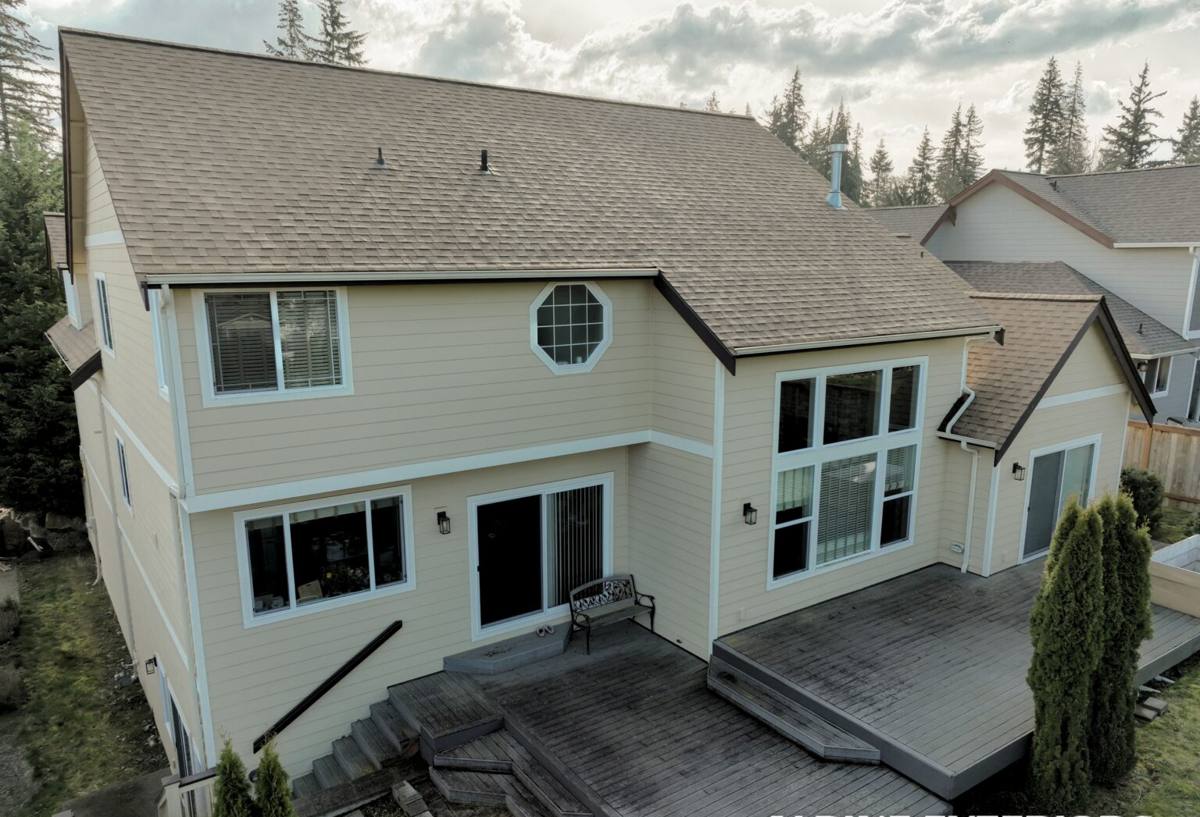
What Bellingham's Climate Actually Does to Siding
Salt Air and Corrosion
Proximity to Bellingham Bay means airborne salt is a real factor for exterior materials, especially metal fasteners, flashing, and trim hardware. Standard fasteners can corrode faster here than they would twenty miles inland, and corroded fasteners eventually stain siding, loosen boards, and create tiny gaps where water gets behind the cladding.
Driving Rain
Wind-driven rain doesn't just fall on a wall, it gets pushed into it. Horizontal rain finds unsealed seams, poorly lapped house wrap, and shortcuts around window and door flashing. A siding system with a working drainage plane behind it — not just a caulked surface — is what actually keeps water out over decades, not just the first few winters.
Moss and Prolonged Moisture
Whatcom County's wet season runs long, and shaded north- and west-facing walls in particular can stay damp for extended stretches. Moss and algae need sustained moisture to establish, and once they do, they hold water against the siding surface, which speeds up rot in wood-based products and accelerates finish breakdown on lower-grade materials.
Why the Material You Choose Matters More Here Than Elsewhere
In a milder, drier climate, the gap between siding products narrows — almost anything installed reasonably well will hold up. In York's climate, that gap widens fast. Products that rely on paint film integrity, or that swell and rot when they take on repeated moisture, get exposed by exactly the conditions this neighborhood sees every winter. That's the core reason this company installs only James Hardie fiber cement siding: it's a non-combustible, moisture- and rot-resistant material with a factory-applied ColorPlus finish, and Hardie's HZ5 product line is engineered specifically for the freeze-thaw, wet-winter climate zone the Pacific Northwest sits in. We're not choosing it because it's the only option on the market — we're choosing it because, on homes in this specific climate, it's the option that holds up with the least long-term maintenance and the fewest callbacks.
What a Correct Siding Installation Actually Involves
Siding is a system, not a single layer. The visible board is the last piece installed and the first thing anyone judges — but the parts underneath it determine whether the job lasts fifteen years or fifty.
The Weather-Resistive Barrier and Drainage Plane
Behind every board should be a continuous, properly lapped weather-resistive barrier that sheds water downward and outward, plus a drainage gap that lets any water that does get behind the siding find its way back out instead of sitting against the sheathing. In a driving-rain climate like this one, skipping or shortcutting this layer is the single most common cause of hidden rot we see on older homes.
Flashing at Every Penetration
Windows, doors, hose bibs, vents, and any other penetration through the siding need dedicated flashing, installed in the correct shingle-lap order so water is always directed outward, never trapped. Caulk is a backup, not a flashing substitute.
Fastening and Clearances
James Hardie specifies fastener type, spacing, and placement for a reason — get it wrong and you void the warranty and invite moisture intrusion at every nail hole. Siding also needs proper clearance from grade, roof lines, decks, and patios so it never sits in standing water or gets buried by landscaping over time. Six inches from soil and two inches from roofing is the general standard, and we hold to it.
Caulking and Joint Treatment
Butt joints, corners, and trim intersections need the right sealant, applied correctly, not just enough to look finished. Poor joint work is a slow leak waiting to happen, and it's one of the most common issues we find when we're asked to look at a previous installation that's underperforming.
Our Installation Process on York-Area Homes
- Assessment and measurement — we walk the exterior, check existing sheathing and framing condition, and identify any moisture damage that needs to be addressed before new siding goes on.
- Removal and substrate prep — old siding comes off, sheathing is inspected and repaired as needed, and any rot is dealt with rather than covered up.
- Weather barrier installation — a continuous, correctly lapped barrier and drainage plane go on before a single piece of siding is hung.
- Flashing at all penetrations — windows, doors, and any wall penetrations get properly sequenced flashing.
- Siding installation to Hardie spec — correct fasteners, spacing, and clearances, installed by a crew trained on this specific product.
- Trim, caulking, and finish detail — joints sealed, trim set, and the job walked for quality before we call it done.
- Final walkthrough — we go over the finished work with the homeowner and explain the warranty coverage in plain terms.
Signs Your Current Siding Is Already Losing the Fight
- Soft or spongy spots when you press on the siding, especially near the bottom courses or under windows
- Visible moss or algae growth that keeps coming back after cleaning
- Peeling, bubbling, or chalky paint that needs recoating more often than it used to
- Warping, cupping, or visible gaps between boards
- Musty odors or unexplained humidity in rooms along an exterior wall
- Rusty streaks below nail heads or trim fasteners
Any one of these on its own might be minor. Several together usually mean the siding system, not just the surface finish, is compromised.
Comparing Siding Options for This Climate
| Factor | James Hardie Fiber Cement | Vinyl | Wood / Engineered Wood |
|---|---|---|---|
| Moisture resistance | Engineered for wet climates; resists rot | Doesn't rot, but can trap moisture behind it | Vulnerable to rot without diligent maintenance |
| Finish durability | Factory ColorPlus finish, long fade resistance | Color molded in, but fades and can grow brittle over time | Relies on field-applied paint that needs regular upkeep |
| Fire resistance | Non-combustible | Combustible | Combustible |
| Maintenance in a wet, mossy climate | Low — occasional wash | Low, but repairs and seams can trap grime | High — repainting, caulking, spot repairs |
| Warranty structure | Long-term, transferable | Varies widely by manufacturer | Typically shorter and product-dependent |
This is why our answer to "what should I put on my house" in this part of Whatcom County is consistent: James Hardie fiber cement, installed to spec, is the product we're willing to stand behind long-term.
Maintaining Your Siding After Installation
Correctly installed Hardie siding is low-maintenance, not no-maintenance. A little attention keeps it performing the way it's designed to for decades.
- Rinse the exterior once or twice a year to clear pollen, road grime, and early moss growth before it establishes
- Keep gutters clear so water isn't overflowing directly onto siding runs
- Trim back landscaping so foliage isn't holding moisture against the wall
- Re-caulk joints if you notice cracking or separation, rather than waiting for a leak to show up
- Have caulking and trim spot-checked every few years, especially on the sides of the home that face prevailing wind and rain
Why a Crew That Already Works in York Matters
Siding installation isn't just a spec sheet — it's judgment calls made on the actual wall, in actual Bellingham weather, on a schedule that has to work around real rain windows. A crew that regularly works this neighborhood already knows how the local climate behaves on different wall orientations, what substrate conditions are common on homes of this area's age and construction, and how to sequence a job so open walls aren't sitting exposed when a system rolls in off the water. That local familiarity shows up in fewer surprises mid-project and a finished installation that's built for the specific conditions it has to survive, not a generic climate.
If your York-area home needs new siding, or you're not sure whether what's on it now is still doing its job, we're happy to take a look. Reach out for a free, no-pressure estimate — we'll walk the exterior with you, answer your questions honestly, and let you know exactly what we'd recommend and why.