 Bellingham Exterior
 Roof Replacement Built for Birch Bay's Coastline Conditions
Birch Bay sits right on the water in Whatcom County, and that location shapes everything about how a roof ages here. Salt-laden air off the Strait of Georgia works its way into fasteners, flashing, and any exposed metal on a roof system. Add in wind-driven rain that comes at the house sideways during winter storms, plus the deep shade many waterfront and wooded lots get from mature conifers, and you get a climate that's genuinely tougher on a roof than what you'll find a few miles inland in Bellingham proper. Moss isn't a cosmetic nuisance out here — it's a moisture-holding, granule-lifting problem that shortens roof life if it's not accounted for at the design and installation stage.
A roof replacement that ignores these conditions might look fine for a year or two, then start showing granule loss, soft spots, or leaks around penetrations well ahead of schedule. We build Birch Bay roofs to handle salt exposure, sustained wet weather, and moss pressure from day one, not as an afterthought.
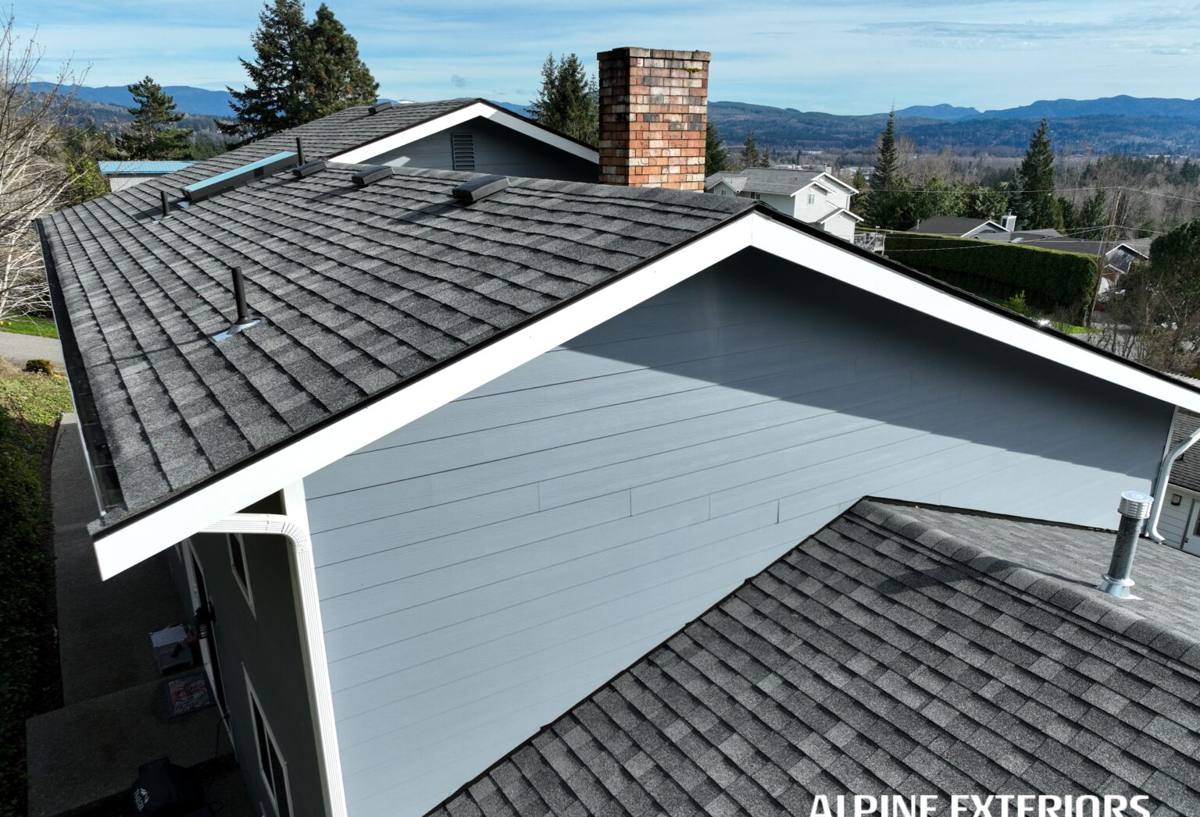
How to Tell a Birch Bay Roof Is Actually Due for Replacement
Not every aging roof needs a full tear-off, and not every homeowner needs to be sold one. Here's what genuinely points to replacement rather than repair:
- Granule loss heavy enough that you're finding grit in gutters and downspouts every time it rains
- Moss or lichen that keeps returning within months of cleaning, especially on north-facing or shaded slopes
- Curling, cracked, or missing shingles concentrated on the side of the roof that takes the worst weather off the water
- Soft decking or staining in the attic near valleys, chimneys, or vent penetrations
- A roof already past 20-25 years old, since coastal exposure tends to shorten the practical lifespan of standard asphalt systems compared to inland homes
- Rusting or failing metal flashing, drip edge, or fasteners — a clear sign salt air has been at work
If a roof shows one or two of these issues in isolated spots, targeted repair is often the honest answer. When several show up together, or the roof is old enough that repair would just be chasing the next failure, replacement is the more cost-effective path.
Material Choices That Make Sense for a Salt-Air, High-Moss Environment
There's no single "best" roofing material for every Birch Bay home — it depends on the home's exposure, roof pitch, shading, and budget. What matters is matching the material to the conditions instead of defaulting to whatever's cheapest or most common inland.
| Material | How It Handles Salt Air & Moisture | Moss Resistance | Typical Lifespan Here |
|---|---|---|---|
| Standard asphalt shingle | Adequate with proper flashing; fasteners and metal accessories need corrosion-resistant hardware | Moderate — benefits from zinc/copper strips on shaded slopes | 18-25 years in this climate |
| Algae-resistant (AR) architectural shingle | Good; heavier mat holds up well to sustained rain | Better — copper-infused granules slow regrowth | 22-28 years |
| Metal (standing seam) | Excellent when properly coated and fastened with matched hardware | Very good — little surface for moss to grip | 40+ years |
| Cedar shake | Requires more upkeep in wet, shaded conditions; higher moisture retention | Lower without regular treatment | Variable — heavily maintenance-dependent |
For most Birch Bay homes, an algae-resistant architectural shingle with corrosion-resistant fasteners and properly detailed flashing gives the best balance of cost, appearance, and durability. Metal roofing is worth serious consideration on homes with heavy shade or steep water exposure, where the long-term maintenance savings can outweigh the higher upfront cost. We'll walk through the honest trade-offs for your specific roof rather than pushing one product line.
What a Correct Roof Replacement Actually Involves
Tear-Off and Deck Inspection
Every job starts with a full tear-off to bare decking — never a layover — because you can't properly address moss staining, trapped moisture, or soft sheathing without seeing the deck directly. Any rotted or delaminated plywood gets replaced before anything new goes down. Skipping this step is the single most common corner cut in cheap re-roofs, and it's the one that causes the most expensive problems later.
Underlayment Built for Wet Weather
Given how much sustained rain Birch Bay gets off the water, we use synthetic or ice-and-water underlayment in valleys, eaves, and around penetrations at a minimum — sometimes across the full deck on north-facing or heavily shaded roofs where moisture sits longer. This is the layer that protects the home if wind-driven rain ever gets past the shingles.
Flashing and Fasteners That Won't Corrode
Salt air accelerates corrosion on standard galvanized hardware faster than most homeowners expect. We spec corrosion-resistant flashing, drip edge, and fasteners for any roof within reach of salt spray, which is most of Birch Bay. This is a small line-item cost difference that prevents rust streaks, leaks, and premature flashing failure down the road.
Ventilation Sized for the Roof
Proper intake and exhaust ventilation keeps the attic dry and temperature-balanced, which matters for both shingle lifespan and moss prevention — a hot, humid attic accelerates deck moisture problems from underneath, compounding whatever moisture pressure the roof faces from outside. We calculate ventilation to the actual roof, not a generic rule of thumb.
Moss Mitigation Built In
On shaded slopes, we install zinc or copper strips near the ridge as a standard part of the job. Rain washing over these strips releases trace metal ions that suppress moss and algae regrowth for years, which is far more effective than periodic chemical treatments alone.
Our Process, Start to Finish
- On-site inspection: We walk the roof and attic, note existing damage, ventilation, and exposure direction, and take photos.
- Written estimate: A clear scope of work and price — no vague allowances, no surprise change orders for things we could have identified upfront.
- Material selection: We go over the honest trade-offs between shingle types, metal, and accessory upgrades (moss strips, fastener grade, underlayment coverage) for your specific roof.
- Scheduling around weather: We plan around Whatcom County's wetter stretches rather than starting a tear-off with rain in the forecast.
- Tear-off and deck repair: Full removal, deck inspection, and any needed sheathing replacement, priced before we close the roof back up.
- Installation: Underlayment, flashing, ventilation, and roofing material installed to manufacturer spec plus our own coastal-condition additions.
- Final walkthrough: We review the finished roof with you, including gutters, flashing details, and any moss-prevention features installed.
Living With a New Roof: Maintenance in a Moss-Heavy Climate
A well-built roof still needs some upkeep in this environment. Here's what actually extends its life:
- Keep gutters clear of needles and debris — clogged gutters back water up under shingles and eaves
- Trim back overhanging branches where possible to reduce shade and debris load on the roof
- Have moss buildup addressed early with soft washing rather than pressure washing, which can strip granules
- Check attic ventilation isn't blocked by insulation or storage after any attic work
- Schedule a visual roof check every year or two, especially after major windstorms off the water
What Affects the Cost of a Birch Bay Roof Replacement
Costs vary by roof size, pitch, material, and how much deck repair is needed, so we won't quote a number without seeing the roof. What we can tell you is which factors move the price most:
| Cost Factor | Why It Matters |
|---|---|
| Roof pitch and access | Steep or hard-to-access roofs take longer and require more safety equipment |
| Deck condition | Rotted or soft sheathing found during tear-off adds material and labor |
| Material choice | Standard shingle vs. algae-resistant vs. metal carries a real price spread, offset by different lifespans |
| Underlayment coverage | Full ice-and-water coverage costs more upfront than minimum-code coverage but pays off on shaded, wet slopes |
| Number of penetrations and valleys | Each chimney, vent, and valley is additional flashing labor and a potential leak point if done poorly |
| Moss-prevention additions | Zinc/copper strips are a modest add-on cost with meaningful long-term payoff on shaded roofs |
We'd rather walk you through these trade-offs honestly than hand you a lowball number that turns into change orders once the tear-off starts.
Why Hiring a Crew That Already Works in Birch Bay Matters
A roofer based well inland can still do competent work, but they're guessing at conditions a Bellingham-area crew that regularly works Birch Bay already knows firsthand: which slopes hold moss longest, how far salt spray actually carries on a windy day, which fastener and flashing grades hold up here versus a few miles inland, and how to sequence a tear-off around the wetter stretches of a Whatcom County winter. That local familiarity shows up in fewer callbacks and a roof that's actually specified for the site it's on, not a generic template.
Permits and Timing in Whatcom County
Roof replacements in unincorporated Whatcom County, which covers Birch Bay, typically require a permit through the county's permitting process, and we handle that as part of the job so you're not tracking down paperwork yourself. Timing-wise, we aim to schedule tear-offs during drier weather windows and always keep the roof weather-tight at the end of every work day — a roof is never left open overnight regardless of forecast.
If your Birch Bay roof is showing its age or you just want a straight answer on repair versus replacement, we're glad to take a look. Fill out the form below for a free, no-pressure estimate.