 Bellingham Exterior
 Why Birch Bay's Waterfront Setting Changes the Siding Equation
Birch Bay sits right on the water, and that changes what siding has to survive compared to homes further inland in Whatcom County. Salt-laden air moves off the bay and settles on exterior surfaces year-round, accelerating corrosion of fasteners, trim, and any material that isn't built to shrug off constant moisture. Add wind-driven rain that comes in sideways during winter storms, rather than falling straight down, and you get water intrusion at joints and seams that a calmer inland location would rarely see.
Then there's the moss. Whatcom County's long, damp shoulder seasons give algae and moss months to establish themselves on north-facing walls and anywhere siding stays shaded and wet. On a waterfront lot, that season runs even longer because the marine layer keeps humidity elevated even on days without rain. Siding that can't shed water quickly or resist organic growth ends up doing double duty as a maintenance project, not just a weather barrier.
None of this means Birch Bay homes need exotic materials. It means the siding replacement has to be specified and installed with this specific combination of salt, wind, rain, and shade in mind, rather than treated as an interchangeable job that would look the same in a dry climate.
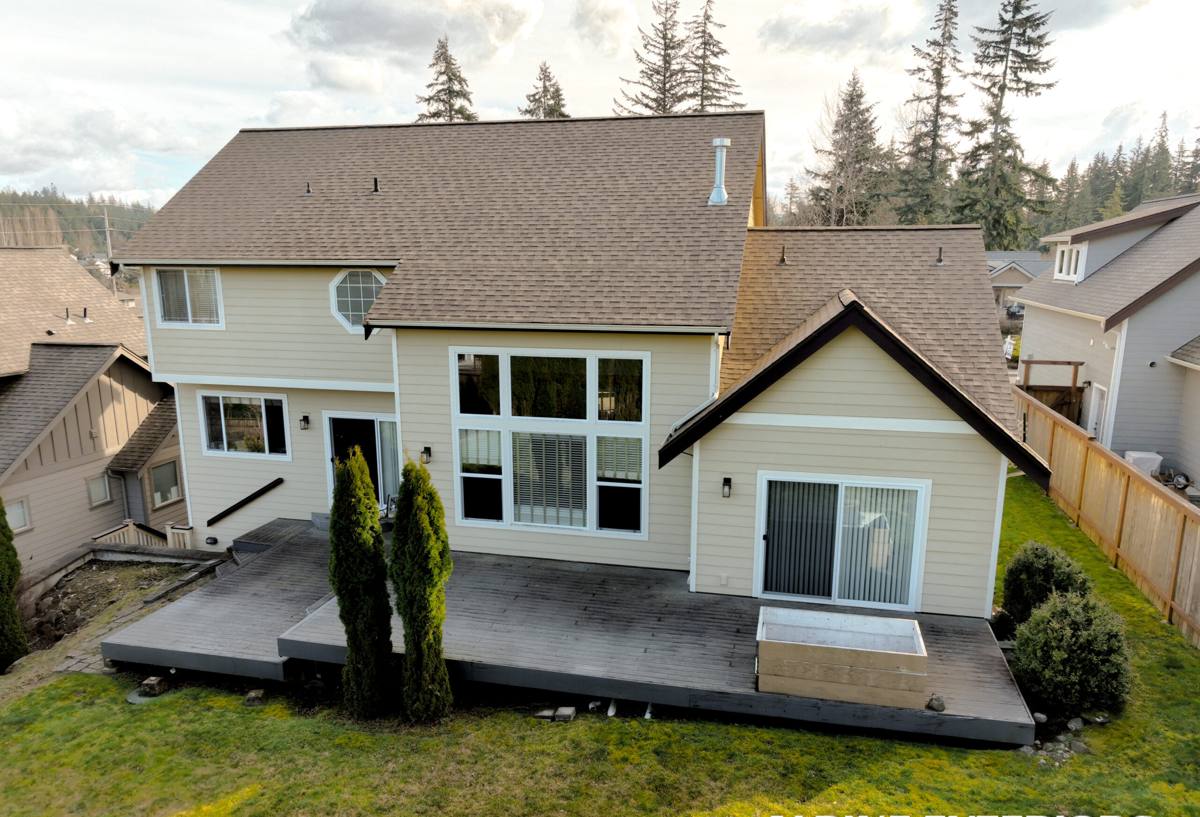
Signs a Birch Bay Home Needs Replacement, Not Just Repair
Homeowners often ask us to patch a section of siding when the real problem is systemic. A few signs point toward full replacement rather than a spot fix:
- Soft or spongy siding when pressed, especially near the bottom courses closest to grade and salt spray
- Persistent moss or black streaking that returns within a season or two of cleaning
- Paint that's failing uniformly across a wall rather than in one isolated area
- Visible gaps, warping, or buckling at seams, which usually signals moisture already behind the siding
- Corroded or rust-streaked fasteners, a common tell in salt-exposed coastal settings
A single damaged panel is a repair. Widespread softness, staining, or fastener corrosion across a wall or the whole house is a sign the siding system itself has reached the end of its useful life in this environment.
What a Correct Siding Replacement Actually Involves
It Starts Underneath the Siding, Not With It
The siding you see is the last layer installed, not the first line of defense. A correct replacement starts with removing the old material down to the sheathing, inspecting for rot or water damage, and repairing anything compromised before a single new panel goes up. Skipping this step and installing new siding over hidden damage is one of the most common shortcuts in the trade, and it's exactly how a home ends up needing another full replacement well ahead of schedule.
Weather-Resistive Barrier and Flashing
Behind the siding, a properly lapped weather-resistive barrier and correctly integrated flashing around windows, doors, and penetrations do most of the actual work of keeping water out. In a location like Birch Bay, where wind-driven rain can push water sideways and upward under poorly sealed edges, this layer matters more than the visible siding itself.
Fasteners and Hardware
Corrosion-resistant fasteners aren't optional this close to the water. Standard fasteners can start rusting within a few seasons in salt air, leaving streaks on the siding and, eventually, failure points where panels can work loose.
Why We Only Install James Hardie Fiber Cement
We install one siding system: James Hardie fiber cement. Fiber cement doesn't expand and contract with temperature swings the way vinyl does, it's non-combustible, and it holds a factory-applied ColorPlus finish that's engineered to resist fading and moisture-related failure far better than field-applied paint. In a climate like Whatcom County's, where siding stays wet for long stretches and then goes through freeze-thaw cycles, that combination matters more than it does in drier parts of the country.
We don't install vinyl, LP SmartSide, or other engineered wood products, and we're upfront about why: each of those systems has real strengths, but each also has a moisture-sensitivity or maintenance trade-off that we're not willing to put our name behind in a marine environment. Hardie isn't the cheapest material on the market, but it's the one we're confident holding up to Birch Bay's combination of salt air, rain, and moss without turning into a recurring maintenance headache for the homeowner.
Our Process for a Birch Bay Siding Replacement
1. On-Site Assessment
We walk the exterior, check the sheathing where accessible, look at drainage and grading around the foundation, and note any areas with existing moss, staining, or soft siding. This tells us whether we're dealing with isolated damage or a system-wide problem.
2. Tear-Off and Substrate Repair
Old siding comes off in sections so the sheathing stays protected from weather during the job. Any rot or water damage found underneath gets repaired before we move forward — this step gets documented and discussed with the homeowner, not buried under new siding.
3. Weather Barrier, Flashing, and Installation
We install the weather-resistive barrier, integrate flashing at every window, door, and penetration, and hang the Hardie siding to the manufacturer's fastening and clearance specifications. Correct clearance from grade, decks, and roof lines is especially important on waterfront lots where splash-back and standing moisture are more common.
4. Final Walkthrough
We walk the finished exterior with the homeowner, checking caulking, trim, and paint lines, and answer questions about care in a coastal environment before we consider the job done.
Cost Factors for Siding Replacement in a Waterfront Setting
Every home is different, but these are the main factors that move the price of a siding replacement up or down in a location like Birch Bay:
| Factor | Why It Matters Here |
|---|---|
| Extent of hidden water damage | Salt air and driving rain increase the odds of sheathing repair being needed once old siding comes off |
| Home size and wall complexity | More corners, dormers, and trim details mean more flashing and cutting time |
| Siding profile and trim package | Lap width, trim style, and accessory boards affect material and labor |
| Access and site conditions | Waterfront lots can have limited staging area or exposure that affects scheduling around weather |
| Existing moss or organic growth | May require additional cleaning or substrate treatment before new siding goes on |
We provide a written, itemized estimate so homeowners can see exactly what's driving the number, rather than a single lump-sum figure.
Moss, Mildew, and Long-Term Maintenance in a Marine Climate
Even the right siding system needs some ongoing attention in a place like Birch Bay. Shaded, north-facing walls will still collect moss over time, and gutters and downspouts need to stay clear so water isn't running down the siding face longer than necessary. The advantage of a correctly installed Hardie system is that it tolerates periodic cleaning and moisture exposure without the material itself breaking down, which is the failure point we see most often with siding that wasn't built for a coastal climate in the first place.
A simple annual rinse-down and a quick check of caulking and trim each fall goes a long way toward keeping a Birch Bay home's siding looking and performing the way it did on install day.
What to Ask Before Hiring a Siding Contractor Near Birch Bay
- Are you licensed and bonded to do exterior contracting work in Washington State?
- Will you inspect and repair the sheathing before installing new siding, and is that spelled out in writing?
- What fastener and flashing specifications will you use in a salt-air environment?
- Can you explain, in plain terms, why you recommend the specific siding material you're proposing?
- Do you have experience working on homes in coastal or waterfront settings, not just inland neighborhoods?
A contractor who can answer these clearly, without vague reassurances, is one who understands what this specific stretch of coastline does to exterior materials over time.
Why Local Experience in Birch Bay Matters
Siding that performs well in a dry inland neighborhood can fail early on a waterfront lot exposed to salt spray and wind-driven rain. A crew that already works this part of Whatcom County knows to spec corrosion-resistant fasteners as standard, pay closer attention to flashing at grade, and expect a longer moss season on shaded walls. That's the difference between a siding replacement that's built for Birch Bay's actual conditions and one that simply meets a generic installation standard.
If you're weighing a siding replacement on a Birch Bay home, we're glad to take a look and walk you through what we're seeing — no pressure, no obligation. Fill out the form below to schedule a free estimate.