 Bellingham Exterior
 Window Replacement Built for Birchwood's Climate, Not Just Its Homes
Birchwood homes deal with a specific combination of weather that doesn't show up the same way in drier parts of Washington. Salt-laden air off the water, long stretches of driving rain, and a moss season that can run most of the year all work on window frames, sills, and seals in ways that generic replacement advice doesn't account for. A window install that would hold up fine in Spokane can fail early here if it's not detailed for Bellingham's coastal, marine-influenced climate.
This page is about one job in one place: replacing windows on Birchwood homes correctly, with the flashing, sealing, and material choices that actually matter in Whatcom County's weather. It's not a general overview of window replacement — it's what we've learned doing this specific work in this specific neighborhood.
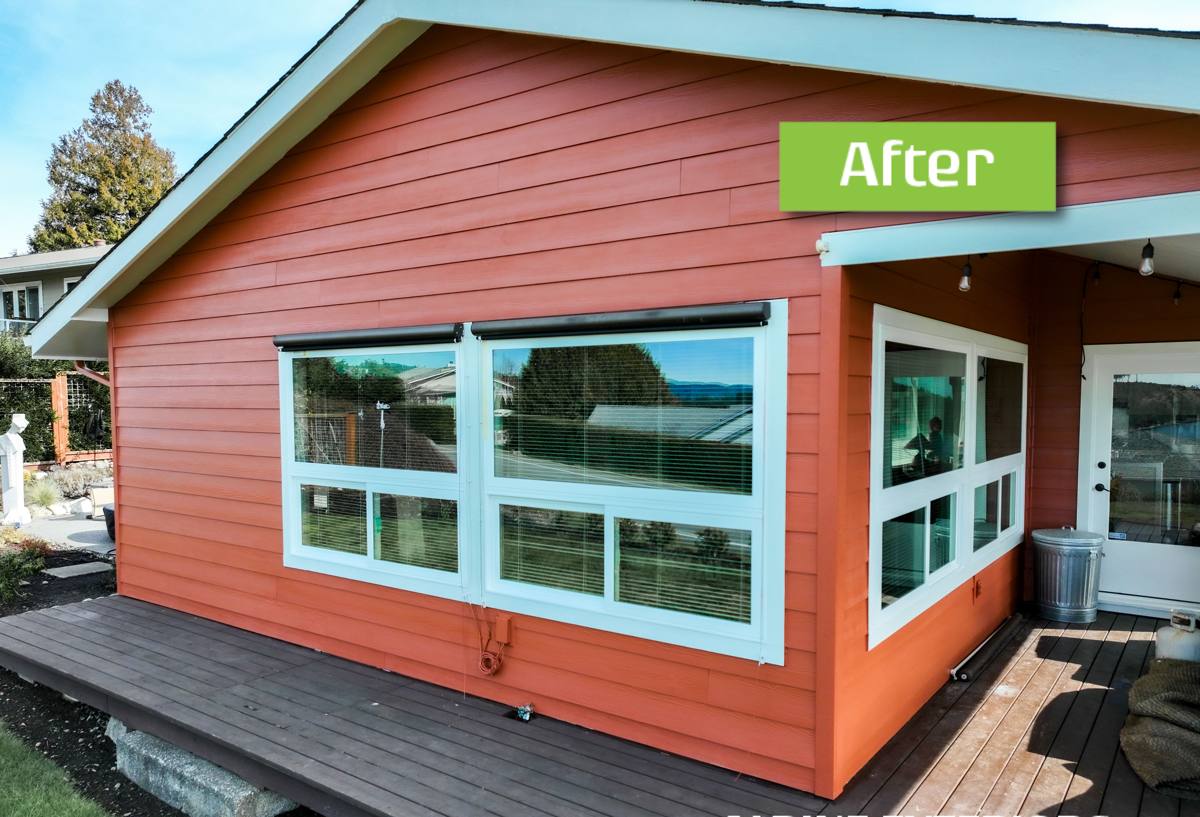
What Salt Air, Driving Rain, and Moss Do to Windows Over Time
Three things drive most of the window failures we see on Birchwood homes, and they compound each other.
Salt Air and Corrosion
Proximity to the water means airborne salt settles on everything, including window hardware. Over years, it accelerates corrosion on latches, hinges, and metal fasteners, and it can degrade certain aluminum components faster than manufacturers' warranties assume for inland climates. This is one reason we pay close attention to hardware material and finish, not just glass and frame.
Driving Rain and Wind-Driven Moisture
Storms here often come with sideways rain, not just vertical rainfall. That means water gets pushed up and under trim, sills, and poorly lapped flashing rather than simply running down the face of the wall. Windows that were installed with minimal flashing — common in older construction — are especially vulnerable to this kind of wind-driven intrusion, even if the window unit itself is otherwise sound.
Moss, Algae, and Prolonged Dampness
Bellingham's tree cover, humidity, and long damp stretches favor moss and algae growth on sills, exterior trim, and anywhere water sits instead of draining. Beyond the cosmetic issue, sustained moisture and organic growth break down caulk and wood trim faster, and they can mask early rot until it's already significant.
None of this means Birchwood homes need exotic solutions. It means the installation details — flashing, drainage, sealant choice, hardware — have to be treated as seriously as the window unit itself.
Signs Your Windows Are Past the Point of Repair
Not every window problem means full replacement. But in this climate, certain signs usually point that direction rather than toward another round of caulking or weatherstripping.
- Fogging or a milky haze between panes, which means the seal on a double-pane unit has failed and can't be restored
- Soft, spongy, or darkened wood at the sill or lower frame corners — a sign moisture has already reached the wood
- Persistent drafts you can feel with the window fully latched, especially during wind-driven rain
- Visible daylight or gaps around the frame when viewed from outside
- Windows that are difficult to open, close, or lock, often from swelling, warping, or hardware corrosion
- Recurring moss or algae growth on the sill that returns within weeks of cleaning
- Paint or finish that's bubbling or peeling specifically around the window, rather than the wall generally
If you're seeing one or two of these, a repair may still make sense. If you're seeing several on the same window, or across multiple windows on the same wall, replacement is usually the more honest recommendation, both for comfort and for protecting the framing underneath.
What a Correct Window Replacement Job Actually Involves
The window unit itself is often the easy part. The details around it are what determine whether the job holds up through a few Whatcom County winters or starts leaking again in three years.
Removal and Opening Inspection
Once the old window is out, we inspect the rough opening, sill, and surrounding framing for hidden water damage or rot before anything new goes in. This step gets skipped by crews trying to move fast, and it's the single biggest reason "new" windows leak — because they were installed over a problem that was never actually fixed.
Flashing and Water Management
Proper flashing directs any water that gets past the window itself back out of the wall assembly instead of into it. Given how much wind-driven rain this area sees, we treat flashing detail — not just the window brand — as the part of the job that determines long-term performance.
Installation, Shimming, and Sealing
The window has to be set plumb, level, and square, shimmed correctly so it isn't under stress, and sealed with materials suited to sustained damp exposure rather than generic caulk that hardens and cracks within a few seasons.
Finish Work and Cleanup
Interior and exterior trim gets reset or replaced, hardware is checked for smooth operation, and the site is cleaned up. We also walk you through operation and basic maintenance specific to your new windows before we call the job done.
Choosing the Right Window Material for a Birchwood Home
There's no single "best" window material for every home — the right choice depends on exposure, budget, and how much upkeep you want to take on. Here's how the common options compare for a coastal, high-moisture climate like ours.
| Material | Moisture & Salt Air Behavior | Maintenance | Typical Trade-offs |
|---|---|---|---|
| Vinyl | Doesn't corrode or rot; performs well in damp, salt-air conditions | Low — no painting, minimal upkeep | Frame color options are more limited; can flex slightly in temperature swings |
| Fiberglass | Very stable in moisture and temperature swings; strong resistance to warping | Low to moderate | Higher upfront cost than vinyl |
| Wood-clad | Good performance if cladding and seals stay intact, but any breach exposes wood to rot risk | Higher — seals and finish need periodic attention | Best appearance option for some homes, but least forgiving of installation shortcuts here |
| Aluminum | Prone to corrosion from salt air over time; conducts cold, increasing condensation risk | Moderate | We generally steer Birchwood homeowners away from it for primary living-space windows in this climate |
We're not tied to one brand, and we'll tell you honestly when a product isn't a good fit for a specific exposure — a south or west-facing wall that takes direct driving rain calls for different priorities than a sheltered, tree-covered elevation.
What Actually Drives Window Replacement Cost
We don't post fixed prices because window replacement cost depends on real variables specific to your home, but these are the factors that move the number up or down.
| Factor | How It Affects Cost |
|---|---|
| Number and size of windows | More openings and larger units mean more material and labor |
| Frame material | Vinyl is typically the most budget-friendly; fiberglass and wood-clad cost more upfront |
| Extent of hidden damage | Rot or water damage found at the rough opening adds repair work before the new window goes in |
| Full-frame vs. insert replacement | Full-frame replacement (removing down to the studs) costs more but is often the correct fix when flashing or framing is compromised |
| Access and site conditions | Second-story windows, tight clearances, or landscaping obstacles can add labor time |
| Glass package | Upgraded glazing for energy performance or sound dampening adds cost but can be worth it depending on the window's exposure |
We walk every home in person before quoting, because two houses with the "same" ten windows can have very different scopes once we see the actual condition of the openings.
Our Process, Start to Finish
- Free on-site assessment. We look at every window you're considering replacing, check for hidden moisture or rot, and talk through what's realistic for your home and budget.
- Written estimate. You get a clear scope and price before any work is scheduled — no surprise change orders for things we should have caught during the assessment.
- Material selection. We help you weigh frame material, glass package, and finish against your home's specific sun and rain exposure.
- Installation. Careful removal, opening inspection, correct flashing, precise setting, and proper sealing — the sequence that actually determines whether the job lasts.
- Final walkthrough. We test operation on every window, review basic care, and make sure you're satisfied before we consider the job finished.
Why Local Experience in Birchwood Actually Matters
Window replacement isn't identical from one neighborhood to the next, even within Bellingham. A crew that's worked on Birchwood homes before already has a sense of which elevations tend to take the worst of the wind-driven rain, how mature tree cover in the area affects moss and drainage around sills, and what condition to expect behind older siding and trim before ever pulling the first window.
That familiarity shortens the guesswork. It means fewer surprises once a window comes out, more accurate estimates up front, and installation decisions — flashing detail, sealant choice, hardware material — that are already matched to what this climate actually does to a house over time, instead of generic assumptions that don't hold up here.
It also means we're a known, findable crew if a question comes up after the job is done — not a company that worked in the area once and moved on.
Get a Straight Answer About Your Windows
If your Birchwood home has windows that are drafty, fogged, hard to operate, or showing signs of moisture damage, it's worth getting an honest assessment before deciding between repair and replacement. We'll walk your windows with you, tell you what we actually see, and give you a clear, no-pressure estimate — use the form below to get started.