 Bellingham Exterior
 Blaine's Waterfront Location Puts Extra Stress on Windows
Blaine sits right on the water at the northwest corner of Whatcom County, and that location cuts both ways. It's part of what makes the area beautiful, and it's also why windows here work harder than windows a few miles inland. Salt-laden air off the water settles on frames and hardware year-round, wind-driven rain finds its way into gaps that would stay dry in a more sheltered spot, and the long gray stretch of fall through spring keeps north-facing walls and window sills damp enough to grow moss and algae. None of that is a reason to panic about your windows — it's just the reason a "custom" approach matters more here than it would somewhere drier.
When we say custom windows, we don't mean upgraded or fancier. We mean windows specified for the actual conditions of your house: its exposure to wind and salt spray, its age and framing, and how water moves across that particular wall when a storm rolls in off the Strait. A stock big-box window ordered off the shelf can work fine in a protected inland neighborhood. On a Blaine property exposed to open water and prevailing wind, the margin for error is smaller.
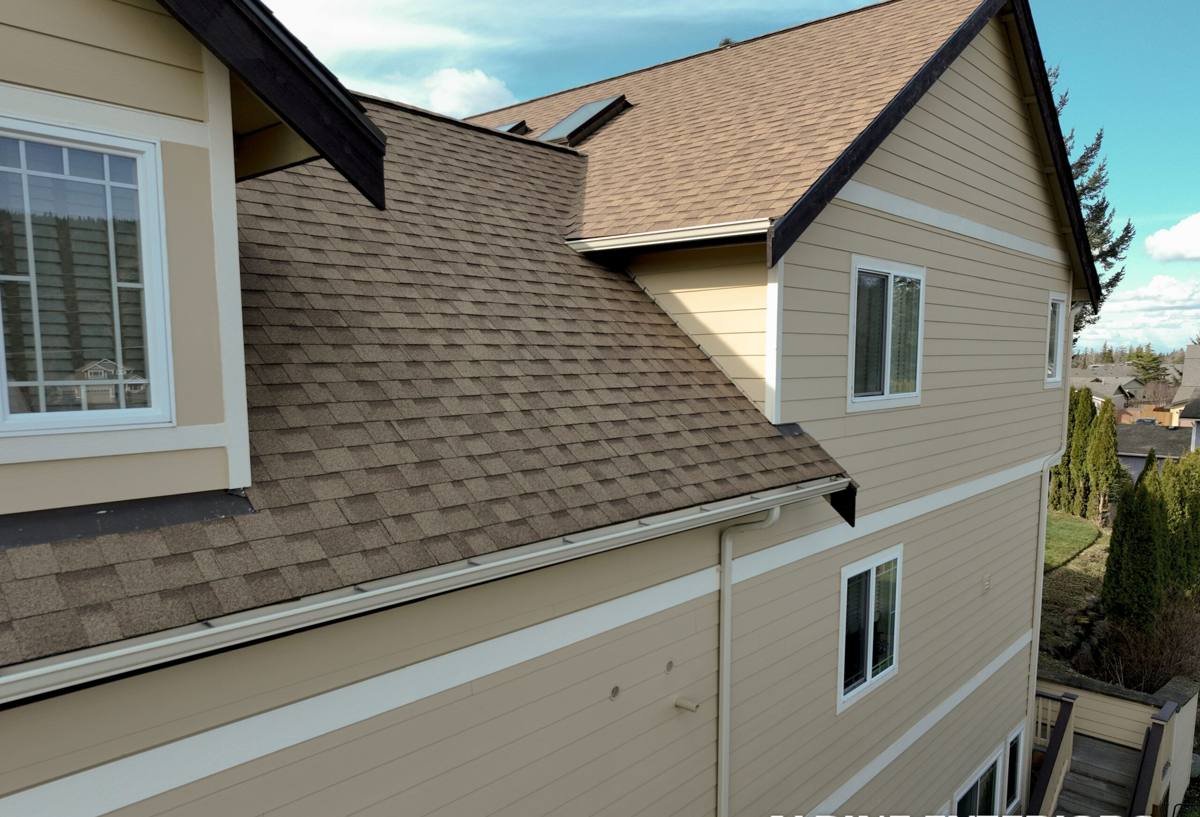
What "Custom" Actually Means for a Blaine Home
Non-Standard Openings
Many homes in and around Blaine were built or added onto over several decades, which means rough openings are rarely a perfect match for today's standard window sizes. Custom sizing means we measure your actual opening and either order a window built to that dimension or build out the frame correctly, instead of forcing an off-the-shelf size into a space it wasn't made for and packing the gaps with trim and caulk to hide it.
Matching Architecture and Sightlines
Grid patterns, sash proportions, and trim profiles should match the style of the house, especially on older coastal cottages and farmhouses where the window layout is part of the home's character. A window that's technically well-built but visually wrong for the house is still the wrong window.
Matching Exposure, Not Just the House Next Door
Two homes on the same street can have very different exposure depending on which direction they face and how much wind and salt spray they take directly. We spec glass, frame material, and hardware based on your home's actual exposure, not a one-size-fits-all package.
Frame Materials: What Actually Holds Up Near Salt Air
This is where a lot of window jobs go wrong, and it's usually not obvious until a few years in. Salt air corrodes metal hardware and fasteners faster than people expect, and it can also degrade certain finishes and seals over time. Here's how the common frame options generally compare for a salt-air, high-rain environment like Blaine:
| Frame Material | Salt Air / Corrosion Resistance | Maintenance | Typical Fit For Blaine |
|---|---|---|---|
| Vinyl | Good — won't corrode, but hardware quality varies by manufacturer | Low | Solid, budget-friendly choice; insist on marine-grade or corrosion-resistant hardware |
| Fiberglass | Very good — stable in temperature swings and moisture, minimal corrosion risk | Low | Strong option for full water exposure; higher upfront cost |
| Aluminum-clad wood | Depends heavily on cladding quality and seal integrity at joints | Moderate | Good for architectural fit, but exposed corners need careful detailing |
| Bare wood | Poor without diligent upkeep — moisture and salt accelerate rot and finish failure | High | Best reserved for protected walls, porches, or interior-only applications |
| Aluminum (uncladded) | Poor — prone to pitting and corrosion in coastal salt air over time | Moderate to high | We generally steer clients away from it for direct water-facing walls |
None of these materials is automatically "bad" — the trade-offs are about maintenance burden and how forgiving the material is if a seal starts to fail. Where we do steer clients away from a product, it's a maintenance and moisture-behavior call, not a knock on the manufacturer. A well-built wood window with excellent upkeep can last decades; it just needs an owner willing to keep up that upkeep on a coastal lot.
Installation Details That Matter More Here Than Inland
The window unit itself is only part of the job. In a driving-rain climate, how the window is installed determines whether water stays out for the next twenty years or finds a way in within five. A few details we treat as non-negotiable:
Sill Pan Flashing
A proper sloped sill pan under the window gives any water that does get past the exterior seal somewhere to go besides your wall framing. This is one of the most commonly skipped steps in fast window swaps, and it's one of the most important in a wind-driven rain environment.
Flashing Sequence and Overlap
Flashing tape and building paper need to be layered so water sheds downward and outward, shingle-style, at every layer. Get the order wrong and you can trap water behind the siding instead of directing it away from the house.
Sealant Selection and Placement
Not every exterior sealant is rated for constant UV and salt exposure. We use products suited to marine and coastal conditions, and we're deliberate about where caulk is used versus where a weep path needs to stay open — sealing every gap shut can actually trap moisture that a window is designed to drain.
Weep Holes and Drainage Paths
Manufactured windows are engineered with drainage paths built in. If those weep holes get caulked over or blocked with debris during installation or later maintenance, water that's designed to drain back out instead sits in the frame.
Our Process, Start to Finish
We keep the process straightforward and don't skip steps to save time:
- On-site assessment — we look at your existing windows, framing condition, and the specific exposure of each wall before recommending anything.
- Custom measurement — every opening is measured individually; we don't assume uniformity between windows on the same wall.
- Material and glass selection — based on exposure, budget, and how the window needs to look with the rest of the house.
- Removal and inspection — once the old window is out, we check the framing and sill for hidden rot or water damage before anything new goes in. This is often where problems from a past installation show up.
- Installation with proper flashing and sealing — following the sequence above, not a shortcut version of it.
- Final check and cleanup — operation, seal, and trim are checked before we consider the job done.
Signs Your Blaine Home's Windows May Be Due
Some warning signs are obvious, but others show up slowly and get written off as normal aging. Worth checking for:
- Fogging or moisture between panes of double-pane glass, which means the seal has failed
- Soft, spongy, or discolored wood at the sill or bottom corners of the frame
- Visible corrosion, pitting, or stiff operation on hardware and hinges
- Drafts you can feel near the frame even when the window is fully latched
- Paint or finish that keeps failing in the same spot no matter how often it's touched up
- Persistent green or black staining on the sill or trim that returns shortly after cleaning
- Difficulty opening, closing, or latching that didn't used to be there
Any one of these on its own might just need a repair. Several together, especially on a wall that takes direct wind and rain, usually means the window and its installation are due for a real look.
Living With Moss Season: What Ongoing Maintenance Looks Like
Even a well-installed, well-chosen window benefits from a little seasonal attention in a climate where moss and algae growth run most of the year. Keeping weep holes and drainage paths clear, rinsing salt film off frames and glass periodically, and checking sealant for cracking at least once a year will extend the life of any window material. This isn't about babying the house — it's the same basic upkeep any coastal home needs, and it's far less work than dealing with water damage after the fact.
Why It Matters to Hire a Crew That Already Works in Blaine
Window installation isn't identical everywhere in Whatcom County, and a crew that mostly works drier, more sheltered inland jobs can miss details that matter on a waterfront or near-waterfront property. Knowing how hard the wind typically pushes rain against a given exposure, which hardware finishes actually hold up to salt air over years rather than months, and how moss and moisture behave on this stretch of coastline all come from doing this work locally and repeatedly — not from a general contracting background. We're not guessing at what Blaine's climate does to a window installation; it's the environment we already build for.
If your windows are showing wear, drafting, or just don't fit the house the way they should, we're happy to take a look and talk through honest options — no pressure, no obligation. Fill out the form below and we'll set up a free estimate.