 Bellingham Exterior
 Siding in Blaine Works Harder Than Siding Almost Anywhere Else in Whatcom County
Blaine sits right where the Salish Sea meets the Canadian border, and that location shapes everything about how siding ages here. Homes close to the water take on salt-laden air that settles into every seam, fastener, and coating on a house's exterior. Add in driving rain that comes sideways off Semiahmoo Bay and Drayton Harbor during winter storms, plus a moss and mildew season that can run eight months out of the year in this part of Whatcom County, and you have a climate that punishes siding that wasn't built or installed for it.
We install siding across Bellingham and the surrounding communities, and Blaine is one of the areas where we see the clearest evidence of what happens when siding is chosen or installed without the local conditions in mind. Paint failure, swollen panel edges, moss creeping up north-facing walls, and corroded fasteners show up faster here than in drier, more sheltered parts of the county. This page is about what a correctly installed siding job looks like for a Blaine home, and why we've standardized on one product system to deliver it.
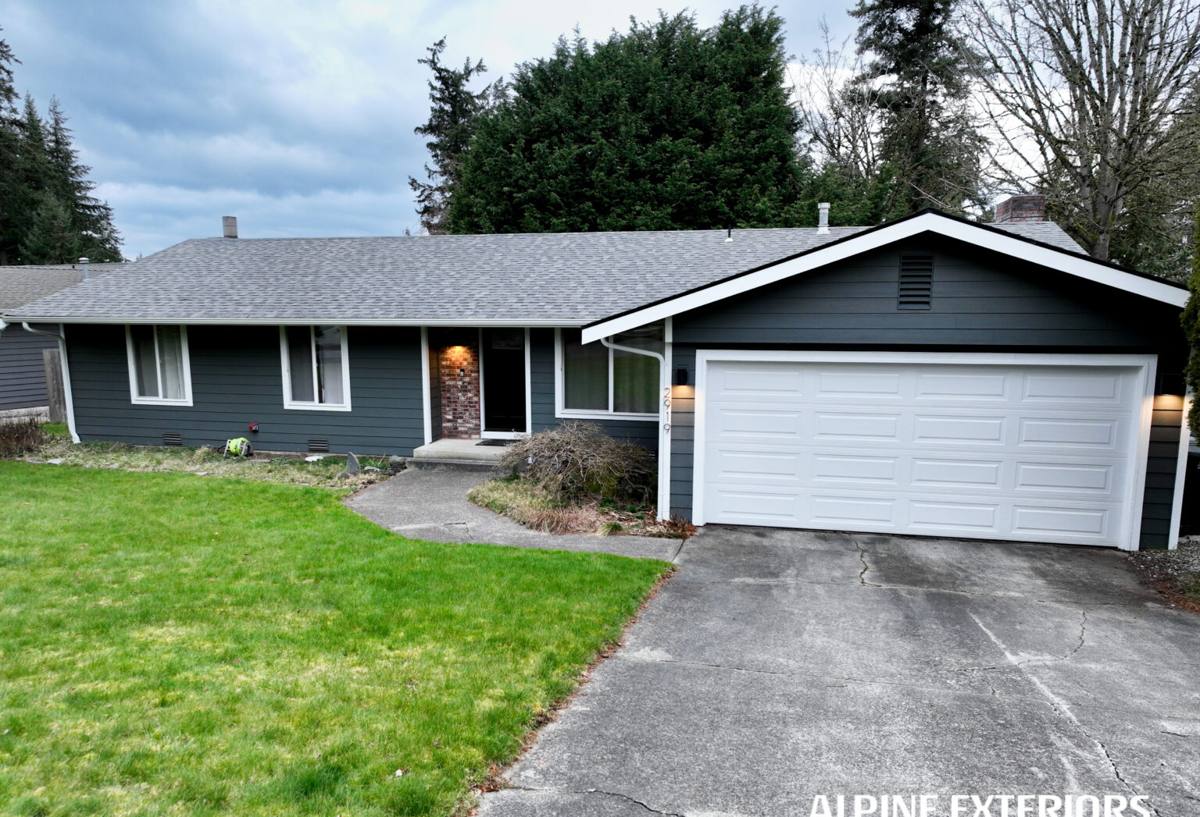
What Blaine's Climate Actually Does to a House
Salt Air and Metal Fasteners
Airborne salt from the bay doesn't just sit on the surface of your siding — it works into fastener heads, flashing seams, and any exposed metal trim. Over years, that accelerates corrosion in anything that isn't rated for a marine-influenced environment. It's one of the reasons fastener selection and flashing details matter as much as the siding material itself.
Driving Rain and Wind-Driven Moisture
Blaine gets storms that push rain horizontally against west- and southwest-facing walls. Siding that relies on face-sealed caulk joints rather than proper water-shedding laps and flashing will eventually let moisture behind the cladding. Once water gets behind siding, it doesn't dry out quickly in a climate this damp — and that's when sheathing and framing damage starts.
Moss, Mildew, and Shade
Many Blaine lots have mature trees and long shaded stretches, especially on north and east elevations. Combined with near-constant moisture from fall through spring, those areas grow moss and mildew on siding surfaces that can't shed water and dry between rain events. Porous or absorptive siding materials hold onto that moisture longer, which feeds the growth cycle.
What a Correct Siding Job in Blaine Actually Involves
A siding installation is really a water-management system with a finished appearance on top of it. Getting the visible layer right matters, but it's the layers underneath that determine whether the job holds up through Blaine winters.
- A weather-resistive barrier (house wrap or building paper) installed with proper shingle-lap sequencing so water is shed downward and outward, never trapped
- Correct flashing at every window, door, deck ledger, and roof-to-wall transition — the places where most real-world leaks originate
- Rain-screen gapping or drainage capacity where the wall assembly calls for it, so any moisture that gets behind the cladding has a path to drain and dry
- Fasteners matched to the substrate and rated for coastal exposure, driven to the manufacturer's specified depth and pattern
- Proper clearance between siding and grade, decks, patios, and roof lines to keep the bottom edge of the siding from sitting in standing moisture
- Caulking used only where the manufacturer specifies it — not as a substitute for proper flashing and lap sequencing
Skipping any one of these steps doesn't usually cause a visible problem on day one. It shows up two, five, or ten years later as a soft spot near a window, a stain trailing down from a flashing point, or moss establishing itself in a spot that never quite dries.
Why We Install Only James Hardie Fiber Cement
We don't install vinyl siding, LP SmartSide, Cemplank, Allura, or primed wood siding like spruce or cedar. That's a deliberate standard, not a lack of options — we've chosen to put James Hardie fiber cement on every home we side, and in a climate like Blaine's, the reasoning holds up.
Fiber Cement vs. the Alternatives
Vinyl siding can warp and gap in temperature swings, and its seams and channels give wind-driven rain more opportunities to work behind the panels. Wood-based composite and primed wood products depend heavily on maintaining an intact factory or field-applied coating — any crack or chip exposes wood fiber to moisture, and in a climate this wet, that exposure doesn't take long to become rot. Other fiber cement brands compete on price but don't offer the same factory-finish system, engineered profiles, or transferable warranty structure that James Hardie backs its products with.
What James Hardie Gets Right for This Climate
| Concern in Blaine | How Hardie Fiber Cement Addresses It |
|---|---|
| Salt air and moisture exposure | Fiber cement doesn't rot, and it resists moisture-driven swelling that plagues wood and some composite products |
| Driving rain | Engineered lap profiles and manufacturer-specified installation details are built around proper water-shedding, not just face sealing |
| Moss and mildew on shaded walls | The ColorPlus factory finish is a baked-on, multi-coat finish that resists moisture absorption at the surface far better than field-applied paint on porous substrates |
| Coastal fastener corrosion | Correct fastener specification (material and length) is part of Hardie's published installation requirements, which we follow to the letter |
| Long-term appearance | ColorPlus finish is engineered to resist fading and chalking longer than standard field-applied paint systems |
Non-Combustible Material
James Hardie siding is non-combustible fiber cement. That's a meaningful consideration anywhere in the Pacific Northwest given wildfire smoke and ember exposure during dry summer stretches, and it's a difference in kind — not degree — from vinyl or wood-based products.
Choosing the Right Hardie Product Line for a Blaine Home
James Hardie makes climate-engineered HZ product lines specifically because siding needs differ by region. For Western Washington, that means selecting a formulation and installation approach suited to sustained moisture exposure rather than a generic national spec. We factor in your home's specific exposure — how close you are to the water, how much direct wind-driven rain a given wall sees, how shaded the property is — when we recommend a plank profile, exposure width, and finish color for your project.
Plank Style Options
Most Blaine homes we work on use either traditional lap siding for a classic look or board-and-batten for a more modern vertical profile. Some homeowners mix the two — lap siding on the main body with a board-and-batten accent on a gable or entry feature. Trim, soffit, and fascia can be finished in matching Hardie trim products so the whole exterior envelope is a single coordinated system rather than a patchwork of materials aging at different rates.
Our Installation Process
1. On-Site Assessment
We walk the exterior with you, note which elevations take the most weather exposure, check existing flashing and trim conditions, and identify any moisture damage in the current siding or sheathing that needs to be addressed before new siding goes on.
2. Removal and Substrate Inspection
Old siding comes off and we inspect the sheathing underneath. Any soft, rotted, or damaged sheathing gets replaced — installing new siding over compromised sheathing just hides a problem that will resurface.
3. Weather Barrier and Flashing
We install the weather-resistive barrier with correct shingle-lap sequencing and flash every penetration and transition point before a single piece of siding goes up. This step is where most long-term water problems are prevented or created.
4. Hardie Installation to Manufacturer Spec
Panels and planks are installed following James Hardie's published fastening, clearance, and joint-treatment requirements — not shortcuts. Installing to spec is also what keeps the manufacturer's warranty intact.
5. Trim, Caulking, and Final Detailing
Trim goes on, joints are treated per specification, and we do a final walk-through so you understand what was done and why.
Maintenance: What Ownership Looks Like After Installation
Fiber cement siding is low-maintenance, not no-maintenance. In Blaine's climate, a homeowner's realistic annual routine looks like:
- A visual walk-around each spring and fall to catch caulk gaps, debris buildup at the base, or trim issues early
- Keeping gutters clear so overflow doesn't run down the wall behind the siding
- Rinsing off moss, mildew, or salt residue with a garden hose or gentle wash — no pressure washer aimed directly at seams or edges
- Trimming back vegetation that keeps a wall section shaded and damp longer than the rest of the house
- Watching for any signs of staining below flashing points, which can indicate a developing issue worth having checked
Why Hiring a Crew That Already Works in Blaine Matters
Siding installation isn't one-size-fits-all across Whatcom County. A crew that mostly works inland, sheltered projects will sometimes underestimate what a bayfront or wind-exposed Blaine property needs in terms of flashing detail and fastener spec. Working in this area regularly means we've already seen how local homes weather over time — which elevations show wear first, where moss tends to establish, and which older installation shortcuts cause problems down the road. That local pattern recognition informs decisions on your project before problems ever start, rather than after.
It also means straightforward logistics: material delivery, scheduling around Blaine's weather windows, and being reachable if a question comes up after the job is done.
Get a Free, No-Pressure Estimate
If you're planning a siding project for a Blaine home, we're happy to walk the exterior with you, talk through what your specific exposure calls for, and give you a straightforward estimate — no pressure, no upsell games. Fill out the form below to get started.