 Bellingham Exterior
 Board & Batten in a Bay-Front Climate
Birch Bay sits right where Whatcom County's weather meets the water, and that combination is hard on exterior materials in ways that inland neighborhoods don't experience the same way. Board and batten siding — with its crisp vertical lines and deep shadow reveals — is one of the most requested looks for homes in this area, whether it's a full exterior or an accent on gables and entries. But the same visual appeal that makes it popular also makes it unforgiving of a bad installation. Every seam, batten, and panel edge is a place water can find its way in if the job isn't done correctly, and in a bay-adjacent environment, mistakes show up faster than they would somewhere drier and farther inland.
This page covers what board and batten siding actually needs to hold up in Birch Bay, what a correct installation looks like, and why we install it exclusively in James Hardie fiber cement rather than wood, vinyl, or engineered wood alternatives.
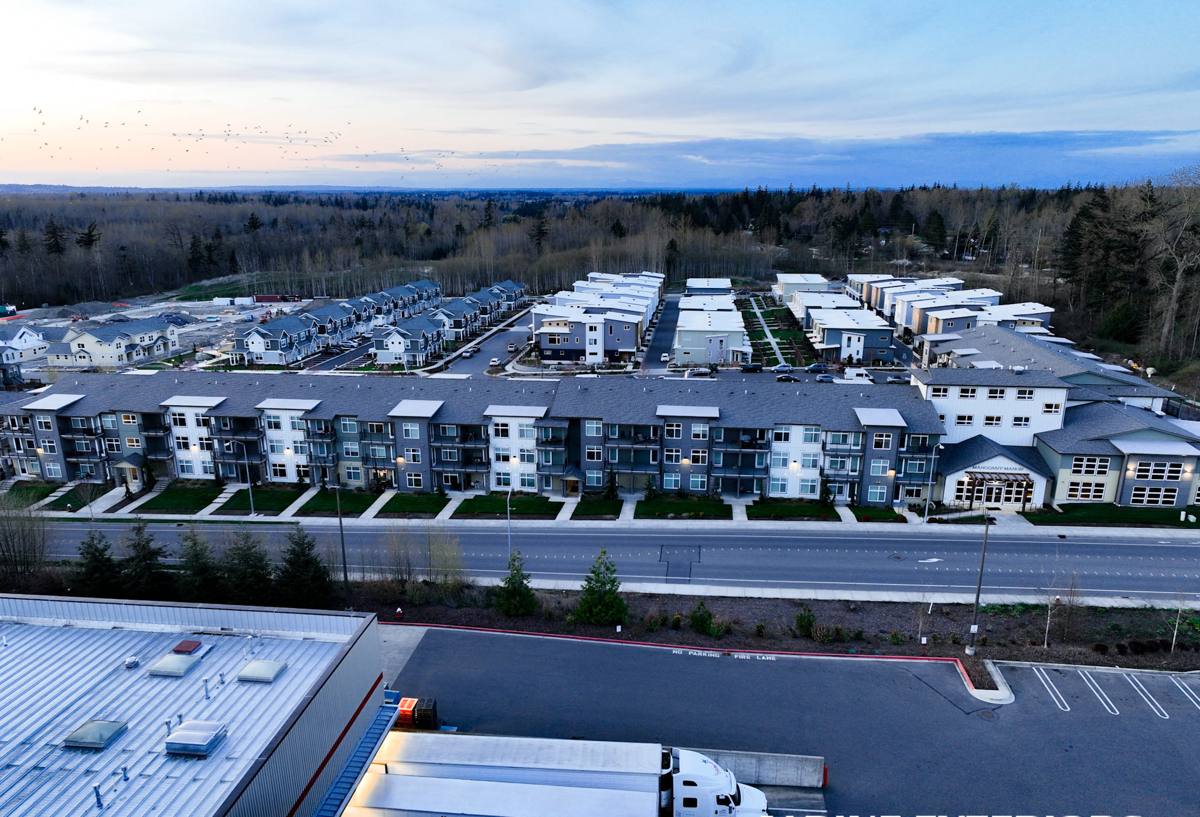
What Birch Bay's Climate Does to Exterior Siding
Salt Air
Homes near the water in Birch Bay are exposed to salt-laden air more than properties even a few miles inland. Salt is corrosive to exposed metal fasteners and trim, and it accelerates the breakdown of finishes that aren't formulated to resist it. Over years, this shows up as premature fading, chalking, or fastener corrosion on materials that weren't built with a coastal-adjacent environment in mind.
Driving Rain
Storms coming off the water don't just drop rain straight down — wind pushes it sideways into wall assemblies, and board and batten's vertical seams give water a lot of edges to test. If the panels, battens, flashing, and water-resistive barrier underneath aren't installed as a system, wind-driven rain will eventually find the gap.
Moss and Sustained Moisture
Whatcom County's long wet season means siding stays damp for extended stretches, especially on north-facing walls and anywhere shaded by trees or neighboring structures. Materials that absorb moisture or trap it behind the surface are prone to moss, mildew staining, and — in wood-based products — rot that starts from the inside of the material outward, often before it's visible from the yard.
What Board & Batten Siding Actually Is
Board and batten is a siding pattern, not a single product — wide vertical panels (the "boards") installed with narrower strips (the "battens") covering the seams between them. It's one of the oldest siding styles in American building, originally developed as a practical way to cover gaps between rough-sawn boards on barns and farmhouses. Today it's chosen almost entirely for its look: strong vertical lines, deep shadow lines at each batten, and a clean, modern-farmhouse or craftsman feel depending on trim and color choices.
We install this pattern using James Hardie's fiber cement panel systems, most commonly HardiePanel vertical siding with matching battens, or the Artisan Collection where a more refined, tighter-reveal look is wanted. Both are engineered specifically for board and batten applications rather than being a general siding board pressed into a vertical layout.
Why We Install This in James Hardie Fiber Cement Only
Board and batten can be built out of real wood, vinyl panel systems styled to look like board and batten, or engineered wood products like LP SmartSide. We don't install any of those, and it's worth being direct about why, since it's the whole reason this company exists in its current form.
- Real wood looks great on day one but is the most vulnerable to Birch Bay's moisture cycle — it swells, cups, and rots at end grain and fastener points, and repainting/recaulking on a strict schedule is the only thing that slows it down.
- Vinyl board and batten panels are low-maintenance but are a thin plastic product that can warp in heat, crack in cold, and fade — and the vertical seams on most vinyl systems are not a true watertight assembly the way a properly installed fiber cement system is.
- LP SmartSide and other engineered wood panels use wood strand cores with a resin coating. They perform reasonably when the coating and caulking stay intact, but any breach — a fastener hole, a cut edge, a failed sealant joint — exposes wood fiber that can swell and delaminate, and that failure mode is harder to catch early than it is with fiber cement.
James Hardie fiber cement is a mix of cement, sand, and cellulose fiber. It doesn't rot, it isn't combustible, and it doesn't feed moss and mildew the way organic materials do. The ColorPlus factory finish is baked on under controlled conditions rather than field-applied, which gives it far more consistent resistance to fading and moisture intrusion at the surface — a real advantage in an environment with year-round dampness and periodic salt exposure. It's not a maintenance-free product, but the maintenance it does require is inspection and caulk upkeep, not the repainting and rot-chasing that wood-based products demand.
What a Correct Board & Batten Installation Requires
The board and batten look depends entirely on the installation underneath it. A crew that treats it like standard lap siding will get the visual pattern right and the water management wrong. Correct installation includes:
- A drainage plane / weather-resistive barrier behind the panels, installed continuous and properly lapped
- Rainscreen furring or an approved gap detail so water that gets behind the panel can drain and the wall assembly can dry
- Flashing at every horizontal transition — window heads, roof lines, deck ledgers, and the base of the wall
- Correct fastener spacing and placement per James Hardie's published fastening schedule, not a generalized siding pattern
- Battens installed to cover panel seams with the specified overlap and fastened independently, not just decoratively over the joint
- Factory-cut and field-cut edges sealed per manufacturer spec, since a raw cut edge is the most common point of moisture entry on any fiber cement job
- Proper clearance at grade, decks, and patios so siding isn't sitting in standing water or snow load
Skipping any one of these doesn't usually cause a visible problem in year one. It shows up two, five, or ten years later as staining, soft spots, or paint failure at specific joints — by which point it's a repair job instead of a five-minute install-time correction.
Our Process on a Birch Bay Job
Every board and batten project starts with a walk of the existing exterior — checking the current siding, sheathing condition where accessible, window and door flashing, and any problem areas like north-facing walls or spots with heavy shade and moss buildup. From there:
- Assessment and estimate — we look at the whole wall assembly, not just the surface, and flag anything (rot, prior water damage, inadequate flashing) that needs to be addressed before new siding goes on.
- Product and reveal selection — panel width, batten spacing, and reveal depth are chosen to match the home's proportions and the look you want, using James Hardie's board and batten systems.
- Prep and moisture barrier work — removal of failing material, repair of any compromised sheathing, and installation of a continuous drainage plane.
- Installation to manufacturer spec — panels, flashing, and battens installed per James Hardie's fastening and clearance requirements, adjusted for wind exposure on bay-facing walls.
- Final detailing — caulking, touch-up painting at cut edges and fastener heads where required, and a walk-through before we call it done.
Because we work this area regularly, we already know which details matter most on bay-exposed elevations versus more sheltered inland-facing walls, and we plan fastening and flashing accordingly rather than applying one generic spec to every wall of the house.
Comparing Board & Batten Material Options
| Factor | James Hardie Fiber Cement | Real Wood | Vinyl Panel | LP SmartSide |
|---|---|---|---|---|
| Moisture/rot resistance | Does not rot; non-organic core | Prone to rot, cupping, swelling | Won't rot but seams can trap moisture | Resin-coated; vulnerable once coating is breached |
| Salt air performance | Factory finish resists fading and corrosion issues | Finish breaks down faster near salt air | Can chalk/fade; seams are a weak point | Coating can degrade faster in salt exposure |
| Fire resistance | Non-combustible | Combustible | Combustible, can melt/warp | Combustible |
| Maintenance | Periodic inspection and caulk upkeep | Regular repainting and caulking required | Low, but limited repair options if damaged | Coating and caulk maintenance similar to wood |
| Typical lifespan with proper install | Multiple decades | Highly variable; shorter in wet climates | Multiple decades but appearance degrades | Shorter than fiber cement in wet climates |
Questions to Ask Before Hiring for This Job
Board and batten is a style choice that a lot of crews will quote, but not all of them install it to a manufacturer's actual spec. Before hiring anyone for this work in Birch Bay, it's worth asking:
- Do they install a continuous drainage plane and rainscreen gap, or just panel over the existing wall?
- Will they show you the fastening schedule they're following and where it comes from?
- How do they flash window heads, roof-to-wall transitions, and the base of the wall specifically?
- What's their plan for cut-edge sealing on every field cut, not just factory edges?
- Are they James Hardie-familiar with actual board and batten product lines, not just general lap siding experience?
- What does their warranty cover, and is it backed by the manufacturer as well as the installer?
Longevity and Upkeep After Installation
A correctly installed James Hardie board and batten exterior in Birch Bay's climate needs relatively little from a homeowner year to year: a periodic visual check of caulking at joints and penetrations, keeping vegetation and irrigation spray off the wall where possible, and addressing any physical damage (impact from equipment, debris) promptly so a small breach doesn't become a larger moisture problem. It won't need repainting on the schedule wood siding does, and it won't develop the soft spots or delamination that engineered wood products can if a seal fails. That lower long-term burden is a big part of why we standardized on it — it's the material that holds up to what this specific stretch of coastline does to a house, without asking the homeowner to fight the climate every couple of years.
If you're weighing board and batten siding for a home in Birch Bay, we're happy to walk the exterior with you and give you a straightforward, no-pressure estimate — just fill out the form below.