 Bellingham Exterior
 Building Decks for Cordata's Particular Kind of Wet
Cordata is one of north Bellingham's newer, fastest-growing neighborhoods, and most of the homes here are still well within their first few decades. That means a lot of original decks are approaching the age where builders find out whether the framing and finish choices actually held up. In Whatcom County, "holding up" means something specific: the deck has to shrug off salt-tinged air moving in off Bellingham Bay, take on driving rain that comes sideways during fall and winter storms, and survive a moss season that, depending on the year, can run from October clear through April.
None of that is exotic weather. It's just steady, patient weather, and steady, patient weather is exactly what finds the shortcuts in a deck build. A ledger board with the wrong flashing detail won't fail the day it's built — it'll fail three winters later, quietly, behind the siding. That's the mindset we build with on every Cordata project: not "will this survive one storm" but "will this still be tight and dry in year twelve."
What Correct Deck Construction Actually Involves Here
Ledger Flashing and Water Management
The single most common point of hidden rot on a deck attached to a house is the ledger board — the framing member bolted to the structure. Done right, it gets a self-adhered waterproof membrane and metal flashing that directs water out and away from the house, not down behind the siding. This detail matters more here than in drier climates, because Whatcom County's rain doesn't just fall — it drives, and it has time to work into any gap during a long soggy season.
Joist Protection and Airflow
Every cut end and top edge of a joist is a place where water can sit and start wood rot, even on pressure-treated lumber. We tape joist tops before decking goes down and make sure the space underneath the deck has real airflow, not a sealed pocket where moisture just sits. Decks built low to the ground or boxed in with skirting need extra attention here, since that's exactly the kind of shaded, damp environment moss and mildew prefer.
Fasteners and Hardware
Salt-laden air corrodes standard fasteners faster than most homeowners expect, especially on decks with any bay exposure. We use coated or stainless connectors rated for the treated lumber and coastal conditions common around Bellingham, not the cheapest hardware that happens to fit.
Footings Sized for Local Frost and Soil
Footing depth isn't a guess — it's set by the frost line and soil conditions in your specific yard, and it's one of the things your permit and inspection will confirm before framing continues. Skipping or shortcutting this step is one of the few deck mistakes that's genuinely expensive to fix later, since it means digging the deck back up.
Choosing Decking Material That Can Handle Cordata's Weather
There's no single "best" decking material — there's a best material for your budget, your maintenance appetite, and how much shade and moisture your specific lot deals with. Here's how the common options actually compare once you factor in a long, damp moss season.
| Material | Upfront Cost | Moss/Moisture Resistance | Maintenance Needed |
|---|---|---|---|
| Cedar | Moderate | Good if sealed regularly | Annual cleaning and re-sealing |
| Pressure-Treated Fir/Pine | Lowest | Fair — needs consistent upkeep | Cleaning, staining every 1-2 years |
| Composite | Higher | Very good | Periodic washing, no staining |
| PVC/Capped Polymer | Highest | Excellent | Occasional washing only |
Cedar and pressure-treated wood cost less to install but ask more of the homeowner every year — moss and algae will find any wood surface that stays shaded and damp, and skipping a season of cleaning and sealing shortens the board's life noticeably. Composite and PVC decking cost more up front but resist moss growth and don't need staining, which matters if your lot has mature trees casting shade for much of the day, as many Cordata lots do. We'll walk through the honest tradeoffs for your specific yard rather than push one product line — the right call depends on how much sun your deck actually gets and how much yearly upkeep you want to sign up for.
Design Choices That Fit Cordata's Homes and Lots
A lot of Cordata's housing stock is newer construction on moderately sized lots, often with some slope and roof drainage systems already tied into the yard. That changes a few design decisions from what we'd recommend on an older, flatter in-town lot:
- Grading and drainage around footings need to account for where your downspouts and yard drainage already send water — a deck shouldn't sit in the path of that flow.
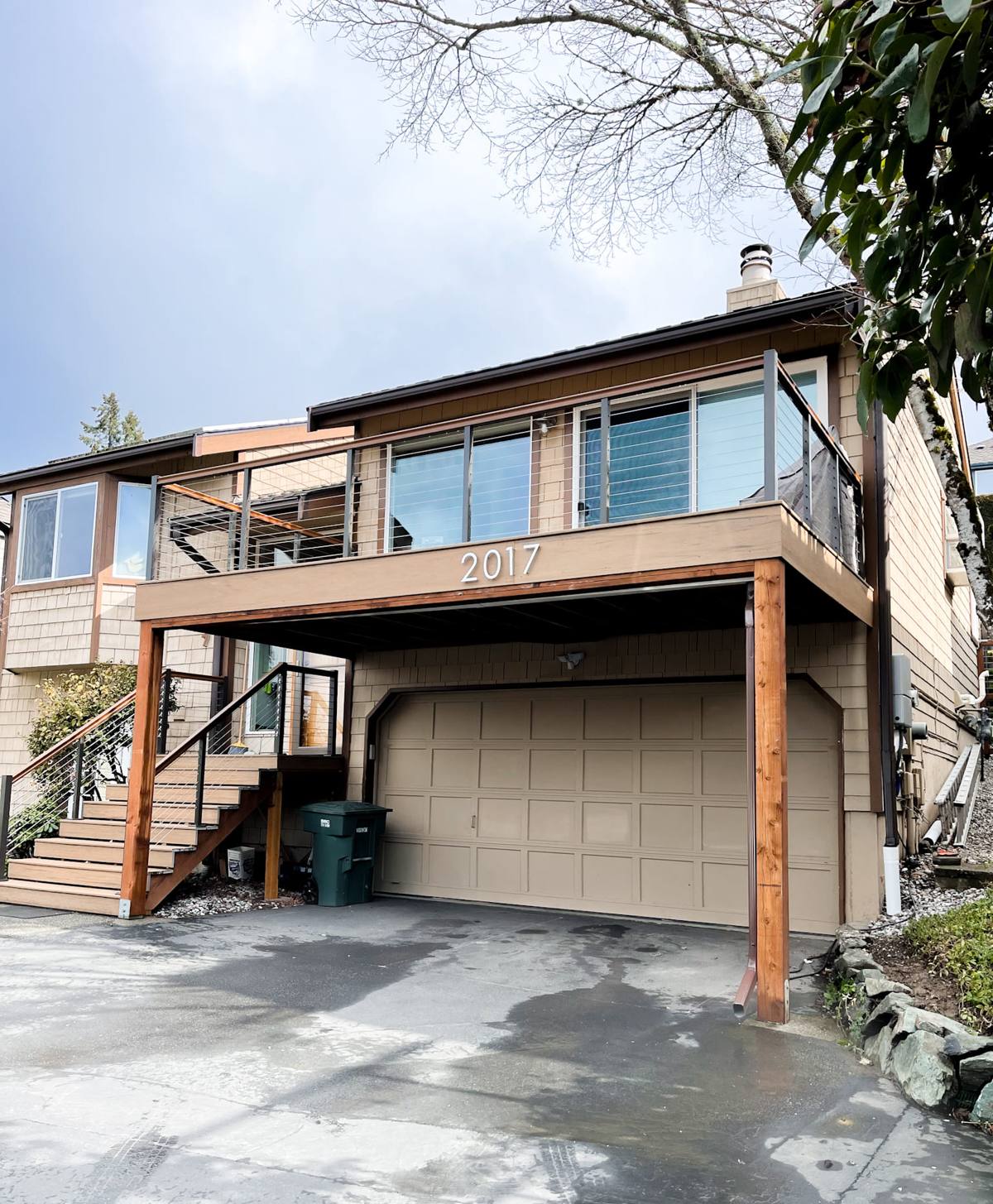
- Multi-level decks are common on sloped Cordata lots, which means extra attention to stair stringer support and handrail code compliance at each level change.
- Newer developments sometimes carry HOA or covenant guidelines on exterior appearance — we check those before finalizing railing style or decking color so there's no rework later.
- Homes with mature landscaping or fencing nearby often have shadier decks, which pushes the moss-resistance conversation higher up the priority list regardless of budget.
Permits and Code Requirements You Should Expect
Most custom deck builds in Bellingham and unincorporated Whatcom County require a building permit, and for good reason — the inspection points exist specifically to catch the mistakes that cause failures years down the road. Expect inspections at the footing stage (before concrete is poured), at framing, and at final completion. Guardrails on elevated decks need to meet minimum height requirements, and stair and baluster spacing follows code to keep small children from squeezing through. A contractor who suggests skipping the permit to save time or money is asking you to take on the liability yourself if something's later found to be out of code — we pull the permit and coordinate every inspection as a standard part of the job.
Our Process, Start to Finish
- Site visit and assessment — we look at sun exposure, existing drainage, soil conditions, and how the deck will tie into the house before recommending anything.
- Design and material selection — layout, railing style, and decking material get decided together, with real cost and maintenance tradeoffs laid out plainly.
- Permitting — we handle the paperwork and schedule the required inspections so you're not managing city or county contacts yourself.
- Construction — footings, framing, flashing, decking, and railing, built in that order with each stage checked before the next begins.
- Final walkthrough — we go over the finished deck with you, including what maintenance it'll need and roughly when.
Living With a Deck Through Moss Season
Even a well-built deck needs some seasonal attention in this climate — the goal of good construction is to make that upkeep manageable, not to eliminate it entirely. A few habits go a long way toward keeping moss and mildew from getting a foothold:
- Sweep leaves and debris off the deck surface regularly in fall — trapped organic matter is what gives moss spores somewhere to take hold.
- Rinse or lightly scrub the deck surface at least once before winter and once after, especially in shaded areas.
- Check that gaps between boards stay clear so water drains through instead of pooling.
- Re-seal wood decking on the schedule your material calls for — skipping a year is when moisture starts working into the grain.
- Walk the underside of the deck once a year to check for any dampness, staining, or soft spots around the ledger and posts.
Why Hiring a Crew That Already Works in Cordata Matters
A deck built to a generic national spec sheet isn't necessarily built for this specific neighborhood's combination of coastal air, rainfall pattern, and shade coverage. Working regularly in and around Cordata means we already know how footing depths tend to run in this part of Whatcom County, which flashing and fastener choices actually hold up against the local moisture pattern, and how the permitting process moves through the local building department. That local familiarity shows up less in any single dramatic decision and more in a dozen small ones — the kind that determine whether a deck is still tight, dry, and moss-free a decade from now instead of needing early repair.
If you're planning a new deck or replacing one that's showing its age, we're happy to take a look and talk through what makes sense for your yard, your budget, and how much upkeep you actually want to take on. Reach out for a free, no-pressure estimate using the form below.