 Bellingham Exterior
 Building Decks That Actually Hold Up in Cordata
Cordata sits in north Bellingham, close enough to Bellingham Bay and the Salish Sea that salt-laden air is a real factor in how outdoor structures age, and far enough into the Whatcom County rain belt that a deck here spends more months of the year wet than dry. A deck built to a generic national spec will survive its first few winters just fine. What separates a deck that still looks and performs well after ten or fifteen years from one that starts sagging, staining, and rotting is almost always decisions made before the first board was ever cut — drainage, fastener choice, framing details, and material selection matched to this specific climate.
We build decks in this neighborhood as a regular part of our work, not as an occasional side job. That matters because deck problems in Cordata don't show up the way they do in Spokane or Boise. They show up as moss between the boards in February, black streaking on the underside of rails by year three, and a ledger board connection that's been quietly absorbing moisture behind the siding for longer than anyone noticed. This page walks through what we've learned building and repairing decks in this specific part of Bellingham, and what a correctly built deck actually requires here.
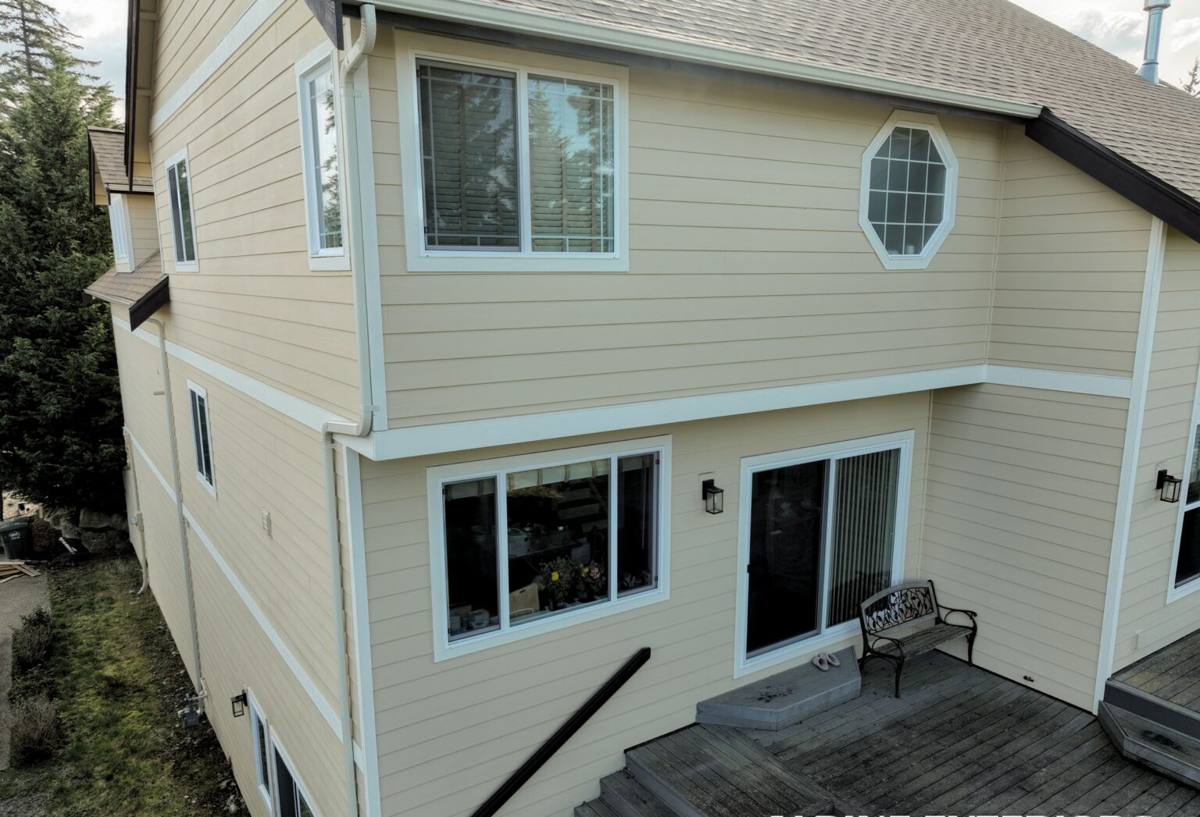
What Bellingham's Climate Does to a Deck
Rain That Doesn't Let Up
Whatcom County's marine climate means long stretches of light, steady rain rather than short heavy downpours. That's actually harder on a deck in some ways — water has more time to find gaps, wick into end grain, and sit in low spots instead of running off quickly. Any deck built here needs positive drainage designed in from the start, not added as an afterthought once someone notices standing water.
A Long Moss and Algae Season
Moss doesn't need much to get established — shade, moisture, and time, and Cordata's tree cover and overcast winters supply all three for months at a stretch. Moss growing on a deck surface isn't just cosmetic. It holds moisture against the wood or composite surface, turns walking surfaces slick, and on wood decking it accelerates rot at the exact spots where boards meet each other and the joists below.
Salt Air and Metal Fasteners
Bellingham's proximity to saltwater means the air carries more chloride than an inland town, and that air reaches Cordata even though it's not waterfront. Salt air corrodes standard fasteners and hardware faster than people expect, especially at joist hangers, ledger bolts, and any exposed screw heads. A deck that looks fine on the surface can have hardware quietly rusting underneath if the wrong fastener grade was used.
Choosing the Right Decking Material for This Neighborhood
There's no single "best" decking material — there's a best material for this climate and this budget. Here's how the common options actually perform under Cordata conditions:
| Material | Moss/Moisture Behavior | Maintenance | Typical Lifespan Here |
|---|---|---|---|
| Pressure-treated fir/hem-fir | Absorbs water at cut ends and fastener holes; needs sealing to resist moss and rot | Annual cleaning, re-sealing every 2-3 years | 15-20 years with upkeep |
| Cedar | Naturally rot-resistant but still needs cleaning to prevent moss buildup and graying | Periodic cleaning and oiling if color is to be maintained | 15-25 years |
| Composite decking | Doesn't absorb water like wood, but moss and algae can still grow on the surface film and need washing off | Occasional washing; no sealing or staining | 25-30+ years, warranty-backed |
| PVC decking | Fully moisture-resistant material; surface-level moss/algae still needs occasional cleaning | Lowest maintenance of the group | 25-30+ years, warranty-backed |
We don't push composite or PVC on every job — a well-built cedar or pressure-treated deck is a perfectly good choice for a lot of Cordata homeowners, especially on a budget-conscious project. What we do insist on is being honest about the maintenance commitment each material actually requires in this climate before you commit to it, not after.
What a Correctly Built Deck Involves
Most deck failures we get called out to inspect trace back to a handful of framing and detail mistakes, not the decking material itself. A correct build in this climate covers:
- Footings below frost depth and sized to soil conditions — Whatcom County's clay-heavy soils in some areas hold water longer than sandy soil, which affects footing performance over time.
- Proper ledger board flashing — the connection where a deck attaches to the house is the single most common source of hidden water damage; it needs correct flashing and a gap for water to escape, not just lag bolts and caulk.
- Joist spacing matched to the decking product — composite and PVC boards often require tighter joist spacing than solid wood; using wood-spec framing under composite boards leads to bounce and premature sagging.
- Stainless or coated fasteners rated for the decking material — mixing incompatible metals (like standard steel screws with some composite or coated lumber) causes accelerated corrosion, which is worse near saltwater air.
- A slight slope away from the house — usually around a quarter inch per foot, so water sheets off instead of pooling against siding or door thresholds.
- Gapping between boards sized for drainage and for the wet-swell behavior of whichever material is used.
Permits and Whatcom County Code
Most elevated decks and any deck attached to the house require a permit through the City of Bellingham or Whatcom County, depending on exactly where in Cordata the property sits and whether it's inside city limits. Permitted work means an inspector checks footings, framing, and ledger attachment before it's covered up — which is exactly the work that's impossible to verify once the decking is installed. We pull permits as a standard part of the job rather than treating it as optional paperwork.
How Our Process Works
- Site visit and assessment — we look at drainage patterns, sun/shade exposure, existing structure (for replacements), and how the deck will tie into the house.
- Design and material selection — sized to your use of the space, budget, and how much maintenance you actually want to take on long-term.
- Permit and engineering as needed — handled before any demolition or digging starts.
- Demolition of the old deck (if applicable) — including an honest look at what condition the ledger connection and any framing were actually in.
- Framing, footings, and flashing — the part of the job that determines whether the deck lasts 10 years or 30, done to code and inspected.
- Decking, railing, and stair installation — with fasteners and hardware matched to the material and to this climate.
- Final walkthrough — we go over basic care specific to whatever material was installed, so there are no surprises the first wet winter.
Railings and Hardware Built for Wet, Salty Air
Railing systems take a different kind of abuse than the deck surface — they're touched constantly, exposed on all sides, and often the first place corrosion or wood rot becomes visible. Cable and metal railing systems need marine-grade or coated stainless hardware near Bellingham Bay's air; standard zinc-plated hardware will show rust streaking within a few seasons. Wood railings need the same attention to end-grain sealing as the decking itself, since balusters and top rails have a lot of exposed end grain. We spec hardware by what the site actually needs rather than defaulting to whatever's cheapest, since railing hardware failures are also a safety issue, not just a cosmetic one.
What It Costs — and What Drives the Number
We're not going to put a fake number on a deck we haven't seen, but here's what actually moves the price on a Cordata deck project:
| Factor | Why It Matters Here |
|---|---|
| Height off grade | Taller decks need engineered footings, guardrails, and often stairs — more materials and inspection steps |
| Decking material | Composite and PVC cost more up front than wood but save on maintenance over the deck's life |
| Ledger vs. freestanding design | Freestanding decks avoid house-attachment moisture risk but need their own full footing system |
| Site access and slope | Some Cordata lots have grade changes that affect footing depth and equipment access |
| Railing style | Cable and glass systems cost more than standard wood or metal baluster railings |
| Demolition scope | Replacing an existing deck with rotted framing costs more than building on a clean slab or fresh footings |
Keeping a Cordata Deck in Good Shape Year to Year
Whatever material you choose, this climate rewards a little regular attention more than it punishes any single material choice. A basic seasonal routine goes a long way:
- Sweep debris and standing leaves off the surface regularly through fall, since trapped organic matter feeds moss growth
- Wash the deck surface at least once a year with a deck-safe cleaner to remove moss and algae before it gets a foothold
- Check and clear gaps between boards so water and debris don't build up
- Inspect railing posts and hardware annually for looseness or corrosion staining
- Re-seal or re-stain wood decking on the schedule the product actually needs, not just when it looks faded
- Check the ledger board area and any flashing for signs of moisture staining on the siding above it
Why a Local Crew Matters for This Job
Deck building isn't a job you want a crew learning on your property. A crew that already works Cordata and the rest of Bellingham regularly knows how the permitting process runs through the local jurisdiction, has already seen how footings perform in this soil, and isn't guessing at what fastener grade holds up under this air quality. We're not driving in from out of the area to give an estimate and disappear — we're the same crew you'd call back in five years if something needs a look, and that accountability shapes how we build the first time around.
If you're planning a new deck or need an honest look at replacing one that's showing its age, we're happy to come take a look. There's no pressure and no cost to get an estimate — just a straightforward assessment of what your Cordata property actually needs.