 Bellingham Exterior
 Edgemoor's Waterfront Climate Puts Real Stress on a Deck
Edgemoor sits close enough to Bellingham Bay that homes here deal with a combination most inland neighborhoods don't: salt-laden air off the water, long stretches of driving rain, and heavy tree cover that keeps things shaded and damp well into the season. Any one of those is manageable on its own. Together, they're exactly the conditions that shorten the life of a poorly built or poorly chosen deck.
Salt Air and Corrosion
Homes closer to the water pick up fine salt particulate in the air, especially during windier weather. It settles on decking surfaces and, more importantly, on fasteners, brackets, and any exposed metal hardware. Over years, that accelerates corrosion in anything that isn't rated for coastal exposure — loose screws, rust streaks bleeding into the decking, and eventually hardware that fails before the boards around it show any wear at all.
Moss, Shade, and a Long Wet Season
Whatcom County's rainy stretch runs long, and Edgemoor's mature tree canopy means many decks here don't get much direct sun to dry out between storms. That combination is close to ideal for moss and algae growth. On the wrong decking material, that's not just a cosmetic problem — it's a slip hazard and, on wood, a moisture trap that speeds up rot from the surface down.
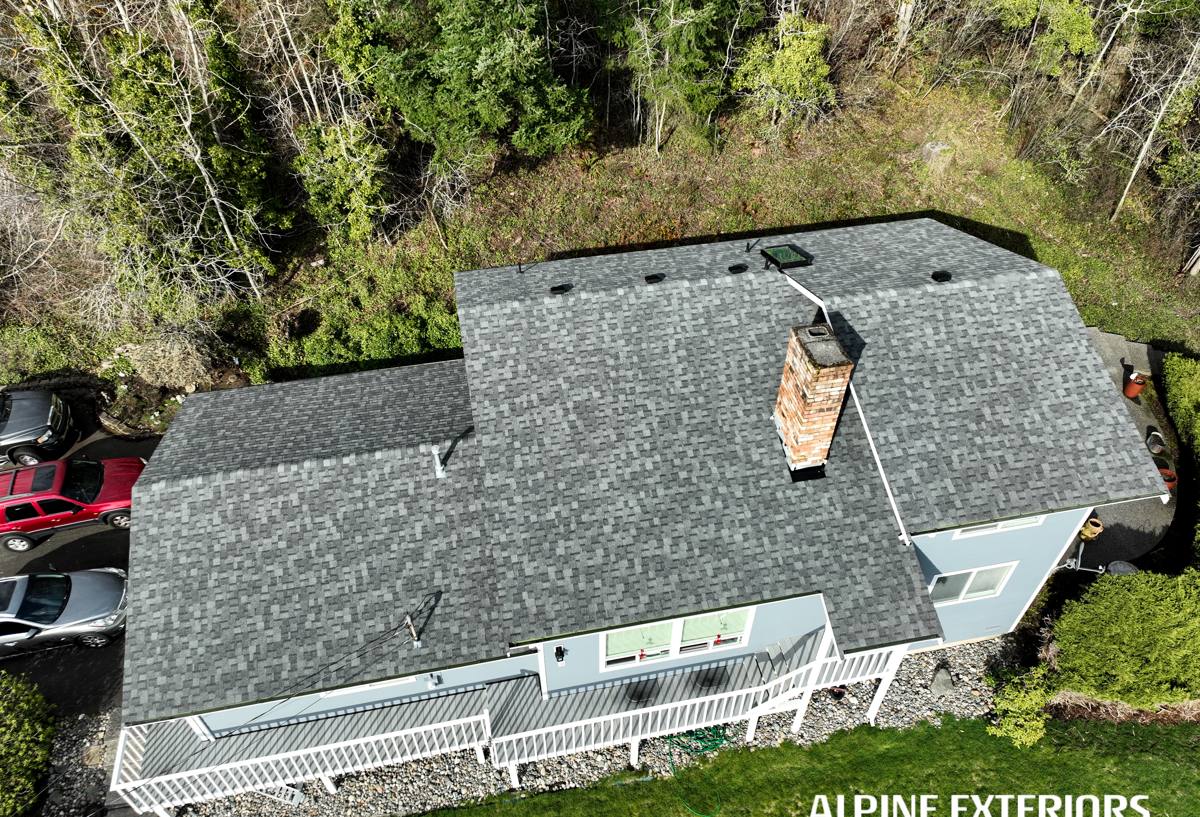
Why Composite Decking Makes Sense for This Neighborhood
Composite decking was developed specifically to handle the wear patterns that wood struggles with: moisture cycling, organic growth, and UV exposure without the need for annual sealing or staining. For an Edgemoor property, that's a direct answer to the three climate factors above — it doesn't absorb water the way wood does, it resists the kind of surface staining that moss and mildew leave behind, and modern capped boards hold their color and structure through repeated wet-dry cycles far better than untreated lumber.
Capped vs. Uncapped Composite
Not all composite decking is built the same. Capped composite has a polymer shell fully wrapping the board, which is what actually gives it moisture and stain resistance — uncapped or older-generation composite can still absorb water at the surface and is more prone to fading and mold growth over time. When we quote composite decking for a property in a shaded, damp spot like Edgemoor, we're specifically steering toward fully capped products for that reason. It's a maintenance and longevity decision, not a marketing one.
What a Correct Composite Deck Installation Actually Involves
Composite boards are only as good as what's underneath them. A lot of the decks we get called to repair or rebuild failed not because the decking itself gave out, but because the structure or fastening underneath it was wrong for the material or the site conditions.
Substructure and Ledger Attachment
Composite decking is heavier than wood per linear foot and behaves differently under load, so joist spacing has to match the manufacturer's span tables for that specific product — not a generic "close enough" spacing carried over from a wood deck. Where the deck ties into the house, the ledger board and flashing need to be sealed correctly against wind-driven rain, which is a real factor for homes exposed to weather coming off the bay.
Fasteners and Hardware
Given the salt exposure in this area, we use corrosion-resistant fasteners and hardware rated for coastal or high-moisture conditions, not standard interior-grade hardware. Hidden fastener systems, when compatible with the board profile, also reduce the number of exposed metal points on the surface where corrosion streaking or squeaking can start.
Drainage and Airflow Underneath
A composite deck built low to the ground or over poorly draining soil will trap moisture underneath even if the boards themselves handle water fine. Proper substructure ventilation and grading away from the foundation keep that moisture from becoming a mildew or pest problem in the crawlspace below — a common issue on shaded, low-lying lots.
Composite vs. Other Decking Materials for This Site Type
There's no universally "correct" decking material — it depends on the site, the budget, and how much upkeep you're willing to do. Here's how the common options stack up specifically for a shaded, salt-exposed lot like a typical Edgemoor property:
| Material | Moisture & Moss Resistance | Maintenance | Typical Lifespan |
|---|---|---|---|
| Pressure-treated wood | Absorbs water; needs sealing to resist moss staining | Annual cleaning, periodic staining/sealing | 10-15 years before major repair |
| Cedar | Naturally moisture-resistant but still absorbs water over time | Regular oiling or sealing to maintain appearance | 15-20 years with upkeep |
| Uncapped composite | Better than wood, but surface can still stain and mold | Occasional washing | 15-20 years |
| Fully capped composite | Strong resistance to moisture absorption and surface staining | Periodic rinsing, no sealing/staining needed | 25+ years, backed by manufacturer warranty |
For most Edgemoor homeowners weighing long-term cost against upkeep time, capped composite is where the math works out best — the upfront cost is higher than pressure-treated wood, but the maintenance burden over 15-20 years is dramatically lower.
Our Process, From Estimate to Finished Deck
We keep the process straightforward and don't push anything you don't need:
- On-site assessment — we look at sun exposure, drainage, existing structure (if replacing a deck), and how close the site is to prevailing wind and rain direction off the bay.
- Material recommendation — based on that assessment, we recommend a board profile and color that fits the site's shade and moisture exposure, not just what's popular.
- Honest, itemized quote — covering substructure work, hardware, decking material, and any drainage or flashing corrections needed.
- Permitting — we handle the local permit process where required, including any setback or structural review specific to the site.
- Build — substructure first, inspected before boards go down, then decking installed to manufacturer spec with coastal-rated fasteners.
- Final walkthrough — we check fastening, edge finishing, and drainage with you before calling the job done.
Keeping a Composite Deck Clean Through Bellingham's Wet Months
Composite decking needs far less upkeep than wood, but "low maintenance" doesn't mean "no maintenance" — especially with the moss pressure this area sees. A simple seasonal routine keeps a capped composite deck looking and performing the way it should:
- Rinse or sweep debris (leaves, needles, seed pods) off the deck regularly — trapped organic matter is what feeds moss and mildew growth.
- Wash the surface a few times a year with a soft-bristle brush and mild soap-and-water solution, focusing on shaded areas that stay damp longest.
- Keep gutters and downspouts near the deck clear so runoff isn't concentrating extra water onto or under the decking.
- Check railing posts and stair connections annually for any loosening, especially after a windy winter.
- Avoid pressure-washing at close range or high PSI directly into board seams — it can force water into fastener points over time.
Why Hiring a Crew That Already Works This Neighborhood Matters
Decking looks like a straightforward trade until you're the one dealing with a deck that was built to a generic spec instead of the actual site. Contractors who already work in Edgemoor and along Bellingham's waterfront know which slopes drain poorly, which lots hold shade long into the afternoon, and what wind-driven rain does to a ledger connection that wasn't flashed correctly. That local pattern recognition is the difference between a deck that needs attention again in five years and one that doesn't.
It also matters for the paperwork side — permitting requirements and any site-specific structural considerations in Whatcom County are easier to navigate correctly the first time when the crew has already been through that process on similar homes nearby, rather than learning it project by project.
What Affects the Cost of a Composite Deck Project
Every quote is specific to the site, but the main variables that move the number are consistent:
- Size and shape — square footage, plus how many angles, stairs, or level changes are involved.
- Substructure condition — whether existing framing can be reused or needs to be rebuilt to current span requirements.
- Board tier — entry-level capped composite versus premium lines with longer warranties and more color/texture options.
- Railing and fascia choices — composite, metal cable, or glass railing systems all price differently.
- Site access and drainage corrections — sites needing regrading or additional drainage work under the deck add labor.
We'll walk through each of these during the on-site visit so the quote reflects your actual property, not a generic per-square-foot number that doesn't hold up once work starts.
If you're weighing options for a deck in Edgemoor, we're happy to come take a look and give you a straightforward, no-pressure estimate — just fill out the form below and we'll get in touch.