 Bellingham Exterior
 Decks Built for Edgemoor's Terrain and Weather
Edgemoor sits close to Bellingham Bay, and that proximity shapes almost every decision that goes into a good deck here. Many lots are elevated or sloped, wooded with mature trees that keep decking shaded and damp for long stretches of the year, and exposed to salt-laden air coming off the water. A deck built to a generic spec sheet, without accounting for any of that, tends to show its age fast — soft spots in the framing, corroded fasteners, and a slick green film that never quite goes away. A deck built for this specific setting holds up differently, because every material and connection was chosen with Whatcom County's climate in mind from the start.
We build custom decks for homes throughout Bellingham, and Edgemoor jobs come with their own set of considerations: uneven or sloped grade, tree cover that limits drying time after rain, and salt air that accelerates corrosion on anything less than the right-grade hardware. None of that is a reason to avoid building a deck here — it's just a reason to build it correctly the first time.
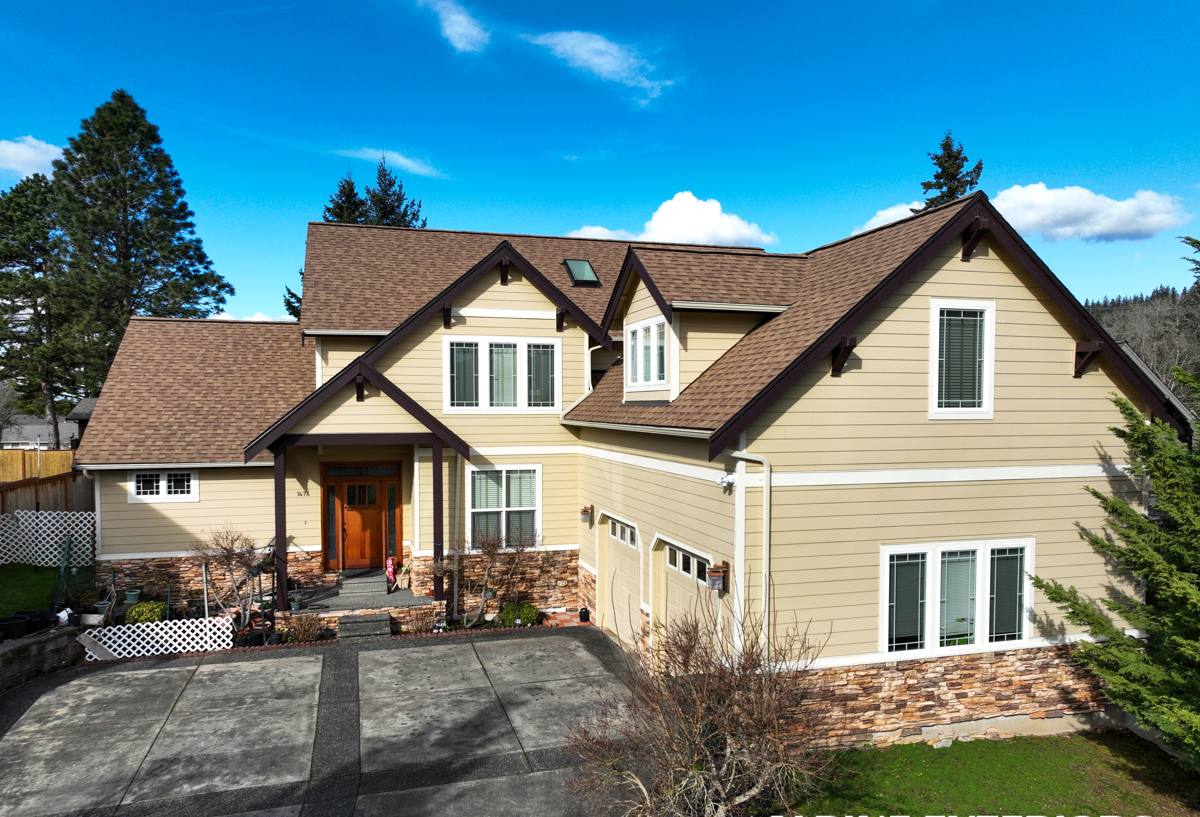
What Salt Air, Driving Rain, and Moss Actually Do to a Deck
It helps to understand the specific failure modes we're designing against, rather than treating "weatherproofing" as a vague catch-all.
Salt Air and Corrosion
Airborne salt from the bay speeds up oxidation on any exposed metal. Standard zinc-coated screws and joist hardware that would last for decades further inland can start rusting and staining decking within a few seasons this close to the water. Rust streaks around fastener heads aren't just cosmetic — they mean the fastener itself is losing holding strength.
Driving Rain and Wind-Driven Moisture
Bellingham's rain doesn't always fall straight down. Wind off the bay can drive moisture sideways into ledger connections, under railing posts, and into end grain that isn't sealed. Water that gets trapped rather than shed is what causes rot, not water that simply passes over a properly sloped surface.
Moss, Algae, and the Long Wet Season
Shaded, north-facing, or tree-covered sections of a deck in Edgemoor can stay damp for weeks at a time in fall, winter, and spring. That's exactly the environment moss and algae need to establish. Beyond being slippery, sustained moss growth holds moisture directly against the decking surface, which shortens the life of wood boards in particular.
Choosing the Right Decking Material
There's no single "best" decking material — the right choice depends on how much sun and shade your specific lot gets, how much maintenance you're willing to do, and your budget. Here's how the common options compare for an Edgemoor property:
| Material | How It Handles This Climate | Maintenance | Typical Lifespan |
|---|---|---|---|
| Pressure-treated lumber | Good rot resistance when properly sealed; needs re-staining to resist moss and moisture staining | Annual cleaning, re-seal every 1-2 years | 15-20 years |
| Western red cedar | Naturally resists decay and insects; still needs sealing to prevent graying and moisture uptake | Cleaning and re-sealing every 1-2 years | 15-25 years with upkeep |
| Composite decking | Doesn't absorb water the way wood does, resists rot; textured surfaces still need cleaning where moss can gain a foothold | Periodic washing, no staining or sealing | 25-30+ years |
| Tropical hardwoods (e.g. ipe) | Extremely dense and rot-resistant; installation and fastening require more precision | Occasional oiling to maintain color, otherwise low | 30+ years |
In shaded, moss-prone sections we often steer clients toward composite or a hardwood, simply because they don't feed moisture into the board the way softwood can once the sealer starts to wear thin. In sunnier, more open parts of a yard, a well-maintained cedar or pressure-treated deck performs perfectly well and costs less up front.
Framing, Footings, and What's Underneath Matters Most
The decking surface is what you see, but the framing underneath determines whether the deck is still solid in ten or twenty years. On sloped Edgemoor lots, footing depth and placement take more thought than on a flat backyard — we design footings to reach stable, undisturbed soil below the frost line, and we account for grade changes so the structure sits level and properly supported rather than being packed with shims.
Ventilation matters just as much as strength. A deck built low to the ground, or over a section of yard that stays shaded and wet most of the year, needs enough airflow under the joists to let the frame dry out between storms. We also grade and sometimes gravel the area beneath low decks so water doesn't pool against posts and footings — standing water under a deck is one of the most common causes of hidden rot we find when we're called out to repair someone else's build.
Fasteners, Flashing, and Hardware: The Details That Prevent Callbacks
This is where a lot of decks in coastal neighborhoods actually fail, and it's rarely the decking boards themselves.
- Ledger flashing: where the deck attaches to the house, proper metal flashing keeps water from working its way behind siding and into the wall framing — this is one of the highest-consequence details on the entire project.
- Corrosion-resistant hardware: given the salt air this close to the bay, we use stainless steel or heavy-duty coated fasteners and joist hardware rated for coastal exposure, not the minimum-grade hardware sold for inland use.
- Post bases: posts set directly in concrete or in contact with wet soil rot from the bottom up; elevated post bases keep end grain out of standing water.
- Sealed end cuts: any board cut on site has exposed end grain, which absorbs water many times faster than a factory-sealed edge — every field cut gets sealed before installation.
None of these details show up in a photo of a finished deck, which is exactly why they're the details that get skipped by crews trying to save time. They're also the details that determine whether you're looking at a repair bill in five years or twenty-five.
Railings, Stairs, and Code Requirements
Any deck built above a certain height off grade needs a code-compliant guardrail, and most jurisdictions in Washington require guardrails at 36 inches for residential decks with baluster spacing that prevents a 4-inch sphere from passing through — a detail aimed squarely at child safety. Stair stringers, handrail height, and landing dimensions all have code requirements too, and on a sloped Edgemoor lot, stairs are often part of the design rather than an afterthought.
Permitting in Bellingham and unincorporated Whatcom County depends on the deck's height, size, and attachment to the house — some smaller, low-to-grade decks may not require a permit, while elevated decks generally do. We handle the permit process as part of the job rather than leaving homeowners to sort it out with the building department on their own.
Our Process, From Estimate to Finished Deck
We start with an on-site visit, because a deck design that works for a flat, open lot often doesn't translate directly to a sloped or wooded Edgemoor property. During that visit we look at grade, sun and shade patterns, drainage, and how the deck will connect to the house, then talk through material options honestly — including the trade-offs, not just the upsides.
From there:
- We provide a written estimate with material and labor broken out, so you know what you're paying for.
- We handle permitting where required, including structural details the building department needs to see.
- We build the frame first — footings, posts, and joists — and this is the stage where corrosion-resistant hardware and proper flashing go in.
- Decking, railings, and stairs go on last, with every field-cut edge sealed before it's installed.
- We walk the finished deck with you and cover basic care so you know what to expect in year one versus year ten.
Maintenance Checklist for an Edgemoor Deck
Even a well-built deck needs some seasonal attention in this climate. A simple yearly routine goes a long way toward avoiding bigger repairs:
- Sweep debris and standing leaves off the deck surface regularly, especially under tree cover — trapped organic matter holds moisture and feeds moss.
- Rinse or gently wash decking at least once a year to remove the early stages of algae and moss before they take hold.
- Check railing posts and stair connections for looseness, which can signal moisture getting into a fastener or post base.
- Inspect for rust staining around screw heads or hardware — an early sign that fasteners are corroding and may need replacement.
- Re-seal wood decking on the schedule appropriate to the product; don't wait until the surface looks visibly gray and dry.
- Keep gutters and downspouts near the deck clear so roof runoff isn't dumping extra water directly onto or under the structure.
Why Hire a Crew That Already Works in Edgemoor
A deck built to a national average spec doesn't account for what a shaded, salt-exposed, sloped Whatcom County lot actually does to lumber and hardware over time. Building here regularly means we're not guessing at footing depth on a slope, we're not second-guessing which fastener grade holds up near the bay, and we're not surprised by how fast moss can take over a shaded section of decking that never fully dries out. That familiarity shows up in the parts of the deck you can't see once it's finished — the flashing, the hardware, the drainage — which is exactly where it matters most.
If you're planning a new deck or replacing one that's showing its age, we're happy to walk your property, talk through what makes sense for your specific lot, and put together a free, no-pressure estimate. There's a form below — reach out and we'll go from there.