 Bellingham Exterior
 Edgemoor's Siding Has a Harder Job Than Most Neighborhoods
Edgemoor sits close to the water, and that proximity shapes everything about how siding ages here. Salt-laden air drifts in off Bellingham Bay and settles on exterior surfaces day after day, accelerating corrosion on fasteners and trim and breaking down finishes that weren't built to handle it. Add the driving rain that comes with Pacific storm systems moving through Whatcom County, and you have wind-driven moisture that doesn't just fall straight down — it gets pushed sideways into laps, seams, and trim joints that a lot of installations aren't detailed to resist.
Then there's the moss and algae growth that comes with a long, damp shoulder season stretching from fall through spring. Shaded elevations, tree cover, and north-facing walls in Edgemoor stay wet longer than they would in a drier inland location, which means organic growth isn't a cosmetic afterthought — it's a recurring condition the siding has to tolerate for decades, not just survive one winter.
None of this is unique to any single house in the neighborhood. It's the baseline condition every exterior surface in Edgemoor deals with, and it's why we treat siding installation here as a climate-specific job, not a generic one.
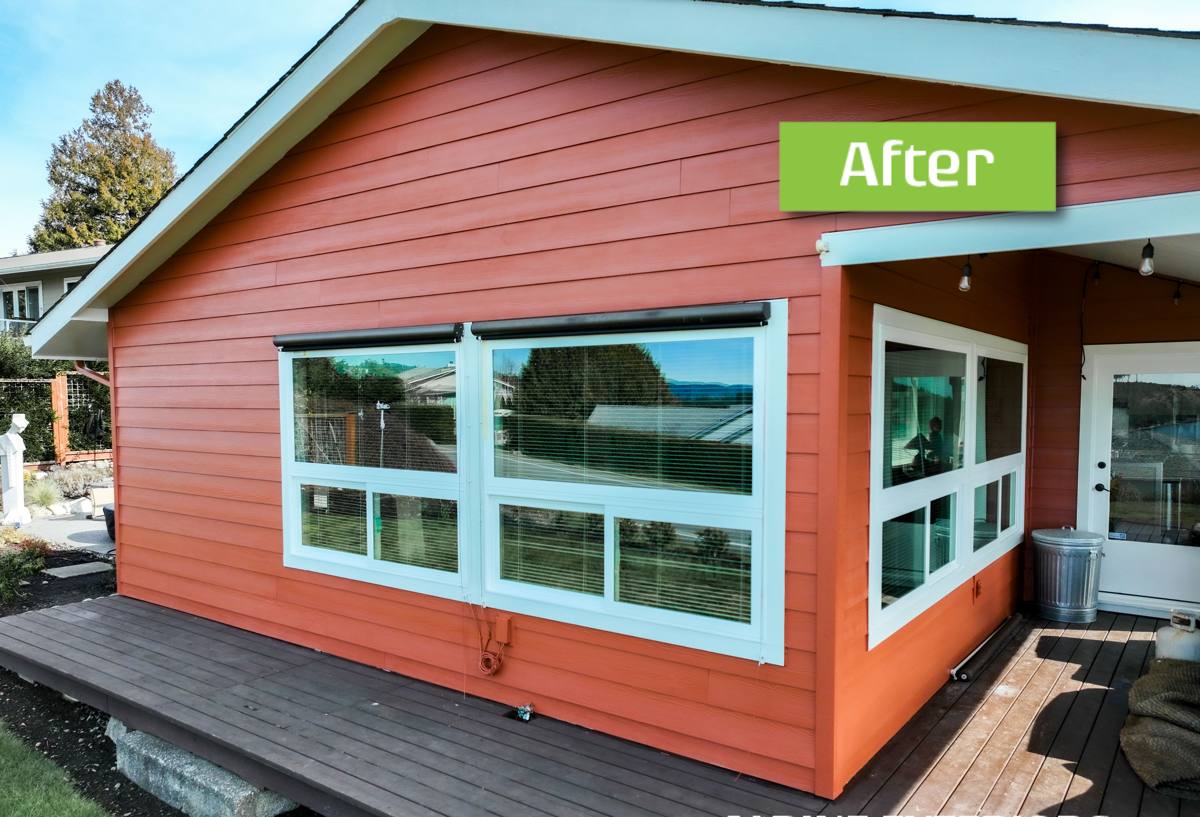
What "Correct" Siding Installation Actually Means
Siding failures in this part of Whatcom County are rarely about the material itself failing outright. They're almost always about installation details that let moisture in behind the surface, where it then has nowhere to go. Getting this right involves a handful of things that are easy to skip and expensive to fix later.
Weather-Resistive Barrier and Drainage Plane
Every wall needs a continuous weather-resistive barrier behind the siding, lapped correctly from bottom to top so water is shed outward rather than trapped. In a marine climate like Bellingham's, we also pay close attention to creating a drainage gap so any moisture that does get past the cladding has a clear path to drain and dry rather than sitting against the sheathing.
Fastening and Clearances
Fastener choice matters more here than in drier inland regions — corrosion-resistant fasteners are non-negotiable given the salt air. Clearances matter just as much: siding held too close to grade, decks, roofs, or hardscaping wicks up moisture and stays wet far longer than siding installed with the manufacturer's specified gaps.
Trim, Flashing, and Penetrations
Windows, doors, hose bibs, vents, and light fixtures are where most real-world leaks start. Correct flashing at every penetration, proper caulking only where it belongs (not as a substitute for flashing), and factory-mitered or properly sealed trim joints are what actually keep water out over a 30- or 40-year timeline, not just for the first inspection.
Why We Install Only James Hardie Fiber Cement
We made a deliberate decision to install one siding system: James Hardie fiber cement. We don't install vinyl, LP SmartSide, other fiber cement brands, or bare wood siding, and that's not a marketing position — it's a standard built around what actually holds up in conditions like Edgemoor's.
Fiber cement is non-combustible, which matters increasingly across Washington. It doesn't warp, rot, or feed insects the way untreated wood products can, and it holds paint and factory finishes far more consistently than wood over the long term. James Hardie's ColorPlus factory-applied finish is baked on under controlled conditions, giving it more consistent adhesion and UV resistance than field-applied paint, which matters in a climate that alternates between damp, shaded stretches and strong summer UV exposure.
Hardie also engineers specific product lines for different climate zones — their HZ5 formulation, for instance, is built around freeze-thaw and moisture cycling rather than just heat and dryness. That climate-specific engineering, paired with a strong transferable warranty when installed to spec, is why we standardized on it rather than offering a menu of lower-cost alternatives that ask homeowners to accept more maintenance or shorter service life in exchange for a lower sticker price.
What We Don't Install, and Why That's Relevant Here
Vinyl siding can crack in cold snaps and fade under UV exposure, and it doesn't offer the fire performance fiber cement does. LP SmartSide and similar engineered wood products perform reasonably well when installation and maintenance are followed precisely, but they're more sensitive to sustained moisture exposure than fiber cement — a real consideration on a shaded, salt-air lot. We'd rather stand behind one system we trust in this climate than install several and hope each one gets maintained perfectly.
Our Installation Process in Edgemoor
Assessment and Measurements
We start by walking the exterior with the homeowner, checking existing sheathing condition, identifying moisture-prone areas (shaded walls, low clearances, existing trim damage), and confirming which Hardie product and exposure width fits the home's style and elevation exposure to wind-driven rain.
Prep and Removal
Old siding comes off cleanly, and we inspect sheathing underneath for hidden rot or moisture damage before anything new goes up — this is often where a proper installation catches problems a surface-level repaint would have missed entirely.
Weather Barrier and Installation
We install the weather-resistive barrier and flashing details first, then install the Hardie boards or panels to manufacturer specification: correct fastener spacing and type, correct clearances from grade and roof lines, and factory-finished cuts sealed per Hardie's guidelines.
Trim, Caulking, and Final Inspection
Trim, corners, and penetrations get detailed last, followed by a final walk-through with the homeowner to confirm the finished product before we consider the job complete.
Choosing the Right Hardie Product for an Edgemoor Home
Hardie's product lines aren't interchangeable — the right choice depends on the home's style, elevation exposure, and how much of the wall sits in shade or faces prevailing weather.
| Product | Best Fit For | Climate Consideration |
|---|---|---|
| HardiePlank Lap Siding | Traditional and most common home styles | Wide range of exposures; good all-around performance against wind-driven rain |
| HardieShingle | Craftsman or cottage-style homes | More detail and shadow lines, but more joints to detail correctly on shaded, damp walls |
| HardiePanel (vertical) | Modern or mixed-material facades | Fewer horizontal laps for water to catch on, useful on heavily exposed elevations |
| HardieTrim | Corners, window and door surrounds | Paired with any of the above for consistent, factory-finished detailing |
We'll walk through these options with you on-site rather than defaulting to whatever's fastest to install — the goal is a system matched to how your specific lot handles sun, shade, and rain exposure.
Why a Crew That Already Works Edgemoor Matters
Edgemoor's lots often combine mature tree cover, sloped terrain, and proximity to the water — all of which affect scheduling, access, and installation detail decisions in ways a crew unfamiliar with the neighborhood can miss. Knowing which elevations typically stay wet longest, how local moss growth patterns behave season to season, and how to sequence work around Bellingham's wetter months all come from repeat experience in this specific area, not from a generic installation checklist.
There's also a practical scheduling advantage: a crew that already works in and around Edgemoor can plan installation windows around drier stretches and avoid the delays that come from bidding out a one-off job to a contractor working the area for the first time.
Maintaining Hardie Siding in a Salt-Air, High-Moss Climate
Fiber cement is low-maintenance compared to wood, but "low-maintenance" doesn't mean "no maintenance," especially in Edgemoor's conditions.
- Rinse siding periodically to remove salt residue and organic buildup, particularly on shaded or north-facing walls
- Keep gutters and downspouts clear so water isn't overflowing directly onto siding surfaces
- Trim back vegetation and tree cover that keeps specific wall sections damp longer than the rest of the house
- Inspect caulking at trim joints and penetrations annually and re-seal as needed
- Watch for moss or algae buildup at ground-level clearances and address it before it spreads upward
- Address any paint or ColorPlus finish damage promptly to prevent moisture intrusion at the exposed edge
Cost Factors Worth Understanding Before You Get Quotes
Siding installation pricing varies by home size, number of stories, trim complexity, and how much of the existing wall assembly needs repair before new siding goes on. Homes with hidden moisture damage under old siding, more complex rooflines, or extensive trim and window detailing will cost more than a straightforward single-story wall replacement. We provide a detailed, itemized estimate after an on-site assessment rather than a rough phone quote, since the condition of what's underneath your current siding often matters as much as the square footage.
If you're weighing a siding project for your Edgemoor home, we're happy to walk the exterior with you and put together a straightforward, no-pressure estimate — reach out through the form below to get started.