 Bellingham Exterior
 Why Ferndale Roofs Take a Different Kind of Beating
Ferndale sits close enough to the water and open farmland that roofs here deal with a combination most inland homes never see: salt-laden air off the Strait of Georgia and Bellingham Bay, wind-driven rain that comes in sideways during winter fronts, and a moss season that can run eight or nine months out of the year in Whatcom County's damp, mild climate. None of these on their own is dramatic. Together, over years, they wear down flashing, loosen fasteners, and soften the wood underneath shingles in ways that aren't always obvious from the ground.
When a storm actually hits — a windstorm off the water, a heavy atmospheric river event, or just a hard gust that catches a weakened section of roof — the damage often shows up fastest in spots that were already compromised by that slow background wear. That's why storm damage repair in Ferndale isn't quite the same job as storm damage repair somewhere drier and calmer. We're not just fixing what the wind broke; we're usually also finding and addressing what salt air and moss had already been quietly breaking down.
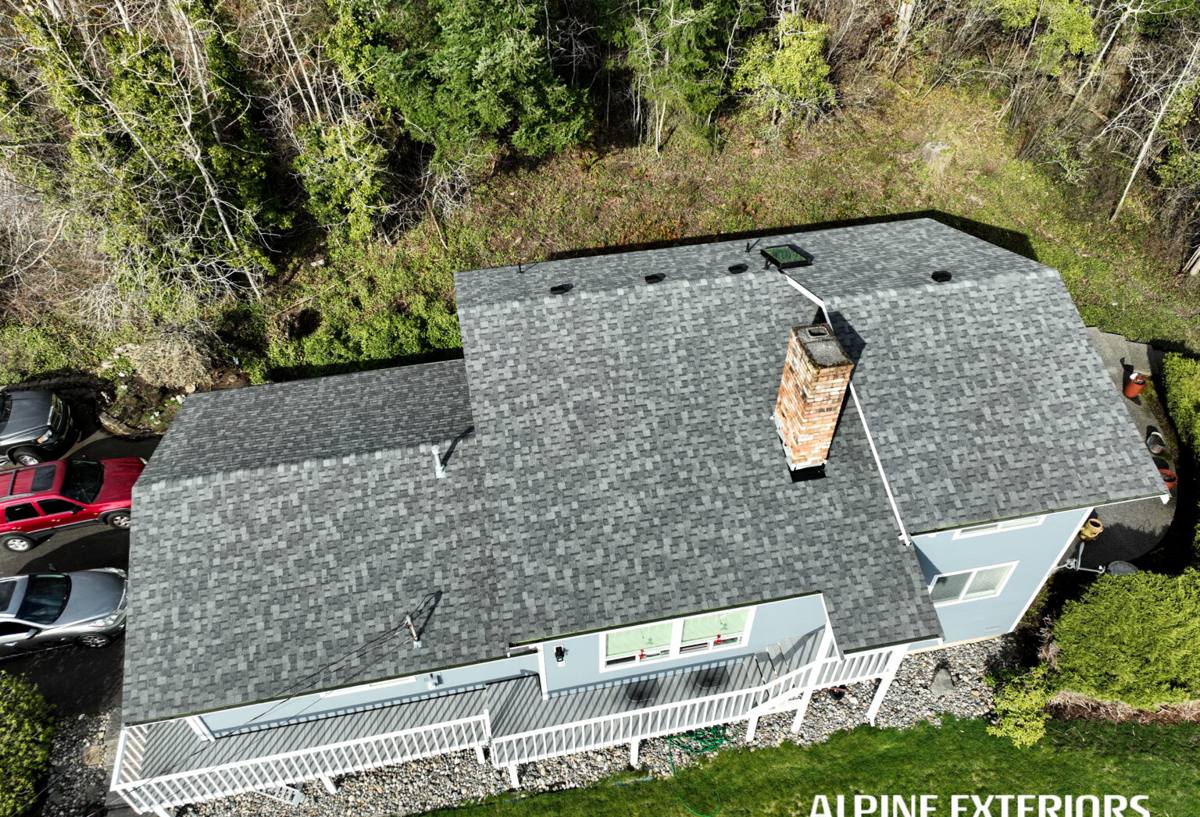
What Storm Damage Actually Looks Like on a Ferndale Roof
Homeowners often expect storm damage to be obvious — a missing shingle patch you can spot from the driveway. Sometimes it is. Just as often, it's subtler:
- Shingles that lifted in high wind and didn't fully seal back down, leaving a gap wind and rain can get under next time
- Ridge cap shingles cracked or blown loose along the roof's peak, a common failure point in gusty conditions
- Flashing pulled away or bent at chimneys, skylights, and roof-to-wall transitions
- Granule loss from wind-blown debris, which thins the shingle's protective layer even without a visible hole
- Fascia, soffit, or gutter damage from branches or debris carried by the storm
- Water staining in the attic or on ceilings that shows up days after the storm, once enough rain has worked its way through a small opening
That last point matters most. A lot of the storm damage we get called out for in Ferndale isn't reported the day of the storm — it's reported a week or two later, when a ceiling stain finally appears. By then water has usually already reached the decking. Catching damage early, before that happens, is the single biggest factor in keeping a repair small.
What a Correct Repair Actually Involves
Starting With an Honest Inspection
A storm damage repair should start on the roof, not on the ground. That means walking the roof surface, checking the decking for soft spots underfoot, examining flashing and penetrations up close, and looking at the attic side for water tracking, staining, or daylight coming through anywhere it shouldn't. A drive-by estimate from the street can miss the exact thing that's actually letting water in.
Matching the Repair to the Roof, Not Just the Damage
Storm repairs go wrong most often when a contractor patches the visible damage without accounting for the roof around it. If shingles have aged and lost flexibility, a patch repair using new shingles butted against old ones can look mismatched and, worse, may not seal properly against the surrounding material. Part of doing this correctly is being honest with the homeowner about whether a section, a slope, or the whole roof is the right scope for the repair.
Addressing the Cause, Not Just the Symptom
If wind lifted a shingle because the sealant strip had already failed from age, replacing just that shingle without checking neighboring ones invites a repeat call after the next storm. If moss buildup held moisture against the decking and contributed to a soft spot, clearing the moss and improving drainage or airflow in that area is part of the actual fix — not an upsell.
How Our Process Works
- Initial contact and scheduling — we get a description of the damage and timing, and prioritize active leaks.
- On-roof inspection — a full assessment of the damaged area and the surrounding roof, plus an attic check when accessible.
- Documentation — clear notes and photos of the damage and its likely cause, useful for your own records and for any insurance claim you choose to file.
- Temporary protection if needed — for active leaks or exposed decking, we get the area covered and weather-tight before the full repair is scheduled, especially if more rain is on the way.
- Written scope and estimate — what needs to be done, what materials are involved, and why, before any work starts.
- Repair work — matched materials, proper flashing detail, and fastening to current best practice, not just replacing what was there.
- Cleanup and final check — debris removed, gutters cleared of anything the storm or the repair left behind, and a final look to confirm the fix is sound.
We also point out anything else we noticed while we were up there — moss buildup starting on a north-facing slope, a flashing detail that's aging out, gutters that need attention — even if it's not part of the current repair. It's information, not a sales pitch, and what you do with it is up to you.
Insurance and Documentation: What's Worth Knowing
Many storm-related repairs are eligible for insurance coverage, but every policy is different, and we're not adjusters or insurance agents. What we can do is document what we find — photos, notes on the likely cause of the damage, and a clear scope of repair — so you have solid information to bring to your insurer if you decide to file a claim. We'd rather give you an honest, well-documented assessment than tell you what you want to hear about coverage we don't control.
What Affects the Cost of a Storm Damage Repair
Every roof and every storm is different, but a few factors consistently drive cost up or down. Knowing them ahead of time makes the estimate conversation more useful.
| Factor | Why It Matters |
|---|---|
| Extent of damage | A few lifted shingles is a very different job than a section with exposed or soaked decking |
| Roof material and age | Matching older shingles can be harder, and aging roofs may reveal more issues once opened up |
| Roof pitch and accessibility | Steep slopes, tall stories, or difficult access affect labor time and safety setup |
| Underlying moisture or moss damage | Rot or soft decking found during repair adds scope beyond the original storm damage |
| How quickly the leak is addressed | Repairs done soon after damage occurs are almost always smaller and cheaper than ones left through another rain cycle |
Because of that last row, we'd rather look at a roof after a storm even if the damage seems minor. A same-week inspection is a lot less expensive, in every sense, than a repair delayed until spring.
Repair or Replace? A Straight Answer
Not every storm-damaged roof needs full replacement, and we don't push replacement when a repair will genuinely hold up. As a general guide: isolated damage on a roof that's otherwise in reasonable shape is a repair job. Damage spread across multiple slopes, a roof already near the end of its expected lifespan, or repeated storm damage in the same areas year after year is usually a sign that repair is becoming a short-term fix for a longer-term problem. We'll tell you honestly which category your roof falls into and why, rather than defaulting to whichever answer is more profitable for us.
Signs You Should Have Your Roof Checked After a Storm
- Visible shingles in the yard, gutters, or against the house after wind
- Any new ceiling stain, even a small one, following heavy rain
- A section of roof that looks different in color or texture from the rest — often a sign of granule loss
- Gutters pulling away from the fascia or overflowing more than they used to
- Moss that's thickened noticeably since last season, especially on north-facing slopes
- Any daylight visible through the roof deck from inside the attic
If any of these sound familiar, it's worth having someone look before the next system moves through — which, in this part of Whatcom County, tends not to be a long wait.
Why It Matters That We Already Work in Ferndale
A crew that regularly works Ferndale roofs already knows which storm systems tend to hit this area hardest, how the salt air off the water accelerates wear on flashing and fasteners compared to more inland Bellingham neighborhoods, and how long moss season really runs here versus what a national roofing guide might assume. That local pattern recognition shortens the inspection, sharpens the diagnosis, and avoids the guesswork that comes with a crew unfamiliar with the area's specific climate combination. It also means faster response — we're not driving in from out of the county after a storm has already hit half the region.
A Little Prevention Goes a Long Way
Storm damage is rarely 100% preventable, but a roof that's been properly maintained holds up better and fails less catastrophically when a real storm does come through. Keeping moss under control, making sure gutters and downspouts are clear before the wet season, and having flashing and ridge caps checked every couple of years all reduce the number of weak points a storm can exploit. If it's been a while since your roof had a real look, that's a good place to start regardless of whether a storm has already caused damage.
If your Ferndale roof has taken a hit — or you're just not sure whether recent weather left something behind — we're happy to come take an honest look. Reach out for a free, no-pressure estimate using the form below.