 Bellingham Exterior
 Cordata's Siding Problem Isn't Cosmetic — It's Moisture Management
Cordata sits in the north end of Bellingham, close enough to the water and the marine weather systems that roll off the Salish Sea that homes here deal with a specific combination of stresses most siding products were never engineered for: salt-laden air, long stretches of driving rain, and a moss season that can run from fall through spring. None of these things damage siding overnight. They work slowly, on a timescale of years, which is exactly why so many homeowners don't notice a problem until paint is peeling, boards are swelling, or moss has taken hold along a north-facing wall and started holding moisture against the substrate.
Siding in Whatcom County isn't just a weather barrier — it's a system that has to shed water fast, resist the fine salt residue that settles out of coastal air, and keep organic growth from getting a foothold in shaded, damp corners. Get any part of that wrong and you're not looking at a paint touch-up, you're looking at rot, delamination, or a full re-side years before it should be necessary.
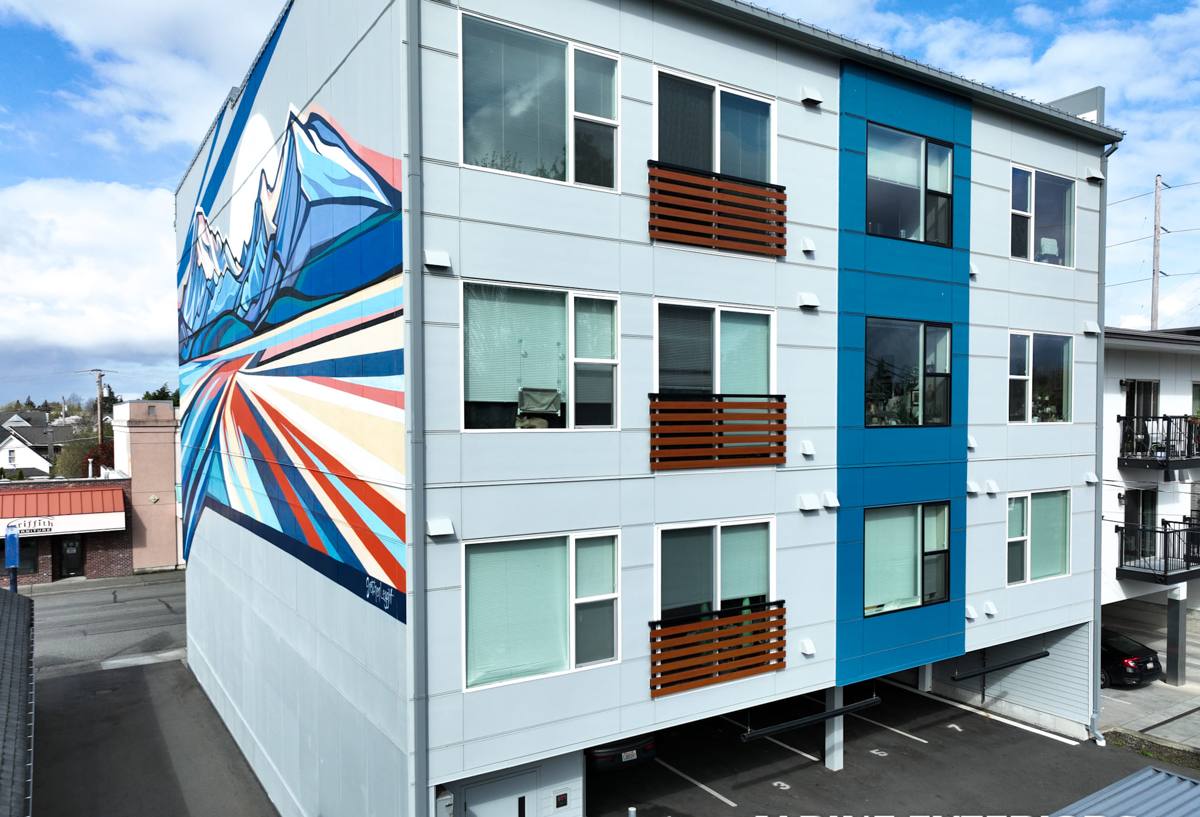
Why We Only Install James Hardie in This Neighborhood
We don't install vinyl, LP SmartSide, primed spruce, cedar, or other fiber cement brands. That's a deliberate standard, not a sales pitch, and it matters more in a neighborhood like Cordata than it would somewhere drier and more sheltered. James Hardie fiber cement is non-combustible, dimensionally stable, and manufactured with a factory-applied ColorPlus finish that's baked on rather than sprayed on site — which matters a great deal when the air itself carries salt and moisture that attacks weaker paint bonds over time.
Hardie also builds region-specific product engineering into its HZ5 line, which is what we spec for Bellingham and the rest of Whatcom County. It's formulated to resist moisture absorption and swelling in wetter, cooler climates rather than the higher-heat, dry-climate formulation used in other parts of the country. That distinction is easy to miss if you're just comparing "fiber cement" to "fiber cement" on paper — it's not the same product everywhere, and installing the wrong regional formulation is a mistake that shows up as premature wear.
What Homeowners Give Up With Other Products
Vinyl siding can work loose or warp under sustained wind-driven rain and temperature swings, and it doesn't hold paint if you ever want to change the color. Primed spruce and cedar look good going up, but both are organic materials — in a moss-prone, shaded, high-moisture environment like Cordata's tree-lined lots, that means ongoing sealing, staining, and vigilance against rot that most homeowners underestimate. LP SmartSide and other engineered wood products reduce some of that risk but still rely on cut-edge sealing and consistent field maintenance to keep water out over the long run. We'd rather put a product on your home that doesn't ask you to win that maintenance battle every single year.
What "Correct" Looks Like on a Cordata Job
A James Hardie installation is only as good as the water-management details behind the boards — the siding itself is the visible 10%. Here's what has to happen underneath for the system to perform the way it's designed to in this climate:
- Rainscreen gap: A drainage plane behind the siding lets any moisture that gets past the cladding drain and dry out instead of sitting against the wall assembly — critical during our extended wet seasons.
- Correct fasteners and fastener placement: Hardie specifies fastener type, size, and setback from panel edges precisely. Get this wrong and you create stress points where cracking starts.
- Proper flashing at every penetration: Windows, doors, hose bibs, light fixtures, and vents all need step flashing or self-adhered membrane detailing so driving rain can't track behind the cladding.
- Correct board overlaps and caulking: Horizontal laps, butt joints, and inside/outside corners need to be lapped and sealed to Hardie's spec, not "close enough."
- Clearance from grade, decks, and roof lines: Siding held too close to soil, concrete, or a roof surface wicks moisture continuously — a common defect we find when re-siding homes that failed early.
Any one of these done wrong won't necessarily show up in year one. It shows up in year five or eight, as a callback nobody wants — which is why we treat the hidden work with the same care as the finish coat.
Salt Air, Driving Rain, and Moss — Addressed Individually
Salt Air
Marine air carries fine salt particulate that settles on exterior surfaces and accelerates the breakdown of lower-quality paint films and fasteners. ColorPlus finishes are factory-cured for adhesion and fade resistance, and we pair them with fasteners rated to resist the corrosion that salt exposure accelerates.
Driving Rain
Storms coming off the water don't just fall straight down — wind pushes rain sideways into wall assemblies, which is why lap coverage, caulking, and flashing details matter more here than in a drier inland climate. A rainscreen gap is what gives that water somewhere to go instead of sitting against your sheathing.
Moss Season
Shaded, north-facing walls and areas under tree canopy stay damp longer, and moss will colonize any surface that holds moisture and organic debris. Fiber cement doesn't feed moss growth the way wood does, but proper clearances, gutter placement, and grading around the home still matter — moss control starts with keeping water moving, not with the siding material alone.
Cost Factors for a Cordata Siding Project
| Factor | Why It Matters Locally |
|---|---|
| Home size and wall complexity | More corners, dormers, and trim details mean more cuts, flashing, and labor time |
| Existing substrate condition | Rot or water damage found once old siding comes off adds repair scope before new siding goes up |
| Siding profile (lap, shingle, panel) | Different HZ5 profiles carry different material and install-labor costs |
| Trim and accessory package | Corner boards, window trim, and fascia treatments affect both cost and how well water sheds at penetrations |
| Access and site conditions | Mature landscaping, fencing, or tight lot lines common in established Cordata blocks can add setup time |
Our Process on a Cordata Home
- On-site assessment: We walk the exterior, check for existing moisture damage, evaluate grading and drainage, and identify problem areas like shaded walls or poor roof-to-wall transitions.
- Written scope and product selection: We spec the HZ5 line and profile that fits the home, with a clear breakdown of trim, flashing, and drainage plane work — no vague allowances.
- Tear-off and substrate check: Removing the old siding lets us confirm the sheathing underneath is sound before anything new goes on. Any rot gets repaired, not covered up.
- Rainscreen and flashing installation: This is the step that determines whether the job lasts — done before a single piece of visible siding goes up.
- Siding installation to Hardie spec: Correct fastening, spacing, and lap detail, installed by crews who install this product routinely, not occasionally.
- Final walkthrough: We review the finished work with you and confirm caulking, trim, and paint lines meet the standard before calling the job done.
Why a Crew That Already Works Cordata Matters
Building science for siding isn't universal — it's local. A crew that regularly works Cordata and the rest of Bellingham already knows which wall orientations take the worst of the driving rain, which lots hold moisture longer because of tree cover or drainage patterns, and how to sequence a project around the wetter months instead of fighting them. That local pattern recognition is the difference between a crew that installs Hardie correctly on paper and one that installs it correctly for this specific climate.
It also means faster turnaround on questions after the job is done. If something needs a look — a caulking line, a trim detail, a question about the warranty — you're dealing with a contractor who's a known quantity in your neighborhood, not a crew that worked one job in the area and moved on.
Signs Your Current Siding Is Already Behind
- Paint that's peeling, bubbling, or chalking, especially on north- or west-facing walls
- Soft spots, visible swelling, or delamination at board edges and seams
- Persistent moss or algae growth that returns shortly after cleaning
- Gaps opening up at corner boards, trim, or window casings
- Visible warping or cupping on individual boards or panels
- Rising energy bills that may point to a compromised weather barrier behind the siding
The Warranty Question
James Hardie backs its ColorPlus products with a strong, transferable limited warranty covering both the fiber cement substrate and the factory finish — a meaningful advantage if you sell the home before the siding's full lifespan is up. That warranty assumes installation to Hardie's specifications, which is another reason the installation details above aren't optional extras. A warranty is only as good as the install it's attached to, and we document our work so there's a clear record if you ever need it.
If you're weighing a siding replacement or repair in Cordata and want a straight answer about what your home actually needs, we're happy to take a look. Reach out below for a free, no-pressure estimate — no obligation, just an honest read on your siding's condition and what correct James Hardie installation would involve for your home.