 Bellingham Exterior
 Why Blaine's Coastline Is a Different Kind of Roofing Challenge
Blaine sits right where Whatcom County meets the water, and that location shapes everything about how a roof ages here. Salt-laden air off Semiahmoo Bay and Drayton Harbor works its way into fasteners, flashing, and metal edges year-round, not just during storms. Add in driving rain that comes sideways off the Strait during winter fronts, and a moss season that can run eight or nine months out of the year in the shade pockets under mature conifers, and you've got a roof environment that punishes shortcuts. A roof that would hold up fine in a drier inland town can show corrosion, streaking, or moss intrusion within a few years out here if it wasn't specified and installed with this specific climate in mind.
Metal roofing, done correctly, handles this combination better than almost any other roofing material available to homeowners. But "done correctly" is doing a lot of work in that sentence — the wrong panel type, the wrong fastener, or a rushed flashing detail can turn a 40-plus-year roofing system into a source of leaks and premature corrosion. This page covers what a metal roof needs to actually deliver on its promise for a home in Blaine.
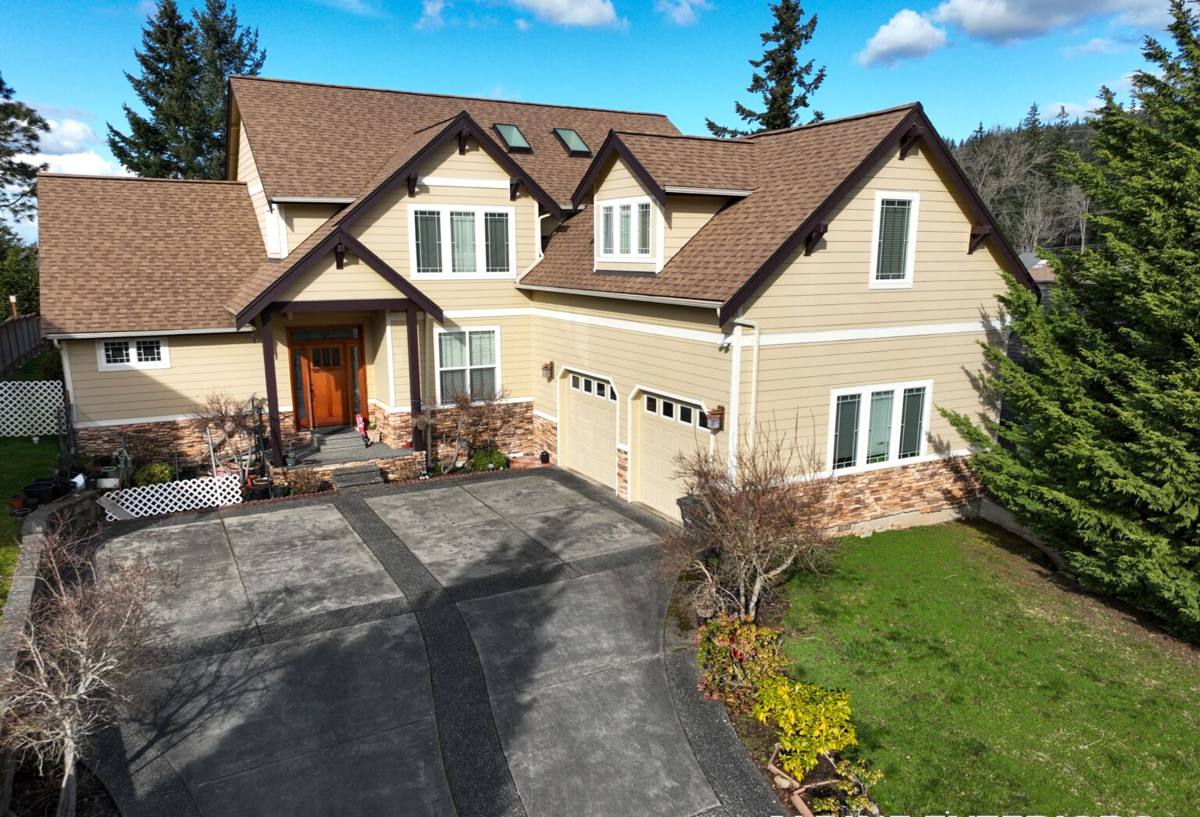
Why Metal Roofing Makes Sense for Blaine Homes
A handful of factors line up in metal's favor for this part of the county:
- Moss resistance: Metal's smooth, hard surface gives moss and algae far less to grab onto compared to the rough texture of asphalt shingles or the porous surface of wood or composite products, which matters a lot in a climate with this much shade and moisture.
- Steep water shedding: Standing seam profiles move water off the roof fast, which matters when rain is coming in sideways during a winter blow.
- Wind performance: Properly fastened metal panels resist uplift better than most shingle systems, relevant for homes exposed to open water or unbroken wind runs near the bay.
- Longevity against the freeze-thaw and wet-dry cycling that's typical of a maritime Pacific Northwest winter.
None of that means metal is maintenance-free or immune to this environment — it just means the material has more built-in advantages to work with, provided the coating, fastener hardware, and installation details are matched to a coastal setting.
Standing Seam vs. Exposed-Fastener Panels
Homeowners in Blaine usually end up choosing between two general metal roofing types:
| Feature | Standing Seam | Exposed-Fastener (Corrugated/Ribbed) |
|---|---|---|
| Fastener exposure | Concealed clips, no exposed penetrations | Screws penetrate the panel face |
| Salt-air durability | Higher — fewer failure points for corrosion to start | Lower — exposed fasteners are the first thing to corrode or back out |
| Typical cost | Higher material and labor cost | More budget-friendly upfront |
| Maintenance | Minimal once installed correctly | Fastener washers should be checked periodically and may need replacement over time |
| Best fit | Primary residences, ocean-facing exposure, long-term ownership | Outbuildings, shops, budget-conscious projects with less direct salt exposure |
For a primary home this close to the water, we lean toward standing seam whenever the budget allows, simply because it removes the weakest point in the system — the exposed fastener — from the equation. Exposed-fastener panels are still a legitimate, durable option, especially for garages, shops, and secondary structures, but they ask more of the homeowner in terms of periodic fastener inspection.
Panel Materials and Coatings That Hold Up in Salt Air
Not every metal roofing product is built for a coastal environment, and this is where a lot of the long-term performance difference actually comes from — more than from the panel profile itself.
| Material/Coating | Salt-Air Suitability | Trade-Offs |
|---|---|---|
| Galvalume steel (standard) | Good general-purpose option | Can show white rust or edge corrosion faster in direct salt exposure without a quality paint finish |
| PVDF (Kynar-type) painted finish | Strong choice for coastal exposure | Higher upfront cost, but the paint system resists chalking and fading far longer near salt air |
| Aluminum panels | Excellent — naturally corrosion-resistant, doesn't rely on a coating to resist rust | Softer material, typically a higher material cost than steel |
| Uncoated or bare galvanized | Poor fit for this location | We don't recommend it for homes with direct bay or open-water exposure — it corrodes faster here than the cost savings justify |
Our standard for anything within close range of the water is a quality PVDF-finished steel panel or an aluminum system, matched to fasteners rated for the same environment. Mismatched metals — for example, the wrong fastener alloy against a dissimilar panel material — can set up galvanic corrosion at every screw location, which is a slow-motion failure that's easy to avoid at installation and expensive to fix later.
What a Correct Metal Roof Installation Actually Involves
The panels get the attention, but most metal roof failures in this climate trace back to the details underneath and around them:
Underlayment and Deck Prep
A synthetic, high-temp-rated underlayment (not felt paper alone) belongs under any metal roof here, with self-adhered ice-and-water membrane at eaves, valleys, and any low-slope transitions where wind-driven rain is most likely to work its way backward under the panels.
Fastening and Clip Systems
Concealed-clip standing seam systems need clips spaced and fastened to the panel manufacturer's specification — not eyeballed. On exposed-fastener panels, screw spacing and torque matter more than most homeowners realize; overdriven screws crush the rubber washer seal and become leak points within a few seasons.
Flashing at Every Penetration and Transition
Chimneys, vents, skylights, sidewalls, and valleys are where the vast majority of roof leaks actually originate, metal or otherwise. Custom-formed flashing, properly lapped with the panel system and sealed with compatible sealants, is not optional detail work — it's the difference between a roof that sheds Blaine's sideways rain and one that doesn't.
Ventilation
Metal roofs need a ventilated assembly (ridge venting paired with intake at the eaves, or a vented batten system) to manage condensation on the underside of the panels, particularly given how much moisture this region holds in the air for months at a time.
Fastener and Trim Hardware
All exposed hardware should match the panel material's corrosion profile — stainless or coated fasteners rated for coastal exposure, not generic hardware-store screws.
Our Process, Start to Finish
- On-site assessment: We look at your existing roof structure, decking condition, ventilation, and exposure to prevailing wind and salt air before recommending a system.
- Material and profile selection: We walk through panel material, coating, and profile trade-offs based on your home's exposure and budget — not a one-size-fits-all recommendation.
- Written estimate: Clear scope, materials, and timeline before any work begins.
- Tear-off and deck inspection: Existing roofing is removed and the deck is checked for rot or soft spots before new underlayment goes down — a step that's easy to skip and costly to skip.
- Installation: Underlayment, flashing, panels, and ventilation installed to manufacturer specification.
- Final walkthrough: We review the finished roof with you and cover basic maintenance expectations before we leave.
Living With Moss Season: Maintenance That Actually Matters
Even a moss-resistant metal roof benefits from a bit of routine attention in a climate where moss and organic debris are a near-constant presence:
- Clear gutters and valleys of needles and debris a couple of times a year — clogged gutters back water up under eave flashing.
- Trim back overhanging branches to reduce shade, moisture retention, and debris load on the roof surface.
- Do a visual check of fastener heads and flashing seams after major wind events.
- Avoid pressure washing metal panels directly — it can strip coatings and drive water under seams; a soft brush and low-pressure rinse is safer for the finish.
- Watch for any streaking or discoloration near fasteners, which can be an early sign of a coating or hardware mismatch worth having checked.
What Drives the Cost of a Metal Roof in Blaine
| Factor | Why It Matters Here |
|---|---|
| Panel profile | Standing seam costs more than exposed-fastener panel systems, largely due to labor and concealed-clip material |
| Coating/material choice | PVDF finishes and aluminum cost more upfront but reduce long-term maintenance in salt air |
| Roof complexity | Valleys, dormers, and multiple roof planes add flashing labor |
| Deck condition | Rot or soft decking found during tear-off adds repair cost before panels go on |
| Access and pitch | Steep or hard-to-access roofs increase labor time and safety setup |
We don't quote metal roofing off a square-footage rule of thumb alone — exposure and existing roof condition swing the number too much for that to be honest. A site visit gives you a real figure.
Why It Matters That We Already Work in Blaine
A crew that only occasionally works this far north can miss things a Blaine-familiar crew catches automatically — how much more aggressively salt air attacks hardware this close to the water, which panel coatings actually hold up here versus in a drier part of the county, and how much moss pressure a shaded, north-facing roof plane is going to see compared to open, sun-exposed sections. Being based in Whatcom County means we're working in this climate on a regular basis, not applying assumptions from a different environment to your roof.
Questions Worth Asking Any Contractor Before You Hire
- What panel material and coating do you recommend for a property this close to the water, and why?
- Are you using concealed fasteners or exposed screws, and what's the reasoning for this roof specifically?
- What underlayment and ice-and-water protection do you install at eaves and valleys?
- How is the roof ventilated to manage condensation under the panels?
- What warranty applies to the panels versus the workmanship, and are they separate?
If a contractor can't give you a straight answer on panel material, fastener type, and flashing approach specific to a coastal property, that's worth noticing before you sign anything.
If you're weighing a metal roof for a home in Blaine, we're glad to take a look and walk you through what makes sense for your specific exposure and budget. Reach out for a free, no-pressure estimate using the form below.