 Bellingham Exterior
 Metal Roofing in Edgemoor: Built for What This Site Actually Faces
Edgemoor sits close to Bellingham Bay, on lots that tend to be wooded, shaded, and exposed to weather rolling in off the water. That combination — salt-laden air, heavy tree cover, and long stretches of wet weather — is a specific set of conditions, not a generic "Pacific Northwest roof" problem. A roofing system that holds up fine in a dry, open subdivision inland can struggle here, and a roof that's correct for Edgemoor isn't automatically the same spec you'd use across town.
This page is about one thing: metal roofing done right for homes in this part of Bellingham, Whatcom County. Not a general metal roofing pitch, and not a list of every product on the market — just what actually matters for a roof that has to deal with salt air, moss, and driving rain year after year.
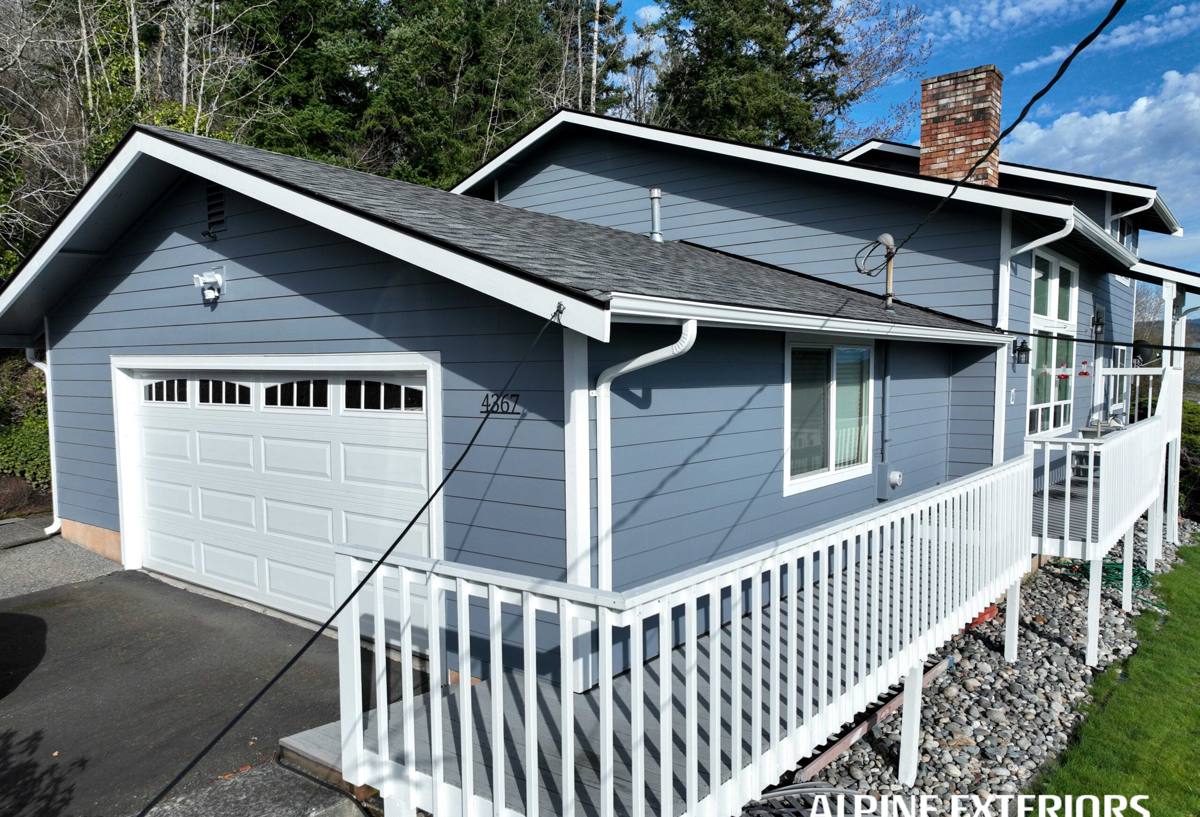
What Edgemoor's Climate Does to a Roof
Salt Air and Coastal Corrosion
Homes close to Bellingham Bay get low-level salt exposure carried in on the wind, even without being right on the water. Salt air accelerates corrosion on any exposed metal — fasteners, flashing edges, cut panel ends, and lower-grade coatings all show it first. It's not dramatic or fast, but it's steady, and it's the reason coating quality and fastener material matter more here than they would on a roof twenty miles inland.
Moss, Shade, and Moisture
Tree-covered lots keep roofs shaded and slow to dry out after rain, which is exactly the environment moss and algae need. On a shingle roof, moss roots into the granule surface and lifts shingle edges over time. On metal, moss can't root into the surface the same way, but it can still build up in valleys, around penetrations, and along low-slope sections if debris and organic buildup aren't managed — and a neglected metal roof in deep shade will still grow a moss mat on top of the panels.
Driving Rain and Wind-Driven Water
Storms coming off the bay don't always fall straight down. Wind-driven rain pushes water sideways and upward under laps, flashing, and fastener heads that would stay dry in a calmer climate. This is the detail that separates a roof that leaks in year three from one that doesn't leak in year twenty — it's almost never the panels themselves, it's the underlayment, laps, and flashing behind them.
Choosing the Right Metal Roofing System for This Neighborhood
Not every metal roofing product is a good fit for a shaded, salt-air, high-rainfall site. We narrow the options based on what will actually perform here, not just what's cheapest to install.
| System | How It Handles Salt Air & Rain | Best Fit For |
|---|---|---|
| Standing seam (concealed fastener) | No exposed fastener heads for salt to attack; interlocking seams shed wind-driven rain well | Most Edgemoor homes, especially shaded or bay-facing lots |
| Exposed-fastener panel | Lower upfront cost, but fastener heads and washers are the first point of corrosion and future leaks | Outbuildings, shops, or budget-driven projects with realistic maintenance expectations |
| Stone-coated steel | Heavier surface texture can trap moisture and organic debris in shaded, slow-drying conditions | Sunnier, more open lots away from heavy tree cover |
Coating and Gauge Matter as Much as Panel Style
Two roofs can use the same panel profile and perform very differently based on the paint system and steel gauge underneath. For coastal exposure we favor heavier-gauge steel or aluminum with a high-performance PVDF (Kynar-type) coating over lighter gauge material with a basic polyester finish — the upfront cost difference is modest compared to the difference in how the finish holds up to salt air over 20-plus years.
Fasteners and Flashing Details
On any exposed-fastener sections, penetrations, or trim, we use stainless steel fasteners and matched, factory-finished flashing rather than mixed metals. Mixing metal types on a roof — say, galvanized flashing against a different alloy panel — sets up galvanic corrosion that shows up as pitting and staining well before the roof is due for it, and it's made worse, not better, by salt air.
What a Correctly Installed Metal Roof Involves
Underlayment and Water Protection
A synthetic, high-temperature underlayment goes down first, with self-adhered membrane at eaves, valleys, and any low-slope transitions — the spots where wind-driven rain is most likely to find a way in. This layer is what actually keeps water out if wind ever drives moisture past the panel laps; the metal on top is the durability layer, not the only line of defense.
Ventilation
Shaded roofs stay cooler and wetter longer, which makes attic ventilation more important, not less. Proper intake and exhaust venting keeps moist air from condensing against the underside of the roof deck, which matters for both the structure and for keeping the attic space from developing its own moisture problems separate from the roof surface itself.
Flashing and Penetrations
Every pipe boot, chimney, skylight curb, and wall transition is a place water can get in if it's flashed generically instead of correctly for the specific detail. On a wooded lot, we also pay close attention to valleys and any area where branches or debris will collect, since that's where moss and standing moisture start.
Our Process for Edgemoor Homes
- On-site assessment — we look at slope, tree cover, existing roof condition, and how exposed the roof is to bay winds before recommending a system.
- Straightforward proposal — panel type, coating, gauge, and flashing details spelled out, not a vague line-item allowance.
- Tear-off and deck check — old roofing removed and the deck inspected for any rot or soft spots before anything new goes down, common under long-standing moss growth.
- Underlayment and flashing first — the water-management layer goes in correctly before a single panel is installed.
- Panel installation — laid and fastened to the manufacturer's coastal/high-wind specifications, not a generic install pattern.
- Final walkthrough — we cover ventilation, expected maintenance, and what to watch for given the site's specific shade and exposure.
Why a Crew That Already Works in Edgemoor Matters
Roofing a home on a wooded, sloped, bay-adjacent lot is different logistically from roofing a house on a flat, open lot. Tree cover limits staging and material drop areas, driveways and access can be tight, and crews need to work carefully around mature landscaping that homeowners have no interest in seeing damaged. A crew that's worked this neighborhood before knows to plan for that before the job starts, not figure it out mid-install.
There's also a permitting side to it. Roofing work in Bellingham and unincorporated Whatcom County goes through the applicable building department, and depending on the property, there can be additional considerations tied to slope, drainage, or shoreline proximity for bay-adjacent parcels. We handle the permit process as part of the job so homeowners aren't left tracking it down themselves.
Maintenance in a Moss-Prone, Salt-Air Environment
Metal roofing needs far less maintenance than shingles, but "far less" isn't "none" — especially under trees and near the bay. A short annual routine keeps a good installation performing the way it should for decades.
- Clear leaves, needles, and debris from valleys and around penetrations, especially after fall storms
- Rinse off any visible moss or algae buildup before it accumulates into a mat
- Check gutters and downspouts for clogs, since backed-up water sits against the roof edge longer than it should
- Look over exposed fasteners, flashing, and cut edges for early signs of rust or coating wear
- Trim back overhanging branches that keep sections of the roof shaded and slow to dry
None of this is difficult or time-consuming, but skipping it is how a well-installed roof still ends up with a moss problem five years in.
Cost Factors for Metal Roofing in Edgemoor
Every roof is priced from its own measurements and specifics, but the factors that move the price on a project like this are consistent. As a broad range, installed metal roofing in this region typically runs somewhere in the $9–$16 per square foot range, with the variables below driving where a given project lands.
| Factor | Why It Affects Cost |
|---|---|
| Panel style | Standing seam runs higher than exposed-fastener panel due to labor and material |
| Coating grade | PVDF/Kynar-type coatings cost more than basic polyester but last longer under salt exposure |
| Roof complexity | Valleys, dormers, and multiple planes add labor time and flashing detail |
| Access and staging | Wooded or steep-sloped lots can require more careful, slower material handling |
| Tear-off condition | Deck repair needs found during tear-off are priced separately from the base roof |
We'll walk through exactly where a given home lands on each of these before any work is scheduled — no vague allowances, no surprises added mid-project.
If you're weighing options for a roof in Edgemoor, we're glad to take a look and walk the property with you. The estimate is free, there's no pressure to commit on the spot, and you'll get a straight answer about what your roof actually needs — just fill out the form below to get started.