 Bellingham Exterior
 Getting New-Construction Windows Right the First Time in Happy Valley
New construction gives you one real chance to install windows correctly before the walls are closed up. Once siding, trim, and interior finishes go on, fixing a bad flashing job or a poorly integrated window means tearing into finished work. In Happy Valley, that first-chance-only nature matters more than in a lot of places, because this part of Bellingham deals with a steady mix of salt-tinged air off the bay, wind-driven rain that comes in sideways instead of straight down, and a long, damp moss season that keeps north-facing walls shaded and wet for months at a time. A window that's installed "close enough" in dry weather can still fail quietly for years before anyone notices water damage inside a wall cavity.
This page is specifically about new-construction window installation for homes being built in Happy Valley — not repairs, not swap-outs in an existing wall. New construction means the window goes into a rough opening with no existing siding, trim, or interior finish in the way, which is exactly why it needs to be done in the right sequence, with the right materials, the first time.
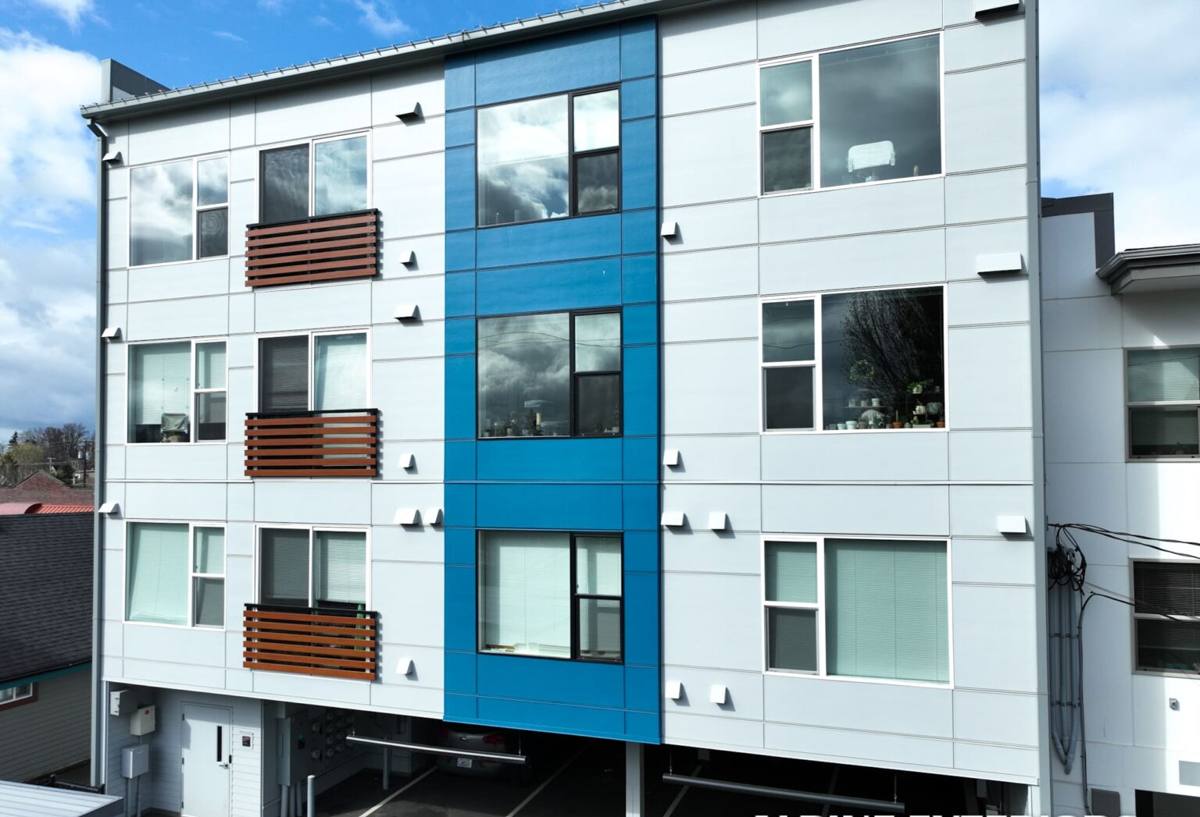
What Happy Valley's Climate Actually Asks of a Window Installation
Salt-influenced air
Homes closer to Bellingham Bay pick up a fine, persistent salt content in the air that accelerates corrosion on lower-grade hardware, fasteners, and unprotected metal flashing. It's not dramatic, but it's constant — the kind of exposure that shows up as pitting or streaking on cheap components years before it would in a drier inland climate.
Driving, wind-driven rain
Whatcom County storms rarely come straight down. Wind pushes rain sideways and upward under eaves and around corners, which means the water management around a window opening has to work in more directions than gravity alone. A flashing detail that only sheds water downward isn't enough here.
A long moss season
Shaded, north- and west-facing walls in Happy Valley stay damp for extended stretches during the wetter months. That prolonged moisture exposure is hard on caulk-only sealing methods and on any window trim material that isn't built to handle sustained dampness rather than the occasional rain event.
None of this means Happy Valley needs exotic products. It means ordinary new-construction detailing has to be followed correctly and completely — skipping steps is what causes problems in this climate, not any single dramatic weather event.
What a Correct New-Construction Window Install Involves
New-construction windows use a nailing flange (fin) that gets integrated into the wall's water-resistive barrier (WRB) system before siding goes on. Done right, the sequence looks like this:
- Rough opening is checked for square, level, and correct sizing before the window ever shows up on site.
- A sloped sill pan is formed at the bottom of the opening so any water that gets past the window has a built-in path to drain back outward, not into the wall framing.
- The window is set, shimmed plumb and square, and fastened through the nailing fin per the manufacturer's schedule — not just a few nails in the corners.
- Flashing tape is applied in a shingle-lap sequence — sides first, then the top — so water always drains over the layer below it, never behind it.
- The WRB (house wrap) is integrated over the top flashing and taped so the whole assembly sheds water as one continuous system, not a patchwork of separate parts.
- Interior gaps are insulated (not overpacked) and the interior side is air-sealed, which matters as much for condensation control as the exterior does for bulk water.
Every one of those steps is standard practice. The difference between a window that performs for decades in this climate and one that leaks in five years usually comes down to whether every step actually happened, in order, rather than any single product choice.
New-Construction Windows vs. Retrofit Windows
These two installation methods are often confused, but they're not interchangeable, and using the wrong one for the situation causes problems.
| Factor | New-Construction Install | Retrofit/Replacement Install |
|---|---|---|
| When it's used | Open wall framing, no existing siding or trim | Existing wall, siding and trim already in place |
| Water management | Full sill pan, flashing tape, and WRB integration | Relies more on sealant against the existing frame |
| Frame attachment | Nailing fin fastened directly to sheathing | Frame fastened through existing window frame or opening |
| Best fit for Happy Valley new builds | Yes — this is the correct method | Not applicable until the home is finished and later needs a window replaced |
If you're building new in Happy Valley, your windows should always go in using the new-construction method. Retrofit installation exists for a different problem — replacing a window in a home that's already finished — and using shortcuts meant for that scenario during a new build skips water-management steps you won't get a second chance at.
Choosing a Frame Material for a Happy Valley Build
Frame material affects how the window handles this area's damp, salt-touched, rain-heavy conditions over time — and what kind of upkeep you're signing up for.
| Frame Type | Moisture & Salt Performance | Maintenance | General Cost Position |
|---|---|---|---|
| Vinyl | Doesn't corrode or rot; performs well in damp, salt-tinged air | Low — occasional cleaning | Most affordable |
| Fiberglass | Very stable in temperature swings and moisture; holds paint well if colored | Low | Mid to upper |
| Wood-clad | Good if the cladding is fully intact; any breach exposes wood to rot in a wet climate | Higher — cladding seams and any exposed wood need monitoring | Highest |
We don't push wood-clad frames as a default choice for new builds in this area. It's not that the product is bad — it's that a fully wet climate with a long moss season is unforgiving of any small failure in the cladding seal, and the repair cost when that happens is high. Vinyl and fiberglass carry less of that long-term risk for the money, which is why we recommend them as the standard for most Happy Valley new construction unless there's a specific design reason to go another direction.
How Our Process Works on a New Build
We coordinate directly with the builder's framing schedule so windows arrive and get installed at the right point in the sequence — not too early, not so late that it holds up siding and interior trades.
- Plan review: we go over the window schedule and rough opening sizes against the actual framing before ordering, catching sizing conflicts on paper instead of on site.
- Ordering with realistic lead times: window manufacturing lead times can run several weeks, and we build that into the schedule up front so it doesn't become a surprise delay.
- Pre-install check: rough openings are verified for square and correct flashing surface before a single window is set.
- Installation in sequence: sill pans, flashing, window setting, and WRB integration happen in the correct shingle-lap order on every opening.
- Walkthrough: openings are checked after install and again before siding closes them up, since that's the last point where a flashing issue can be caught easily.
We work directly with the builder or general contractor as needed so window installation isn't a disconnected trade showing up out of sequence — it's coordinated with the rest of the build.
Why Local Happy Valley Experience Matters
A crew that already works in Happy Valley and the surrounding Bellingham area has a practical read on which walls take the worst wind-driven rain, which lots sit in enough shade to run a longer moss season, and which orientations pick up more salt-influenced air off the bay. That's not something you get from a general install manual — it's from having flashed openings on homes a few streets over and seen how they've held up.
There's also a permitting and inspection side to it. Working regularly in Whatcom County and the City of Bellingham's permitting process means fewer surprises at inspection — the crew already knows what local inspectors expect to see at a window rough-in, which keeps the build moving instead of waiting on a callback.
A Practical Checklist for Your New-Construction Windows
Whether you're the homeowner or working with your builder, these are worth confirming before windows go in on a Happy Valley build:
- Rough openings are checked for square and correct size against the actual window order, not just the plans.
- A sloped sill pan is part of the install at every opening, not just the ones facing the weather.
- Flashing tape is applied in the correct shingle-lap sequence — sides before top.
- Frame material matches the exposure of that wall (more weather-exposed walls deserve extra attention regardless of material).
- Interior air sealing is done, not just exterior weatherproofing — condensation control matters as much as rain control here.
- Someone reviews flashing and WRB integration before siding covers it up for good.
If you're planning a new build in Happy Valley and want windows installed the way this climate actually requires, we're happy to take a look at your plans and walk through the details. The form below gets you a free, no-pressure estimate — no obligation, just a straight answer on what your project needs.