 Bellingham Exterior
 Deck Building for Puget-Area Homes in Bellingham
Homes in and around the Puget area of Bellingham sit close enough to the water that the air itself works against outdoor wood and hardware every single day. Add Whatcom County's long wet season and the moss that grows on anything that stays damp for more than a few weeks, and a deck here has to be built differently than a deck in a dry inland climate. This page is about that one job, done right, for that one kind of environment.
A lot of deck problems we get called out to fix didn't start as bad workmanship — they started as a deck built to a generic standard instead of a Bellingham standard. Fasteners that were fine for a dry climate rusted through in five years. Decking that never got a chance to dry out between rains stayed damp long enough to rot from underneath. Framing that wasn't ventilated turned into a moss farm. None of that is exotic knowledge, but it only shows up if the crew building your deck has actually built decks in this climate before.
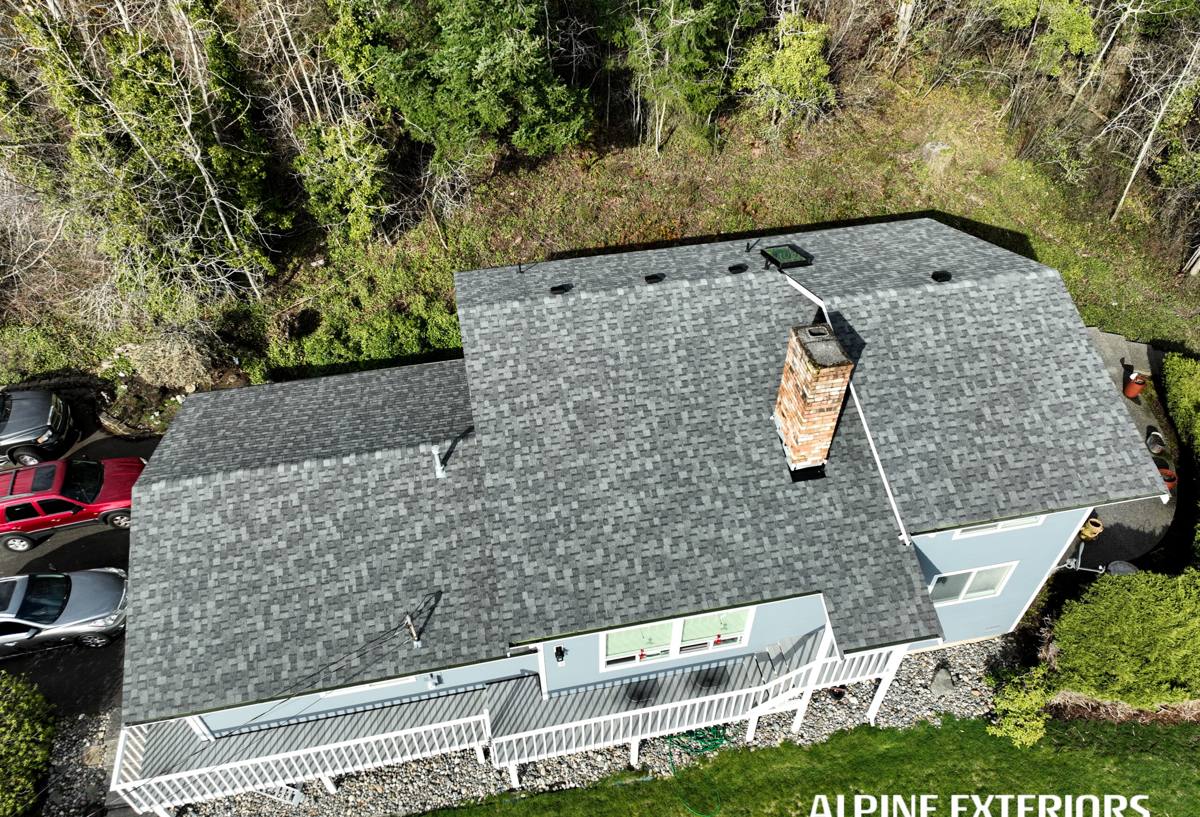
What Salt Air, Rain, and Moss Actually Do to a Deck
Salt Air and Corrosion
Proximity to Bellingham Bay and Puget Sound means airborne salt is a real factor, even a few blocks inland. Salt accelerates corrosion on anything metal — nails, screws, joist hangers, post bases, railing hardware. Standard electro-galvanized fasteners can start showing rust streaks in a couple of years in this kind of exposure, and once a fastener corrodes, the wood around it weakens too. This is the single most common shortcut we see in decks that fail early.
Driving Rain and Trapped Moisture
Bellingham doesn't just get a lot of rain — it gets rain that comes in sideways off the water often enough that vertical surfaces and ledger connections take a real beating. Water finds its way behind rim joists, into end-grain cuts, and under poorly flashed ledger boards. Once moisture gets trapped against wood that can't dry out, rot sets in from the inside, which is why a deck can look fine on top while the structure underneath is failing.
The Long Moss Season
Shade, moisture, and mild temperatures are exactly what moss wants, and Whatcom County offers all three for most of the year. Moss on a deck surface isn't just cosmetic — it holds moisture against the boards, breaks down surface fibers over time, and turns into a genuine slip hazard on stairs and low-traffic areas. Decks with poor airflow underneath or heavy shade cover tend to develop moss fastest, which is a design and layout issue as much as a maintenance one.
Choosing Decking Material for This Climate
There's no single "best" decking material — there's a best fit for your budget, your maintenance appetite, and how exposed your specific yard is to shade and moisture. Here's how the common options actually perform in a Puget-area setting.
| Material | Moisture Behavior | Maintenance | Typical Lifespan Here |
|---|---|---|---|
| Pressure-treated wood | Resists rot when properly sealed; end cuts and fastener points remain vulnerable | Annual cleaning and resealing recommended | 10–15 years with upkeep |
| Cedar | Naturally moisture- and insect-resistant, but softer and can gray or split without care | Periodic cleaning, oiling, or staining | 15–20 years with upkeep |
| Composite decking | Doesn't absorb moisture like wood; resists rot but can trap surface moss if not cleaned | Occasional washing; no sealing or staining | 20–25+ years, per manufacturer warranty |
| PVC decking | Fully moisture-resistant surface material | Lowest maintenance; periodic washing | 25+ years, per manufacturer warranty |
Composite and PVC decking cost more up front, and we're honest with clients that they're not a fix-all — a poorly ventilated substructure will still trap moisture and grow moss underneath a composite deck just as it would under wood. The material matters less than the structure underneath it, which is where most long-term problems actually start.
What a Correctly Built Deck Involves in Bellingham
A deck built for this climate isn't just a different material choice — it's a different set of construction details, most of which are invisible once the deck is finished.
- Footings sized for our soil and frost depth, set below the local frost line and inspected before backfill
- Ledger board flashing that actually sheds water away from the house rim joist, not just a bead of caulk
- Stainless steel or heavy hot-dip galvanized fasteners and hardware rated for coastal exposure, not standard interior-grade fasteners
- Joist tape or a moisture barrier on top of framing lumber to keep water from wicking into end grain and fastener holes
- Proper board spacing and airflow gaps so decking can dry between rain events instead of staying saturated
- Adequate under-deck clearance and ventilation so the substructure doesn't become a permanently damp, shaded space where moss and rot take hold
- Drainage grading beneath the deck so water doesn't pool against posts and footings
Skip any one of these and the deck can still look good on installation day. The failures show up two, five, or ten years later — which is exactly why they get skipped by crews that aren't sticking around for the callback.
Our Deck Building Process
Site Visit and Design
We start by walking the actual site — sun exposure, drainage slope, proximity to trees or fences that hold shade and moisture, and how the deck will tie into the house. In a Puget-area yard, shade patterns and water flow across the lot often matter as much as square footage when it comes to how long a deck will last.
Permitting
Most new decks and many deck replacements in Bellingham and Whatcom County require a permit, particularly for structures attached to the house or built above a certain height. We handle the permitting conversation as part of the process rather than leaving it for the homeowner to sort out after the fact.
Construction
Footings, framing, ledger work, decking, and railing — built in that order, with the structural work inspected before anything gets covered up by finish decking. This is also where the climate-specific details above get built in, not added as an afterthought.
Final Walkthrough
We walk the finished deck with the homeowner, cover basic care for whatever material was installed, and point out anything worth watching over the first year — new construction settles and dries out, and it's normal for minor adjustments to be needed early on.
Maintenance That Actually Matters Here
A well-built deck still needs some upkeep in this climate — the goal is to keep water and moss from getting a foothold before they cause damage.
- Sweep debris and standing leaves off the deck surface regularly, especially in fall
- Rinse or brush off moss and algae before it spreads, rather than after it's established
- Check and clear gaps between boards so water and debris don't build up
- Inspect visible fasteners and hardware once a year for rust staining or looseness
- Reseal or restain wood decking on the manufacturer or product-recommended schedule — don't wait until it's visibly gray or cracking
- Keep gutters and downspouts near the deck clear so roof runoff isn't dumping extra water onto the structure
- Trim back overhanging branches or shrubs that keep sections of the deck shaded and damp
Why a Crew That Already Works in Puget Matters
Building decks in this specific stretch of Bellingham isn't fundamentally different from building anywhere else in Whatcom County, but the details that matter — how close a lot sits to salt air exposure, how shaded a yard stays through the wet months, what the local permitting process expects — are things a crew learns by working here repeatedly, not by reading a spec sheet once. A contractor who already knows the area's drainage patterns and moisture behavior isn't guessing at fastener grade or ventilation gaps; they're applying what they've already seen hold up and what they've already seen fail.
That local familiarity also shows up in smaller, practical ways — knowing which yards tend to have poor drainage before digging a single footing, or recognizing early signs of moss buildup that a less experienced crew might not flag until it's already a slip hazard.
Signs an Existing Deck Needs Attention
If you already have a deck in the Puget area, a few warning signs are worth acting on before they become bigger repairs:
| Sign | What It Usually Means |
|---|---|
| Soft or spongy decking | Trapped moisture and early-stage rot in the board or framing below |
| Rust streaks around fasteners | Hardware not rated for coastal exposure, corroding and weakening the connection |
| Persistent green or black film | Moss or algae buildup, often pointing to poor airflow or drainage in that area |
| Gaps or separation at the ledger board | Possible flashing failure allowing water behind the house rim joist |
| Wobbly railings or posts | Loosened or corroded connection hardware, or a footing issue below |
Catching these early is almost always cheaper than waiting — a moisture problem caught in one board is a repair, the same problem ignored for a few more wet seasons can become a structural rebuild.
Get an Honest Look at Your Project
Whether you're planning a new deck or want a second opinion on one that's already showing its age, we're glad to come take a look and give you a straightforward assessment — no pressure, no inflated scope. Fill out the form below for a free estimate on deck building in the Puget area of Bellingham.