 Bellingham Exterior
 Roof Repair in Ferndale: Built for This Corner of Whatcom County
Ferndale sits in the part of Whatcom County where marine weather runs the show. Moist air moves in off the water, rain arrives wind-driven more often than it falls straight down, and mild temperatures mean moss and algae have months and months to work on a roof surface rather than a few weeks. That combination is hard on roofing, and it's especially hard on roofs that have already developed a weak point — a lifted shingle, a gap in flashing, a vent boot that's started to crack. Those small failures don't stay small here. They get exploited every time it rains.
Roof repair is a different job than roof replacement, and it calls for a different mindset. A repair has to solve the actual problem, match into the existing roof cleanly, and hold up under the same salt air, driving rain, and moss exposure that caused the original issue. We do this work regularly for Ferndale homeowners, and this page walks through what that actually involves.
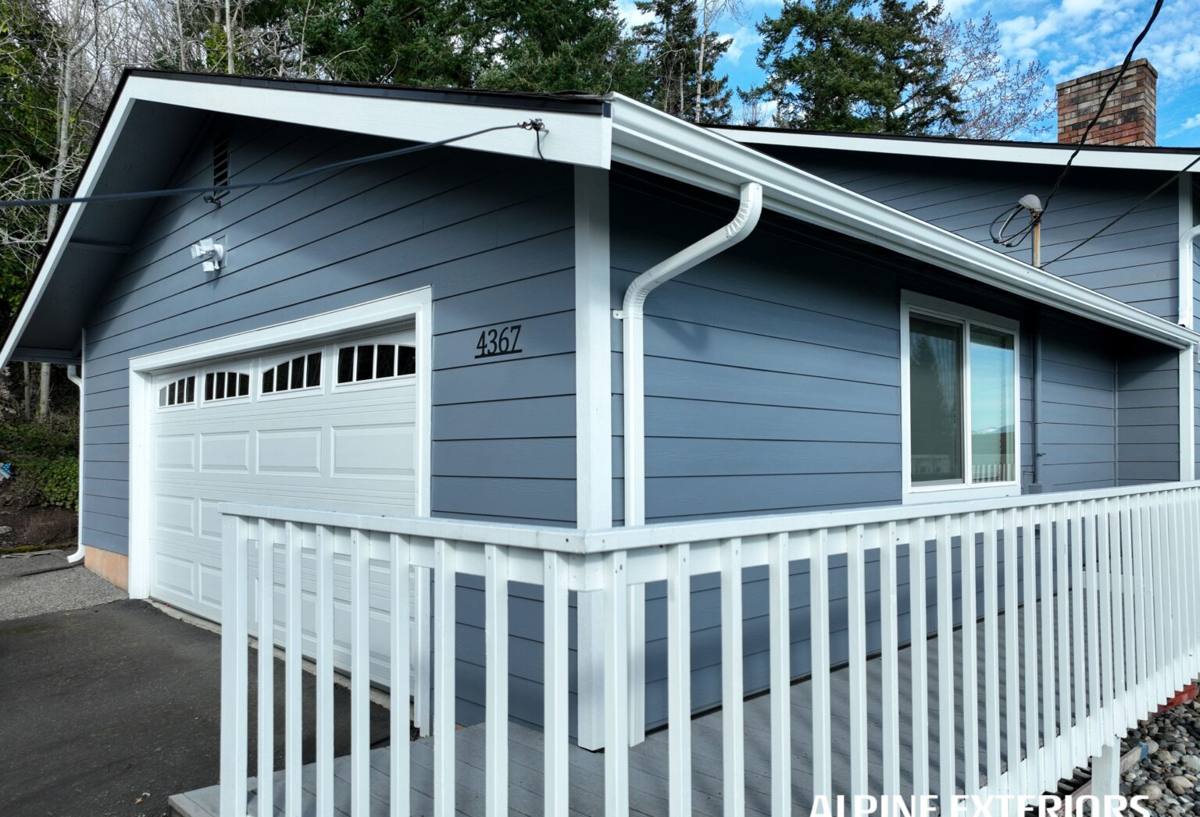
What Salt Air, Driving Rain, and Moss Actually Do to a Roof
Salt-Driven Corrosion
Homes closer to the water pick up a fine, constant dose of salt in the air, and that salt is hard on unprotected metal. Fasteners, flashing, and vent components that aren't rated for a corrosive marine environment can start pitting and weakening years before a homeowner would expect, and once a fastener or flashing seam corrodes through, it stops doing its job even if everything around it still looks fine from the ground.
Wind-Driven Rain and Flashing Failure
Rain in this part of Whatcom County doesn't reliably fall straight down. Wind pushes it sideways and up under shingle edges, around chimneys, and into any flashing seam that isn't lapped and sealed correctly. Most roof leaks we find on repair calls don't start out in the open field of the roof — they start at a flashing detail: a valley, a chimney base, a skylight curb, or the joint where a roof meets a wall.
Moss, Algae, and Trapped Moisture
Shaded slopes and north-facing roof planes hold moisture longer than sections that get regular sun, and over a wet season or two that turns into moss. Moss holds water against the roofing material, works under shingle tabs, and can physically lift roofing as it spreads. Left unaddressed, a moss patch that starts as a cosmetic issue becomes an entry point for water.
Signs a Ferndale Roof Needs Repair
Most roof repairs start as something small and visible, if you know what to look for. Any of the following is worth a professional look before the next stretch of wet weather:
- A water stain on an interior ceiling or wall, especially near an exterior wall, chimney, or skylight
- Shingles that are curling, cracked, cupped, or missing after a windstorm
- Granules collecting in gutters or piling up at the base of downspouts
- Moss or dark streaking that keeps coming back on the same slope after cleaning
- Flashing that looks lifted, rusted, or has visibly failed sealant
- A soft or spongy feel when walking near a valley, chimney, or vent
- Daylight visible through the roof deck from inside the attic
- A vent boot or pipe collar with visible cracking around the base
Catching any of these early is almost always a contained repair. Waiting through another wet season tends to turn a small fix into a much larger one, because water damage spreads into the deck, insulation, and framing long before it shows up as a stain on the ceiling.
The Repairs We Handle Most Often in Ferndale
Flashing Repair and Replacement
Since most leaks trace back to flashing, this is where we spend a lot of repair time — re-lapping and re-sealing valley flashing, replacing corroded step flashing along walls and chimneys, and correcting flashing that was installed with gaps or the wrong lap direction in the first place.
Shingle and Roofing Material Replacement
Localized shingle damage from wind, falling branches, or age can usually be repaired by removing and replacing the affected section and matching it into the surrounding roof, rather than tearing off the whole roof for a problem confined to one area.
Vent Boot and Penetration Repair
Rubber and plastic vent boots crack with age and UV exposure, and they're a common source of slow leaks that go unnoticed for a while because the water travels along framing before it stains a ceiling. Replacing a cracked boot is a small job that prevents a much bigger one.
Moss and Organic Growth Treatment
Removing moss safely — without damaging or lifting the roofing underneath — and applying treatment to slow regrowth is routine maintenance here, but it's also a repair when moss has already worked under shingle tabs and needs to be cleared before we can assess what's underneath.
Storm Damage and Emergency Repair
After a windstorm, a damaged section of roof needs a fast, secure temporary fix to stop water intrusion, followed by a permanent repair once conditions allow. We handle both the emergency response and the follow-up work.
Repair or Replace? How We Help You Decide
Not every roof problem in Ferndale calls for a full replacement, and a repair-first approach is usually the right one when the roof is otherwise sound. But there's a point where patching the same aging roof repeatedly stops making financial sense. We look at the whole picture before recommending either path.
| Factor | Favors Repair | Favors Replacement |
|---|---|---|
| Roof age | Well within its expected service life | At or past the typical lifespan for its material |
| Extent of damage | Localized to one section or detail | Spread across multiple slopes or systemic |
| Deck condition | Solid, dry, no rot | Soft spots or moisture damage found underneath |
| Repair history | First or infrequent issue | Repeated repairs to the same or nearby areas |
| Moss/moisture pattern | Isolated, treatable | Long-term buildup across shaded slopes with underlying damage |
We'll explain what we find on the roof and why we're recommending what we're recommending, including telling you plainly when a repair is the honest answer even if a replacement would be the bigger job for us.
What a Correct Repair Actually Involves
A repair that's done right doesn't just cover the visible symptom. On every repair, that means:
- Identifying the actual source of the leak or damage, not just the spot where water showed up inside
- Checking the roof deck underneath for moisture damage before closing anything back up
- Using flashing, underlayment, and fasteners rated for sustained marine-climate exposure
- Matching replacement shingles or material as closely as possible to the existing roof
- Confirming attic ventilation isn't contributing to the problem before finishing the repair
- Cleaning up debris and old material, including a magnetic sweep for stray nails
Skipping the diagnostic step and just patching what's visible is the most common reason a "repaired" roof leaks again a season later. We treat that first step — actually finding the source — as the most important part of the job.
Our Process: From Call to Completed Repair
- Inspection: We look at the roof in person, inside the attic where accessible, and document what we find.
- Diagnosis and estimate: We explain what's actually causing the problem and give you a written estimate before any work starts.
- Repair: We complete the work using materials suited to this climate, matched into your existing roof.
- Walkthrough: We show you what was done and what to watch for going forward.
For urgent situations — active leaks or storm damage — we prioritize getting the roof secure first and schedule the permanent repair as soon as conditions allow.
Why a Crew That Already Works Ferndale Matters
A contractor who works roofs across Whatcom County through every season has a feel for how salt air, wind-driven rain, and moss actually behave on real houses over years, not just how a product performs on a spec sheet. That shows up in small but real decisions during a repair: which flashing detail is worth extra time because it's the one that fails first in this climate, whether a vent boot needs an upgraded material given its sun exposure, and how much moss removal is safe to do without damaging the roofing underneath. It also means someone who's still around locally if a repair needs a follow-up look, rather than a crew that worked the area for one storm season and moved on.
Protecting the Repair: Simple Maintenance That Extends Roof Life
A well-done repair still benefits from basic upkeep, especially in a climate that keeps roofs damp for long stretches of the year.
- Keep gutters and downspouts clear so water isn't backing up under roof edges
- Trim back tree branches that keep a roof section shaded and slow to dry
- Have moss treated before it spreads across a full slope, not after
- Do a visual check after any significant windstorm
- Schedule a professional look every year or two, even when nothing seems wrong
None of this takes much time, and it's far cheaper than letting a small problem sit through another wet Whatcom County winter.
If you're dealing with a leak, storm damage, or a roof that just needs an honest look, we're glad to come take a look and give you a straightforward, no-pressure estimate. Reach out using the form below to get started.