 Bellingham Exterior
 Board & Batten Siding in Sehome: Built for This Neighborhood's Conditions
Sehome sits close enough to Bellingham Bay that salt-laden air is a daily fact of life for anything mounted on the outside of a house. Add in the region's long, wet winters and the moss season that follows every fall, and you have a set of conditions that will find every weakness in a siding job within a few years. Board and batten siding has a strong following here because of its clean, vertical look and the way it suits the mix of craftsman bungalows, mid-century homes, and newer infill construction found throughout the neighborhood. But the style only holds up if the material and the installation account for what Whatcom County weather actually does to a wall over time.
This page is specific to board and batten siding for homes in Sehome. It covers what the climate here demands from this particular siding style, what a correct installation looks like, and why we install it in exactly one material.
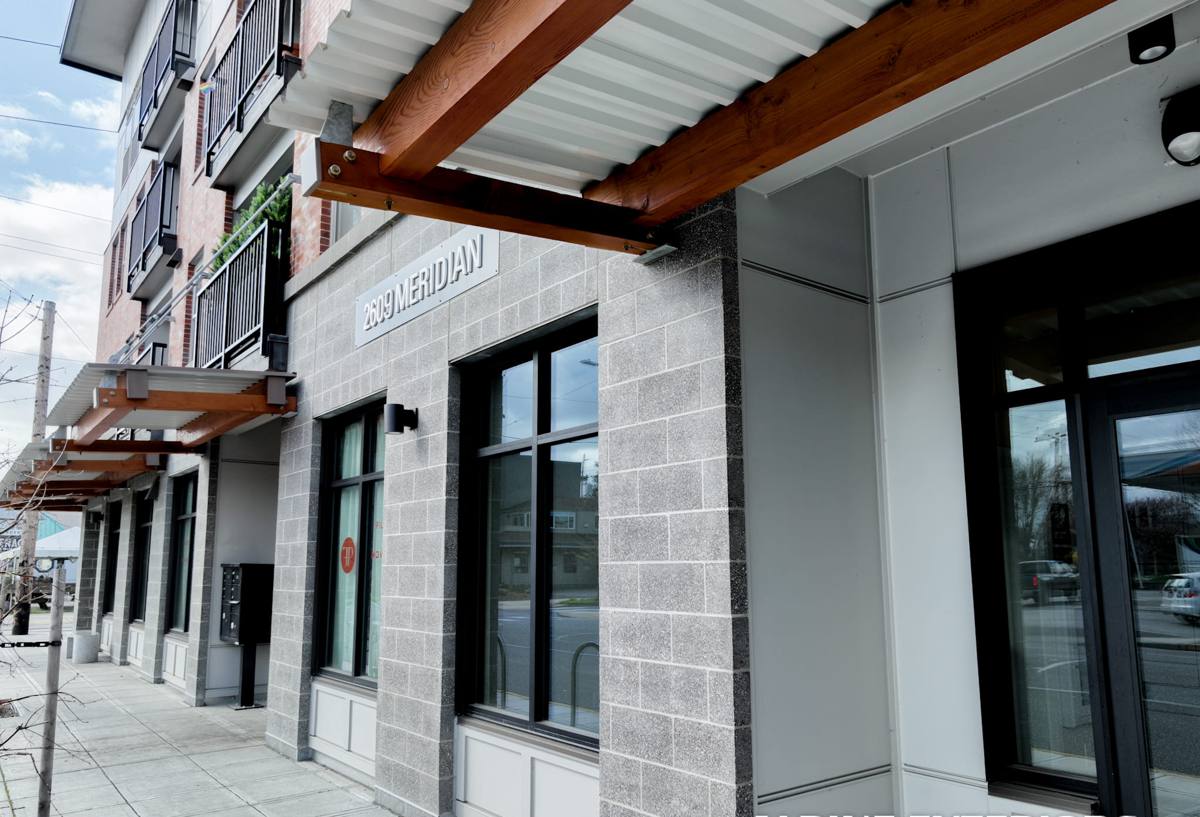
What Bellingham's Climate Does to Vertical Siding Over Time
Board and batten relies on vertical boards with narrow battens covering the seams. That design is attractive, but it also creates more vertical joints and more places for water to travel down the wall than a standard horizontal lap. In a dry climate that's a minor detail. In Sehome, where driving rain off the bay hits walls at an angle and moss spores are airborne for months out of the year, those joints and the surface behind them matter a great deal.
Moisture Behind the Battens
If water gets behind a batten and has nowhere to drain or dry out, it sits against the substrate. Over repeated wet seasons that trapped moisture is what causes rot, paint failure, and swelling in wood-based products. The board and batten look doesn't cause this by itself — a poorly detailed installation does.
Moss and Algae Growth
Shaded elevations and north-facing walls in Sehome, especially near mature trees, stay damp for days after a storm passes. That's exactly the environment moss and algae need to take hold. Siding that absorbs moisture gives them something to grow on; siding that doesn't absorb moisture is far easier to keep clean.
Salt Air and Fasteners
Proximity to the bay accelerates corrosion on anything metal that isn't rated for it — fasteners, flashing, trim accessories. A board and batten installation is only as good as the hardware holding it up, and that hardware needs to be chosen for a coastal environment, not a generic one.
What a Correct Board & Batten Installation Actually Involves
Board and batten is more forgiving to look at than it is to install correctly. A lot of the work that determines whether it lasts 10 years or 40 happens before the first board ever goes up.
A Drainage Plane, Not Just a Weather-Resistive Barrier
Behind the siding there needs to be a water-resistive barrier and, ideally, a drainage gap that lets any moisture that gets past the cladding drain out and the wall breathe. On a vertical siding style like this, that gap is what keeps incidental water from becoming trapped water.
Board Spacing and Fastening
Fiber cement expands and contracts with temperature and moisture differently than wood. Boards need to be hung with the correct gaps and fastener pattern called for by the manufacturer, not tight-fit the way a carpenter might frame trim. Battens then need to land over the seams with consistent reveal, which is a big part of why the finished look reads as clean or sloppy.
Flashing at Every Penetration
Windows, doors, hose bibs, light fixtures, and the base of the wall all need proper flashing and kick-out details. In a climate that gets sustained, driving rain, these details are where most premature siding failures actually start — not in the field of the wall.
Fastener and Trim Material
We use corrosion-resistant fasteners and trim components suited to a coastal climate, because standard hardware simply doesn't hold up as long this close to the bay.
Why We Install This Look Only in James Hardie Fiber Cement
Board and batten can be built out of several different materials — cedar, engineered wood, vinyl panel systems, or fiber cement. Cedar has real appeal and a long history in this region, but it needs ongoing refinishing and is more vulnerable to the rot and moss issues described above once finishes start to wear. Engineered wood products have improved over the years, but they're still wood-based at the core, which means they depend heavily on intact factory coatings and correct field sealing to resist moisture — something that's hard to guarantee over decades in a wet coastal climate. Vinyl-style panel systems avoid rot, but they don't hold paint, they can visibly warp under heat, and they don't offer the crisp, flat reveal that board and batten is supposed to have.
We standardized on James Hardie fiber cement for board and batten because it's engineered specifically for this trade-off. It's non-combustible, it doesn't support moss growth the way wood fibers can, and it holds its shape and finish far longer than wood-based alternatives in a wet marine climate. For homes in this part of Washington, Hardie's HZ5 product line is engineered for the freeze-thaw cycles and moisture exposure typical of the Pacific Northwest. The factory-applied ColorPlus finish also matters more here than in a drier climate — a factory-baked finish resists the fading and peeling that field-applied paint struggles with under constant damp-dry cycling.
Comparing Board & Batten Material Options for This Climate
| Material | Moisture Performance Near the Bay | Maintenance | Typical Lifespan | Fire Rating |
|---|---|---|---|---|
| Cedar | Absorbs moisture; prone to swelling and rot without diligent upkeep | Refinishing every few years | Variable, shortened by coastal moisture | Combustible |
| Engineered Wood | Depends on intact coatings and sealed edges | Periodic inspection and touch-up | Moderate, sensitive to installation quality | Combustible |
| Vinyl Panel System | Doesn't rot, but can trap moisture behind panels; poor UV/heat stability | Low, but panels can warp or fade | Moderate | Combustible, can deform under heat |
| James Hardie Fiber Cement | Engineered for wet, coastal climates; doesn't feed moss growth | Low, factory finish holds up outdoors | Long, when installed to spec | Non-combustible |
Our Process for a Sehome Board & Batten Project
Every board and batten job we run in this neighborhood follows the same sequence, because skipping steps is where climate-related failures start.
- Site assessment: we look at exposure — how much direct driving rain and shade each elevation gets — before finalizing details, since a south wall and a shaded north wall don't need identical treatment.
- Substrate check: we confirm what's underneath the existing siding is sound before covering it back up.
- Weather barrier and drainage plane installation: this is the layer that determines long-term performance and it doesn't get shortcut.
- Board and batten installation: Hardie boards and battens go up with manufacturer-specified fastening, spacing, and flashing at every penetration.
- Finish and detail: trim, caulking joints that require it, and final fastener finishing.
- Walkthrough: we go over the finished work with the homeowner before calling the job done.
What to Check Before Hiring for Board & Batten Siding
- Do they install a proper drainage plane behind the siding, not just a barrier?
- Do they follow the manufacturer's fastening and spacing specs for fiber cement, rather than treating it like carpentry trim?
- Do they use corrosion-resistant fasteners suited to a coastal, salt-air environment?
- Can they explain how they'll flash windows, doors, and the base of the wall?
- Do they have experience with board and batten specifically, not just lap siding?
Why Working With a Crew That Knows Sehome Matters
Sehome has a mix of older homes — many built well before modern water-resistive barriers and drainage planes were standard practice — alongside newer construction. That mix matters when a contractor is planning a board and batten installation, because what's behind the existing siding on an older Sehome home is often different from what's behind a newer build a few blocks away. A crew that's worked in this neighborhood knows to check rather than assume, and knows how City of Bellingham permitting and inspection expectations apply to exterior siding work.
Local experience also means understanding how a specific lot sits relative to the bay and to tree cover, since those two factors do more to predict moss and moisture problems than the general Bellingham forecast does. A wall that gets afternoon sun and open exposure behaves very differently than one tucked against mature landscaping, even on the same street.
Getting Started
If you're weighing board and batten siding for a home in Sehome, we're happy to walk your property, look at how each elevation is exposed to rain, sun, and shade, and give you a straight answer on what a correct installation would involve. There's no pressure and no obligation — just a clear look at what your home actually needs. Use the form below to request a free estimate.