 Bellingham Exterior
 Building a Deck That Can Actually Handle Sehome's Weather
Sehome sits close enough to the water and high enough on Bellingham's hillside terrain that its homes take a steady beating from Pacific Northwest weather almost year-round. A deck built here isn't just an outdoor living space — it's an exterior structure that has to survive salt-laden air off Bellingham Bay, long stretches of driving rain, and a moss season that can run from fall through spring. A deck designed for a drier inland climate, or built with shortcuts that hide fine in the showroom, tends to show its weaknesses fast once it's sitting outside in Whatcom County.
This page is about one thing: building custom decks specifically for Sehome homes, with the material choices, structural details, and maintenance realities that actually matter in this neighborhood's conditions. Not a generic deck pitch — the specific decisions that separate a deck that lasts fifteen-plus years from one that needs boards replaced in five.
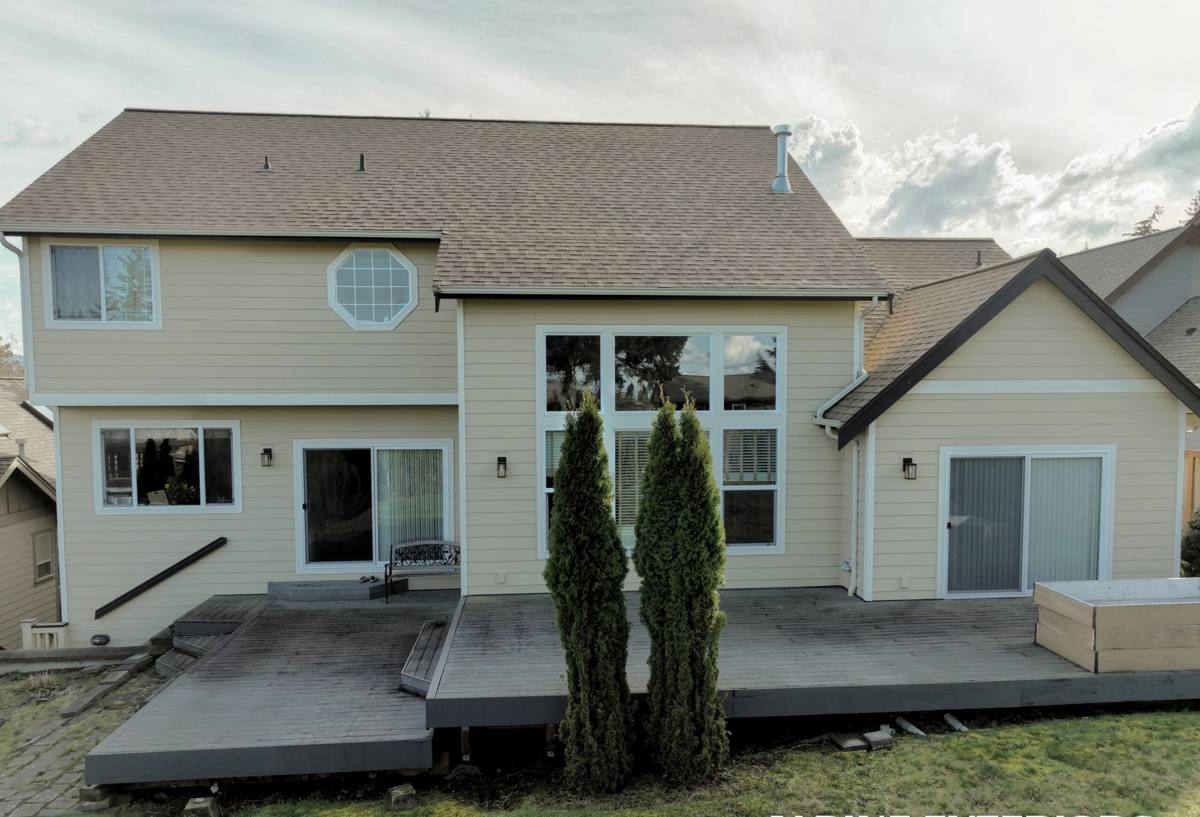
What Salt Air, Driving Rain, and Moss Season Do to a Deck
Every one of these conditions attacks a different part of the deck, which is why a deck built for Sehome needs to be thought through as a system, not just a set of boards.
Salt Air
Bellingham's proximity to the bay means airborne salt reaches homes well inland, including hillside neighborhoods like Sehome. Salt accelerates corrosion on fasteners, brackets, and any exposed metal hardware. A deck can look structurally sound on the surface while the screws and joist hangers holding it together are quietly rusting underneath.
Driving Rain
Wind-driven rain doesn't just fall on a deck — it gets pushed sideways into ledger connections, under railings, and into any gap in the decking boards. Standing water and trapped moisture are the two biggest causes of rot, warping, and fastener failure in this climate.
Moss and Prolonged Dampness
Long stretches of overcast, damp weather let moss and algae establish on decking surfaces, especially in shaded spots — common on Sehome's tree-covered lots. Beyond being slippery and unattractive, moss holds moisture against the wood surface for extended periods, which speeds up decay in untreated or poorly sealed lumber.
Decking Material Options for Sehome Homes
There's no single "best" decking material — there's a best material for your budget, your sun exposure, and how much upkeep you want to do. Here's how the common options actually perform under Bellingham conditions.
| Material | Upfront Cost | Maintenance | How It Handles PNW Moisture | Typical Lifespan |
|---|---|---|---|---|
| Pressure-Treated Wood | Lowest | Annual cleaning, periodic re-staining/sealing | Good if sealed and maintained; vulnerable if neglected | 10-15 years with upkeep |
| Cedar | Moderate | Regular sealing to hold color and resist moisture | Naturally rot-resistant but still needs sealing here | 15-20 years with upkeep |
| Composite Decking | Higher | Periodic washing to prevent moss/algae buildup | Does not rot or splinter; won't absorb water into the board core | 25-30+ years |
| PVC Decking | Highest | Low — occasional rinse | Fully moisture-resistant, most resistant to moss staining | 25-30+ years |
For a lot of Sehome homeowners, composite or PVC decking earns its higher upfront cost by removing the annual sealing cycle entirely — which matters when your deck is under tree cover and drying time is limited for much of the year. That said, plenty of homes are well served by a properly sealed cedar or treated wood deck, especially where the homeowner wants a natural wood look and is comfortable with a yearly maintenance routine. We'll walk through the honest trade-offs for your specific yard and sun exposure rather than push one material across the board.
The Structure Underneath Matters More Than the Boards
Homeowners naturally focus on decking material because that's what you see and walk on. But the framing underneath is what determines whether the deck is still safe and level in fifteen years. This is also where a lot of older or budget-built decks in this region start to fail first.
Footings and Posts
Footings need to be set below frost depth and sized correctly for the load and soil conditions on your specific lot. Undersized or shallow footings are a common source of deck settling and shifting, especially on the sloped or uneven ground found on many Sehome properties.
Joists and Fasteners
We use fasteners and joist hangers rated for the moisture and salt exposure this area sees — not standard hardware that's fine in a drier inland climate but corrodes prematurely here. Joist spacing and beam sizing get calculated for your actual deck dimensions and expected loads, not just built to whatever lumber happened to be on the truck.
Ledger Boards, Flashing, and Drainage — Where Failures Start
If you ever see a deck failure that starts at the house connection, it's almost always a flashing or drainage problem, not a lumber problem. This is the single most important detail on any deck attached to a house in a climate like ours.
- Proper flashing behind and over the ledger board to direct water away from the house sheathing
- A slight slope on the decking surface itself so water sheds instead of pooling
- Gaps between boards sized to let water drain through rather than sit on the surface
- Joist tape or a moisture barrier on top of framing members to protect them from standing water
- Clearance and airflow underneath the deck so the structure can actually dry out between rain events
Skipping or rushing any one of these is how a deck that looks fine for the first two or three years develops hidden rot at the ledger connection by year five — often the most expensive kind of repair because it involves the house structure itself, not just the deck.
Designing for Sehome's Lots
Sehome's terrain tends to be hillier and more tree-covered than some of the flatter parts of Bellingham, which shapes what a well-designed deck actually needs to do.
Slope and Grade Changes
Sloped backyards often call for a deck that steps down in levels, or that's built up on taller posts to reach a usable, level surface. This affects footing depth, railing requirements, and sometimes whether stairs need an intermediate landing.
Shade and Tree Cover
Mature trees are part of what makes Sehome attractive, but heavy shade means a deck surface stays damp longer after rain and is more prone to moss growth. We factor this into material recommendations and, where possible, layout — orienting the deck or trimming sightlines to get more sun exposure and airflow across the surface.
Older Homes, Newer Decks
A lot of Sehome's housing stock is older, which means the ledger attachment point is often original framing that needs to be evaluated before a new deck can be safely tied into it. We check this during the estimate, not after the framing crew shows up.
Our Process, Start to Finish
We keep the process straightforward so you know what's happening at every stage.
- On-site assessment — we look at your slope, sun exposure, existing structure (if replacing a deck), and how you actually plan to use the space.
- Design and material selection — we walk through decking material, railing style, and layout options with honest cost and maintenance trade-offs for each.
- Permitting — decks typically require a permit from the local building department; we handle the application and inspections as part of the job.
- Framing and structural work — footings, posts, beams, and joists built to the loads and moisture exposure specific to your property.
- Decking, railing, and finish work — installation, fastening, and any sealing or finishing the material requires.
- Final walkthrough — we go over the finished deck with you, including how to care for the specific material you chose.
Keeping Your New Deck in Good Shape
Every deck, regardless of material, lasts longer with a little regular attention. Here's a realistic seasonal checklist for this climate:
- Sweep off leaves and debris regularly, especially in fall — trapped organic matter holds moisture and feeds moss growth
- Rinse or lightly scrub decking surfaces in early spring to remove winter moss and algae buildup before it stains or gets slick
- Check railings, stairs, and fasteners once a year for looseness or early corrosion
- For wood decks, reseal or restain on the schedule appropriate to your product — don't wait until the finish has visibly failed
- Keep gutters and downspouts near the deck clear so runoff isn't dumping extra water directly onto or under the structure
- Trim back overhanging branches where practical to improve sun exposure and airflow
Why Work With a Crew That Already Knows Sehome
A deck built to a generic spec sheet can still fail here if it doesn't account for what this specific climate and this specific neighborhood's lots actually do to a structure over time. Working with a crew that already builds in Bellingham and Whatcom County means the flashing details, fastener choices, and footing depths are already dialed in for salt air, driving rain, and moss — not something we're guessing at on your project. It also means we're familiar with the local permitting process and typical lot conditions in the area, which keeps the job moving without avoidable delays.
If you're considering a new deck or need to replace one that's showing its age, we're happy to come take a look and give you a straightforward, no-pressure estimate — including an honest read on your specific site conditions and which materials make sense for your budget and yard. Use the form below to get started.