 Bellingham Exterior
 Why Sehome Roofs Wear Out Faster Than Homeowners Expect
Sehome sits close enough to Bellingham Bay that salt-laden air is a constant, low-grade stressor on every exposed metal component on a roof — nails, flashing, vent caps, and fastener heads. Add in the driving rain that comes off the Sound during fall and winter storms, and you have a combination that finds every weak seam, every under-lapped shingle, and every gap in flashing faster than it would in a drier inland climate. On top of that, Sehome's older tree canopy and mix of shaded lots mean many roofs here spend a good chunk of the year damp, which is exactly what moss needs to get established.
None of this is unique to one house — it's the baseline condition for roofing anywhere in this part of Whatcom County. But it does mean a roof replacement done to a "generic" spec, without accounting for moisture cycling and moss pressure, tends to underperform here compared to the same roof installed in a drier region. The right materials and details matter more in Sehome than the brochure numbers suggest.
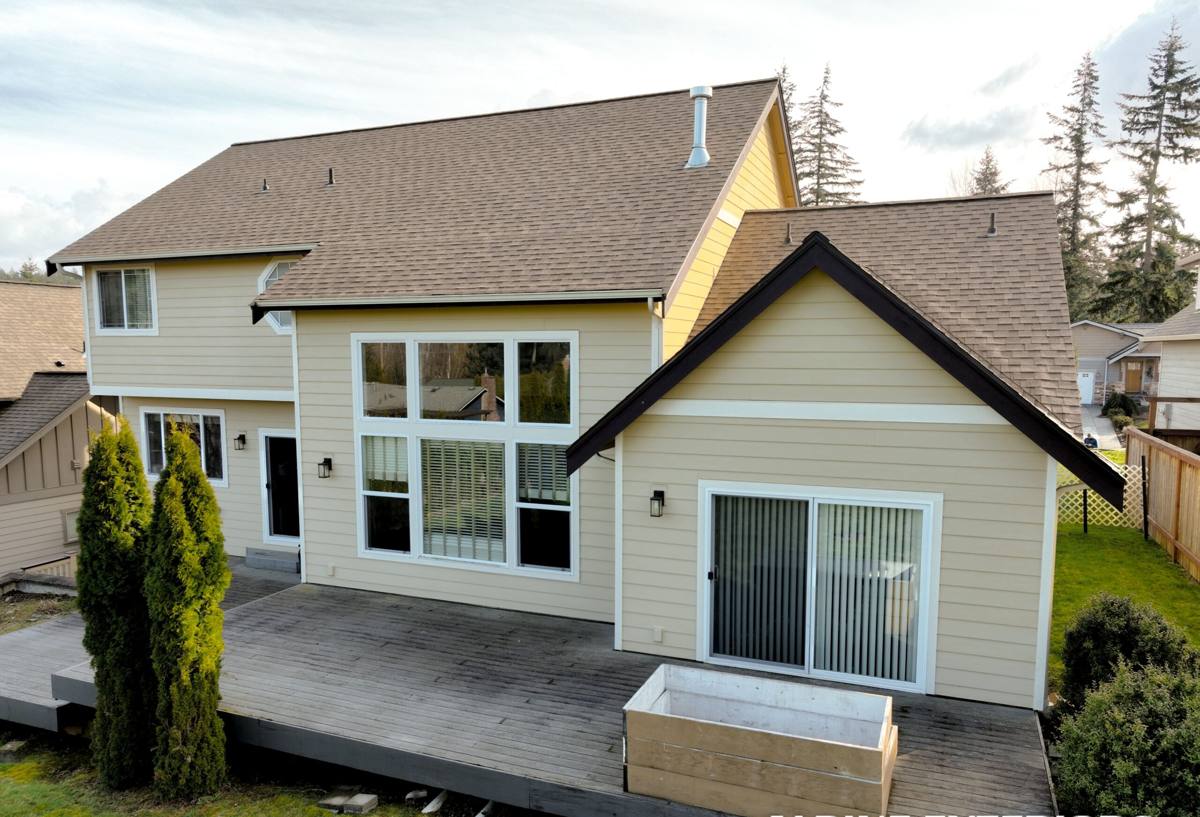
Warning Signs Worth a Second Look
Most homeowners don't think about their roof until something forces the issue — a stain on a ceiling, a missing shingle after a windstorm, or a contractor pointing out moss during an unrelated visit. By the time interior damage shows up, the roof has usually been letting water in for a while. Catching the signs earlier gives you options — repair versus replace, planned timing versus emergency scheduling.
- Shingles that are cupping, curling at the edges, or losing granules in visible clumps
- Moss or dark algae streaking that keeps coming back within a season or two of cleaning
- Soft or spongy spots when walking the roof, or sagging visible from the ground
- Daylight visible through the attic roof deck, or damp insulation near the eaves
- Flashing around chimneys, skylights, or roof-wall intersections that's rusted, lifted, or caulked over repeatedly
- A roof approaching or past 20–25 years old for asphalt, even if it "looks fine" from the street
If you're seeing two or more of these, it's worth having someone walk the roof rather than just looking at photos from the ground. Moss coverage in particular can hide granule loss and soft decking underneath it.
What a Correct Roof Replacement Actually Involves
Tear-Off and Deck Inspection
A proper replacement starts with a full tear-off down to the roof deck — not a layover on top of existing shingles. This is the only way to actually see the plywood or OSB sheathing underneath, which in a climate like this is often where the real damage lives. Any wood that's soft, delaminating, or stained from long-term moisture gets replaced before anything new goes down. Skipping this step to save time is one of the most common ways a "new roof" fails early.
Underlayment and Water Protection
Given how much driving rain this area sees, underlayment choice matters. Synthetic underlayment across the full roof, combined with self-adhered ice-and-water membrane at eaves, valleys, and around penetrations, gives the roof a real second line of defense if wind-driven rain ever gets under the shingle layer. Valleys in particular take a beating here and deserve extra attention rather than a minimal strip of protection.
Flashing and Ventilation
Flashing at chimneys, sidewalls, skylights, and roof-to-wall transitions should be replaced, not reused or caulked over — caulk is a temporary patch, not a flashing detail. Ventilation is just as important as the shingles themselves: balanced intake at the eaves and exhaust at the ridge keeps moisture from building up in the attic, which matters enormously in a climate where the air outside is often nearly as damp as the air you're trying to vent out.
Choosing the Right Roofing Material for a Sehome Home
There's no single "best" roofing material — the right choice depends on your roof's pitch, sun exposure, tree cover, and budget. Here's an honest look at how the common options hold up under Whatcom County's wet, moss-prone conditions.
| Material | Moss & Moisture Behavior | Maintenance | Typical Lifespan |
|---|---|---|---|
| Architectural asphalt shingle | Good with proper ventilation and, where shade is heavy, algae-resistant granules | Periodic moss removal on shaded slopes | 25–30 years |
| Standing seam metal | Sheds moisture fast, very moss-resistant on steeper pitches | Low; occasional fastener/seam checks | 40–60 years |
| Cedar shake | Attractive but holds moisture longer, higher moss and rot risk in shade | Higher; regular treatment and inspection | 20–30 years with upkeep |
| Synthetic composite | Doesn't absorb water like wood; performs closer to metal in wet shade | Low to moderate | 30–50 years |
For heavily shaded lots common in parts of Sehome, we'll often steer homeowners away from cedar shake unless they're committed to real upkeep — not because the material is bad, but because damp, shaded conditions are the hardest environment for any wood roofing product to age well in. That's a maintenance and moisture conversation, not a knock on the product itself.
Moss, Debris, and Keeping a New Roof Looking New
Moss is the single most common complaint we hear from homeowners in shaded parts of town, and it's largely preventable with the right approach at install time. Zinc or copper strips placed just below the ridge use rainwater runoff to inhibit moss growth on the courses below — a passive, low-maintenance option worth discussing at the proposal stage rather than adding after the fact. Keeping gutters clear of needles and leaves also matters more here than in drier climates, since standing water in a clogged gutter backs up under the shingle edge and accelerates rot at the eaves.
A new roof isn't maintenance-free. A light annual check — clearing debris, glancing at flashing, knocking off any early moss — goes a long way toward getting the full lifespan out of the investment.
Permits, Timing, and Working Around Bellingham Weather
Roof replacements in Bellingham require a building permit, and we handle that process as part of the job rather than leaving it to the homeowner. Scheduling around weather is its own skill in this region — we watch forecasts closely and stage materials so that a roof is never left open overnight without protection. Summer and early fall tend to offer the most predictable dry windows, but a well-run crew can work responsibly through the shoulder seasons too, as long as the schedule respects the rain rather than fighting it.
Our Replacement Process, Start to Finish
- On-site inspection — we walk the roof and the attic, not just the ground-level view, to assess deck condition and ventilation.
- Written proposal — clear scope, material options, and pricing, with no vague allowances hidden in the fine print.
- Property protection — tarps and plywood over landscaping, siding, and windows before tear-off begins.
- Tear-off and deck repair — old roofing removed and hauled off same-day where possible, damaged sheathing replaced.
- Underlayment, flashing, and new roofing installed — per manufacturer spec, not shortcuts.
- Cleanup and magnetic nail sweep — of the yard, driveway, and planting beds.
- Final walkthrough — so you see the finished work and understand what was done before we consider the job complete.
What It Costs
Every roof is different, so exact numbers only come from an on-site look — but the factors below are the real drivers of cost on most Sehome homes.
| Factor | How It Affects Cost |
|---|---|
| Roof size and number of facets | More squares and more cuts (valleys, hips) mean more labor and material |
| Pitch and access | Steep or hard-to-access roofs require more safety equipment and time |
| Deck condition | Rotted sheathing found at tear-off adds material and labor not visible beforehand |
| Material choice | Asphalt, metal, and composite carry different upfront costs and lifespans |
| Layers to remove | Tearing off multiple existing layers costs more than a single-layer tear-off |
Homeowners should expect a wide range depending on these factors — we'll never quote a firm number without seeing the roof first, and we're upfront if we find something during tear-off that changes the scope.
Why Hiring a Crew That Already Works Sehome Matters
Roofing crews that spend real time in this part of Bellingham get a feel for which slopes hold moss year after year, which lots need extra attention to ventilation because of heavy tree cover, and how the local weather patterns actually behave versus the general forecast. That local pattern-recognition shows up in small decisions — where to add an ice-and-water course, whether a shaded valley needs a different detail than a sun-exposed one — that a crew unfamiliar with the neighborhood might not think to make.
If your roof in Sehome is showing its age, or you just want an honest read on where it stands, we're happy to take a look. Reach out for a free, no-pressure estimate using the form below.