 Bellingham Exterior
 Siding Installation in Sehome: Built for the Weather This Neighborhood Actually Gets
Sehome sits close enough to Bellingham Bay that salt-laden air is a fact of life for the siding on every home here, not an occasional nuisance. Add in the marine layer of driving rain that rolls through Whatcom County most of the year and the long, damp moss season that follows it, and you have a climate that is genuinely hard on exterior cladding. Siding here isn't just a cosmetic choice — it's the single biggest factor in whether a home stays dry, warm, and free of rot behind the walls for the next few decades.
We install siding in Sehome the same way we install it everywhere in Bellingham: correctly, with materials engineered for this exact climate, and with a process that treats the water management behind the siding as more important than the color on the front of it. This page walks through what that actually means for a Sehome home.
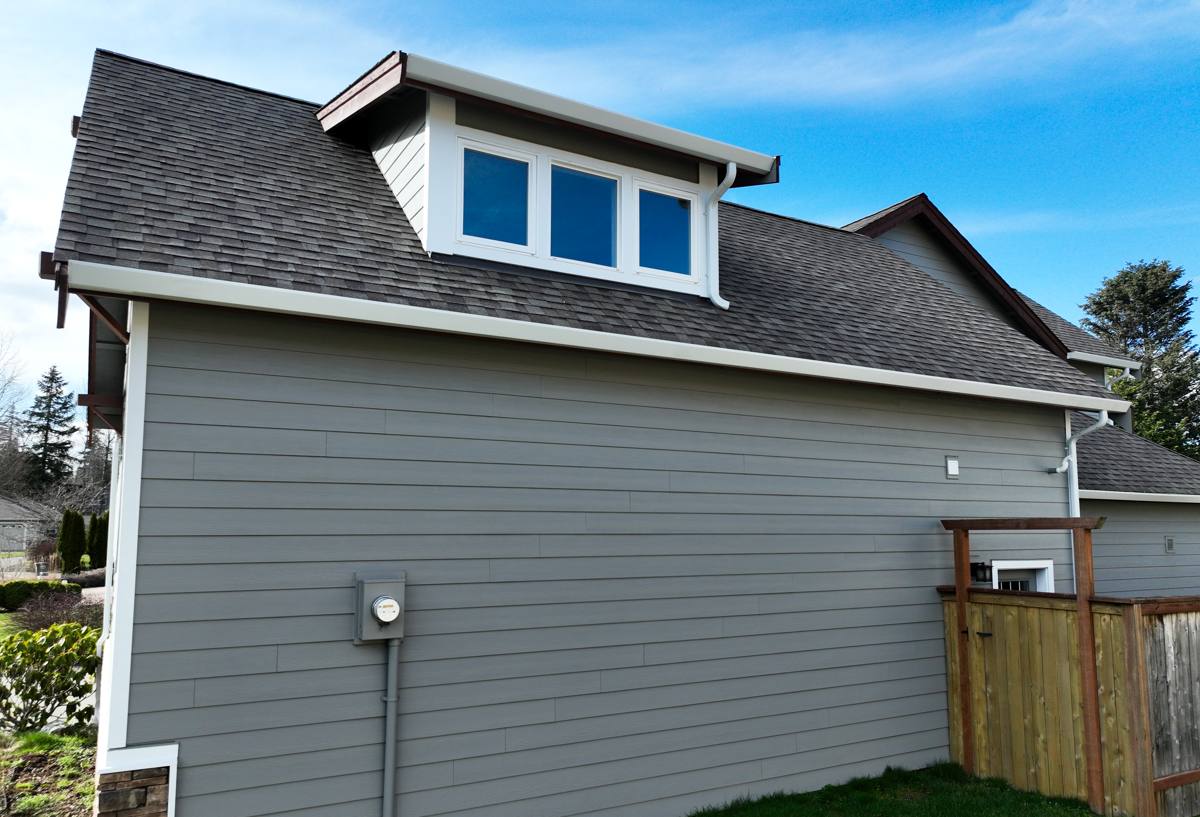
What Sehome's Climate Does to Siding Over Time
Salt Air and Slow Corrosion
Homes within a few miles of the water pick up airborne salt that settles on exterior surfaces and accelerates the breakdown of fasteners, trim, and lower-quality siding materials. Over years, this shows up as pitting on cheap metal accessories, premature paint failure, and softening at seams that weren't sealed with a marine environment in mind.
Driving Rain and Wind-Driven Moisture
Bellingham's rain rarely falls straight down. Wind off the bay pushes it sideways into wall assemblies, which means siding here has to shed water at laps, corners, and penetrations — not just on flat faces. A product or installation that only handles vertical rainfall will eventually let moisture in.
The Long Moss Season
Shaded, north-facing walls and anything close to mature trees stay damp for extended stretches between fall and spring. That moisture supports moss and algae growth directly on siding surfaces, which holds even more water against the material and, on the wrong substrate, feeds rot at the surface level.
None of this is unique to any one street in Sehome — it's the reality of this part of Whatcom County. What changes from house to house is how well the siding and the installation behind it were built to handle it.
Why We Install Only James Hardie Fiber Cement
We don't install vinyl siding, LP SmartSide, cemplank, Allura, primed spruce, or cedar. That's not a marketing position — it's a standard we hold because of what we've seen these products do over time in exactly this kind of climate, and we think Sehome homeowners deserve a straight explanation rather than a sales pitch.
- Vinyl can look fine for years, but it expands and contracts with temperature swings, can crack in cold snaps, and isn't repairable in the way a fiber cement panel is — a damaged section usually means a full replacement of that run.
- LP SmartSide and other wood-based composites perform well when maintained perfectly, but they're wood products at their core, and wood-based siding is far less forgiving of the sustained moisture exposure common here if caulking or paint maintenance ever lapses.
- Primed spruce and cedar require the most diligent, ongoing maintenance of any siding option and are the most vulnerable to the rot that a damp, shaded Sehome lot can accelerate.
James Hardie fiber cement is non-combustible, holds its factory-applied ColorPlus finish far longer than field-applied paint, and Hardie's HZ5 product line is engineered specifically for climates like ours — freeze-thaw cycles, sustained moisture, and coastal air included. It's also backed by a strong transferable warranty, which matters if you sell the home before the siding's functional life is up. We install it because it's the product we're comfortable standing behind on every job, not because it's the only thing we know how to install.
What a Correct Siding Installation Actually Involves
The siding itself is only part of the system. Most siding failures we get called out to inspect in Bellingham trace back to what's underneath the panels, not the panels themselves.
Water-Resistive Barrier and Flashing First
Before a single piece of siding goes up, the wall needs a continuous, properly lapped weather-resistive barrier, and every window, door, and penetration needs flashing detailed so water is directed out and down, never trapped behind the cladding. This is the step that determines whether a home stays dry for 30 years or develops hidden rot in 5.
Correct Fastening and Clearances
Hardie siding has specific fastening patterns, nail types, and clearance requirements — including gaps at grade, roof lines, and decks — that exist to keep the material out of standing water and to let it perform as designed. Installed too tight to the ground or with the wrong fasteners, even the best siding on the market will underperform.
Joint and Seam Treatment
Every butt joint, corner, and trim intersection is a place water can find its way in. Correct caulking, factory-matched trim, and proper overlap at laps are what keep those seams sealed through years of wind-driven Bellingham rain.
Ventilation Behind the Cladding
A rainscreen gap or adequate ventilation behind the siding lets any moisture that does get past the outer layer dry out instead of sitting against the wall sheathing — a detail that matters more in a damp, moss-prone climate than almost anywhere else.
Our Process for a Sehome Siding Installation
- On-site assessment: We evaluate the existing siding, sheathing condition, moisture history, and any problem areas specific to the home's exposure and shading.
- Tear-off and inspection: Old siding comes off and we inspect the sheathing underneath for hidden rot or moisture damage before anything new goes up — this is where problems that have been building for years actually get caught.
- Weather barrier and flashing installation: A new, continuous water-resistive barrier and correctly detailed flashing go in at every window, door, and penetration.
- Hardie panel or lap siding installation: Installed to manufacturer spec, with correct clearances, fastening, and joint treatment throughout.
- Trim, caulking, and finish work: Corners, trim boards, and seams are finished and sealed.
- Final walk-through: We review the finished work with you and confirm everything meets both Hardie's installation requirements and our own standard.
Comparing Siding Options for a Bellingham Climate
| Factor | James Hardie Fiber Cement | Vinyl | Wood / LP-Style Composite |
|---|---|---|---|
| Moisture resistance in coastal/marine climate | Engineered for it (HZ5 line) | Doesn't absorb water, but seams and expansion gaps can let it in | Vulnerable if maintenance lapses |
| Fire resistance | Non-combustible | Combustible | Combustible |
| Finish longevity | Factory ColorPlus finish, long fade resistance | Color baked into material but can chalk over time | Field-applied paint, needs recoating on a regular cycle |
| Maintenance burden | Low — occasional wash and caulk check | Low, but repairs are difficult | Higher — regular repainting and moisture checks |
| Repairability | Damaged sections can be replaced individually | Often requires replacing full runs | Repairable but prone to recurring issues |
| Warranty structure | Strong, transferable manufacturer warranty | Varies widely by manufacturer | Varies, often shorter on the substrate itself |
This isn't a claim that other products are unusable — plenty of homes around the country wear vinyl or wood siding without issue. It's why, given what this specific climate does to exterior materials over time, fiber cement is what we're willing to install and stand behind.
Signs a Sehome Home May Need New Siding
- Persistent moss or algae growth that returns quickly after cleaning, especially on shaded or north-facing walls
- Visible cupping, warping, or soft spots when you press on the siding
- Paint that's peeling or bubbling rather than just fading
- Cracking at corners, seams, or around window and door trim
- Rising energy bills that suggest the wall assembly isn't insulating or sealing the way it used to
- Any staining on interior walls near exterior corners, which often points to moisture getting in behind the siding
Any one of these on its own isn't necessarily an emergency, but a combination of them — especially soft spots plus interior staining — usually means the wall assembly behind the siding is already compromised and worth a professional look before it spreads further.
Maintaining Hardie Siding Once It's Installed
One of the practical advantages of fiber cement over the alternatives is how little upkeep it actually needs when installed correctly. That said, "low maintenance" isn't "no maintenance," especially in a climate that grows moss on its own timeline.
- Rinse siding annually with a garden hose or soft wash — avoid high-pressure washing, which can force water behind panels and damage the finish
- Check caulking at trim and seams every year or two and re-caulk any cracked or separated joints
- Trim back vegetation and tree limbs that keep any section of wall shaded and damp for long stretches
- Keep gutters clear so overflow isn't running down the siding face during heavy Bellingham rain events
- Address any moss growth promptly with a gentle cleaning approach rather than letting it establish
Why It Matters to Hire a Crew That Already Works in Sehome
Siding installation done to spec looks similar on paper anywhere in the country, but the details that actually matter — flashing choices, clearance decisions, how tight to run caulk joints — shift based on how much rain and moisture exposure a wall genuinely sees. A crew that installs siding regularly in Bellingham and greater Whatcom County has already made those judgment calls hundreds of times on homes dealing with the same salt air, the same wind-driven rain, and the same moss pressure Sehome sees. That's the difference between a technically correct installation and one that's actually built for where it sits.
Local experience also means familiarity with the permitting process for Bellingham and Whatcom County, realistic expectations about weather windows for tear-off and installation, and an understanding of the older housing stock common in established neighborhoods near the city core — including what's usually found underneath the siding once it comes off.
What Affects Your Estimate
Every Sehome home is different, and a proper estimate depends on the specifics of yours rather than a generic square-footage number. The factors that move the price most are the condition of the sheathing underneath the current siding, the home's overall size and complexity (corners, dormers, trim detail), the siding profile you choose within the Hardie lineup, and whether any rot repair or additional flashing work is needed once the old siding comes off. We won't know which of these apply to your home until we've actually looked at it, which is why we walk every property before giving a number.
If your Sehome home's siding is showing its age, or you're planning ahead rather than reacting to a problem, we're happy to take a look and put together a free, no-pressure estimate — no obligation, just an honest assessment of where things stand.