 Bellingham Exterior
 Window Replacement Built for Sehome's Climate
Sehome sits close enough to Bellingham Bay that salt-laden air is a constant factor in how exterior materials age, and it shares the same wet, gray stretch of fall-through-spring weather that defines Whatcom County living. Driving rain off the water, long stretches of low sun angle, and a moss season that can run eight months out of the year all put steady pressure on window assemblies — not just the glass, but the frames, the seals, and the flashing behind them. A window that was installed correctly for a drier climate can still fail here if it wasn't detailed for constant moisture exposure.
Window replacement in this neighborhood isn't just a cosmetic upgrade. It's a chance to correct water management details that may have been done wrong the first time, tighten up energy performance in a home that gets heated most of the year, and put in products that are actually rated to hold up under Pacific Northwest conditions rather than generic national-average weather.
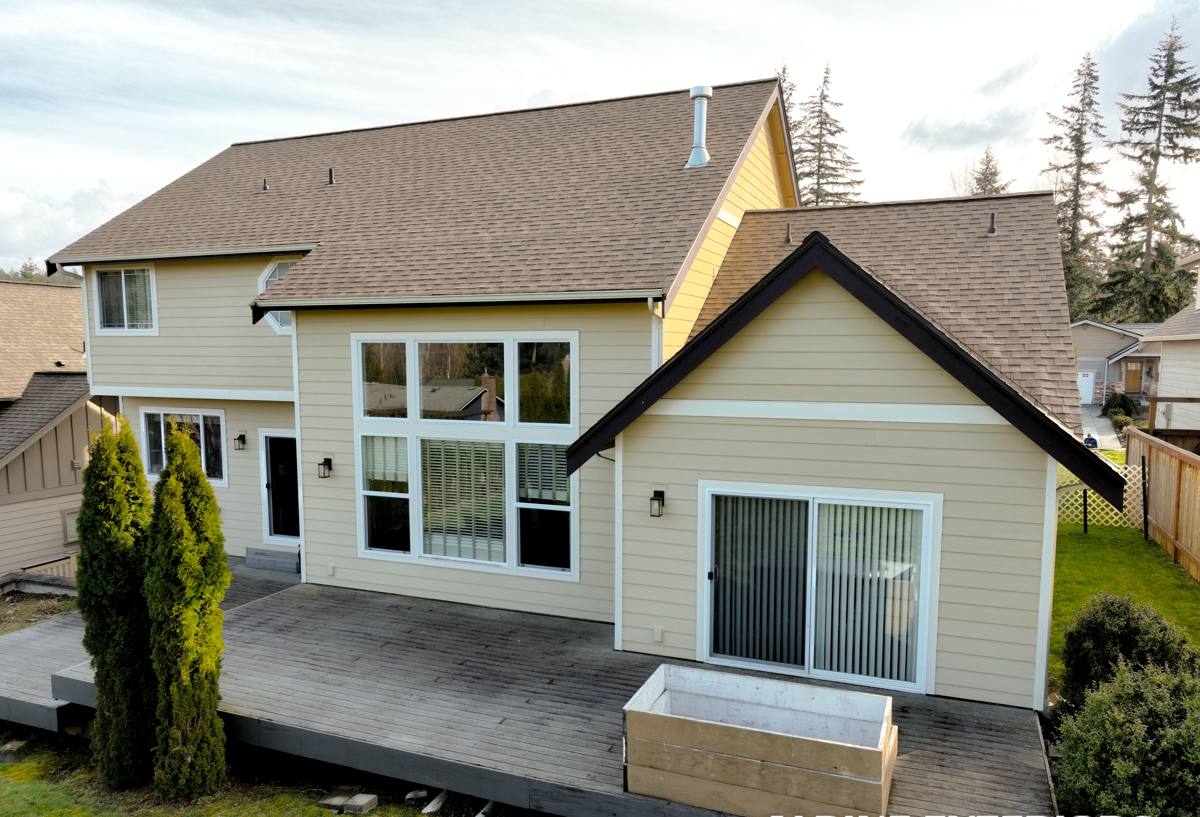
How Sehome Homes Show Window Wear
Homes in this part of Bellingham cover a range of ages and construction styles, from older single-pane or early dual-pane installs to more recent replacement windows that may already be nearing the end of their seal life. Regardless of age, the failure patterns we see locally tend to follow the same causes: sustained moisture exposure and UV combined with wind-driven rain finding its way past worn or undersized flashing.
- Fogging or a visible haze between panes — a sign the insulated glass seal has failed
- Soft or discolored wood trim around the window, often worse on the sides that face prevailing weather
- Visible moss or algae buildup on sills and lower frames, a signal that water is sitting rather than draining
- Drafts or noticeable temperature difference near the window even when it's latched shut
- Difficulty opening, closing, or locking due to frame swelling or settling
- Rising heating bills without another clear explanation
Any one of these on its own might just mean a repair. Several at once, especially combined with visible trim damage, usually means the window and the wall assembly around it need to be addressed together.
What a Correct Installation Actually Involves
The window itself matters, but in this climate the installation detailing matters just as much — arguably more. A high-end window installed with poor flashing will leak. A mid-grade window installed correctly, with proper drainage and sealing, will often outperform it.
Removal and Inspection
Old windows come out carefully so we can see the condition of the rough opening underneath — sheathing, framing, and any existing flashing or house wrap. This is where hidden rot or past water intrusion shows up, and it needs to be dealt with before a new window goes in, not covered over.
Flashing and Water Management
Proper flashing creates a shingled, gravity-fed path for water to move down and out rather than behind the siding. This includes sill pan flashing at the bottom of the opening, side flashing that laps correctly with the water-resistive barrier, and head flashing integrated above the window — all detailed to handle sustained, wind-driven rain rather than just a light shower.
Setting, Shimming, and Sealing
The window is set level and square, shimmed at the correct load points so it isn't relying on fasteners alone to hold its shape, and sealed with the right materials at the right layers — not just a bead of caulk around the outside trim as a catch-all.
Interior and Exterior Finish
Once the window is set and tested, trim and sealant work are finished on both sides, and the surrounding siding or trim is restored to shed water the way it did before the work started — or better.
Choosing Materials for Whatcom County Conditions
There's no single "best" window material for every home — it depends on the home's style, budget, and how exposed that particular wall is to weather. What matters here is picking a product with a frame material and finish that's genuinely suited to long-term coastal moisture exposure, not just a good-looking spec sheet.
| Frame Material | How It Handles Local Climate | Maintenance |
|---|---|---|
| Vinyl | Good moisture resistance, won't rot; performance depends heavily on manufacturer and weld quality | Low — occasional cleaning |
| Fiberglass | Very stable in temperature and moisture swings, holds paint well if color changes are wanted later | Low |
| Wood-clad | Attractive interior wood look with an exterior clad shell; performance depends entirely on the cladding and sill detailing staying intact | Moderate — cladding and seals need periodic inspection |
| Aluminum | Durable but a poor thermal performer unless thermally broken; can be prone to condensation in our damp winters | Low, but condensation issues need monitoring |
Whatever material a homeowner chooses, we pay close attention to the sill design and drainage path, since that's usually where coastal-climate windows fail first — not through the glass or the frame material itself, but at the bottom edge where water collects.
Glass Package Considerations
For Sehome's mix of filtered daylight, overcast skies, and occasional bright summer sun off the water, a dual-pane, low-E coated unit with an appropriate argon fill is typically the right balance of energy performance and daylight quality. Homes with more direct afternoon sun exposure may benefit from a slightly different low-E coating to manage heat gain without darkening the glass noticeably.
Our Process for a Sehome Window Replacement
- On-site assessment — we look at each window opening individually, not just count units, since exposure and condition can vary wall to wall on the same house
- Honest scope and estimate — a written estimate that separates window cost from any trim, siding, or rot repair that turns up
- Product selection — matched to the home's style and that wall's weather exposure, not a one-size-fits-all recommendation
- Scheduling around weather — openings are only exposed for as long as necessary, and we plan around forecasted rain where possible
- Installation with proper flashing and sealing — done to hold up under sustained wind-driven rain, not just pass a quick visual check
- Final walkthrough — every window is opened, closed, and inspected with the homeowner before we consider the job done
What Affects the Cost
Every home is different, so we don't quote sight unseen, but these are the main factors that move the number up or down.
| Factor | Why It Matters |
|---|---|
| Number and size of openings | Larger and more windows mean more material and labor, but per-unit cost often drops with volume |
| Frame material and glass package | Vinyl, fiberglass, and wood-clad options carry different material costs |
| Condition of the rough opening | Hidden rot or old water damage adds repair scope beyond the window itself |
| Access and height | Second-story or hard-to-reach windows take more time and equipment |
| Trim and siding tie-in | Matching existing trim profiles or siding takes more finish labor than a straightforward swap |
Why Local Experience in This Neighborhood Matters
A contractor who works regularly in Sehome and the surrounding Bellingham area already knows how the local weather pattern tends to attack a window installation over time — which wall exposures fail first, how moss and algae growth behaves on north- and west-facing surfaces, and what flashing details actually hold up through a full Whatcom County winter. That's different knowledge than what a crew brings if they mostly work in a drier inland climate and treat rain protection as an afterthought.
It also means faster, more accurate estimates, because we're not guessing at how a given product or detail will perform here — we've already seen it hold up, or seen it fail, in homes like this one.
Simple Maintenance That Extends Window Life
- Rinse sills and tracks periodically to clear moss, algae, and debris before it holds moisture against the frame
- Check and refresh exterior caulking at trim joints every year or two, since UV and moisture break it down faster here than in drier climates
- Keep gutters and downspouts clear so roof runoff isn't sheeting down across window heads
- Operate each window through its full range a few times a year so hardware doesn't seize from disuse
- Watch for early signs of trim discoloration — catching it early is far cheaper than a full repair later
If your Sehome home has windows showing any of these signs, or you're simply ready to stop losing heat through old glass, we're happy to take a look and walk you through honest options. Request a free, no-pressure estimate using the form below and we'll assess your windows in person before recommending anything.