 Bellingham Exterior
 Siding Repair Built for Sehome's Conditions
Sehome sits close enough to the water and to Bellingham's tree canopy that its homes take a different kind of beating than siding in drier parts of Whatcom County. Salt-tinged air off Bellingham Bay, driving rain that comes in sideways during fall and winter storms, and a moss season that seems to stretch longer every year all combine to work on exterior siding in ways that are easy to underestimate until a wall starts showing real damage. We repair siding throughout Sehome and the surrounding Bellingham neighborhoods, and the patterns we see here are consistent enough that we can tell homeowners what to expect before we even get a ladder out.
Siding repair is not a one-size-fits-all service. A hairline crack in a fiber cement panel is a different job than a soft, water-swollen seam on old wood lap siding, and both are different from a stretch of vinyl that's buckled after years of freeze-thaw cycling. What matters most is diagnosing the actual cause of the damage — not just patching the symptom — because in this climate, a repair that doesn't address the underlying moisture path will fail again within a season or two.
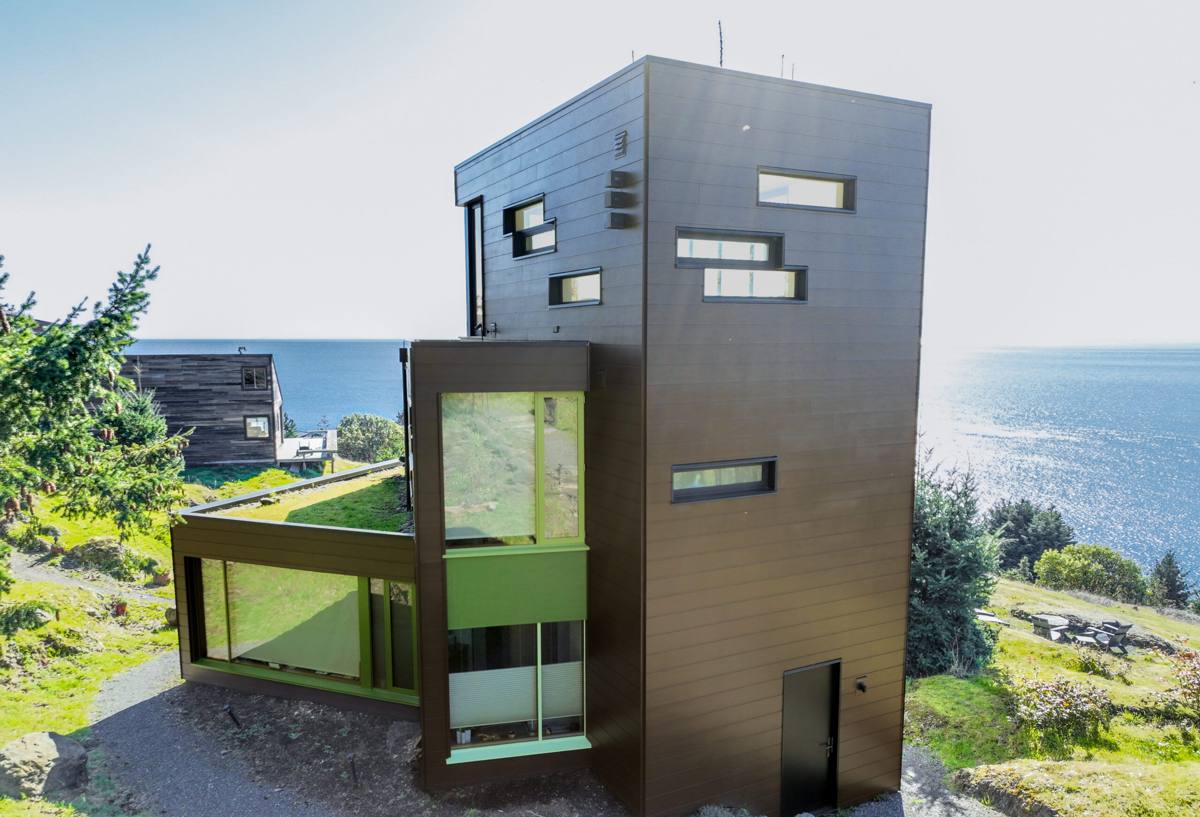
Why Sehome Homes Take This Kind of Wear
Salt Air and Corrosion
Homes closer to the bay deal with a fine mist of salt-laden moisture that settles on exterior surfaces. Over years, this accelerates the breakdown of fasteners, caulk, and paint films, and it's part of why we see premature fastener staining and caulk failure on siding that would otherwise still have plenty of life left in it.
Driving Rain
Bellingham's storms often come with real wind behind them, which pushes rain sideways into seams, corner boards, and butt joints that were designed for rain falling straight down. Once wind-driven rain finds a gap, it doesn't just wet the surface — it tracks behind the siding and into the wall assembly, where it can sit against sheathing and framing for weeks before anyone notices a problem.
Extended Moss and Algae Season
The combination of shade from mature trees, humidity, and mild temperatures means moss and algae growth isn't confined to a short window here — it's closer to a year-round concern on north-facing walls and anywhere siding stays damp longer than it should. Beyond the cosmetic staining, moss holds moisture directly against the siding surface, which is exactly the condition that causes rot in wood-based products and accelerates coating breakdown on almost everything else.
Common Siding Problems We Find in Sehome
- Soft or spongy panels — usually wood-based siding (cedar or engineered wood) that has absorbed moisture through a failed seam, nail hole, or caulk joint.
- Cracked or chipped fiber cement — often from an impact, a poor factory cut left exposed, or a fastener driven too close to a panel edge.
- Buckled or warped vinyl — typically caused by improper installation (nailed too tight) combined with temperature swings, not a manufacturing defect.
- Moss and algae staining — most common on shaded north and east walls, especially under overhangs with limited sun exposure.
- Caulk failure at trim and butt joints — UV exposure and age cause caulk to shrink and crack, opening a direct path for wind-driven rain.
- Corroded or popped fasteners — salt air and moisture accelerate corrosion on lower-grade fasteners, leading to streaking and loose panels.
- Rot at bottom courses and corners — where splash-back from grade, gutters, or hardscaping keeps siding wet longer than the rest of the wall.
What a Correct Repair Actually Involves
A siding repair that's done right starts before any new material goes up. We open up the damaged area enough to see what's behind it — sheathing, house wrap, flashing — because siding damage is frequently a symptom of a moisture problem that started somewhere else. Patching over rotted sheathing or a missing flashing detail just buys a little time before the same spot fails again.
Our Repair Process
- Inspection and diagnosis — we identify not just where the siding failed, but why, checking flashing, caulk lines, and drainage paths around the damaged section.
- Assess the substrate — once panels are pulled, we check the sheathing and house wrap for hidden water damage before closing anything back up.
- Address the moisture path first — this might mean correcting flashing, adding a kick-out at a roof-wall intersection, or re-sealing a window trim detail that was letting water in.
- Match and install replacement siding — we match profile, reveal, and color as closely as the existing product allows, or recommend a broader section replacement when a true match isn't realistic.
- Finish and seal — proper fastener placement, correct caulk joints, and paint or factory-finish touch-up where needed.
That inspection step is also where we tell homeowners honestly when a "repair" isn't really the right call — if a wall has widespread rot or the siding material itself is failing systemically (common with aging engineered wood products), patching one section is a short-term fix on a problem that's going to keep resurfacing elsewhere on the same wall.
Repair vs. Replacement: How We Help You Decide
| Factor | Repair Usually Makes Sense | Replacement Should Be Considered |
|---|---|---|
| Extent of damage | Isolated to one or two panels/sections | Damage spans multiple walls or recurs in the same area |
| Age of siding | Product still well within its expected service life | Siding is near or past the manufacturer's expected lifespan |
| Underlying cause | A specific, fixable flashing or caulk failure | Systemic moisture intrusion across the wall assembly |
| Material match | Matching material/color is realistic | Discontinued product with no close match available |
| Sheathing condition | Sheathing is sound once opened up | Rot or soft sheathing found behind the siding |
We'll always tell you which column your situation falls into, with the reasoning, so the decision is yours to make with full information — not a sales pitch either direction.
Why We Only Install James Hardie Fiber Cement
When a repair does turn into a larger replacement, or when a homeowner asks what we'd install if we were doing the whole wall, our answer is the same every time: James Hardie fiber cement, and nothing else. We don't install vinyl, LP SmartSide, cedar, primed spruce, or other fiber cement brands like Allura or Cemplank. That's a deliberate standard, not a limitation of what we know how to work with.
In a climate like Sehome's — salt air, sustained damp seasons, and moss pressure — the material differences matter. Fiber cement is non-combustible and doesn't feed the rot cycle the way wood-based products can once moisture gets behind a seam. Hardie's ColorPlus factory finish is baked on under controlled conditions, which holds up better against UV and moisture than field-applied paint, and it comes with a real, transferable warranty. Hardie also engineers specific HZ5 product lines for regions with heavier moisture exposure, which is exactly the profile of this part of Washington. We've seen enough vinyl buckle, enough engineered wood soften at seams, and enough alternative fiber cement underperform on finish durability that we no longer install anything else — full stop.
What This Means for a Repair on Existing Non-Hardie Siding
If your home currently has vinyl, wood, or another fiber cement brand and needs a repair, we'll still repair it properly and match it as closely as we reasonably can. We're not going to talk you into a full re-side for a small fix. But if the damage is extensive enough that replacement is the more honest recommendation, we'll say so, and Hardie is what we'll propose putting up in its place.
Preventive Maintenance Between Repairs
A lot of repair calls in Sehome could have been smaller jobs — or avoided altogether — with some basic seasonal attention. None of this requires a contractor visit, just consistency.
- Walk the exterior each fall and spring, looking specifically at caulk joints, corner boards, and butt seams for cracking or gaps.
- Keep gutters clear so overflow doesn't run down and pool against siding at the roofline.
- Trim back tree limbs and shrubs that keep siding shaded and damp longer than the rest of the house.
- Address moss and algae growth early with a gentle, low-pressure cleaning approach rather than letting it build up season after season.
- Check grade and hardscaping near the foundation so splash-back isn't hitting the bottom courses of siding directly.
- Note any soft spots or discoloration and get them looked at before the next wet season, rather than waiting until it's obviously worse.
Why Hiring a Crew That Already Works in Sehome Matters
Siding repair is a trade where local pattern recognition genuinely speeds up an accurate diagnosis. A crew that works Sehome regularly already has a sense of which wall orientations tend to hold moss, how bay-adjacent salt exposure shows up on fasteners and caulk first, and which older homes in the neighborhood are more likely to have engineered wood or first-generation vinyl that's reaching the end of its service life. That context means less guesswork, a faster and more accurate quote, and fewer surprises once we open up a wall.
It also means we're not learning Bellingham's climate on your project. We know what a properly detailed repair needs to hold up through another wet Whatcom County winter, and we stand behind that work because we're not going anywhere — we're your neighbors, working on homes in this same neighborhood season after season.
Get an Honest Look at Your Siding
If you're seeing soft spots, cracking, moss buildup, or staining on your Sehome home's siding, it's worth getting an honest assessment before the next storm season pushes a small problem into a bigger one. We'll walk the exterior, tell you plainly what we find, and lay out your real options — repair, partial replacement, or full replacement — with no pressure either way. Reach out for a free estimate and we'll get a look at it.