 Bellingham Exterior
 Siding Repair in Sudden Valley Isn't Generic Patch Work
Sudden Valley sits on the south shore of Lake Whatcom, wrapped in heavy second-growth forest, with its own private road network and homeowners association. That setting is beautiful, but it's tough on siding. Walls under tree canopy stay wet longer after every rain, moss and algae get a long runway to establish themselves, and the terrain means wind-driven rain can hammer one elevation of a house while another stays relatively dry. Whatcom County's marine climate also carries salt-tinged air off Bellingham Bay across the region, which is one more reason fasteners, flashing, and trim hardware need to be the right grade, even on a lake-side, tree-shaded lot like the ones throughout Sudden Valley.
We repair siding throughout Sudden Valley regularly, and the calls we get here look different from the ones we get on open, sunnier lots closer to town. A repair here has to account for shade that never fully dries a wall, moss and mildew that return quickly if the underlying moisture problem isn't solved, and driving rain that finds its way behind poorly detailed trim and flashing. Treating a Sudden Valley repair like a generic patch job — cut out the bad board, nail up a new one, caulk the edges — is exactly how the same spot ends up failing again in a year or two.
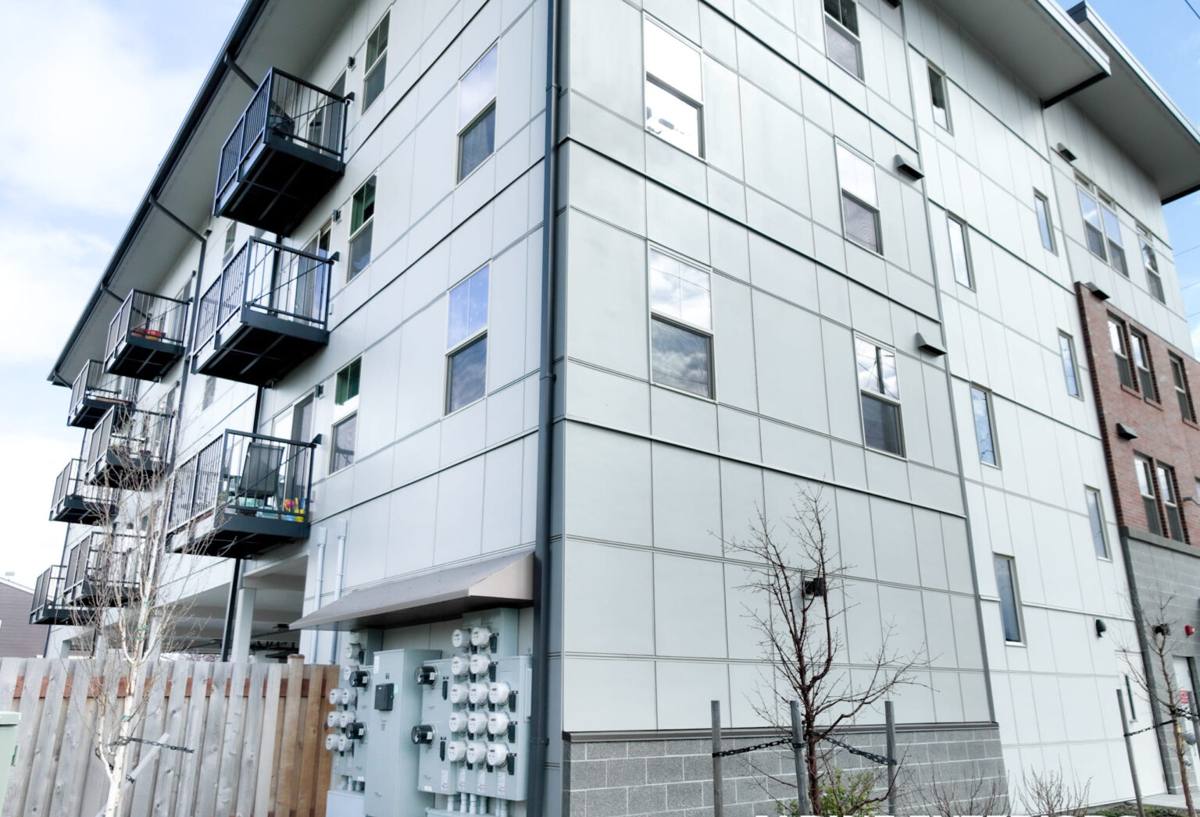
The Damage Patterns We See Most Often Here
Moss and Algae Staining That Keeps Coming Back
Shaded siding under dense canopy holds moisture longer than siding on an open lot, and that's the exact condition moss and algae need to take hold. On some materials this is mostly cosmetic. On others, especially wood-based or porous products, sustained moss and algae growth signals that the surface is staying wet long enough to start breaking the material down underneath the staining.
Swelling, Delamination, and Soft Spots
Engineered wood and untreated wood siding absorb water at cut edges, fastener holes, and butt joints. In a wall that rarely gets a full day of direct sun to dry out, that absorbed moisture doesn't leave quickly, and repeated wetting cycles cause swelling, delamination, and eventually soft or crumbling spots — usually first at the bottom courses and around window and door trim.
Failed Caulk and Open Joints
Caulk is a maintenance item, not a permanent seal, and it fails faster on a wall that's damp more often than it's dry. Once a joint opens up at a butt seam, a trim board, or a window flange, driving rain off the lake and the surrounding terrain finds its way behind the cladding, and the damage almost always turns out to be bigger than what's visible from outside.
Impact and Storm Damage
Tree cover that helps with shade also means falling limbs and wind-driven debris, which cause cracked panels, dented trim, and gouges that expose the substrate underneath to moisture if they aren't repaired promptly.
Rot at Grade and Around Penetrations
Splash-back from soil, mulch beds, or downspouts that discharge too close to the foundation keeps the lowest courses of siding wetter than the rest of the wall, and that's a common starting point for rot, along with poorly flashed hose bibs, vents, and light fixtures.
What a Correct Siding Repair Actually Involves
A repair that holds up in this climate goes well past matching the color and nailing up a new piece. Every repair call we run through the same basic diagnostic steps before any material comes off the wall:
- Probe or moisture-meter the area to find out how far the damage actually extends, not just where it's visible
- Remove siding back to sound material and sound fasteners, not just the obviously damaged section
- Inspect the weather-resistive barrier and flashing underneath — a lot of "siding failures" are really flashing failures
- Check the sheathing for softness or staining, and replace any section that's compromised
- Correct the water management detail that caused the failure in the first place, whether that's flashing, kick-out diverters, or drainage behind the cladding
- Match new material to existing in profile, exposure, and color as closely as the product allows
- Re-seal and finish to manufacturer specification, not just enough to look right from the ground
Skipping that last step — fixing the water management detail, not just the board — is the single biggest reason siding repairs fail again. If a wall let water in once because of a missing kick-out flashing or an unsealed joint, putting a new board over the same unresolved detail just buys a little time before it happens again.
Repair or Replace? How We Make That Call
Not every damaged section needs a full re-side, and not every repair is worth doing on its own. The right call depends on how much of the wall is affected, what's causing it, and how old the existing siding already is.
| Situation | Usual Recommendation | Why |
|---|---|---|
| Isolated impact damage on siding installed within the last several years | Repair | Surrounding material is sound; a targeted repair matches easily and costs far less than a re-side |
| Moisture damage confined to one wall or a small run of boards | Repair, with the underlying water management issue corrected | Fixing the cause plus the visible damage solves the problem without full replacement cost |
| Repeated moss, staining, or soft spots across multiple walls | Full assessment before committing to repair | Widespread symptoms often point to a systemic moisture or ventilation issue, not a one-off failure |
| Original siding is near or past its expected service life | Replace the affected elevation or the whole house | Patching old, degrading material rarely matches well and doesn't extend the life of the rest of the wall |
| Existing siding is a moisture-sensitive product (wood, engineered wood) with recurring failures | Replace with fiber cement rather than repeat patching | Repeated patching of a material that struggles in this climate is a maintenance cycle, not a fix |
Why We Repair and Rebuild With James Hardie
We install and repair one siding system: James Hardie fiber cement. When the damaged section is already Hardie, repair is straightforward — we match the existing plank profile and ColorPlus factory finish, tie the new flashing and water management details in correctly, and the repaired section performs the same way the rest of the wall does.
When the existing siding is a different material — vinyl, engineered wood, primed wood, or cedar — and a section has failed, we don't patch it with more of the same material. That's a professional standard, not a sales pitch: we've seen too many service calls where a patched wood or engineered-wood repair failed again within a few years, on shaded, damp Sudden Valley lots that never gave the material a real chance to dry out. Fiber cement doesn't absorb water at cut edges the way wood-based products do, its finish is baked on at the factory rather than applied on site, and Hardie's HZ5 formulation is engineered specifically for wet, freeze-thaw climates like this one. If the damaged section is significant enough to warrant more than a like-for-like patch, we'll walk you through transitioning that elevation to Hardie rather than extending the life of a material we've already stopped installing for good reason.
We don't install LP SmartSide, vinyl siding, Cemplank, Allura, primed spruce, or cedar. Each has its place in the market, and we're not going to tell a homeowner their existing siding is worthless. But when it comes to what we put back on a wall ourselves, we've made the call to stand behind one system rather than offer a cheaper patch that quietly passes the maintenance burden back to the homeowner a few years down the road.
What a Correct Hardie Repair Requires
Fiber cement only performs as engineered when it's cut, fastened, and flashed to Hardie's published specifications — correct fastener type and spacing, proper clearance from grade and roof lines, and joints sealed the way the manufacturer specifies. That matters even more on a repair than a full install, because a repair section has to integrate cleanly with the surrounding wall's existing flashing and drainage path, not just look right on its own.
Our Siding Repair Process
- On-site assessment. We look at the damaged area and the surrounding wall, checking how shade, tree cover, and drainage on that specific elevation may have contributed to the failure.
- Moisture and substrate check. We confirm how far the damage extends behind the visible siding before quoting the scope of work.
- Written scope and estimate. You get a clear explanation of what's being repaired, why, and what it will cost — no surprises once the wall is opened up, and if we find more than expected, we tell you before proceeding.
- Repair or replace, correctly detailed. We fix the water management issue that caused the damage, not just the cosmetic symptom, and match material and finish as closely as possible.
- Final walkthrough. We review the completed repair with you and explain what, if anything, to keep an eye on going forward.
After the Repair: Keeping It From Coming Back
A correct repair solves the underlying cause, but a shaded, wooded lot like a typical Sudden Valley property still benefits from routine attention:
- Keep gutters and downspouts clear of the leaves and needles that accumulate quickly under heavy tree cover
- Trim back branches and foliage that keep a wall in constant shade or brush directly against the siding
- Rinse moss and algae growth off siding surfaces before it has a chance to hold moisture against the material
- Walk the exterior after major storms and check trim, caulk lines, and low courses near grade
- Have a professional look at any soft spots, staining, or recurring moss before it spreads
Signs You Need a Siding Repair Call
- Soft, spongy, or crumbling siding, especially near the bottom of the wall or around trim
- Moss or algae staining that returns quickly after cleaning
- Visible gaps, cracked caulk, or separated joints at seams and trim
- Bubbling, peeling, or discolored paint on wood or engineered-wood siding
- Cracks, dents, or gouges from fallen branches or storm debris
- Water staining on an interior wall near an exterior corner or window after heavy rain
Why a Crew That Already Works Sudden Valley Matters
Sudden Valley is a private community with its own road network and homeowners association, and a crew that already works here knows how to schedule around that without it becoming a hassle for the homeowner. More importantly, we've seen firsthand how differently exposure plays out from one lot to the next inside this same neighborhood — a wall tucked under heavy canopy behaves nothing like one with a clear view of the lake, even on houses a few hundred feet apart. That familiarity shapes real decisions on a repair call: which walls need extra drainage detailing because they rarely see direct sun, how to lap flashing correctly on a steep, shaded roofline that feeds water onto the wall below, and which fastener grade actually holds up in a damp, wooded microclimate like this one. Those are the details that decide whether a repair lasts a few seasons or a few decades.
If you've got a damaged, moss-covered, or soft section of siding on a Sudden Valley home, we're glad to take a look and give you an honest read on whether it needs a repair, a partial replacement, or something more. Reach out below for a free, no-pressure estimate.