 Bellingham Exterior
 Decks Built for Silver Beach's Edge-of-the-Lake Climate
Silver Beach sits close to Lake Whatcom, tucked into terrain that stays shaded, damp, and cool for long stretches of the year. That combination is exactly what makes deck building here different from a straightforward job on a dry, open lot elsewhere in Whatcom County. Between tree cover, lake humidity, and Bellingham's broader marine climate, a deck in this neighborhood is fighting moisture almost year-round, not just during the rainy months.
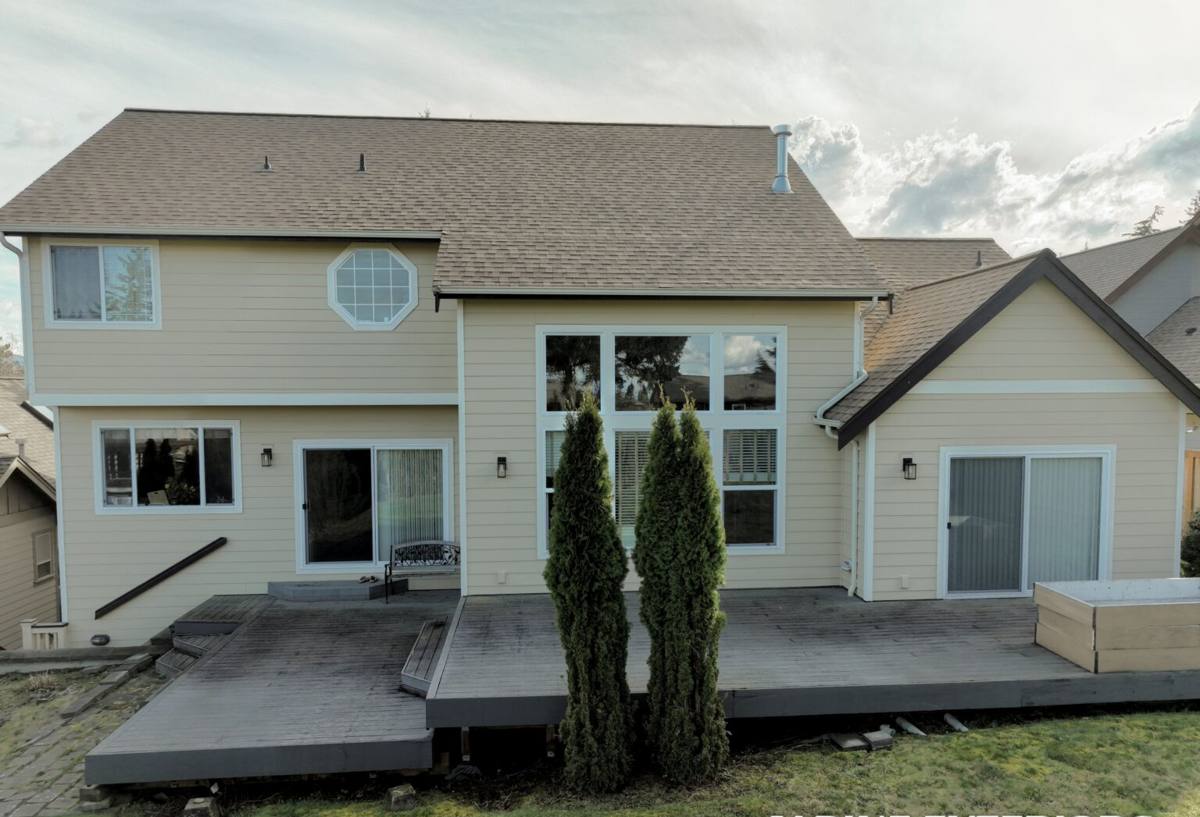
A deck built with generic, one-size-fits-all methods will show its age fast in a spot like this — soft spots in the decking, black streaks of algae, corroded fasteners, and railings that loosen sooner than they should. A deck built specifically for this environment, with the right materials, the right drainage details, and the right hardware, can go decades without those problems. The difference isn't a matter of luck; it's a matter of knowing what this particular pocket of Bellingham throws at outdoor structures and designing around it from day one.
What This Climate Does to an Ill-Built Deck
Before talking about the right way to build, it's worth understanding what actually goes wrong. Most deck failures we see in this area aren't dramatic — they're slow, quiet damage that builds for years before anyone notices.
Moss, Algae, and Constant Shade
Tree canopy and lake-effect humidity mean surfaces in Silver Beach often don't fully dry out between rain events, especially through fall, winter, and early spring. Moss and algae take hold on any decking surface that stays damp and shaded, and once established they hold moisture against the wood or composite surface, accelerating whatever decay process is already underway. A slick, moss-covered deck is also a genuine slip hazard, not just a cosmetic issue.
Driving Rain and Wind-Driven Moisture
Storms coming off the water don't just rain straight down — wind pushes moisture sideways, into joints, under railings, and behind ledger boards. Flat, exposed connections that would be fine in a drier climate become entry points for water intrusion here, which is why flashing and sealing details matter more in this neighborhood than in a lot of places.
Corrosion from Marine Air
Whatcom County's marine air pattern carries salt inland from Bellingham Bay, and that same airflow reaches lakeside neighborhoods like Silver Beach. Combined with near-constant humidity, standard fasteners and connectors corrode faster than manufacturers' ratings often assume. Rust streaks running down decking boards are almost always a sign that the wrong hardware went into the frame.
Choosing the Right Decking Material
There's no single "best" decking material for every home — the right choice depends on how much maintenance you want to do, your budget, and how much sun versus shade your specific lot gets. Here's how the common options actually perform in a damp, shaded, moss-prone setting like Silver Beach.
| Material | Moisture Behavior | Maintenance | Best Fit |
|---|---|---|---|
| Pressure-treated fir/hem-fir | Resists rot when properly sealed; can cup or check if left unfinished | Annual cleaning, refinish every 2–3 years | Budget-conscious owners willing to keep up maintenance |
| Western red cedar | Naturally rot- and insect-resistant; still needs sealing in constant shade | Clean and refinish every 1–2 years in shaded lots | Owners who want a natural look and don't mind upkeep |
| Composite decking | Doesn't absorb water or rot, but can still grow surface algae in deep shade | Periodic cleaning, no sealing or staining | Owners prioritizing low maintenance over decades |
| PVC/capped composite | Fully moisture-sealed surface, best resistance to staining and mold | Lowest maintenance of the group | Heavily shaded, high-moisture lots near the lake |
In a neighborhood like Silver Beach, we lean toward recommending composite or capped composite decking on lots with heavy tree cover, simply because it removes the sealing and refinishing cycle that shaded wood decks demand. That said, plenty of homeowners still prefer real wood, and we build those correctly too — it just means being upfront about the maintenance commitment involved.
Framing and Structure: Getting the Unseen Parts Right
The decking surface is what you walk on, but the frame underneath is what determines whether the deck is still safe in fifteen years. This is where most of the real engineering decisions happen, and it's also where corners get cut on lower-quality jobs because nobody sees it once the boards go down.
Footings and Posts
Footings need to sit below the frost line and bear on solid, undisturbed soil — not fill dirt, which is common on lots that have been graded or landscaped near the lake. Post bases should hold the post above the concrete, not embedded in it, so water doesn't wick up into the wood.
Ledger Attachment
Where the deck attaches to the house is the single most common failure point in wet climates. That connection needs proper flashing that directs water away from the house sheathing and rim joist, along with lag bolts or through-bolts rated for the load — not just nails. A poorly flashed ledger is invisible until the siding or framing behind it starts to rot.
Joist Protection
Joist tops and cut ends are where treated lumber is most vulnerable, since cutting exposes untreated wood underneath. Capping joists with a protective tape barrier before decking goes on keeps water from pooling in fastener holes and wicking into the joist over time — a small step that makes a real difference in a shaded, damp lot.
Structural Checklist We Run on Every Deck
- Footings below frost depth, bearing on undisturbed soil
- Ledger flashed and sealed at the house connection, with proper fasteners rated for the load
- Joist tops and cut ends protected before decking installation
- Post bases that keep wood off standing water or wet concrete
- Beam and joist spans sized to code for the actual decking material and spacing used
- Blocking and bracing installed at stairs and railing posts, not just the field of the deck
Hardware, Fasteners, and Railings That Resist Corrosion
Given the marine-influenced air and near-constant moisture in this area, we treat hardware selection as seriously as decking material. Hot-dip galvanized or stainless steel fasteners and structural connectors cost more upfront than standard coated hardware, but they're the difference between a deck frame that's still sound in twenty years and one that's showing rust bleed and loosened connections in five. Railings get the same attention — post connections and baluster fasteners are exposed to the weather on all sides, so using corrosion-rated hardware there isn't optional in a climate like Bellingham's.
Drainage, Grading, and Moss Prevention by Design
A lot of moss and rot problems trace back to a deck that simply has nowhere for water to go. Gaps between decking boards need to be sized correctly for the material — too tight and they trap debris and moisture, too wide and they become a hazard and let excess light-blocking debris build up underneath. Grading beneath the deck should slope away from the house foundation, and any drainage or downspout discharge nearby needs to be routed away from the deck footings, not toward them.
On heavily shaded lots, we also think about airflow underneath and around the structure. A deck built tight to grade with no ventilation stays damp far longer after a storm than one with a few inches of clearance and open skirting. These are design decisions made before the first post goes in the ground, not fixes applied after moss shows up.
Permits and Site Considerations Near the Lake
Deck projects in Whatcom County typically require a building permit once they exceed a certain size or height off grade, and the City of Bellingham has its own permitting process separate from the county. If your property is close to the lake shoreline or within a designated critical area, additional review may apply beyond a standard building permit — this varies by parcel, so it's worth confirming your specific lot's status before design work locks in. We handle the permit process as part of the job, but it's the kind of detail that's easy for an out-of-area contractor to get wrong or skip entirely.
Our Deck-Building Process
- Site visit and assessment — We look at grade, drainage, shade exposure, and how close you are to the lake, since that shapes both the material recommendation and the design.
- Design and material selection — We walk through decking and hardware options honestly, including maintenance trade-offs, so you're choosing based on real information.
- Permitting — We prepare and submit what's required for your project and jurisdiction before any work starts.
- Framing and structural work — Footings, ledger, joists, and hardware installed to the standards outlined above, not the minimum needed to pass inspection.
- Decking, railing, and finish work — Surface installed with correct spacing and fastening for the material chosen.
- Final walkthrough — We go over the finished deck with you, including what maintenance (if any) it needs going forward.
Why a Silver Beach-Familiar Crew Matters
A deck contractor who mostly works drier, sunnier parts of the county can still build a technically sound deck — but they may not think to spec composite over cedar for a heavily shaded lot, or double down on ledger flashing because they haven't seen how many ledger failures show up in lake-adjacent, shaded properties. Familiarity with a specific neighborhood's conditions shows up in the small decisions that aren't written on the blueprint.
When you're vetting any contractor for a deck project in this area, a few questions tend to separate a solid local crew from a generic one:
- Do they carry current Washington contractor licensing and liability insurance, and can they provide proof?
- Do they pull the required permits themselves, or leave that on you?
- Can they explain why they'd recommend one decking material over another for your specific lot's sun and shade?
- Do they specify corrosion-rated hardware for coastal/marine-air conditions, or default to standard fasteners?
- Will they put footing depth, flashing details, and hardware specs in writing before work starts?
Keeping Your Deck Ahead of Moss Season
Even a well-built deck benefits from a little seasonal attention in a climate like this. Clearing leaves and debris from between boards before the fall rains settle in prevents the trapped moisture that starts moss growth. A yearly rinse with a deck-safe cleaner, done before moss gets a foothold, is far easier than removing it once it's established. Wood decks need their sealant checked annually in shaded spots; composite and capped decking mainly just need to stay clear of debris and organic buildup. None of this is complicated, but skipping it is how a well-built deck starts looking neglected within a couple of seasons.
If you're planning a new deck or replacing one that hasn't held up to Silver Beach's shade and moisture, we're happy to take a look and put together a straightforward, no-pressure estimate — just fill out the form below.