 Bellingham Exterior
 Why Decks in Silver Beach Wear Out Faster Than People Expect
Silver Beach is one of the wetter, shadier pockets of Bellingham, and the decks here take a beating in ways that a lot of homeowners don't fully clock until the boards are already cupping, the fasteners are bleeding rust, or a joist gives a little more than it should underfoot. Between salt-laden air off the water, long stretches of driving rain, and a moss season that can run most of the year, an outdoor structure in this neighborhood is working harder than the same deck would be twenty or thirty miles inland.
Salt Air and Metal Fasteners
Salt air accelerates corrosion in exposed fasteners, joist hangers, and any hardware that isn't rated for coastal exposure. On older decks it's common to find galvanized nails or hangers that have started to pit and weaken years before the wood around them has failed. Once fasteners corrode, the connection they're holding — a ledger board, a stair stringer, a joist hanger — is compromised even if the deck still looks solid from a few feet away.
Moss, Shade, and Standing Moisture
Tree cover and the general dampness of this part of Whatcom County keep a lot of deck surfaces shaded and slow to dry out after rain. That combination is exactly what moss and algae need to take hold. Beyond being slippery underfoot, a moss layer traps moisture against the board surface, which speeds up rot in wood decking and can stain or degrade the surface layer on composite products if it's left to build up season after season.
Driving Rain and End-Grain Exposure
Wind-driven rain doesn't just fall straight down — it gets pushed sideways into board ends, stair stringers, and the gaps around railing posts. End grain absorbs water far faster than the face of a board, so the failure points on a Bellingham deck are often at cut ends, around post bases, and at the ledger connection to the house, well before the main deck surface shows obvious wear.
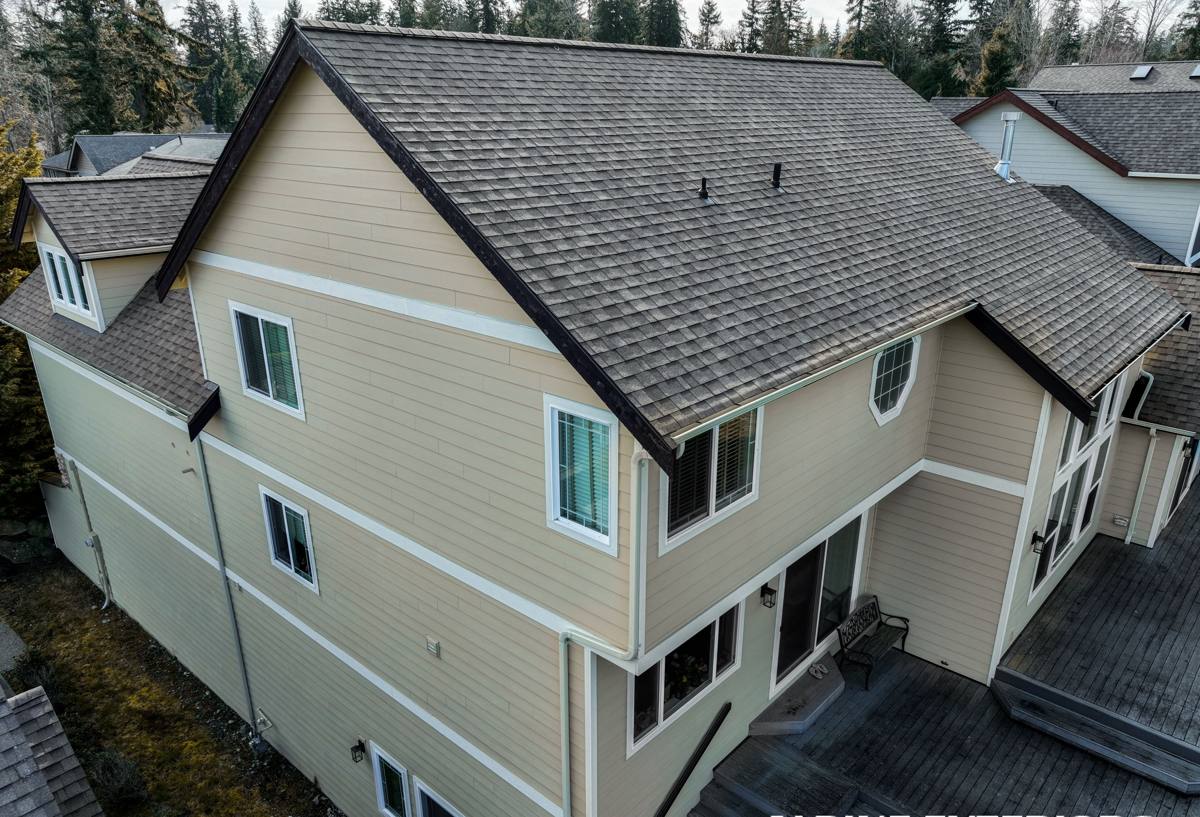
Signs Your Silver Beach Deck Needs Replacing, Not Just Repair
Not every tired-looking deck needs a full teardown. But there's a point where patching individual boards stops making sense and a full replacement becomes the more honest recommendation — both for your budget and for your family's safety. Some of the signs we look for:
- Soft, spongy, or springy spots in the decking or framing when you walk across it
- Rust streaks or corrosion visible around joist hangers, bolts, or ledger fasteners
- A ledger board that's separating from the house, even slightly, or showing water staining behind it
- Persistent moss or dark staining that comes back within weeks of cleaning
- Railing posts that wobble or have any give when pushed
- Multiple boards with checking, splintering, or cupping rather than one or two isolated ones
- A deck original to a home older than 20 years that has never had structural work done
If you're only seeing one or two of these, repair may still be the right call. If you're seeing several at once, especially anything involving the ledger connection or the framing underneath, that's usually a structural conversation, not a cosmetic one.
What a Correct Deck Replacement Involves Here
A deck replacement done right in this climate isn't just swapping old boards for new ones. It starts underneath, at the parts nobody sees once the project is finished.
Substructure and Ledger Board
The ledger board — the piece that ties the deck to the house — is the single most important connection on the whole structure, and it's also the piece most exposed to water intrusion if it isn't flashed correctly. On a replacement, we treat the ledger flashing and the waterproofing behind it as non-negotiable, not an afterthought, because a poorly flashed ledger is one of the more common causes of hidden rot behind an otherwise good-looking deck.
Framing and Joist Spacing for Wet Climates
Framing lumber, joist hangers, and fasteners all need to be rated for exposed, wet-climate use — not just whatever meets minimum code in a drier region. We also pay attention to joist spacing and airflow underneath the deck, since a structure that can't dry out between rain events is a structure that rots faster, regardless of what decking material sits on top of it.
Decking Material Choices
There's no single "best" decking material for every Silver Beach home — it depends on your budget, how much upkeep you want to take on, and how the deck is used. Here's how the common options actually compare in a salt-air, high-rain climate:
| Material | Upfront Cost | Maintenance | How It Handles This Climate |
|---|---|---|---|
| Pressure-treated wood | Lowest | Annual cleaning, periodic sealing or staining | Affordable, but needs consistent upkeep to resist moss and moisture; end grain and fasteners are the weak points |
| Cedar | Moderate | Sealing every 1-2 years to hold color and resist moisture | Naturally more rot-resistant than treated pine, but still needs regular maintenance in this much rain and shade |
| Capped composite | Higher | Occasional washing, no sealing or staining | Best resistance to moss staining and moisture absorption; the cap layer keeps water out of the board core |
| Uncapped composite (older style) | Moderate to higher | More cleaning than capped composite | Can absorb moisture at cut ends and is more prone to mold or staining in shaded, damp spots |
We're honest with homeowners about trade-offs rather than pushing one product. Pressure-treated wood is the budget-friendly choice if you're willing to stay on top of cleaning and sealing. Capped composite costs more upfront but is the lowest-maintenance option for a shaded, damp lot, which is worth factoring in if you don't want to be out there scrubbing moss every spring.
Permits and Whatcom County Considerations
Most deck replacements in Bellingham require a permit, particularly if the deck is attached to the house, elevated, or being rebuilt to a different size or footprint than the original. Requirements can vary depending on the deck's height, whether guardrails are involved, and setback rules for the property. We handle the permit process as part of the job so homeowners aren't left figuring out city and county requirements on their own — but it's worth knowing upfront that a "just replace the boards" job can turn into a permitted project once the framing underneath is opened up and found to need work.
Our Process for a Silver Beach Deck Replacement
- On-site assessment. We look at the existing deck, the ledger connection, the framing condition, and how the site drains and gets sun exposure, since that affects both the diagnosis and the material recommendation.
- Honest scope and estimate. You get a clear picture of what's repair-worthy versus what needs full replacement, with a written estimate before any work starts.
- Permitting. We pull the necessary permits and coordinate any required inspections so the work is documented and code-compliant.
- Demolition and disposal. The old structure comes out cleanly, and we haul away debris rather than leaving it for the homeowner to deal with.
- Rebuild from the ground up. New footings or posts as needed, correctly flashed ledger, wet-climate-rated framing and fasteners, then the decking, railing, and stairs.
- Final walkthrough. We go over the finished deck with you, including basic care guidance specific to the material you chose.
Why a Crew That Already Works Silver Beach Matters
A contractor who works this neighborhood regularly already knows what to expect before the first board comes off: which connections tend to have hidden corrosion, where moss builds up fastest based on tree cover and sun angle, and how the local building department handles deck permits. That familiarity saves time during the estimate, avoids surprises mid-project, and means the materials and fastener specs we recommend are chosen for this specific climate rather than a generic set of national defaults. It's the difference between a deck that's built to look good on installation day and one that's built to hold up through a decade of Bellingham winters.
Keeping a New Deck in Good Shape After Installation
Whatever material you choose, a little routine care goes a long way in this climate:
- Sweep leaves and debris off the surface regularly, especially in fall, so moisture doesn't sit trapped underneath organic matter
- Rinse or wash the deck surface a couple of times a year to keep moss and algae from taking hold
- Check railing posts and stair connections annually for any looseness
- For wood decks, plan on resealing or restaining on the schedule appropriate to the species — don't wait until it's visibly gray and dry
- Keep gutters and downspouts near the deck clear so runoff isn't dumping extra water onto the structure
None of this is complicated, but skipping it is usually how a well-built deck ends up needing early repairs anyway.
Cost Factors Worth Knowing Before You Budget
Every deck replacement is different, but the biggest cost drivers we see on Silver Beach projects are the size and height of the deck, whether the substructure needs full replacement versus reuse of sound footings, the decking material you choose, and how much railing and stair work is involved. A straightforward, ground-level rebuild in wood will run less than an elevated deck in capped composite with full railing systems. We walk through these factors during the estimate so you understand where your money is going, rather than handing you a single number with no explanation behind it.
If your Silver Beach deck is showing its age — or you're just not sure whether it needs repair or full replacement — we're happy to take a look and give you a straight answer. Use the form below to request a free, no-pressure estimate, and we'll walk the property with you before recommending anything.