 Bellingham Exterior
 Why Silver Beach Homes Need a Different Approach to Siding
Silver Beach is one of the more exposed residential pockets in the greater Bellingham area, and that exposure shows up on siding faster than most homeowners expect. Homes here deal with a combination that's tough on exterior materials: salt-laden air drifting in off the water, driving wind-blown rain that hits walls at an angle instead of falling straight down, and a moss and mildew season that can run eight months or longer in a typical Whatcom County year. Individually, none of these are unusual for Western Washington. Together, on a property that sits close to open water, they accelerate wear on siding in ways that a home ten miles inland simply doesn't experience at the same rate.
Salt air is corrosive to exposed fasteners and metal trim, and it also breaks down certain paint films and caulks faster than fresh-air exposure does. Wind-driven rain doesn't just wet the siding surface — it finds its way behind poorly lapped panels, undersized flashing, and old caulk joints that have shrunk and cracked. And moss doesn't just look bad; it holds moisture against the siding face for weeks at a time, which is exactly the condition that rots wood-based products and stains lesser cladding permanently.
None of this means Silver Beach is a bad place to own a home — it means the siding has to be chosen and installed with this specific exposure in mind, not treated like a generic Bellingham job.
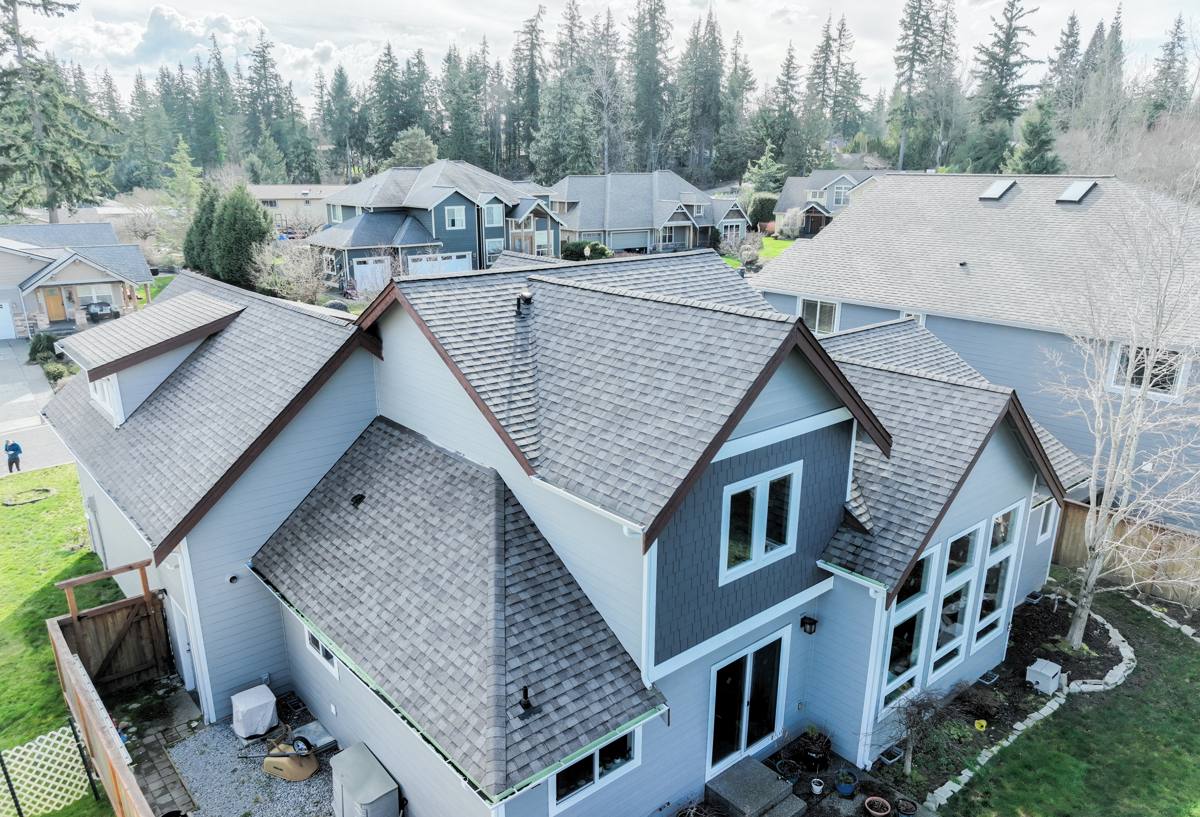
What "Correct" Siding Replacement Actually Involves
A siding replacement that holds up in this kind of environment is about more than swapping old panels for new ones. The work that happens underneath the visible surface is what determines whether a home is dry in year one and still dry in year twenty.
Tear-Off and Substrate Inspection
Every full replacement starts with removing the old siding down to the sheathing, not just re-siding over it. This is the only point in the project where hidden rot, soft sheathing, or prior water damage can actually be found and fixed. Skipping this step — or covering over problems instead of repairing them — is one of the most common ways a siding job fails early.
Weather-Resistive Barrier and Flashing
Behind every new siding installation should be a properly lapped weather-resistive barrier, correctly integrated flashing at windows, doors, and roof-to-wall intersections, and rainscreen or drainage detailing appropriate to the exposure. In a driving-rain environment like Silver Beach, flashing details matter more than the siding material itself — a great product installed with poor flashing will still leak.
Panel Installation and Fastening
Correct nailing patterns, proper clearance from grade and roof lines, and manufacturer-specified gaps at joints all affect long-term performance. This is also where fastener choice matters in a salt-air setting — corrosion-resistant fasteners aren't optional here, they're a requirement.
Caulking, Trim, and Finish
The finish work — caulking joints, sealing penetrations, and painting or pre-finished color coating — is what stands between the home and years of wind-driven rain. Factory-applied finishes tend to outperform field-applied paint in this climate because they cure under controlled conditions rather than in damp Pacific Northwest air.
Why We Only Install James Hardie Fiber Cement
We install James Hardie fiber cement siding exclusively, and in a neighborhood like Silver Beach that's a deliberate choice, not a default one. Fiber cement is non-combustible, dimensionally stable, and doesn't absorb and swell with moisture the way wood-based products can. That matters directly in an environment with a long wet season and consistent moisture exposure from rain and humidity.
We don't install vinyl siding, LP SmartSide, cedar, primed spruce, Cemplank, or Allura, and we're upfront about why. Vinyl can warp and become brittle with repeated freeze-thaw and UV cycling, and its seams and J-channels give wind-driven rain more opportunities to get behind the cladding. Wood-based and OSB-core products like LP SmartSide perform well when maintained perfectly, but they depend on an unbroken factory coating and diligent field sealing at every cut edge — in a high-moisture, high-moss environment, that margin for error gets thin fast. Cedar and primed spruce are attractive materials, but they require an ongoing maintenance commitment — refinishing, moss treatment, and edge sealing — that most homeowners underestimate until the siding is already showing wear.
James Hardie's HZ5 product line is engineered specifically for climates like ours, with enhanced moisture and freeze-thaw performance built into the formulation. Combined with the ColorPlus factory finish — which is baked on and backed by its own finish warranty rather than depending on a field-applied paint job — it holds color and resists the fading and staining that Silver Beach's salt air and moss exposure tend to cause. It's also backed by a strong, transferable product warranty, which matters if the home changes hands down the road.
Our Siding Replacement Process
- On-site assessment: We walk the exterior, check for soft spots, moisture staining, and existing flashing conditions before quoting anything.
- Scope and product selection: We recommend the appropriate Hardie product line and profile for the home's exposure — this can vary even between two houses on the same street depending on orientation to wind and water.
- Tear-off: Old siding and any compromised trim or flashing come off completely.
- Sheathing repair: Any rot or damage found underneath is repaired before anything new goes back on — this is never skipped or covered over.
- Weather barrier and flashing installation: New house wrap, drainage plane, and flashing are installed to current best practice, not just to match what was there before.
- Hardie installation: Panels, planks, or shingles are installed per James Hardie's fastening and clearance specifications.
- Finish and detail work: Trim, caulking, and touch-up are completed to a clean, weather-tight standard.
- Final walk-through: We review the completed work with the homeowner before calling the job done.
Signs Your Silver Beach Home May Need Siding Replacement
Because moisture damage often starts hidden behind the siding face, many homeowners don't realize replacement is due until the problem is well advanced. Watch for:
- Soft or spongy spots when you press on the siding, especially near the bottom courses
- Persistent moss or algae growth that returns quickly after cleaning
- Paint that's peeling, bubbling, or chalking faster than a normal repaint cycle would suggest
- Visible warping, buckling, or separation at seams and corners
- Rising utility bills that may point to compromised insulation behind failing siding
- Cracked or missing caulk at trim, window, and door joints
- Discoloration or staining that tracks with prevailing wind and rain direction
What Drives the Cost of a Siding Replacement
Every home is different, but the same handful of factors drive most of the cost variation we see on Silver Beach projects:
| Factor | Why It Matters |
|---|---|
| Extent of hidden sheathing damage | Rot found during tear-off has to be repaired before new siding goes on |
| Home size and wall complexity | More corners, dormers, and trim details mean more labor and material |
| Siding profile selected | Lap, shingle, and panel Hardie products differ in material and install time |
| Existing trim and flashing condition | Deteriorated trim or flashing usually needs replacing alongside the siding |
| Site access and exposure | Waterfront and steep-lot properties can add staging and access complexity |
| Color and finish selection | Factory ColorPlus finishes vs. field-painted options affect material pricing |
We give homeowners a straightforward, itemized estimate after the on-site assessment rather than a rough phone quote — too much of the real cost depends on what's actually found once the old siding comes off.
Why Local Experience in Silver Beach Matters
A crew that already works in Silver Beach knows things a general contractor coming in from outside the area has to learn on the job: how prevailing wind and rain patterns hit different sides of a house here, which flashing and drainage details actually hold up near the water, and what the City of Bellingham and Whatcom County expect in terms of permitting and inspection for exterior work. That local familiarity shows up in fewer surprises — both during the project and for years afterward.
It also means we're not experimenting with an unfamiliar climate on your home. We've seen how salt air, driving rain, and a long moss season interact with different siding materials over time in this exact area, and that experience directly shapes the product and installation choices we recommend.
Maintenance After Replacement
James Hardie fiber cement is far lower-maintenance than wood-based alternatives, but "low-maintenance" isn't "no-maintenance" — especially in a moss-prone environment like Silver Beach. A simple annual routine keeps the investment protected:
- Rinse siding annually to remove moss spores, pollen, and salt residue buildup
- Inspect caulk joints at trim and penetrations for cracking or shrinkage
- Trim back vegetation and landscaping that holds moisture against the wall
- Check gutters and downspouts to keep water directed away from siding and grade
- Address any impact damage or chips promptly to prevent moisture intrusion at the site
If you're noticing moss buildup, soft siding, peeling paint, or you're simply due for an update, we're happy to take a look and give you an honest, no-pressure assessment of what your Silver Beach home actually needs. Use the form below to request a free estimate.