 Bellingham Exterior
 Decks on South Hill Face a Different Set of Conditions
South Hill sits on elevated, sloped ground above the rest of Bellingham, and a lot of homes up here get partial shade from mature trees along with open exposure to weather coming off Bellingham Bay. That combination puts real stress on an outdoor deck. A flat, sunny, inland lot in Whatcom County doesn't fight the same battles a hillside deck near the water does. Add in the region's long wet season, rain that drives in sideways off the water during a storm, and salt-carrying air working on every piece of exposed metal, and you get a climate that will expose any shortcut in a deck's construction within a few years, not decades.
We build and repair decks across Bellingham, and the South Hill jobs we get called out to tend to share the same handful of problems: moss and algae that never fully dry between rains, ledger boards that were flashed incorrectly when the deck was first built, and fasteners corroding faster than the wood they're holding together. None of that is unusual for this part of Washington. It's just what a deck here has to be built to handle from day one.
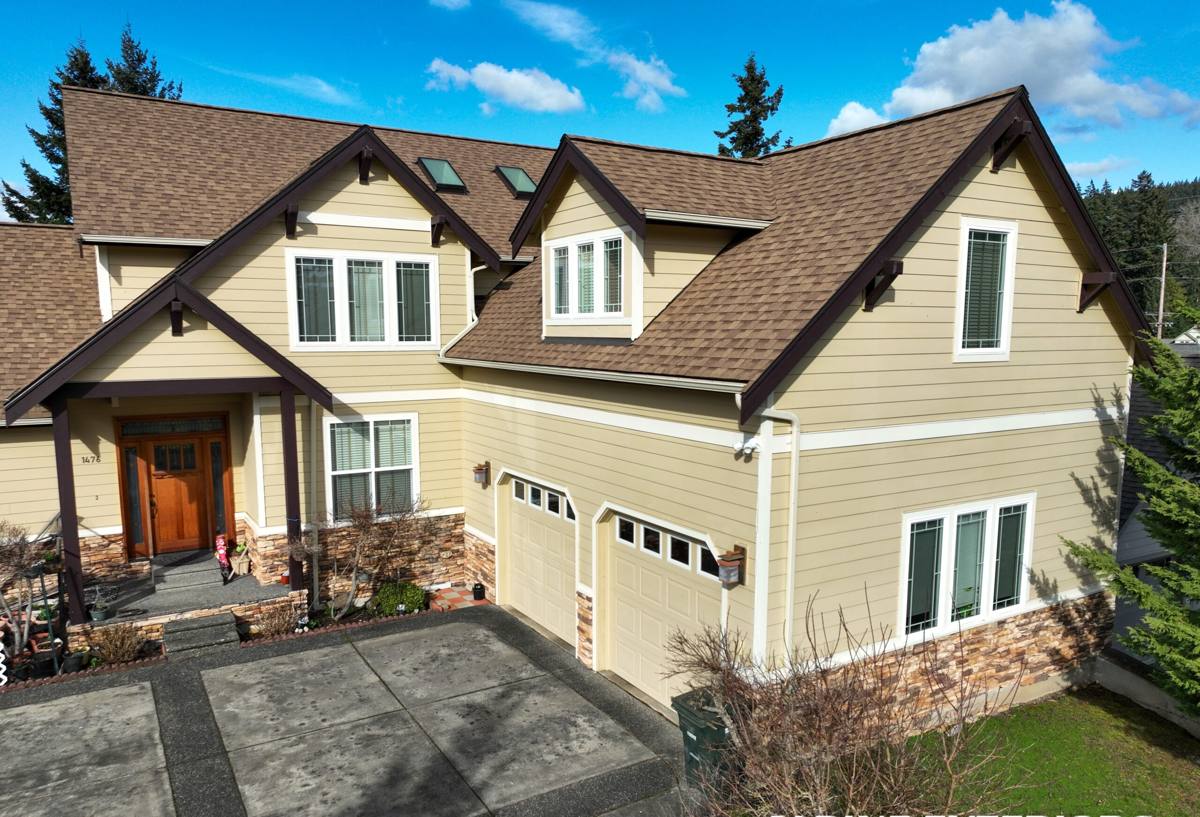
What South Hill Homes Need From a Deck
Grading and Drainage on Sloped Lots
Hillside lots change how water moves around a structure. A deck built low to the ground on a slope can trap runoff against footings and framing instead of letting it drain away, and post footings on a grade need to be set correctly so the deck doesn't shift as the soil around it saturates and dries through the season. We look at how water actually moves across the yard before we finalize a footing layout, not just where the deck "fits" visually.
Shade and Moss Pressure
Tree cover is part of what makes South Hill a pleasant place to live, but shaded decking stays damp far longer after a rain than decking in full sun. That extended damp window is exactly what moss and algae need to take hold. A deck built for a shaded South Hill lot needs better airflow underneath, a decking surface that handles moisture well, and a maintenance plan that accounts for moss — not a build that assumes full afternoon sun will dry things out on its own.
Wind and Wind-Driven Rain
Elevated lots with a view of the bay often get more direct wind exposure than lots tucked into the flats. Wind-driven rain finds its way into any gap in flashing, trim, or fastener holes far more aggressively than a straight-down rain would. That's a big part of why ledger flashing and fastener choice matter more here than they would on a sheltered inland deck.
Where We See South Hill Decks Fail
Most of the deck problems we're called out to fix on South Hill trace back to a handful of root causes, and almost none of them are about the age of the deck by itself — they're about how it was built.
- Ledger board rot — the board that attaches the deck to the house is the single most common failure point when flashing was skipped or installed wrong, letting water track behind it into the rim joist and wall framing.
- Corroded fasteners — salt air accelerates corrosion on screws, joist hangers, and bolts that weren't rated for it, and once fasteners weaken, the whole structure's integrity is in question even if the wood looks fine.
- Moss and algae buildup — beyond looking bad, a moss layer holds moisture against the decking surface, which speeds up rot in wood decking and can make composite surfaces dangerously slick.
- Undersized or shifting footings — on sloped ground, footings that weren't set to the right depth or bearing can move as the soil saturates and drains through the wet season, leading to a deck that feels "bouncy" or uneven over time.
- Poor airflow underneath — decks built low to the ground or against shaded foundation walls without ventilation trap moisture underneath the structure long after the surface looks dry.
Choosing a Decking Material for This Climate
There's no single "right" decking material for every home, but on a shaded, salt-air-exposed hillside lot, some materials are a much easier fit than others. Here's how the common options actually perform in these conditions, honestly, not just on price.
| Material | Moisture & Moss Behavior | Maintenance | Typical Lifespan |
|---|---|---|---|
| Pressure-treated wood | Absorbs moisture readily; moss and mildew take hold quickly in shade without regular cleaning and sealing | Annual cleaning and re-sealing recommended | 10–15 years with upkeep |
| Cedar | Naturally more rot-resistant than treated pine, but still needs sealing to resist moss in shaded, damp spots | Sealing every 1–2 years | 15–20 years with upkeep |
| Uncapped composite | Won't rot, but the exposed wood-fiber surface can still grow algae and stain in constant shade and damp | Periodic cleaning; no sealing needed | 20–25 years |
| Capped composite / PVC | Sealed outer shell sheds moisture and resists moss and algae staining far better in shaded, wet conditions | Occasional washing | 25+ years |
For a shaded South Hill lot with real moss exposure, we generally steer homeowners toward capped composite or PVC decking for the walking surface, because the sealed cap sheds water and doesn't give algae the porous surface it needs to grip. That's a maintenance and moisture-behavior call, not a knock on wood — a well-maintained cedar deck can absolutely hold up here, it just asks more of the homeowner year after year. We'll lay out the honest trade-offs for your specific lot and let you decide what fits your budget and how much upkeep you want to take on.
What a Correctly Built Deck Includes
A deck that's going to hold up on South Hill isn't just about the decking boards on top. The parts nobody sees when the project is finished are the parts that determine whether it lasts.
Ledger Attachment and Flashing
Where the deck meets the house, the ledger board needs proper flashing that directs water away from the house wall and rim joist, not just a bead of caulk. This is the single most important detail on any deck attached to a home in a wet climate, and it's the detail most often done wrong on older decks we inspect.
Fasteners and Hardware
In a salt-air environment, hardware needs a corrosion resistance rating that matches the exposure — standard interior-grade fasteners have no business holding up an outdoor structure here. Joist hangers, structural screws, and bolts should all be rated for exterior, coastal-adjacent use.
Joist Protection
Covering the tops of joists with a self-adhering flashing tape before decking goes down keeps water from soaking into end grain through screw holes, which is one of the most common places rot starts on an otherwise well-built deck.
Footings and Framing on Sloped Ground
Footings need to be set to the correct depth and bearing for the specific slope and soil, with framing sized for the actual span and load, not just "what's always been done." On a hillside lot, this is where an experienced eye matters most.
Airflow and Ground Clearance
Adequate clearance and ventilation underneath the deck keeps moisture from being trapped against framing long after a storm has passed, which matters more under shade than in open sun.
Guardrails and Stairs
Elevated decks on sloped South Hill lots often need guardrails and stair details sized specifically for the height and grade involved — this is also where local code requirements come into play most directly.
Our Process for South Hill Deck Projects
- On-site assessment — we walk the actual lot, note the slope, shade pattern, drainage path, and existing structure (if it's a rebuild), and take real measurements rather than working off a generic template.
- Design and material selection — we talk through decking material, layout, and any structural considerations specific to your grade and exposure, with honest cost and maintenance trade-offs for each option.
- Permitting — deck projects in Bellingham and Whatcom County typically require permitting depending on size and height; we handle that process so it's not left to you to figure out.
- Build — footings, framing, flashing, and hardware go in to the standard the site actually requires, then decking, railing, and stairs finish the job.
- Final walkthrough — we go over the finished deck with you, including what maintenance it needs and on what schedule, before we call the job done.
Maintaining a Deck Through Bellingham's Long Wet Season
Even a well-built deck needs some seasonal attention in this climate, especially on a shaded South Hill lot. A little maintenance goes a long way toward avoiding the moss buildup and hidden moisture damage we get called out to fix on decks that were otherwise built reasonably well.
- Sweep debris and leaves off the decking regularly, especially in fall — trapped organic matter holds moisture and feeds moss growth.
- Clean the decking surface at least once a year to remove algae and moss before it embeds in the surface or grout lines between boards.
- Check that gaps between boards are clear so water can drain through rather than pooling on top.
- Inspect the ledger board area where the deck meets the house for any signs of staining, soft wood, or gaps in flashing or caulk.
- Look underneath the deck once or twice a year for standing water, sagging joists, or corrosion on visible hardware.
- Reseal wood decking on the schedule it actually needs — don't wait until it's visibly gray and weathered.
- Keep nearby vegetation trimmed back where it's shading the deck surface more than necessary or dropping debris directly onto it.
Why a Local South Hill Crew Matters
A deck builder who works this neighborhood regularly already knows how South Hill's slopes, shade patterns, and exposure to the bay affect a build — they're not learning it on your project. That familiarity shows up in footing decisions on sloped lots, in flashing details sized for wind-driven rain, and in material recommendations that account for how much shade a specific lot actually gets rather than a generic assumption. It also means a crew that's already familiar with Bellingham and Whatcom County permitting requirements, so that part of the process doesn't become a bottleneck.
Local also means accountability. A crew that lives and works in this area isn't disappearing after the final payment clears — if something needs a look a year or two down the road, we're still here and still reachable.
If you're planning a new deck or need an honest look at one that's showing its age, we're happy to come out, walk the property, and give you a straightforward estimate — no pressure, no hard sell. Use the form below to get started.