 Bellingham Exterior
 Storm Damage Roof Repair for Birchwood Homes
Birchwood sits close enough to Bellingham Bay that salt-laden air is part of daily life on a roof, and far enough into the tree canopy that shade, needle litter, and moss are constant companions. When a windstorm rolls through Whatcom County, those two conditions combine in ways that generic storm-damage advice doesn't cover. A roof that's already carrying a few years of moss growth and salt exposure doesn't handle wind-driven rain the same way a bare, dry roof does, and that difference matters when you're trying to figure out how bad the damage actually is.
This page is about one job, done right, in one neighborhood: storm damage roof repair for Birchwood homes. Not a full replacement pitch, not a generic checklist copied from somewhere else in the country — what actually happens to roofs here, what a correct repair looks like, and how we approach it when we're called out after a storm.
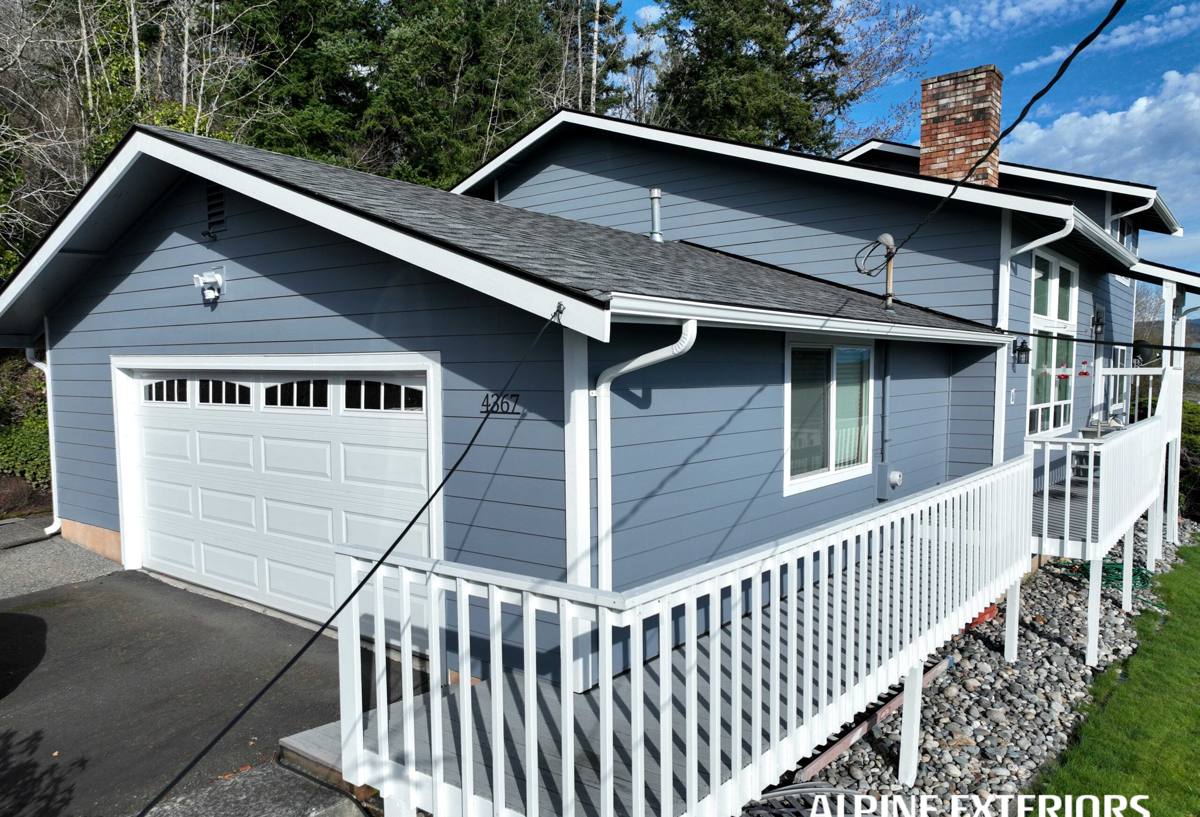
Why Birchwood Roofs Take Storm Damage Differently
Three things show up again and again on Birchwood roofs after a wind event:
Salt Air and Metal Fatigue
Proximity to the bay means chlorides in the air settle on exposed metal — flashing, fasteners, gutter hardware, vent caps. Over time this accelerates corrosion, especially at cut edges and fastener heads where protective coatings are thinnest. A flashing seam that would hold up fine inland can already be compromised before a storm even hits, so wind-driven rain finds the weak point faster.
Driving Rain, Not Just Volume
Bellingham storms rarely dump rain straight down. Wind pushes it sideways and up under laps, seams, and flashing that were only ever designed to shed water moving downhill. This is how a roof with no missing shingles can still leak — the water didn't come through a hole, it came through a lap joint that isn't built to resist horizontal pressure.
A Long Moss Season
Whatcom County's wet season runs long, and Birchwood's tree cover keeps roofs shaded and slow to dry between storms. Moss doesn't just look bad — it holds moisture against the roofing material, lifts shingle edges as it grows, and clogs the granular surface that's supposed to shed water. A storm that would otherwise cause minor damage can do real harm on a roof where moss has already been working against the material for months.
What Storm Damage Actually Looks Like Here
Not all storm damage is dramatic. Some of it is easy to miss from the ground, which is part of why small problems turn into interior leaks weeks later. Signs worth checking after any significant wind or rain event:
- Shingles that look lifted, curled, or slightly out of pattern compared to the surrounding roof
- Granules collecting in gutters or at downspout outlets — a sign of surface wear, often worse where moss has been present
- Bent, lifted, or missing flashing around chimneys, vents, and skylights
- Fresh gaps or debris caught under roof edges, ridge caps, or hip caps
- New or worsening moss growth where wind has opened up a seam and trapped moisture underneath
- Interior signs — a ceiling stain, a musty smell in an attic space, or a damp spot near a chimney chase — that show up days after the storm, not during it
- Fallen branches or debris resting on the roof, even if nothing looks obviously broken underneath
If you see any of these after a storm, the right move is a roof-level inspection before the next round of weather, not after a leak shows up inside.
What a Correct Storm Damage Repair Involves
Stopping Active Water Intrusion First
If a roof is actively leaking or has an open area exposed to weather, the first job is temporary protection — tarping or sealing the vulnerable spot — before anything else. This isn't the repair itself, but skipping it while waiting on scheduling or insurance paperwork is how a one-area problem becomes a whole-deck problem.
Finding the Real Source, Not Just the Visible Damage
Wind-driven rain travels sideways and up, so the spot where water shows up inside is often not directly below where it entered the roof. A correct repair traces the path — checking flashing, underlayment laps, and fastener lines uphill from the visible symptom — instead of patching the first thing that looks wrong.
Matching Materials, Not Just Covering the Hole
Repairs need to tie into the existing roofing system correctly: proper shingle or panel overlap, flashing that integrates with what's already there, and fasteners rated for the material being repaired. A patch that isn't woven into the surrounding roof correctly becomes its own future leak point, especially once wind gets under an edge that wasn't properly sealed.
Addressing Moss and Debris in the Repair Area
If moss contributed to the damage — and in this area it often does — a repair that doesn't remove growth and clear the surrounding area is incomplete. We treat the affected zone as part of the repair, not as a separate add-on, because leaving moss in place next to fresh materials just sets up the same failure again.
Checking Adjacent Areas
One damaged section is a reason to look at the whole slope, not just the one spot. Storms that damage one area of flashing or one row of shingles often stress the same materials elsewhere on the roof, particularly on the side that took the wind directly.
Our Process for Storm-Damaged Roofs in Birchwood
- Inspection and documentation. We look at the whole roof, not just the reported problem area, and document what we find — useful for your own records and for any insurance claim.
- Honest scope of work. We tell you what's storm damage, what's pre-existing wear (moss, age, prior settling), and what's cosmetic versus structural. This distinction matters for insurance and for your own decision-making.
- Written estimate before work starts. No verbal-only pricing, no surprise scope changes without a conversation first.
- Repair using materials that match or reasonably correspond to your existing roof, with attention to flashing details and fastening appropriate for our wind and rain exposure.
- Cleanup. Old materials, debris, and any moss removed as part of the job — not left for you to deal with.
- Follow-up. If something about the repair doesn't hold up the way it should, we want to hear about it directly rather than have it turn into a bigger problem next season.
Repair or Replace: What Actually Drives That Decision
Not every storm-damaged roof needs full replacement, and not every roof that "just needs a patch" is actually a good repair candidate. The honest answer depends on a few factors:
| Factor | Favors Repair | Favors Replacement |
|---|---|---|
| Roof age | Well within expected material lifespan | Near or past the end of its service life |
| Extent of damage | Isolated to one area or slope | Spread across multiple slopes or repeated storm hits |
| Moss and moisture history | Minor, treatable growth | Long-term moss damage affecting the deck or underlayment broadly |
| Underlying deck condition | Solid, no soft spots or rot found | Soft decking, rot, or repeated past patch jobs stacked on each other |
| Material availability | Matching materials still findable | Discontinued product, poor match likely |
We'll give you a straight answer on which category your roof falls into rather than defaulting to the more expensive option out of habit.
Why It Matters That We Already Work in Birchwood
A crew that treats every roof the same way regardless of neighborhood is going to miss things here. Working Birchwood regularly means we already have a feel for how exposed a given lot is to wind off the bay, which tree-shaded roofs tend to hold moss longest into the dry months, and what typical roof ages and material types look like on homes in this part of Bellingham. That context speeds up diagnosis — we're not guessing at what's normal for the area, we're comparing against what we've actually seen.
It also matters for permitting and insurance conversations. Whatcom County and City of Bellingham requirements apply the same way regardless of who does the work, but a contractor who handles storm repairs regularly in this area is more efficient at documenting damage in the format insurance adjusters expect, which can shorten the time between the storm and getting your roof actually fixed.
Preventing the Next Storm From Doing the Same Damage
Once a storm repair is done, a few ongoing habits reduce the odds of a repeat problem in this climate:
- Keep gutters and downspouts clear so wind-driven rain has somewhere to go instead of backing up under roof edges
- Have moss treated before it establishes rather than after it's visibly thick — early treatment is far less invasive
- Trim back branches that overhang the roof, since falling limbs and constant shade are two separate but related risks
- After any major wind event, do a quick visual check from the ground, and call for an inspection if anything looks off
- Address minor flashing or seal issues promptly — small gaps are cheap to fix and expensive to ignore through a full wet season
Get a Straight Answer on Your Roof
If a recent storm has you wondering whether your Birchwood roof needs attention, we're glad to take a look and give you an honest read — repair, monitor, or replace — without pressure either way. Use the form below to request a free estimate, and we'll go from there.