 Bellingham Exterior
 Deck Repair for Sudden Valley Homes
Sudden Valley sits along the shores of Lake Whatcom, a wooded, hillside community southeast of Bellingham where tree canopy, lake humidity, and steep lots shape how decks age. A deck that would hold up fine in a dry, open subdivision can develop real problems here years earlier, simply because of where it sits. We repair decks throughout this community and see the same patterns often enough to know exactly what to check first and what usually turns out to be the real cause of a soft board or a sagging step.
This page is about deck repair specifically — not new deck builds, and not a general overview of decking. If your deck is structurally sound but showing wear, or if something feels off when you walk on it, this is the service you're looking for.
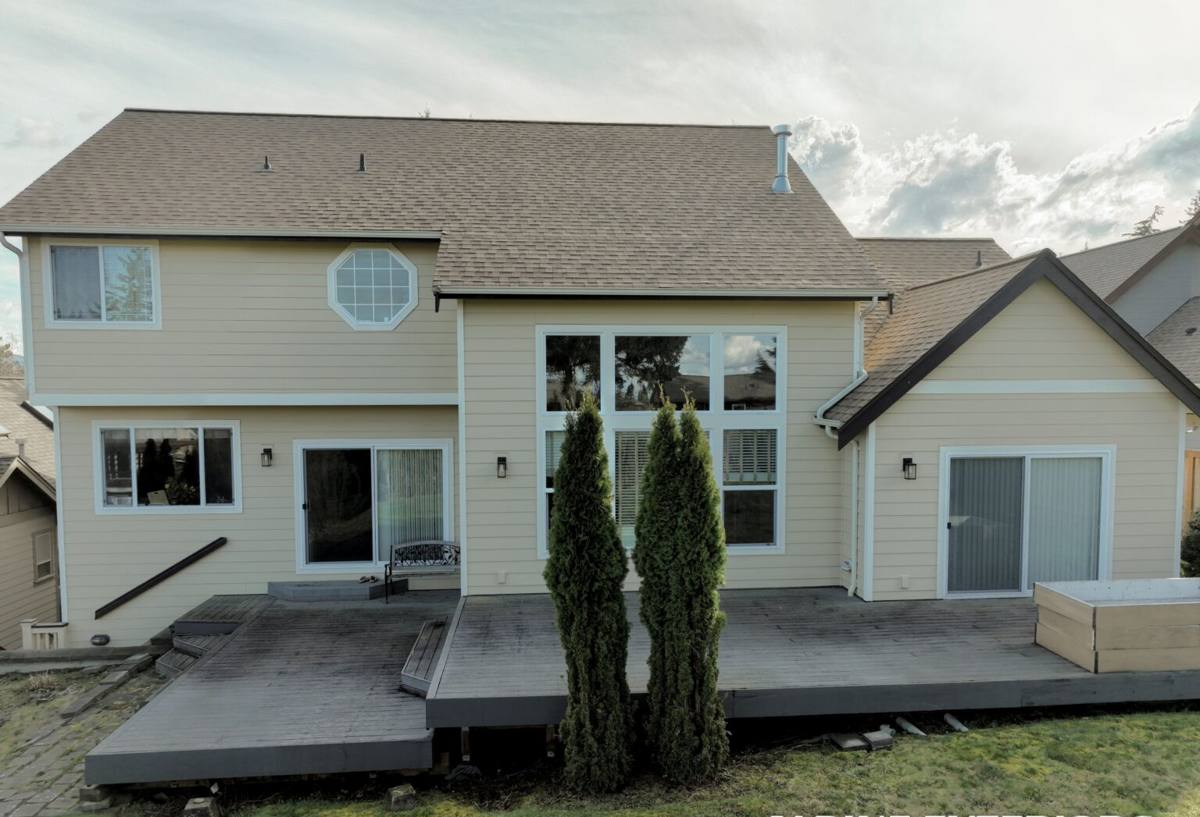
Why Decks in This Part of Whatcom County Wear Differently
Bellingham and the surrounding county deal with driving rain for much of the year, and homes closer to open water can pick up salt-tinged air as well. Sudden Valley's specific challenge is a bit different: heavy tree cover and proximity to Lake Whatcom keep humidity high and sun exposure low on a lot of decks, especially north-facing ones or those tucked under mature trees. That combination is exactly what moss, algae, and slow-drying wood need to take hold.
A deck that dries out within a few hours after rain sheds moisture and stays sound. A deck that stays damp for a day or two — because it's shaded, because leaves and needles collect on it, because airflow underneath is blocked — is the one that develops soft spots, fastener corrosion, and a slick, moss-covered surface. We factor that into every repair, because fixing the visible damage without addressing why the deck stays wet just means doing the same repair again in a few years.
The Long Moss Season
In Sudden Valley's shadier lots, moss can start forming as early as fall and hang on well into late spring. Beyond looking bad, moss holds moisture directly against the wood or composite surface, and on stairs and ramps it becomes a genuine slip hazard. Moss growth is usually a symptom of a deck that isn't drying properly, not a random nuisance — which is why we look at drainage and airflow, not just the surface, when moss is the complaint.
Common Problems We Find on Sudden Valley Decks
- Ledger board rot — where the deck attaches to the house, often from failed or missing flashing letting water track behind the band board
- Soft or spongy decking boards — usually on shaded sections or spots where debris collects and holds moisture
- Corroded fasteners — older nails or under-rated screws that rust, stain the wood, and lose holding strength
- Moss and algae buildup — especially on north-facing decks and stairs under tree cover
- Sagging or bouncy sections — a sign of joist damage or undersized framing that's been carrying more moisture load than it was built for
- Post base rot — where support posts meet the ground or a concrete footing without proper standoff hardware
- Composite board delamination — surface layers separating on older or lower-grade composite decking after years of freeze-thaw and moisture cycling
What a Correct Repair Actually Involves
Start With the Structure, Not the Surface
The first thing we check isn't the decking boards — it's what's underneath. Joists, beams, posts, and the ledger connection carry the load, and if any of those are compromised, replacing surface boards alone just hides the real problem. We probe suspect areas, check for movement at connection points, and look closely at anywhere water has an obvious path to collect.
Fix the Water Path, Not Just the Symptom
If a repair is caused by moisture — and most are — we address how water is getting in or staying trapped. That might mean correcting ledger flashing, adding proper gaps between boards for drainage, clearing blocked airflow underneath the deck, or redirecting a downspout that's been dumping water onto a support post for years.
Match or Upgrade the Materials
Repairs use lumber and hardware rated for exterior, ground-contact, or fastener-corrosion exposure as appropriate — not whatever happens to be the cheapest stock at the yard. On older decks, this often means the repair ends up more durable than the original construction, since fastener and flashing standards have improved over the years.
Repair vs. Replacement: How We Help You Decide
| Factor | Repair Usually Makes Sense | Replacement Worth Considering |
|---|---|---|
| Framing condition | Joists and beams are solid, damage is localized | Widespread rot or undersized framing throughout |
| Age of deck | Under 15-20 years, built to a reasonable standard | Older deck nearing the end of its practical life |
| Scope of damage | A few boards, a section of railing, one post | Damage spread across most of the structure |
| Ledger connection | Sound, or a straightforward flashing fix | Failed connection requiring major rebuild anyway |
| Budget goals | Extend usable life at lower upfront cost | Want a full refresh, different layout, or new material |
Most of the calls we get in Sudden Valley are legitimate repair candidates — the structure is fine, but years of shade and moisture have taken a toll on specific boards, fasteners, or connections. We'll tell you honestly if we think replacement is the smarter long-term move, but we don't default to recommending a full rebuild when a targeted repair will hold up.
Our Process
- On-site inspection. We walk the deck, check underneath, probe questionable boards and framing, and look at how the deck has been draining and drying.
- Honest assessment. You get a clear picture of what's actually wrong, what's cosmetic versus structural, and what we recommend — repair, partial rebuild, or a heads-up that replacement is the better value.
- Written estimate. A scope and price you can review before anything starts, with the reasoning behind it.
- The repair itself. Structural work first, then decking, railing, and stair repairs, using materials suited to your deck's exposure and use.
- Final check. We walk the deck with you when it's done, so you know what was fixed and what to watch going forward.
Materials We Use and Why
For framing repairs, we use pressure-treated lumber rated for the specific exposure — ground contact where a post meets soil or concrete, standard exterior grade elsewhere. For fasteners, we use corrosion-resistant screws and structural hardware rather than standard nails, since fastener corrosion is one of the most common failure points we see on older Sudden Valley decks.
For decking surfaces, both quality pressure-treated wood and composite decking have a place, and the right choice depends on your deck's sun exposure, how much upkeep you want to do, and your budget. Composite costs more upfront but needs less maintenance and resists moss staining better on shaded decks. Wood costs less initially but needs periodic cleaning, sealing, and closer attention on the shadier lots common in this area. We'll walk through the trade-offs for your specific deck rather than push one material across the board.
Maintenance Checklist for Sudden Valley Homeowners
- Sweep leaves, needles, and debris off the deck surface regularly, especially in fall
- Check for moss buildup each winter and address it before it spreads across boards or stairs
- Look underneath the deck once a year for standing water, blocked airflow, or soft framing
- Inspect where the deck meets the house for gaps, staining, or soft wood around the ledger
- Trim back overhanging branches that keep sections of the deck shaded and slow to dry
- Check railings and stair connections for looseness at least once a year
- Re-seal or re-stain wood decking on the schedule appropriate for its product and exposure
Why a Crew That Already Works in Sudden Valley Matters
Sudden Valley's lots are often wooded and set on slopes around the lake, which means access, staging materials, and working around mature landscaping take some planning that a crew unfamiliar with the community won't have dialed in. If your property is part of the Sudden Valley community association, there may be guidelines around exterior work worth checking before a project starts — we're happy to work within whatever process applies to your property.
More than logistics, though, familiarity with how homes in this specific area age — which decks stay shaded longest, where moss tends to come back, which connection points fail first on lake-proximity lots — means less guesswork and a repair that's built for the conditions your deck actually faces, not generic conditions from somewhere else in Whatcom County.
If you've got a deck in Sudden Valley that's showing soft spots, moss buildup, a bit of bounce, or anything else that doesn't feel right, we're glad to come take a look. Estimates are free, there's no pressure, and you'll get a straight answer about what's actually going on — just fill out the form below to get started.