 Bellingham Exterior
 Sudden Valley Homes Face a Different Kind of Weather Than Downtown Bellingham
Sudden Valley sits in a forested pocket along Lake Whatcom, southeast of Bellingham, and that setting changes how a house ages. Mature tree cover shades roofs and walls for much of the day, lake proximity keeps humidity high, and the surrounding hills funnel wind and rain differently than the open, wind-scoured lots closer to Bellingham Bay. The result is siding that stays damp longer, sees less direct sun to dry out, and collects organic growth faster than siding on a more exposed lot across Whatcom County. None of that is a defect in the neighborhood — it's simply what a wooded, lakeside community does to exterior building materials, and it's exactly why the siding choice matters more here than in a lot of other parts of town.
What the Local Conditions Actually Do to Siding
Shade Keeps Moisture in Contact With the Wall Longer
Wood siding, engineered wood products, and even some vinyl installations rely on regular sun exposure to dry out after rain. In Sudden Valley's tree-shaded lots, that drying window is shorter and less reliable. Moisture sits against the wall assembly longer, which is the single biggest driver of rot, paint failure, and moss colonization on siding in this kind of setting.
Driving Rain Off the Lake and the Hills
Storms moving through the Whatcom County lowlands often pick up speed and direction changes as they cross Lake Whatcom and the surrounding terrain, driving rain sideways into walls rather than straight down. Siding that depends on face-sealed caulk joints instead of proper flashing and drainage tends to let water in at exactly the seams and penetrations most homeowners never inspect.
A Long Moss and Algae Season
Cool, shaded, and consistently damp conditions are ideal for moss and algae growth on north-facing walls and anywhere tree canopy blocks the sun. Once organic growth establishes itself on a porous or absorbent siding surface, it holds even more moisture against the material and accelerates whatever deterioration is already underway.
Why We Only Install James Hardie Fiber Cement in This Neighborhood
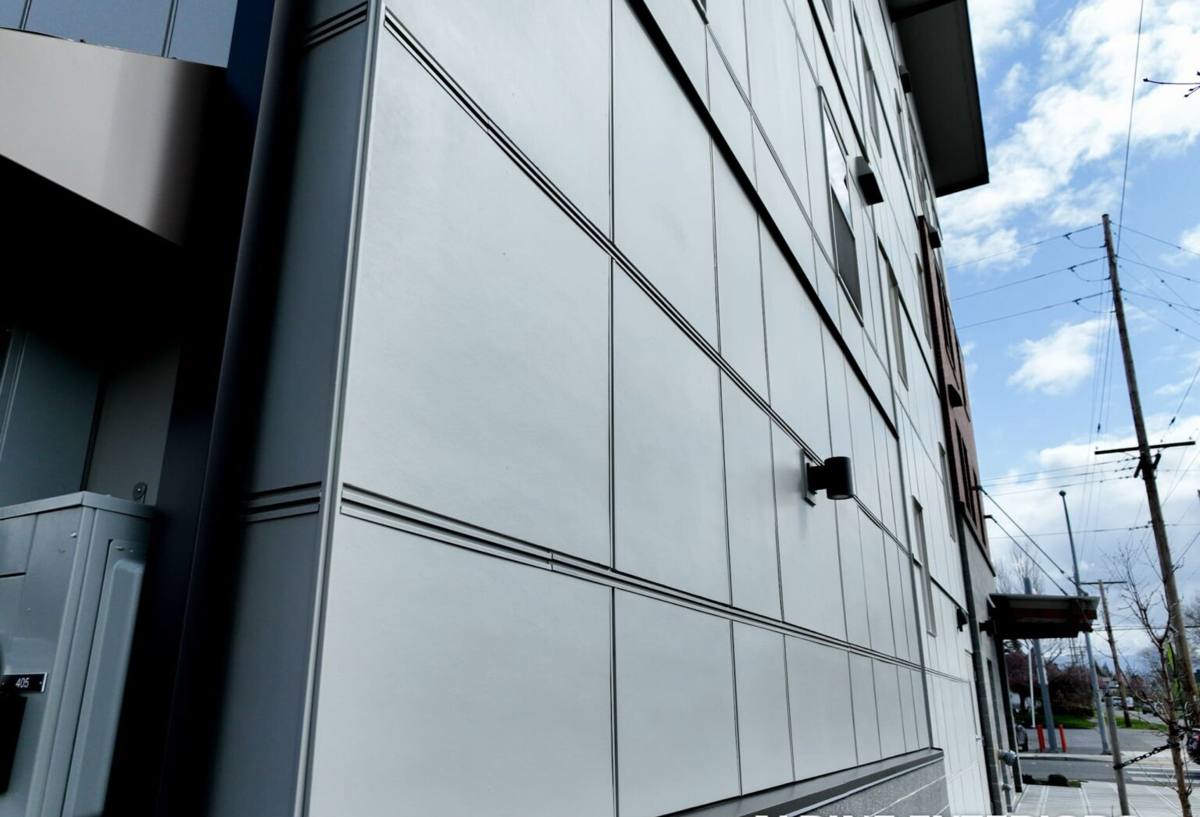
We standardized on James Hardie fiber cement siding for every home we work on, including in Sudden Valley, and this is the kind of environment that explains why. Fiber cement is dimensionally stable and doesn't absorb and release moisture the way wood-based products do, so it isn't cycling through swelling and shrinking every time the humidity changes. It's also non-combustible, which is worth something on a heavily treed lot where wildfire preparedness has become a real conversation across the Pacific Northwest. Hardie's ColorPlus factory finish is baked on under controlled conditions and holds color and resists the kind of surface breakdown that gives mold and moss something to grip onto — it's not a cure for a shaded lot, but it gives the surface a real head start over field-painted alternatives.
We don't install LP SmartSide, vinyl, Cemplank, Allura, primed spruce, or bare cedar, and we're upfront about why: every one of those products asks a homeowner to accept a trade-off — moisture sensitivity, appearance limits, installation sensitivity, or a thinner warranty — that we don't think holds up well in a climate like this one. Hardie isn't the cheapest board on the market, but it's the one we're willing to put our name behind on a lot that stays damp and shaded most of the year.
What a Correct Fiber Cement Installation Actually Involves
Fiber cement performs the way it's supposed to only when it's installed to spec. A rushed or corner-cut install can leave a Hardie job with the same moisture problems as a cheaper product. On a shaded, high-moisture lot like the ones common in Sudden Valley, these details aren't optional extras:
- A drainable weather-resistive barrier behind the siding, not a face-sealed system that traps water against the sheathing
- Correct starter strip height and bottom clearance so water sheds away from the foundation instead of wicking up into the first course
- Proper flashing at every window, door, and penetration — the joints where most water actually gets in
- Fastener placement and spacing per the manufacturer's installation instructions, not just "close enough"
- Factory-primed cut edges resealed on site, since an exposed raw edge is where moisture intrusion starts
- Adequate clearance from grade, decks, and roof lines so the siding isn't sitting in standing water or splash-back
- Caulking used only where the manufacturer specifies it, not as a substitute for proper flashing and drainage
Skip any one of these on a lot that stays wet and shaded most of the year, and you're back to the same failure modes fiber cement is supposed to solve.
Fiber Cement vs. Other Siding Options for a Lot Like This
| Factor | James Hardie Fiber Cement | Vinyl | Wood / Engineered Wood |
|---|---|---|---|
| Moisture response | Dimensionally stable, doesn't swell or rot | Doesn't rot, but can trap moisture behind it if not vented properly | Absorbs moisture; prone to swelling and rot in shaded, damp conditions |
| Moss and algae resistance | Factory finish resists staining and buildup | Can host algae growth in shaded areas over time | Porous surface holds moisture, feeds organic growth |
| Fire resistance | Non-combustible | Melts/deforms under heat exposure | Combustible |
| Finish longevity | ColorPlus factory finish, long repaint interval | Color molded in but can fade; can't be repainted easily if damaged | Field-applied paint/stain needs regular maintenance |
| Typical lifespan with correct install | Multiple decades | Multiple decades but more prone to cracking in impacts | Shorter without diligent upkeep |
Our Process on a Sudden Valley Project
We start with a walk-around inspection of the existing siding, trim, and any visible moisture or organic staining, since that tells us as much about the wall assembly underneath as it does about the surface. From there:
- We assess the existing weather barrier and sheathing condition once old siding is removed, and address any hidden rot or moisture damage before anything new goes up
- We install a proper drainable house wrap and flashing system at every window, door, and penetration
- We install James Hardie siding to manufacturer specifications, including fastener pattern, clearances, and joint treatment
- We finish trim, corners, and transitions so water is directed away from the wall assembly at every level
- We walk the completed job with the homeowner before we consider it done
Why a Crew That Already Works in Sudden Valley Matters
Sudden Valley is a private, HOA-governed community with its own access points, and a crew that's worked there before already understands how to schedule deliveries, staging, and gate access without turning it into a hassle for the homeowner or the neighbors. Just as important, a crew that's replaced siding on other homes in this same tree-covered, lake-adjacent setting has already seen where the shaded north walls fail first, where moss tends to establish, and where the previous siding generation let water in. That's the kind of pattern recognition that comes from doing this specific work in this specific neighborhood, not from a general knowledge of siding in the abstract.
Maintaining Fiber Cement Siding on a Shaded Sudden Valley Lot
Fiber cement is low-maintenance compared to wood, but "low-maintenance" isn't "no-maintenance," especially with the tree cover and moisture common in this area. A short annual routine keeps a correctly installed job performing the way it should:
- Rinse siding annually, especially north-facing and heavily shaded walls, to keep moss and mildew from establishing
- Trim back tree branches and vegetation that keep siding in constant shade or contact
- Check and clear gutters so overflow isn't running down the wall face
- Inspect caulking at trim and penetrations yearly and touch up before gaps let water behind the siding
- Look for any hairline cracking near impact points (ladders, equipment, falling branches) and repair promptly
- Confirm grade and landscaping haven't crept up toward the bottom clearance of the siding over time
What Affects Project Cost in This Area
| Cost Factor | Why It Matters Here |
|---|---|
| Extent of hidden moisture damage | Shaded, damp walls are more likely to need sheathing or framing repair once old siding comes off |
| Home access and site staging | Wooded lots and HOA access points can affect delivery and equipment staging |
| Siding profile and trim complexity | Lap width, panel style, and trim detail all affect material and labor |
| Removal of existing siding | Tear-off scope depends on what's currently on the house and its condition |
| Color and finish selection | ColorPlus factory finishes vs. field painting affect both cost and long-term upkeep |
If you're weighing a siding replacement on a Sudden Valley home, we're glad to walk the property, look at what the current siding is telling us, and put together a straightforward, no-pressure estimate. There's a form below to get that started.