 Bellingham Exterior
 Why Decks Wear Out Faster in Birch Bay
Birch Bay sits right on the water, and that proximity is exactly what makes deck replacement a different job here than it is a few miles inland in Bellingham or elsewhere in Whatcom County. Salt-laden air corrodes fasteners and hardware faster than dry-climate corrosion charts predict. Driving rain off the Strait finds every gap in flashing and decking boards. And the region's long, damp shoulder seasons keep shaded and north-facing decks wet enough, long enough, for moss and algae to take hold and stay there for months at a time.
None of that means decks in Birch Bay fail faster than they should. It means they fail differently — usually starting at the ledger board, the fasteners, and the framing underneath, long before the surface boards look bad enough to worry a homeowner. By the time a deck looks tired on top, the structure underneath has often already been absorbing moisture for years.
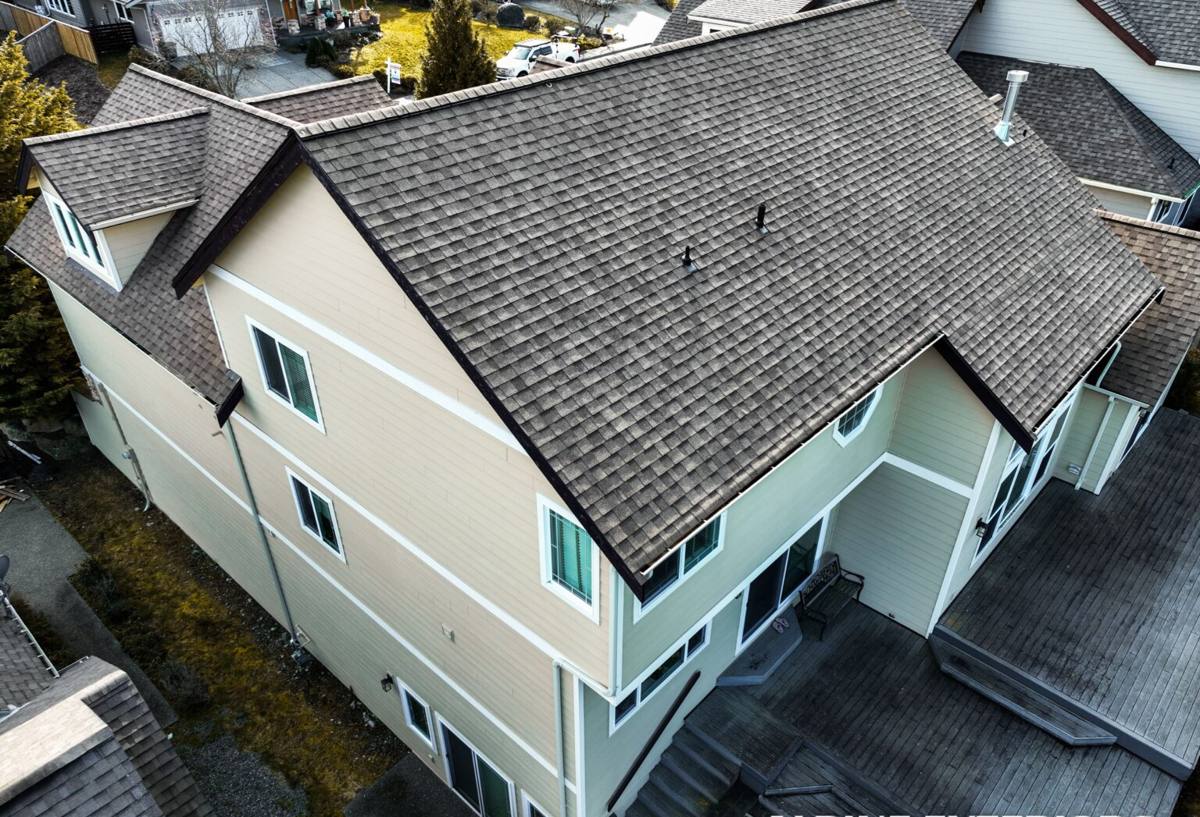
Signs a Birch Bay Deck Needs Replacement, Not Just Repair
Not every deck problem calls for a full tear-off. But there's a point where patching boards is just delaying the real job, and spending money on it stops making sense. Here's how we tell the difference on a Birch Bay property.
- Soft or spongy spots in the decking, especially near the house or along the rim joist
- Rust streaking or bleeding around fastener heads and joist hangers
- Persistent black or green staining that pressure washing only removes temporarily
- Gaps or movement where the ledger board meets the house
- Posts that feel loose at the base or show soft wood at grade level
- A railing that flexes more than it used to, even if the boards look fine
If it's just a handful of surface boards showing wear on an otherwise sound frame, repair is the honest answer and we'll tell you that. If the ledger, joists, or posts are compromised, repair is a short-term patch on a structural problem — and that's when replacement is the right call.
What a Correct Deck Replacement Actually Involves
It Starts Underneath, Not With the Decking
A deck replacement done right isn't just swapping old boards for new ones. The parts you don't see — ledger attachment, joist spacing, footings, and flashing — determine whether the new deck lasts 10 years or 25 in a marine climate. We evaluate all of it before a single new board goes down.
Ledger Board and House Connection
The ledger board is where a deck attaches to the house, and it's the single most common failure point on older decks anywhere near water. Proper flashing between the ledger and the siding or sheathing keeps water from wicking into the house framing — a detail that's often missing or degraded on older builds. We don't reattach a new deck to an old, undocumented ledger connection without inspecting and correcting it.
Framing and Footings
Joist spacing needs to match the decking material and expected loads, and footings need to sit below frost depth and bear on solid soil. Coastal soil conditions and fluctuating moisture can shift or settle footings over time, so we check them rather than assuming the old layout is still sound.
Fasteners and Hardware
This is where salt air does the most damage, and where cutting corners shows up fastest. We use corrosion-resistant, coastal-rated fasteners and structural hardware rated for ground contact and exterior exposure — not standard interior-grade hardware that looks fine going in but starts rusting within a season near the water.
What We Include With Every Deck Replacement
- Full structural inspection of ledger, framing, and footings before rebuild
- Removal and proper disposal of old decking, framing, and hardware
- Corrosion-resistant fasteners and connectors suited to coastal exposure
- Correct ledger flashing to protect the house structure
- Material options reviewed against your budget, sun exposure, and maintenance appetite
- Clear written scope before work starts — no surprise change orders mid-project
Choosing Decking Material for a Salt-Air, High-Moss Environment
There's no single "best" decking material — there's a best fit for your budget, your deck's sun and shade exposure, and how much upkeep you actually want to do. In Birch Bay, moisture behavior and moss resistance matter more than they would inland, so we walk every homeowner through the real trade-offs rather than pushing one product.
| Material | Upfront Cost | Moss & Moisture Behavior | Maintenance |
|---|---|---|---|
| Pressure-treated wood | Lowest | Absorbs moisture; needs sealing to resist moss and rot | Annual cleaning and periodic sealing/staining |
| Cedar | Moderate | Naturally rot-resistant but still needs finish upkeep in shade | Regular cleaning, refinishing every few years |
| Composite | Higher | Doesn't absorb moisture like wood; can still grow surface algae if never cleaned | Occasional washing, no staining or sealing |
| PVC / capped polymer | Highest | Best moisture and moss resistance of the group | Lowest — mostly periodic washing |
Our standard on shaded or heavily wooded Birch Bay lots leans toward composite or capped polymer decking, because the reduced maintenance burden matters more where a deck stays damp longer into the day. On open, sun-exposed sites, wood remains a perfectly sound choice for homeowners who don't mind the upkeep — it's a matter of honest trade-offs, not one product being "bad."
Our Deck Replacement Process
- On-site assessment — we inspect the existing deck, ledger connection, framing, and footings, and talk through what we find in plain terms.
- Written estimate — a clear scope of work and material options, with pricing tied to what your deck actually needs, not a generic package.
- Permitting — we handle the paperwork required for your project so you're not chasing it down yourself.
- Demolition and disposal — full removal of old decking, framing, and hardware, hauled off the site.
- Structural rebuild — footings, framing, and ledger connection corrected and properly flashed before decking goes down.
- Decking, railing, and finish work — installed per manufacturer spec for your chosen material.
- Final walkthrough — we go over the finished deck with you and cover care and maintenance for your specific material.
Permits and Local Considerations in Whatcom County
Deck replacement in Whatcom County typically requires a permit once you're rebuilding structural framing, especially for decks above a certain height or attached to the house. Requirements can vary by exact scope and lot, so we pull and manage the permit as part of the job rather than leaving homeowners to sort out county requirements on their own. Waterfront and shoreline-adjacent properties in Birch Bay can also carry additional setback or shoreline management considerations — something worth flagging early rather than discovering mid-project.
Protecting Your New Deck After Installation
A well-built deck still needs some ongoing attention in this climate — the difference is how much, and how often. Here's what actually keeps a deck sound long-term on the Birch Bay waterfront:
- Sweep debris and standing leaves off the deck regularly, especially in shaded spots
- Rinse or wash the surface periodically to slow moss and algae buildup before it takes hold
- Check railing and stair connections once a year for movement or loosening
- For wood decks, plan on resealing or restaining on the schedule your finish product recommends
- Keep gutters and downspouts near the deck clear so runoff isn't dumping extra water onto it
- Trim back overhanging vegetation that keeps the deck surface shaded and damp
Why Hire a Crew That Already Works in Birch Bay
A lot of deck problems we get called out for started with a contractor who didn't build for the site's actual exposure — using standard fasteners where coastal-rated hardware was needed, or skipping ledger flashing that would've been standard practice a few miles from open water. Working regularly in Birch Bay and along the Whatcom County coastline means we're not guessing at how salt air and moisture behave here — we're building to it as a matter of course, not as an upsell.
That local familiarity also shows up in smaller ways: knowing which sites tend to hold moisture longer, which orientations grow moss fastest, and what materials hold up without excessive upkeep for homeowners who aren't looking to reseal a deck every year.
Get a Free, No-Pressure Estimate
If your deck is showing soft spots, rust staining, or persistent moss, or you just want an honest read on whether it needs repair or full replacement, we're happy to take a look. Fill out the form below for a free estimate on your Birch Bay deck replacement — no pressure, no obligation, just a straight assessment of what your deck actually needs.