 Bellingham Exterior
 Why Birch Bay's Waterfront Climate Is Different
Birch Bay sits right on the water, and that changes what a siding job needs to survive. Homes here take a steady dose of salt-laden air off the bay, wind-driven rain that gets pushed sideways into wall assemblies instead of just falling straight down, and long stretches of damp, low-light weather that keep north- and west-facing walls wet longer than homes further inland. Add in the shade from mature evergreens on many Birch Bay lots, and you get ideal conditions for moss and algae to take hold on any exterior surface that isn't managed correctly.
None of this is unusual for Whatcom County, but Birch Bay gets a concentrated version of it. A siding installation that would hold up fine in a drier, more sheltered part of Bellingham can fail faster here if it wasn't built with this specific exposure in mind. That's the whole reason a "local service page" for Birch Bay siding exists on our site — this isn't the same job as siding a house in a sheltered inland neighborhood, and it shouldn't be treated that way.
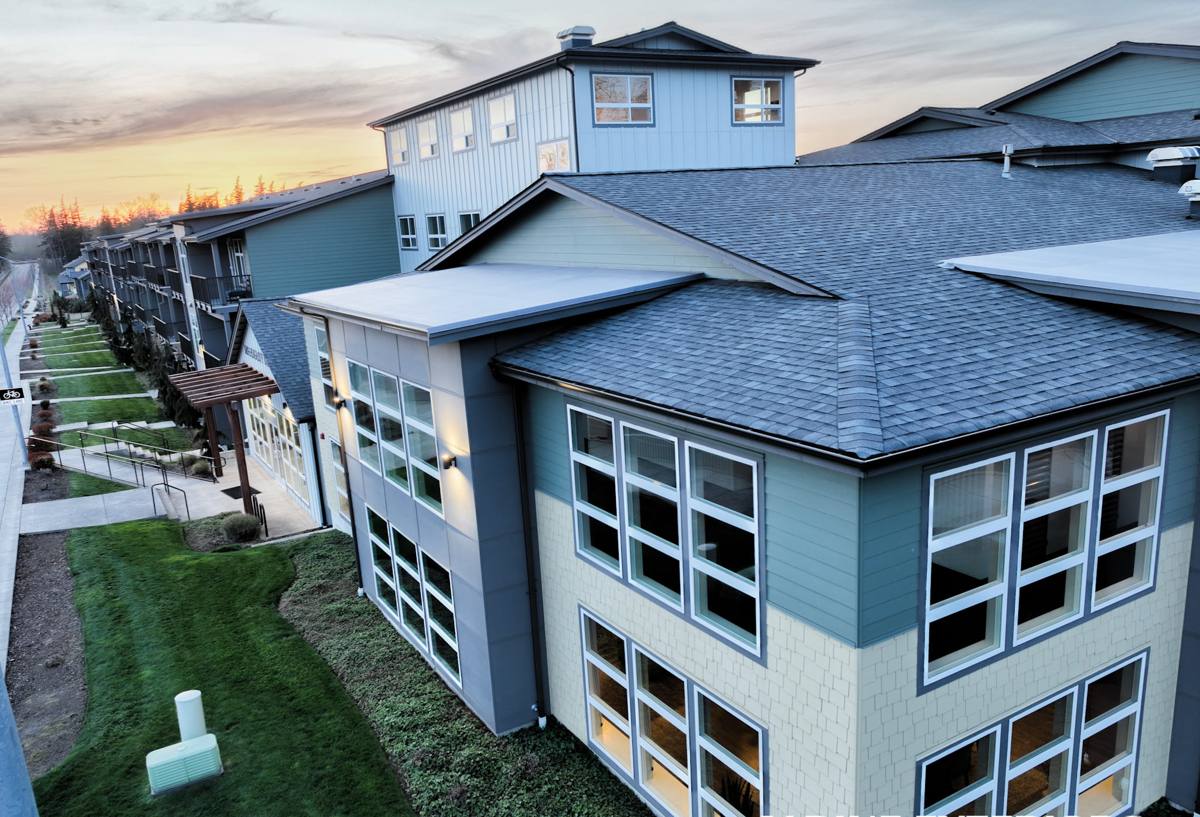
What Salt Air, Rain, and Moss Actually Do to Siding
Salt Air
Airborne salt is corrosive to unprotected metal fasteners, flashing, and trim, and it can accelerate the breakdown of finishes that weren't engineered for coastal exposure. Over years, that shows up as streaking, corrosion staining, and premature finish failure — even on products that perform well elsewhere in the county.
Wind-Driven Rain
Birch Bay's open exposure to Georgia Strait means rain doesn't just fall on siding, it gets driven into laps, seams, and penetrations under wind pressure. If the water-resistive barrier, flashing, and drainage details behind the siding aren't done correctly, that moisture works its way into the wall assembly rather than draining back out.
Moss and Algae
Shade, moisture, and mild temperatures are exactly what moss and algae need to establish on any exterior surface — siding, trim, roofing, decking. It's not a sign of a bad product; it's a function of the environment. What matters is how easily a surface can be cleaned and how well it resists staining over time.
What a Correct Installation Has to Get Right Here
The siding material matters, but in a coastal environment like Birch Bay, the installation details matter just as much — sometimes more. A correct job includes:
- A continuous water-resistive barrier (WRB) installed shingle-style so every layer drains over the one below it
- Proper flashing at every window, door, and penetration, integrated with the WRB rather than just caulked over it
- A drainage gap (rainscreen) behind the siding so any moisture that does get past the cladding has a path to drain and dry instead of sitting against the wall sheathing
- Corrosion-resistant fasteners appropriate for coastal exposure, not standard interior-grade hardware
- Correct starter strips, joint treatment, and clearances at grade, roof lines, and decks so water is directed away from vulnerable seams
Skip any of these steps and the siding material — however good — is fighting an uphill battle against Birch Bay's climate from day one.
Why We Install Only James Hardie Fiber Cement
We standardized on James Hardie fiber cement siding across every job we take, including here in Birch Bay, and we don't install LP SmartSide, vinyl, Cemplank, Allura, primed spruce, or cedar. That's a deliberate professional standard, not a sales pitch, and it matters more in a coastal setting than almost anywhere else in Whatcom County.
Fiber cement doesn't rot, and it isn't a food source for the moss and organic growth that thrive in Birch Bay's damp, shaded conditions the way wood-based products can be. It's non-combustible, which is a real advantage during dry summer wildfire-smoke seasons even in a wet coastal town. And James Hardie's factory-applied ColorPlus finish is baked on and warranted against fading and chipping, which matters when salt air is already working against paint and coatings — a factory finish holds up more consistently than field-applied paint over years of that exposure.
We're not going to claim other products are junk — vinyl, LP SmartSide, and the rest all have legitimate uses and plenty of installations that perform fine in the right conditions. Our standard is about what we're willing to warranty our workmanship on, and for a climate like Birch Bay's, fiber cement with a factory finish is the material we trust to hold up.
Choosing the Right Hardie Product Line for a Birch Bay Home
James Hardie makes several siding profiles, and the right one for a given home depends on style, exposure, and budget. Most of what we install in Birch Bay falls into one of these categories:
| Product | Best For | Coastal Consideration |
|---|---|---|
| HardiePlank lap siding | Traditional and craftsman-style homes | Most common choice; correct lap overlap and flashing critical on wind-exposed walls |
| HardiePanel vertical siding | Modern builds, accent walls, gable ends | Fewer horizontal laps means fewer water-entry points on driving-rain walls |
| HardieShingle siding | Cottage or Cape Cod style homes | More seams to detail correctly; best on more sheltered elevations |
| HardieTrim boards | Corners, fascia, window and door trim | Should be factory-primed/finished, not raw wood, to match coastal durability |
James Hardie also engineers its products by climate zone (HZ5 and HZ10 formulations), which affects moisture resistance and performance. We spec the correct zone formulation for Whatcom County's marine climate rather than defaulting to whatever is cheapest to source.
How We Approach a Birch Bay Siding Installation
- Site and exposure assessment. We look at which elevations take the most wind-driven rain, where shade and moisture will concentrate, and where the existing wall assembly may already have moisture issues.
- Tear-off and sheathing inspection. Removing the old siding lets us check the sheathing underneath for rot or existing water damage before anything new goes on — a step that's easy to skip and expensive to regret.
- Water-resistive barrier and flashing. We install the WRB and integrate flashing at every opening and penetration before the rainscreen and siding go on.
- Rainscreen installation. A drainage gap goes in behind the siding so the wall assembly can dry, which is especially important on Birch Bay's more exposed and shaded elevations.
- James Hardie siding installation. Panels or planks go up to manufacturer spec — correct fastener type, spacing, and clearances — with coastal-appropriate hardware.
- Trim, caulking, and final detailing. Corners, trim, and joints are finished and sealed with products suited to marine exposure.
- Final walkthrough. We go over the finished work with the homeowner before calling the job done.
Fasteners and Hardware: A Detail Worth Getting Right
It's a small line item that makes a real difference over time. Standard fasteners can corrode faster in salt air, leading to staining and, eventually, loosened siding. We use fasteners and flashing hardware rated for coastal and marine exposure on Birch Bay projects, which costs a little more up front and saves homeowners from rust streaks and repairs down the road.
Working With a Crew That Already Knows Birch Bay
Siding contractors who mostly work sheltered, inland neighborhoods don't always think about rainscreen detailing, coastal-grade fasteners, or which elevations need extra attention to wind-driven rain — because they don't need to on most of their jobs. A crew that already works Birch Bay and the surrounding Whatcom County coastline builds those considerations into every estimate and every install by default, not as an upcharge or an afterthought.
That local familiarity also matters for practical reasons: knowing typical lot conditions, working efficiently around the tree cover common on Birch Bay properties, and understanding what Whatcom County permitting and inspection expects for exterior work in the area.
What to Look For When Hiring
- Licensed and bonded to do exterior contracting work in Washington State
- Manufacturer training or certification specific to James Hardie installation
- A clear explanation of their moisture-management approach — WRB, flashing, and rainscreen — not just "we install siding"
- Willingness to explain fastener and hardware choices for coastal exposure
- A written warranty covering both materials and workmanship
- References or completed work you can actually see, not just photos
What This Costs and What Drives the Price
Every Birch Bay home is different, so we don't quote pricing without seeing the house, but a few factors consistently move the number:
| Factor | Why It Matters |
|---|---|
| Tear-off condition | Rotted sheathing found during removal adds repair scope before new siding goes on |
| Home size and wall complexity | More corners, gables, and dormers mean more cutting, flashing, and labor time |
| Product line chosen | Lap, panel, shingle, and trim combinations price differently |
| Exposure level | Wind-exposed water-facing walls may need extra flashing and hardware detailing |
| Access and site conditions | Tree cover, slope, and staging space affect labor time |
The honest answer is that a correctly installed, moisture-managed James Hardie job costs more than a bare-minimum vinyl or unfinished-wood installation — but in a climate like Birch Bay's, that difference in installation quality is often what separates siding that looks good for a couple decades from siding that needs attention in a few years.
Get a Straight Answer for Your Home
If you're weighing a siding project for a home in Birch Bay, we're happy to take a look, walk you through what your specific exposure and wall condition call for, and give you a clear, no-pressure estimate for a correctly installed James Hardie system. Use the form below to get started.