 Bellingham Exterior
 New Roof Installation for Birchwood Homes
Birchwood is one of the older, more established residential pockets of Bellingham, and the roofs here take a specific kind of beating. You've got proximity to Bellingham Bay putting salt-laden air on every exposed surface, Pacific storms driving rain sideways into fascia and soffits for days at a stretch, and a wet, shaded climate that keeps moss and moisture active on north-facing slopes for most of the year. A roof that would hold up fine in a dry inland climate can fail early here if it wasn't built for these conditions. This page is about what a correct new roof installation looks like for a Birchwood home, and why the details matter more in Whatcom County than they do almost anywhere else in the state.
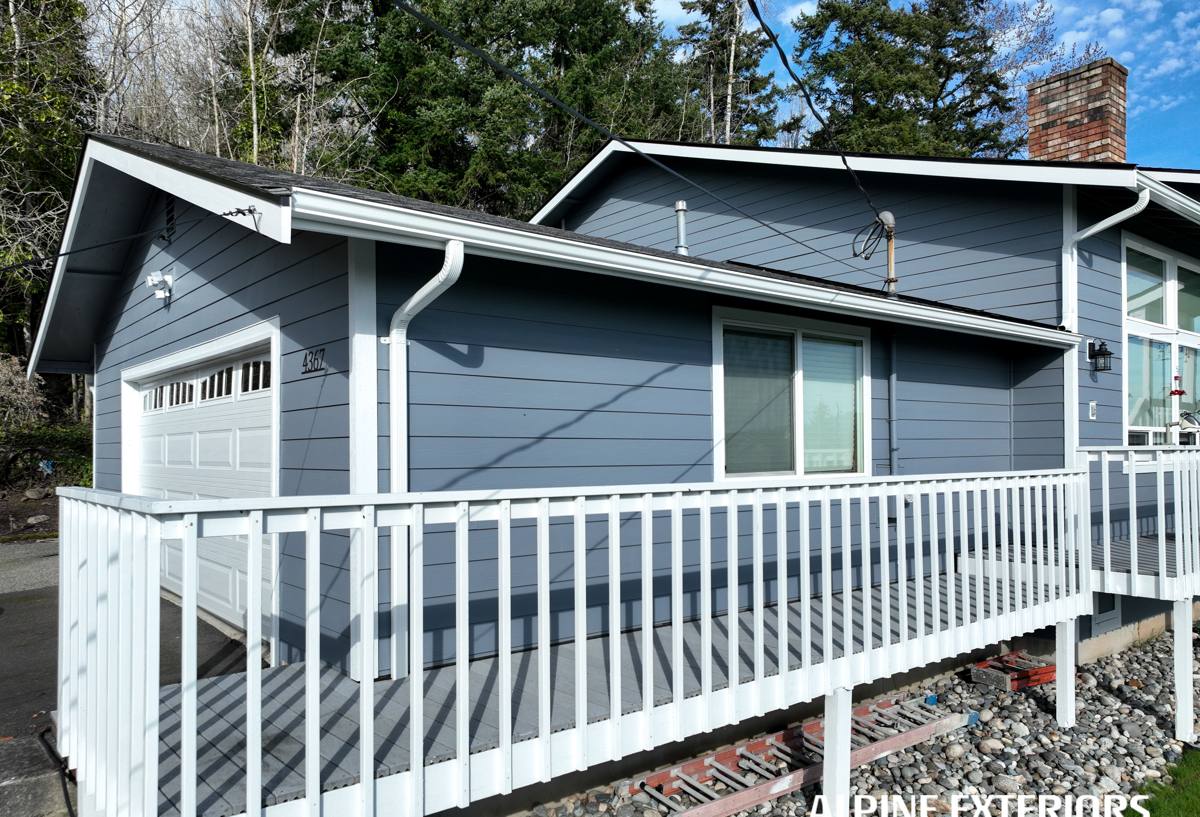
What Bellingham's Climate Actually Does to a Roof
Three things drive almost every premature roof failure we see in this neighborhood:
- Salt air corrosion. Metal fasteners, flashing, and vent components corrode faster near the water. Cheap or mismatched metal shortens the life of an otherwise good roofing system.
- Driving rain. Wind-driven rain doesn't just fall straight down — it gets pushed up and under shingles, into valleys, and around penetrations. Underlayment quality and flashing detail matter more here than in calmer climates.
- Extended moss and algae season. Shade from mature trees, plus consistent moisture, means moss can establish itself on a roof almost year-round. Left unchecked, it lifts shingle edges, holds water against the roof deck, and accelerates rot.
None of these are exotic problems — they're just constant, and a roof installed without accounting for them will show its age years before it should.
Signs a Birchwood Home Is Ready for a New Roof
Roof replacement is rarely one dramatic event — it's usually a slow accumulation of small failures. Homeowners in this neighborhood typically start looking at replacement when they notice:
- Granule loss showing up in gutters, or shingles that look bald and shiny in patches
- Curling, cupping, or cracked shingles, especially on south- and west-facing slopes
- Moss buildup that comes back within a season or two of cleaning
- Soft spots in the decking when walked, or visible sagging along the ridge or eaves
- Staining on interior ceilings or in the attic, even if it's not actively dripping
- A roof that's simply reaching the end of its rated lifespan — most asphalt roofs in this climate run shorter than their national average rating because of the added moisture exposure
If you're seeing two or more of these, it's worth having someone look at the roof before you're dealing with an active leak. Catching it early usually means a straightforward replacement instead of also repairing water damage to decking, framing, or insulation.
What a Correct Installation Actually Involves
A new roof is more than laying shingles over what's already there. Done right, the process includes several steps that don't show up in a quick drive-by estimate but make the real difference in how long the roof lasts:
Full Tear-Off and Deck Inspection
We remove the old roofing down to the deck rather than layering over it. That's the only way to actually see what's underneath — soft spots, rot, or old damage that a layover would just bury and let continue. Any damaged decking gets replaced before anything new goes down.
Ice and Water Barrier at Vulnerable Points
Eaves, valleys, and areas around chimneys and skylights get a self-adhering waterproof membrane underneath the main underlayment. This is the single biggest defense against the wind-driven rain that's common off the Sound — it protects the areas where water is most likely to be pushed backward under the roofing material.
Synthetic Underlayment Across the Field
Over the rest of the deck, a synthetic underlayment provides a secondary water barrier and holds up far better than old-style felt paper in a consistently damp climate — it won't wrinkle, tear as easily, or absorb moisture the way felt can.
Flashing Details
Step flashing at walls, counter-flashing at chimneys, and properly lapped flashing in valleys are where most roof leaks actually originate — not in the open field of shingles. Corrosion-resistant metal matters here specifically because of the salt air.
Ventilation
Balanced intake and exhaust ventilation keeps the attic temperature and moisture level in check, which reduces condensation on the underside of the deck and helps prevent the kind of trapped moisture that leads to rot and, indirectly, to moss and algae growth on the surface above.
Ridge, Starter Course, and Fastening
Proper starter strips at the eaves and rakes, correctly nailed field shingles (not overdriven or underdriven), and a ridge cap system rated for wind — these are the finishing details that determine whether a roof performs in a real coastal windstorm or just looks fine until the first one hits.
Choosing a Roofing Material for This Climate
There's no single "best" roofing material — it depends on budget, the home's structure, and how much long-term maintenance you want to take on. Here's an honest comparison of the options we install most often in Bellingham and Whatcom County:
| Material | Typical Lifespan Here | Moss/Algae Resistance | Best Fit |
|---|---|---|---|
| Architectural asphalt shingle | 20–30 years | Good with algae-resistant granules; still needs periodic cleaning | Most Birchwood homes — best balance of cost and durability |
| Standard 3-tab shingle | 15–20 years | Fair — thinner profile sheds debris less effectively | Budget-driven projects, rentals, secondary structures |
| Standing seam metal | 40–50+ years | Excellent — smooth surface sheds moss and debris | Homeowners planning to stay long-term or wanting minimal maintenance |
| Synthetic/composite shingle | 30–40 years | Good, varies by product line | Homes wanting a specific look with less weight than tile |
Whatever material you choose, we're straightforward about trade-offs. Metal costs more up front but essentially removes moss as a recurring problem. Asphalt costs less and performs well when it's the right grade and properly installed, but it will need occasional moss treatment and cleaning to hit its full lifespan in this climate.
Our Process, Start to Finish
- On-site inspection and estimate. We walk the roof and attic, note the condition of the decking, flashing, and ventilation, and give you a written estimate — not a rough phone quote.
- Material selection. We go over the options in the table above based on your budget and how long you plan to be in the home, with no pressure toward the most expensive option.
- Scheduling around weather. Given how much rain Whatcom County gets, we plan installs for dry weather windows and keep the roof protected if conditions turn mid-job.
- Tear-off, deck repair, and dump. Old material comes off, the deck gets inspected and repaired as needed, and debris is hauled off the same day where possible.
- Installation. Ice and water barrier, underlayment, flashing, shingles or panels, and ridge components go on in that order, with attention to the details covered above.
- Cleanup and magnetic nail sweep. We clear the yard and driveway of debris and run a magnetic sweep for stray nails and fasteners.
- Final walkthrough. We go over the finished roof with you before calling the job done.
What Affects the Cost
Every roof is different, but the main cost drivers on a Birchwood project are consistent:
| Factor | Why It Matters |
|---|---|
| Roof size and pitch | Steeper roofs take longer to work safely and use more material |
| Number of layers to remove | Homes with an existing layover roof cost more to tear off than a single-layer roof |
| Deck condition | Rotted plywood or planking found during tear-off adds material and labor |
| Material choice | Asphalt, metal, and composite options carry different material and labor costs, as shown above |
| Roof complexity | Valleys, dormers, skylights, and chimneys all add flashing work |
| Access | Tree cover, tight side yards, or steep lots can affect equipment and staging |
We're upfront that a solid roof installation in this region isn't the cheapest option on the market — it's priced for materials and details that actually hold up to the weather we get. We'd rather explain that plainly than win a bid with a number that doesn't reflect the real job.
Why a Crew That Already Works Birchwood Matters
A roofing crew that regularly works this neighborhood already knows the housing stock, the common roof pitches and framing quirks of homes built in different decades, and where moss and drainage problems tend to show up first given the tree cover and exposure typical of the area. That familiarity shortens the inspection process and reduces surprises during tear-off. It also means we're not learning Whatcom County's permitting and inspection process on your project — we already know what the county expects for a full re-roof and can get the paperwork handled without it becoming your problem. Local crews also tend to stand behind their work longer simply because they're not driving in from out of town — if something needs a look after a big storm, we're close enough to actually come back.
Before You Sign a Roofing Contract
Whoever you hire, these are worth confirming before work starts:
- Written estimate that specifies materials, underlayment type, and flashing approach — not just "new roof, X price"
- Proof of current WA state contractor licensing and liability insurance
- A clear plan for tear-off disposal and deck repair pricing if rot is found
- Manufacturer warranty terms in writing, including what voids them
- A start and completion timeframe that accounts for weather delays
- Confirmation of who pulls the permit and handles inspection scheduling
If a contractor won't put these in writing before you sign, that's worth treating as a warning sign, not a formality to skip.
Get a Free, No-Pressure Estimate
If your Birchwood home's roof is showing wear, moss that keeps coming back, or you just want an honest read on how much life it has left, we're happy to take a look. Use the form below to request a free estimate — no pressure, no sales script, just a straight assessment of what your roof needs.