 Bellingham Exterior
 Why Blaine Homes Wear Out Siding Faster
Blaine sits at the northwest corner of Whatcom County, right where Puget Sound weather meets the Canadian border — and that location comes with a specific set of siding problems. Homes here take on salt-laden air off the water, long stretches of driving rain blown in sideways by wind, and a moss season that can run most of the year in shaded, north-facing spots. Individually, any one of those is manageable. Together, they shorten the useful life of siding that wasn't built or installed to handle all three at once.
Salt air is corrosive to fasteners and finishes, and it accelerates the breakdown of caulk and paint film faster than inland exposure does. Driving rain finds every gap in flashing, trim, and butt joints, and pushes moisture behind siding that isn't properly lapped or sealed. Moss and algae hold that moisture against the wall assembly, which is where real damage — sheathing rot, mold, siding delamination — actually starts. A siding job that looks fine on a dry, calm day can fail within a few winters if it wasn't built for Blaine's specific exposure.
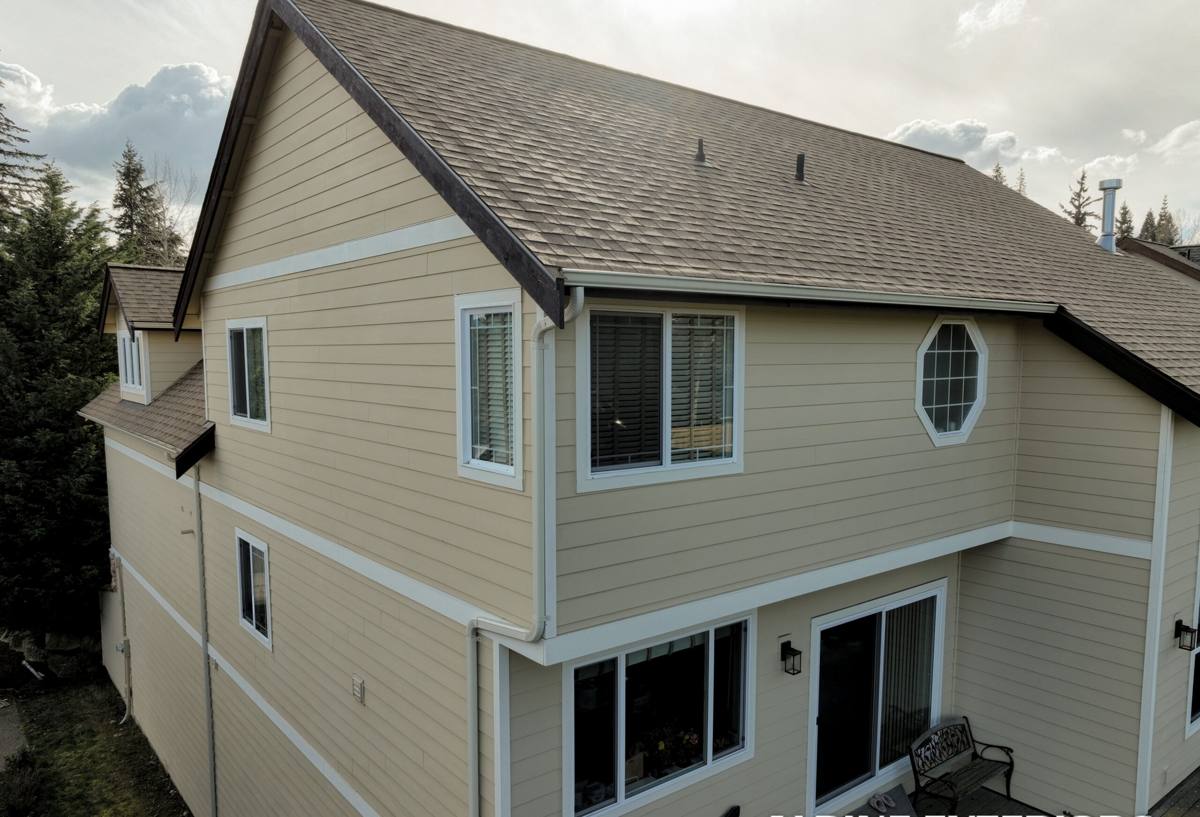
Signs a Blaine Home Needs Siding Replacement, Not Just Repair
Not every issue means a full tear-off. But there are specific signs that tell us the wall assembly itself is compromised and patching won't hold:
- Soft or spongy spots when you press on siding, especially near the bottom courses and around window trim
- Visible cupping, buckling, or delamination — common on older wood-based or engineered wood products in wet climates
- Paint that won't hold more than a couple of years, or that's peeling in sheets rather than fading evenly
- Persistent moss or dark streaking that comes right back after cleaning
- Gaps at seams, corners, or trim that have opened up as the material has moved or shrunk
- Interior signs — musty smell, staining on interior walls near exterior corners, or visible mold at baseboards on exterior-facing rooms
If you're seeing more than one of these, it's worth having someone look at the sheathing underneath, not just the visible siding. That's where the real cost of a delayed decision usually shows up.
What Correct Siding Replacement Actually Involves
A proper siding replacement is a wall assembly project, not a surface swap. On homes in this part of Whatcom County, we treat it as a system with several parts that all have to work together:
Tear-off and inspection
Old siding comes off in sections so we can inspect the sheathing as we go. Any rot, soft wood, or existing moisture damage gets addressed before anything new goes up — covering over a wet wall with new siding just hides the problem for a few more years.
Weather-resistive barrier and flashing
A correctly installed drainage plane behind the siding, with properly lapped house wrap and flashing at every window, door, and penetration, is what actually keeps wind-driven rain out. This is the layer that matters most in a climate like Blaine's, and it's also the layer that's easiest for a rushed crew to shortcut.
Siding installation to manufacturer spec
Fastener spacing, gapping at butt joints, clearance from grade and roof lines, and caulking at penetrations all have to follow spec — not habit. Installed loosely or with the wrong fasteners, even a good product will fail early in this climate.
Trim, caulking, and paint or finish
Trim details and sealed joints are where moss and standing moisture usually get a foothold first. Getting these details right up front is cheaper than fixing them in five years.
Why We Install Only James Hardie Fiber Cement
We don't install vinyl, LP SmartSide, cedar, primed spruce, Cemplank, or Allura. That's a deliberate standard, not a sales pitch, and it comes directly from what we've seen happen to siding in this climate over time.
Vinyl expands and contracts more than fiber cement in temperature swings, and its seams and edges are a common entry point for wind-driven rain when installed in exposed, gusty locations like Blaine's shoreline-adjacent lots. Wood-based products — cedar, primed spruce, and engineered wood siding like LP SmartSide — perform well when moisture is kept off them consistently, but they're far less forgiving of the sustained dampness and moss growth that comes with Whatcom County's wet season. Once moisture gets into the substrate of a wood-based product, the damage is often progressive and hard to catch early.
James Hardie fiber cement is non-combustible, doesn't support moss and mold growth the way wood-based products can, and its ColorPlus factory finish is baked on under controlled conditions rather than field-applied — which means better fade and moisture resistance than site-painted trim and siding. Hardie's HZ product lines are engineered for specific climate zones, including the wetter Pacific Northwest exposure, which matters more here than in a drier inland market. It also carries a strong transferable warranty, which matters to homeowners planning to sell down the road.
None of this means other products are junk — plenty of homes around the region have wood or vinyl siding that's holding up fine. It means that after years of installing and repairing siding in this specific climate, fiber cement is the product we're willing to put our name behind.
How Our Process Works for Blaine Homeowners
- On-site assessment: We look at existing siding, trim, and any visible moisture damage, and talk through what's driving the need for replacement.
- Sheathing check during tear-off: We don't quote blind — the real scope of work often isn't clear until old siding comes off and we can see the wall behind it.
- Weather barrier and flashing installation: Done to spec, with particular attention to window and door details, which is where most leaks in this climate originate.
- Hardie installation: Fastener pattern, gapping, and clearances installed per manufacturer requirements — not shortcuts that will show up as callbacks in a few years.
- Final trim, caulking, and walkthrough: We review the finished work with you before we consider the job done.
Siding Options Compared for a Blaine Climate
| Material | Moisture / Rain Resistance | Moss & Algae Resistance | Salt Air Durability | Typical Maintenance |
|---|---|---|---|---|
| James Hardie Fiber Cement | Strong when installed to spec | Does not support growth like wood | Non-combustible, factory finish holds up well | Occasional wash, repaint on a much longer cycle |
| Vinyl | Seams and edges vulnerable in wind-driven rain | Moderate; can trap moisture behind panels | Can become brittle over time in coastal exposure | Low, but limited repair options if damaged |
| Cedar / Primed Spruce | Good if maintained; poor if neglected | Prone to moss and mildew in shaded, damp areas | Requires diligent upkeep near salt air | Regular refinishing and moisture monitoring |
| LP SmartSide (engineered wood) | Good with intact factory coating; sensitive at cut edges and seams | Better than raw wood, still needs upkeep | Manageable with proper sealing and upkeep | Periodic inspection of seams and edges |
Cost Factors Homeowners Should Expect to Discuss
Every home is different, but the main variables that drive a siding replacement quote in this area are consistent: the condition of the sheathing once old siding comes off, the amount of trim and window detail work involved, the home's size and number of stories, and whether existing moisture damage needs to be repaired before new siding goes on. We'll walk through these specifics during the estimate rather than quoting a number that doesn't reflect what's actually on your walls.
Why Hiring a Crew That Already Works Blaine Matters
Siding installed correctly for a drier inland climate isn't automatically correct for Blaine. Flashing details, fastener choices, and clearance requirements all need to account for sustained rain exposure and salt air, and a crew that mainly works other conditions may not weight those details the same way. Working regularly in Whatcom County and along this stretch of coastline means we're used to building in the margin this climate actually requires — not the minimum a manufacturer's spec sheet allows for a milder environment.
Local experience also means fewer surprises during the estimate. We've seen what moss buildup and driving rain typically do to different wall assemblies in this area over years, which makes it easier to spot a developing problem before it becomes a full-scale repair.
Maintaining Your New Siding in a Blaine Climate
- Rinse siding periodically to keep moss and algae from establishing, especially on shaded, north-facing walls
- Keep gutters clear so water isn't overflowing directly onto siding and trim
- Trim back vegetation and tree cover that keeps walls damp and shaded longer than necessary
- Have caulking and trim joints checked every few years, since this is where moisture problems typically start first
- Address any soft spots, staining, or paint failure early rather than waiting for it to spread
If your Blaine home's siding is showing its age, or you're just trying to plan ahead before the next wet season sets in, we're happy to come take a look. There's no pressure and no obligation — fill out the form below for a free estimate, and we'll walk you through exactly what your home needs.