 Bellingham Exterior
 Why Ferndale Siding Has to Work Harder Than Most
Ferndale sits close enough to the water and open farmland that homes here take a different kind of weather beating than siding in a sheltered subdivision. You've got salt-laden air rolling in off the Strait and the bay, wind-driven rain that doesn't just fall straight down but gets pushed sideways into wall assemblies, and a long, damp shoulder season every fall and spring where moss and algae get a serious head start on anything that holds moisture. Add the everyday humidity of Whatcom County and you have a climate that's constantly testing the weakest point in a home's exterior.
Siding in this area isn't just a cosmetic choice. It's the first line of defense against water intrusion, and over years of freeze-thaw cycles and saturated air, the wrong product or a sloppy install shows its flaws early. We've seen what happens to siding that wasn't built or installed for this environment — swelling at the seams, soft spots at the bottom courses, moss creeping up from grade, and paint that fails years ahead of schedule.
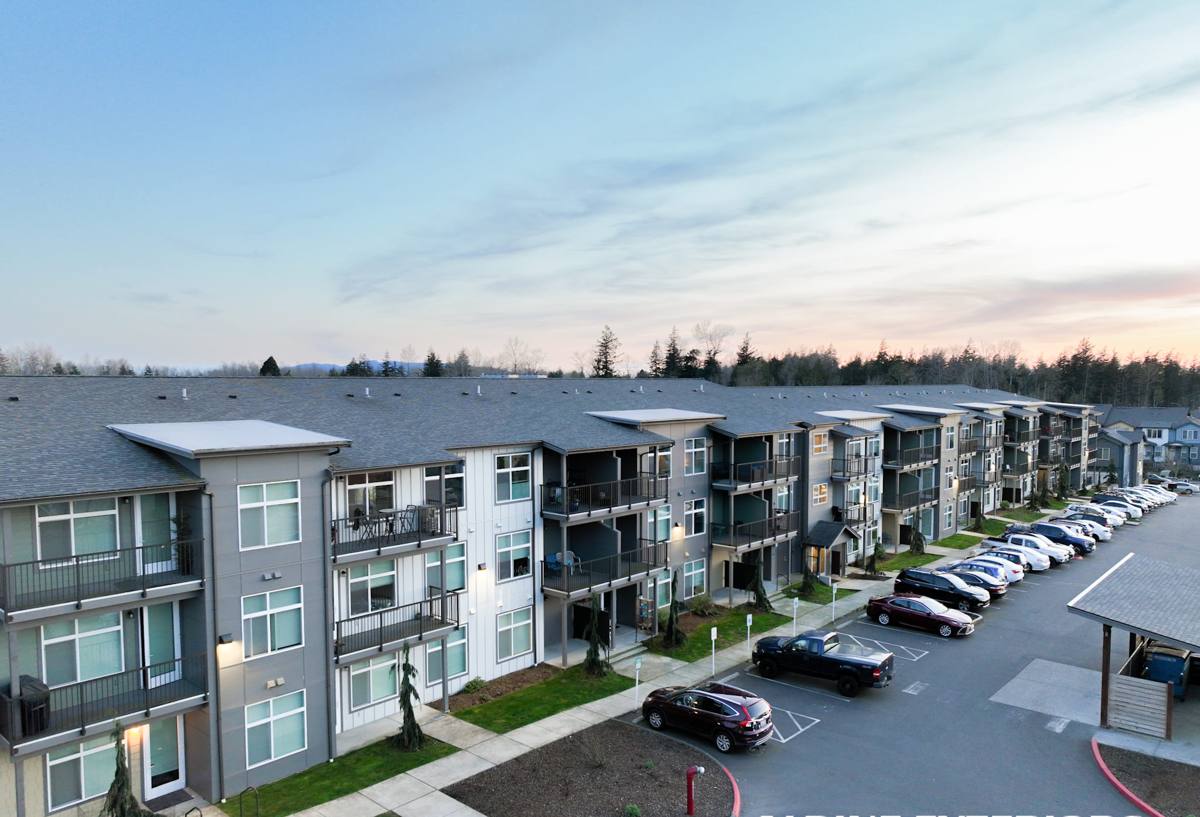
What Ferndale Homes Actually Need From Their Siding
Given the local conditions, siding for a Ferndale home needs to handle three things well: moisture, salt exposure, and biological growth.
Moisture Resistance That Doesn't Depend on Paint Alone
Wind-driven rain finds every gap, lap, and fastener hole. Siding that swells, delaminates, or wicks water once the surface coating is compromised will eventually let moisture into the wall assembly. The material itself needs to be dimensionally stable and resistant to water damage even where the finish gets scuffed or worn.
Salt Air Tolerance
Salt air accelerates corrosion on fasteners and trim, and it breaks down some coatings faster than a straightforward rain-only climate would. Siding near the coast needs a finish system that's engineered to hold color and integrity under that kind of exposure, not just standard field-applied paint.
Resistance to Moss, Algae, and Mildew
Long damp seasons mean anything porous or slow to dry becomes a host for moss and algae, especially on north-facing walls and under eaves. A dense, engineered material sheds water and dries faster than untreated wood-based products, which matters a lot when a home might go weeks without a real drying window.
Why We Standardized on James Hardie Fiber Cement
We install James Hardie fiber cement siding exclusively. We don't install vinyl, LP SmartSide, Cemplank, Allura, primed spruce, or cedar, and that's a deliberate professional standard, not a sales pitch. Each of those alternatives has legitimate strengths, but each also comes with a trade-off we're not willing to put our name behind in this climate — vinyl can warp and doesn't stop moisture at the wall, engineered wood products are more sensitive to sustained moisture exposure at seams and cuts, and untreated wood siding demands a maintenance schedule most homeowners don't want to keep up with.
James Hardie fiber cement is a cement, sand, and cellulose fiber composite. It's non-combustible, it doesn't support the kind of moisture-driven swelling and rot that wood-based sidings can, and it holds a factory-applied ColorPlus finish that's baked on and warranted separately from the panel itself — which matters when you're dealing with salt air and long wet seasons that are hard on paint. Hardie also engineers regional HZ5 product lines specifically for climates like ours, with moisture and freeze performance tuned for the Pacific Northwest rather than a one-size-fits-all national spec.
What a Correct Installation Actually Involves
Fiber cement siding is only as good as the installation behind it. A rushed or generic install is where most of the real-world failures we see started — not with the material itself. For a Ferndale home, the details that matter most are:
- Proper water-resistive barrier and flashing at every window, door, and penetration, lapped correctly so water sheds outward and down
- Correct fastener placement and type — the wrong fastener pattern or spacing undermines both the warranty and the panel's wind resistance
- Minimum clearance from grade, decks, and roof lines so splashback and standing moisture don't sit against the bottom course
- Proper joint treatment and caulking at butt joints and trim, sized and sealed to move with the building without opening gaps
- Ventilation behind the siding where the wall assembly calls for a rainscreen gap, so any moisture that does get behind the cladding can dry out
- Manufacturer-specified overlap and reveal, not a shortcut spacing to save material or time
Skipping or rushing any one of these is how a well-made product ends up failing early. It's also why the installer matters as much as the brand.
Our Process for a Ferndale Siding Project
We keep the process straightforward and transparent from the first walk-around to the final inspection.
1. On-Site Assessment
We look at your home's specific exposure — which walls take the worst of the wind-driven rain, where moss and algae are already showing up, where old flashing or trim may need attention before new siding goes on.
2. Prep and Moisture Management Plan
Before a single panel goes up, we address the water-resistive barrier, flashing details, and any rot or damage found underneath the old siding. This is the stage that determines how the home performs for the next several decades, and it's not one we shortcut.
3. Installation to Manufacturer Spec
We install James Hardie products to the manufacturer's published specifications for fastening, clearance, and joint treatment — the details that keep the transferable warranty intact and keep the wall assembly dry.
4. Final Walkthrough
We walk the finished job with you, checking trim lines, caulking, and touch-ups before we call it done.
Comparing Siding Options for a Ferndale Property
| Factor | James Hardie Fiber Cement | Vinyl Siding | Untreated Wood / Cedar |
|---|---|---|---|
| Moisture behavior in driving rain | Dense, stable, doesn't swell | Sheds water but seams and gaps can let moisture behind panels | Absorbs moisture, prone to swelling and rot over time |
| Salt air / coastal exposure | Factory-baked ColorPlus finish engineered for UV and coastal wear | Can fade and become brittle with age and UV exposure | Finish breaks down faster; needs frequent recoating |
| Moss and algae resistance | Dense surface sheds water, dries faster | Resists rot but traps moisture behind panels where moss can grow unseen | Porous surface, prone to moss and mildew in shaded, damp areas |
| Fire resistance | Non-combustible | Combustible, can melt or deform near heat | Combustible |
| Maintenance | Occasional wash, repaint on a long cycle | Low maintenance but limited repair options once damaged | Regular staining or painting required to keep it protected |
Keeping Your Siding Ahead of the Moss Season
Even the right product benefits from a little seasonal attention in this climate. A short checklist we give Ferndale homeowners:
- Rinse siding annually, especially north-facing and shaded walls where moss gets a foothold first
- Keep gutters clear so overflow doesn't run down the face of the siding
- Trim back shrubs and landscaping so walls get airflow and sunlight to dry out between rain events
- Check caulking at trim and joints every year or two and have any cracked sections resealed
- Watch the bottom courses near grade and decks for splashback staining, which can signal a drainage or clearance issue
Why Hiring a Crew That Already Works Ferndale Matters
Siding specs on paper don't account for the specific way wind comes off the water on a given lot, or which walls in a neighborhood tend to hold moisture longest into spring. A crew that already works in and around Ferndale has seen how homes here actually perform over time — where moss shows up first, which exposures need extra attention at flashing and joints, and how the local permitting and inspection process runs in Whatcom County. That local pattern recognition is hard to replace with a generic install, no matter how good the product is.
It also means accountability. A contractor based in and around Bellingham and Whatcom County is going to be here for warranty follow-up, seasonal questions, or a touch-up years down the road — not a crew that did one job in the area and moved on.
Get a Straightforward Estimate
If your Ferndale home's siding is showing moss, staining, soft spots, or paint that's failing faster than it should, we're happy to take a look and give you a clear, no-pressure picture of what's going on and what it would take to fix it right with James Hardie fiber cement. Fill out the form below to schedule a free estimate.