 Bellingham Exterior
 Why Metal Roofing Fits Birchwood's Climate
Birchwood sits close enough to Bellingham Bay and the Whatcom County lowlands that homes here take on a specific mix of weather stress: salt-laden air rolling in off the water, long stretches of driving rain pushed sideways by wind, and a moss season that can run most of the year under the neighborhood's mature tree canopy. Asphalt shingles can be made to survive this, for a while, but they're working against the grain the whole time. Metal roofing is one of the few systems built to shed water fast, resist moss colonization, and stand up to salt exposure without constant intervention.
This page is about one thing: doing metal roofing right on a Birchwood home, given what Bellingham's climate actually throws at a roof over 30, 40, or 50 years.
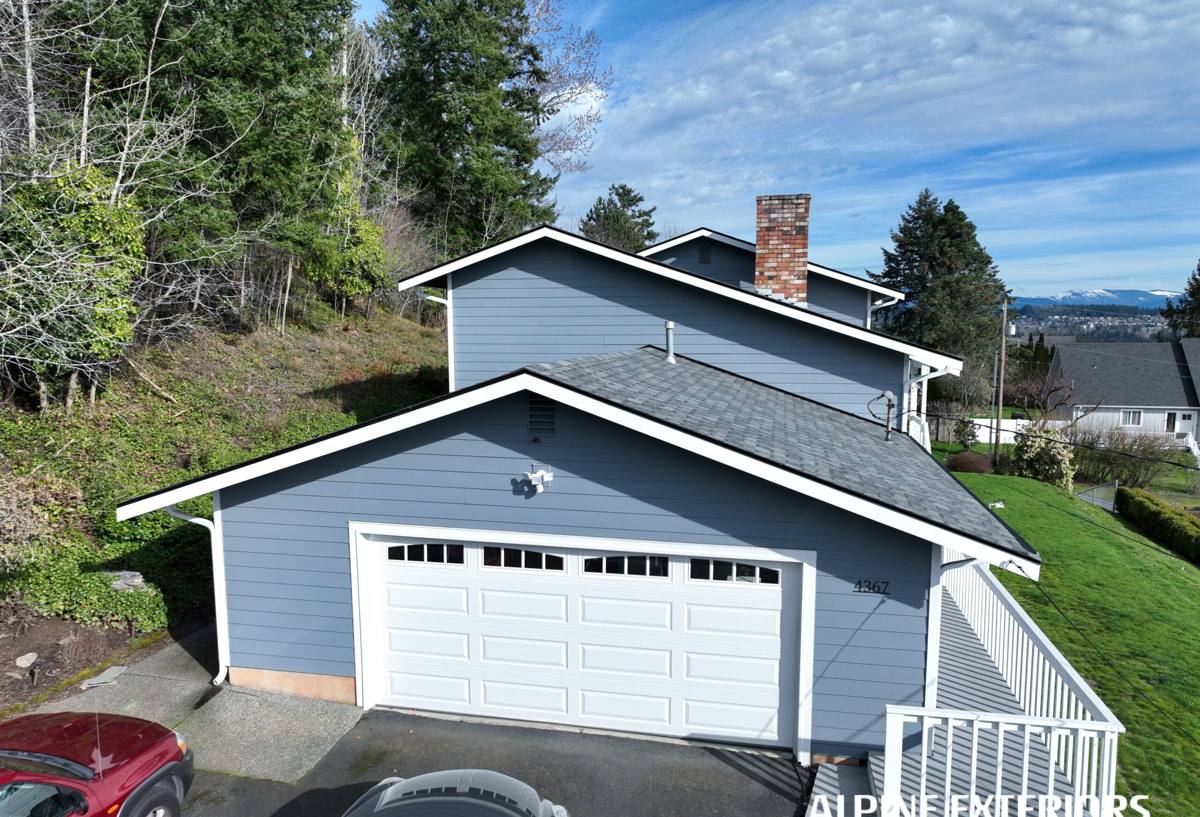
What Bellingham's Climate Actually Demands From a Roof
Salt Air and Corrosion
Proximity to salt water means airborne salt settles on every exterior surface, including the roof. Left unaddressed, salt exposure accelerates corrosion on fasteners, flashing, and any exposed cut edges. This doesn't mean metal roofing is a bad fit near the water — it means material choice and fastener grade matter more here than they would fifty miles inland.
Driving Rain
Whatcom County storms rarely fall straight down. Wind-driven rain gets pushed under lap joints, around poorly sealed penetrations, and into any seam that wasn't detailed correctly. A metal roof's advantage — a continuous, low-permeability surface — only holds up if the underlayment, flashing, and seams underneath it are installed to actually work together as a system.
Moss Season
Shade, moisture, and organic debris from surrounding trees create ideal conditions for moss, and Birchwood's tree cover means that season runs long. Moss holds moisture against a roof surface and, on shingle roofs, works into the granules and mat over time. Metal's smooth, hard surface gives moss far less to grab onto, which is one of the biggest practical advantages of switching in a neighborhood like this one.
Metal Roofing Panel Types and Finishes
Not all metal roofing is the same product wearing different colors. The panel profile and finish you choose change how the roof performs over decades, not just how it looks in year one.
| Option | How It's Installed | Best Suited For | Trade-Off to Know |
|---|---|---|---|
| Standing seam (steel or aluminum) | Concealed fasteners, interlocking vertical seams | Full roof replacements, homes near water or with steep pitches | Higher material and labor cost, but fewer long-term maintenance points |
| Exposed-fastener panel | Fasteners driven through the panel face with sealing washers | Budget-conscious projects, outbuildings, some roof pitches | Fasteners and washers need periodic inspection as they age, especially in salt air |
| Steel with PVDF (Kynar-type) coating | Factory-applied coating over coated steel substrate | Long-term color retention, coastal exposure | Coating quality varies by manufacturer; ask for the finish warranty terms, not just the paint name |
| Aluminum | Naturally corrosion-resistant base metal | Homes closest to salt air exposure | Costs more than steel; softer metal, so care matters during installation and foot traffic |
For most Birchwood homes, we lean toward standing seam with a quality PVDF finish when budget allows, because it minimizes the long-term maintenance items that salt air and rain create. Exposed-fastener systems still have a legitimate place, particularly on secondary structures or when a project has a firmer budget ceiling — we'll tell you honestly when that's the smarter call for your situation rather than upselling a system you don't need.
What a Correct Metal Roofing Installation Actually Involves
Deck and Underlayment
Metal roofing is only as good as what's underneath it. That means confirming the roof deck is sound, adding a high-temperature synthetic or self-adhered underlayment suited to metal (not a generic felt), and installing ice-and-water membrane at eaves, valleys, and around penetrations — the spots where wind-driven rain is most likely to find a way in.
Ventilation
Metal roofs don't breathe the way some homeowners expect. Proper ridge and soffit ventilation prevents condensation from forming on the underside of the panels, which matters in a climate where humidity and temperature swings are constant. Skipping this step is one of the most common ways a metal roof installation goes wrong without the homeowner finding out for years.
Fasteners and Flashing
In a salt-air environment, fastener grade isn't a place to cut corners. We use fasteners and flashing rated for the exposure the roof will actually see, not the minimum the panel manufacturer allows. Flashing details at chimneys, skylights, valleys, and wall intersections get built up in layers rather than sealed with a bead of caulk and hoped for.
Panel Layout and Fastening Method
Panel spacing, seam direction relative to prevailing wind and water flow, and fastener spacing all affect how the roof performs in a storm. This is where installation experience specific to driving-rain climates shows up — a panel run laid out correctly sheds water; one laid out carelessly can channel it exactly where you don't want it.
Our Process for a Birchwood Metal Roofing Project
- On-site assessment: we walk the roof, check the deck condition, note existing ventilation, and look at how trees and prevailing wind affect that specific property.
- Honest scope and options: we explain which panel type and finish fit your budget and exposure, and why — no pressure toward the most expensive system if it isn't the right fit.
- Tear-off or overlay decision: most metal roofing goes on best over a fresh deck inspection; we'll tell you plainly if your existing roof needs to come off first versus when an overlay is genuinely appropriate.
- Underlayment and flashing first: the parts nobody sees get done to the same standard as the parts everyone sees.
- Panel installation: laid out and fastened for this climate's wind and rain patterns, not a generic install.
- Final walkthrough: we review the completed roof with you, including what maintenance to expect and when.
Cost Factors for Metal Roofing in This Area
Every roof is different, but the factors that move price up or down are consistent. We'd rather explain these upfront than have you guess.
| Factor | Why It Affects Cost |
|---|---|
| Roof pitch and complexity | Steep or cut-up roofs with multiple valleys and penetrations take more labor and material to flash correctly |
| Tear-off vs. overlay | Removing an old roof adds labor and disposal cost but is often the more honest long-term choice |
| Panel type and metal | Standing seam and aluminum cost more upfront than exposed-fastener steel |
| Deck condition | Rot or damage found during tear-off requires repair before panels go on |
| Ventilation upgrades | Adding proper ridge/soffit venting where none exists is an added but worthwhile line item |
Broadly, metal roofing costs more upfront than asphalt shingles, and that gap is real — but it's offset by a much longer service life and far less maintenance in a moss-prone, rain-heavy climate. We'll give you a specific number for your roof rather than a generic range that doesn't mean much.
Maintenance: Keeping Salt Air and Moss From Shortening Your Roof's Life
Metal roofing is low-maintenance, not no-maintenance. A little attention goes a long way in this climate.
- Clear debris and organic buildup from valleys and gutters at least twice a year, especially after leaf drop
- Rinse off accumulated salt and grime periodically if the home is closer to the water
- Check exposed fasteners on exposed-fastener systems every year or two for backing out or washer degradation
- Trim back overhanging branches to reduce shade, debris, and moss pressure on the roof surface
- Inspect flashing at penetrations and valleys after major storms
- Address any scratches to the finish promptly to prevent localized corrosion from starting at bare metal
Why a Crew That Already Works Birchwood Matters
A metal roof installed by someone unfamiliar with this specific stretch of Whatcom County weather can still fail in ways that are entirely preventable — underventilated decks, flashing not built for wind-driven rain, fastener choices that weren't rated for salt exposure. We work on homes in and around Bellingham regularly, which means we're not guessing at how a roof needs to be detailed for this neighborhood's rain patterns, tree cover, and proximity to the water. That local familiarity shows up in decisions you won't see on a quote sheet — where we route water, how we flash a valley, and which fastener spec we won't compromise on.
If you're weighing metal roofing for your Birchwood home, we're happy to walk your roof, answer questions honestly, and put together a straightforward estimate — no pressure, no hard sell. The form below gets you started whenever you're ready.