 Bellingham Exterior
 Why Storm Damage Looks Different on a Puget-Area Roof
Roofs in the Puget area of Whatcom County don't fail the way roofs do in drier climates. It's rarely one dramatic event that takes a roof down. More often it's a windstorm that lifts a few shingle tabs, followed by weeks of driving rain that finds that opening, followed by a slow moss creep that's been building all winter and quietly wedging shingles apart. By the time a homeowner notices a stain on the ceiling, the actual damage usually started months earlier.
The salt air moving in off the water is part of the problem too. It accelerates corrosion on exposed fasteners, flashing, and any metal roofing components, which means small failure points show up sooner here than they would inland. Add in a moss season that can run eight months or more in the shaded, moisture-heavy parts of a Puget lot, and you have a roof system that's under near-constant low-level stress even in years without a major storm.
What "Storm Damage" Actually Means for This Region
We use the term broadly and honestly. It covers obvious wind and debris damage from a specific storm event, but it also covers the cumulative water intrusion that shows up after repeated heavy rain finds a weak point that a storm created weeks or months earlier. Both are real storm damage. Both need to be fixed correctly, not just patched.
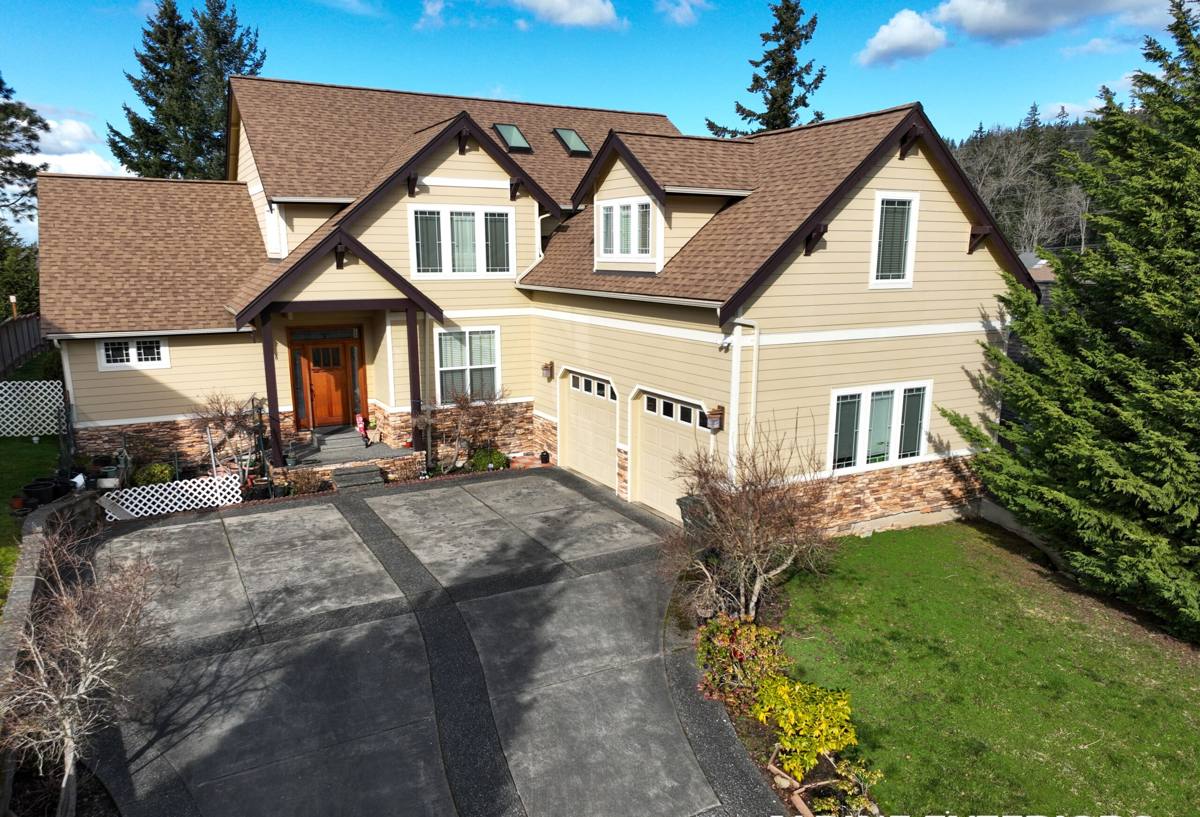
What Counts as Storm Damage (and What Doesn't)
Wind-Lifted and Missing Shingles
Sustained wind gusts common to this area can break the seal strip on asphalt shingles or lift them enough that the next rain gets underneath. Sometimes shingles blow off entirely and end up in the yard. Sometimes they just get creased or lifted and reseal crooked, which is actually the trickier case because it looks fine from the ground.
Impact Damage From Debris
Branches, cones, and blown debris from nearby trees are a common cause of localized damage — punctures, cracked shingles, or dented metal flashing. This kind of damage is usually easy to spot once you're actually on the roof, but easy to miss from the ground or a photo.
Water Intrusion Points
Not every storm problem starts with visible shingle damage. Wind-driven rain can push water sideways under flashing at chimneys, skylights, and wall intersections — areas that hold up fine in ordinary rain but get overwhelmed in a real blow. This is the category that causes the most interior damage relative to how little exterior damage is visible.
What Isn't Storm Damage
Granule loss from age, moss-related shingle degradation that built up over years, and worn-out flashing sealant are maintenance issues, not storm damage — even if a storm is what finally exposed them. We'll always tell you honestly which category a problem falls into, because it affects both the right fix and how an insurance claim will be viewed.
What a Correct Storm Damage Repair Actually Involves
A rushed storm repair is one of the most common ways a roof ends up with a second, worse problem a year later. Doing it right means treating the repair as a system fix, not a patch.
A Full Inspection, Not Just the Obvious Spot
We check the entire roof plane, not just the area a homeowner points to. Wind damage rarely stays contained to one spot, and the shingles near an obvious failure are often compromised too, even if they haven't let go yet.
Matching Materials and Fastening
Repairs get tied into the existing roof using compatible materials and the correct nailing pattern for the pitch and exposure. Mismatched shingles or shortcuts on fastening are exactly the kind of repair that looks fine for a season and then fails in the next windstorm.
Flashing and Underlayment Details
Since so much storm-related failure happens at flashing and transition points, we pay particular attention to step flashing, counter-flashing, and underlayment condition around chimneys, valleys, and wall intersections — not just the shingle field itself.
Our Process, Start to Finish
- Inspection and documentation. We assess the full roof and document damage with photos, which matters if you're filing an insurance claim.
- Temporary weatherproofing. If there's active exposure, we get it covered and watertight before doing anything else — this comes first, always.
- Repair plan and honest scope. We explain what needs fixing, what's optional, and what's a maintenance item to watch rather than repair immediately.
- The repair itself. Matched materials, correct flashing details, and attention to the transition points that tend to fail first in this climate.
- Final check. We walk the completed work and confirm the fix is sound before calling the job done.
Repair or Replace? Weighing the Real Factors
Not every storm-damaged roof needs to be replaced, and not every repair is the right long-term call. These are the factors that actually drive the decision.
| Factor | Leans Toward Repair | Leans Toward Replacement |
|---|---|---|
| Roof age | Under roughly 12-15 years | Near or past expected service life |
| Extent of damage | Isolated to one area or plane | Spread across multiple planes |
| Moss and moisture history | Minimal prior moss damage | Years of moss buildup already degrading shingles |
| Underlying decking condition | Solid, no soft spots | Soft or water-stained decking found on inspection |
| Insurance coverage | Claim covers targeted repair | Claim supports full replacement |
We'll walk you through where your roof actually falls on this table rather than defaulting to the answer that's easiest for us. A lot of Puget-area roofs genuinely just need a targeted, correctly-done repair.
Moss, Salt Air, and Why This Climate Needs a Different Standard
Two things separate roof repair here from roof repair in a drier, inland climate. First, the length of moss season — shaded roof planes and north-facing slopes can stay damp enough for moss to take hold for most of the year, and moss doesn't just look bad, it holds moisture against the shingle surface and works its way under tabs, which is exactly the kind of weak point a storm exploits. Second, the salt air coming off the water accelerates corrosion on exposed nail heads, flashing seams, and any metal roof components faster than you'd see even twenty or thirty miles inland.
A repair that doesn't account for both of these will look fine at handoff and fail early. That's why we use corrosion-resistant fasteners and flashing details built for this exposure, and why we'll flag moss-prone areas during an inspection even if they're not the reason you called.
Why a Crew That Already Works Puget Matters
Roof repair is local work in a way a lot of trades aren't. A crew that's already worked roofs throughout the Bellingham and Whatcom County area knows which roof styles and pitches are common here, how wind tends to move through this terrain, and which failure points show up again and again in this specific climate — because we've already seen and fixed them, not because we're guessing from a manual written for a different region. That translates into faster, more accurate diagnosis and a repair that's built for the conditions your roof actually faces, not generic conditions.
It also means faster response. After a storm, timing matters — the gap between "shingles blew off" and "water made it to the decking" can be a matter of days, not months. Local crews without a long drive or a backlog of out-of-town jobs can typically get eyes on your roof and a tarp up sooner.
Signs Your Roof May Have Storm Damage
After any significant wind or rain event, it's worth doing a quick check from the ground and inside the house. Call for an inspection if you notice any of the following:
- Shingle pieces or granules in the yard, gutters, or downspouts
- Shingles that look lifted, curled, or out of alignment on any roof plane
- New or worsening ceiling stains, especially near chimneys, skylights, or exterior walls
- Visible dents or damage on gutters, vents, or flashing
- Musty smell in the attic or a spike in attic humidity after a storm
- Daylight visible through the roof deck from inside the attic
None of these on their own guarantee major damage, but they're worth a professional look rather than a wait-and-see approach — especially with another rainy stretch usually not far off.
Insurance Claims: What Helps Your Case
If you're filing a homeowner's insurance claim for storm damage, documentation matters as much as the repair itself. We provide photo documentation of the damage as part of our inspection, which supports your claim regardless of which contractor ultimately does the work. We're also glad to walk an adjuster through what we found and explain, in plain terms, what's storm damage versus what's pre-existing wear — because an honest assessment protects you better in the long run than an inflated one that doesn't hold up to scrutiny.
If you've had storm damage, noticed active leaks, or just want a straight answer on the condition of your roof, we're happy to come take a look. Use the form below to request a free, no-pressure estimate — we'll tell you honestly what we find and what it actually needs.