 Bellingham Exterior
 Why Ferndale Siding Takes a Different Kind of Beating
Ferndale sits close enough to the water and to Bellingham Bay's weather patterns that homes here deal with a combination most inland Whatcom County neighborhoods don't: salt-tinged air, wind-driven rain that comes in sideways off Pacific storm systems, and a moss and algae season that can run eight or nine months out of the year on shaded elevations. Any one of those on its own is manageable. Together, they shorten the useful life of siding that wasn't built for the coastal Pacific Northwest, and they turn small, ignorable problems into rot and structural repairs faster than homeowners expect.
Salt air is corrosive to fasteners and metal trim, and it accelerates the breakdown of paint films and caulk joints. Driving rain finds every gap in flashing, trim, and butt joints and pushes water sideways and upward, not just down — which is why damage often shows up somewhere other than where the water actually got in. And moss doesn't just look bad; it holds moisture against the siding surface for weeks at a time, which is exactly the condition that rots wood-based products and stains or degrades lower-grade composites.
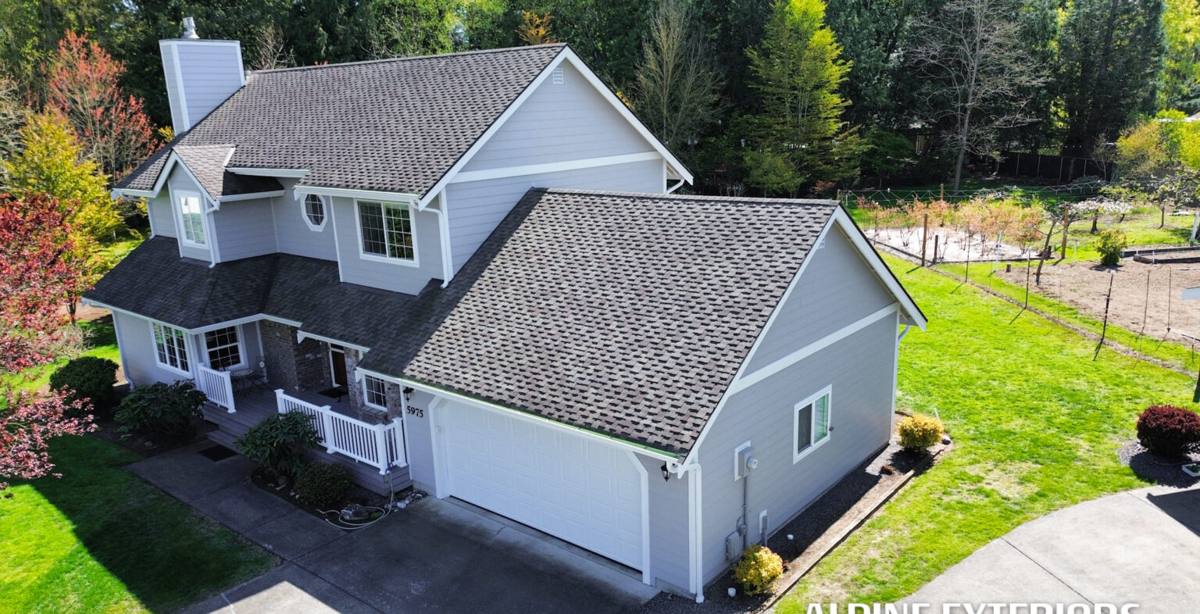
Signs a Ferndale Home Needs Siding Repair, Not Just a Paint Job
Because water damage in siding is often hidden until it's advanced, homeowners usually notice secondary symptoms before they see the actual failure point. Here's what we tell Ferndale clients to watch for between inspections:
- Soft or spongy spots when you press on siding near the bottom courses, around windows, or below roof-wall intersections
- Paint that's bubbling, peeling, or failing in localized patches rather than evenly across a wall
- Visible gaps or separation at butt joints, corner boards, or trim where caulking has shrunk or pulled away
- Dark streaking or persistent moss/algae growth that keeps coming back within a season of cleaning
- Warping, cupping, or bowing panels, especially on north- and west-facing walls that get the most driving rain and the least sun exposure
- Interior signs — a musty smell, discoloration on interior drywall, or trim that's swelling near an exterior wall
Any one of these is worth a look. Several at once, especially combined with a home that's 15-25 years old with its original siding, usually means the damage has moved past the surface.
What a Correct Repair Actually Involves
Finding the water path, not just the visible damage
The single most common mistake in siding repair is patching where the damage is visible instead of finding where the water is actually getting in. Water travels — it can enter at a window head flashing and show up as rot two feet away and one course down. A repair that doesn't trace the actual entry point just reseals the water inside the wall and guarantees a repeat call within a year or two.
Matching material, not just color
Repairing a section of siding means matching thickness, exposure reveal, and profile, not just paint color. Mismatched reveals and butt joint spacing are one of the most common ways a repair job becomes visually obvious from the street, and mismatched material behind the surface (say, patching fiber cement with a different composite) creates a seam where the two products expand, contract, and age differently — which reopens the joint over time.
Flashing and water management details
Most siding failures we find in Ferndale trace back to flashing — at windows, doors, roof-to-wall intersections, and deck ledgers — that was missing, undersized, or installed without the correct lap sequence (each layer needs to shed water onto the layer below it, not behind it). A repair that doesn't correct the underlying flashing detail is cosmetic, not structural.
Repair or Replace? How We Help Homeowners Decide
Not every damaged section needs a full re-side, and not every problem is fixable with a patch. The right call depends on how much of the wall system is affected and how the existing siding is holding up overall.
| Factor | Repair usually makes sense | Replacement usually makes sense |
|---|---|---|
| Extent of damage | Isolated to one or two sections or wall planes | Recurring across multiple elevations |
| Age of existing siding | Under roughly 10-12 years, otherwise in good shape | Original siding is past 20+ years or already failing broadly |
| Sheathing/framing condition | Framing is dry and sound behind the damaged area | Rot has reached sheathing or framing in multiple spots |
| Underlying material | Fiber cement or another durable product in otherwise good condition | Original product (vinyl, primed wood, older composite) is nearing end of service life |
| Cost pattern | One-time fix addresses the actual cause | You've paid for repairs on this wall more than once already |
We'll always give you the honest read on which category your home falls into — including telling you when a repair is the right, less expensive answer, not upselling a full re-side you don't need yet.
Why We Repair and Replace With James Hardie Fiber Cement Only
When a repair does call for new siding material — whether it's a few damaged boards or a full elevation — we install James Hardie fiber cement, and only James Hardie. It's not the cheapest product on the market, and we're upfront about that. But for a coastal Whatcom County climate with salt air, sustained rain exposure, and heavy moss pressure, it's the product we're willing to stand behind.
Hardie's HZ5 product line is engineered specifically for climates like ours, with a moisture and freeze-thaw performance profile suited to the Pacific Northwest. It's non-combustible fiber cement, so it doesn't swell, rot, or provide a food source for moss and mildew the way wood-based products can. The factory-applied ColorPlus finish is baked on under controlled conditions, which gives it better fade and adhesion performance over time than field-applied paint on a patch — a real advantage when you're matching new sections into existing siding. And it carries a strong transferable warranty, which matters on a repair: you want the new material integrated into a system that's still covered, not a mismatched patch that voids coverage on the rest of the wall.
We don't install LP SmartSide, vinyl, Cemplank, Allura, or primed wood siding, including as a repair material. If your existing siding is one of these products, we'll still tell you honestly what your realistic options are — sometimes that's a like-for-like patch, sometimes it's a case for transitioning the affected wall to Hardie.
Our Repair Process for Ferndale Homes
- Inspection: We walk the exterior, check suspect areas by hand, and look at flashing, trim, and penetrations, not just the siding field.
- Moisture check: Where damage is suspected, we probe or check moisture readings to confirm whether framing and sheathing behind the siding are still sound.
- Diagnosis and plan: We explain what we found, what caused it, and give you a straight repair-vs-replace recommendation with the reasoning behind it.
- Correct the cause first: Any flashing, sealant, or water-management defect gets fixed before new siding goes back on — otherwise the repair just fails again in the same spot.
- Match and install: New Hardie material is cut, primed at cut edges, and installed to match existing reveals and profiles as closely as possible.
- Cleanup and walkthrough: We clear debris and walk the finished repair with you so you know exactly what was done and why.
Why Hiring a Crew That Already Works Ferndale Matters
Siding repair done wrong is often worse than doing nothing, because it seals a problem behind a fresh-looking surface. A crew that regularly works Bellingham and Ferndale homes already understands the pattern of damage this coastline produces — where driving rain typically finds its way in on a west-facing wall, how aggressively moss returns on shaded north walls, and how salt-air exposure near the water tends to age fasteners and trim faster than the same materials would age a few miles inland. That local pattern recognition is what separates a repair that lasts from one that's back on the schedule next winter.
It also matters for permitting and code awareness specific to Whatcom County jurisdictions, and for knowing which Hardie profiles and colors are already common on Ferndale streets, so a partial repaint or repair doesn't stand out awkwardly against the rest of the home or the neighborhood.
Keeping Repaired Siding in Good Shape
Once a repair is done correctly, a little seasonal attention keeps it that way. Rinse moss and algae off shaded walls before it gets a foothold rather than after, keep gutters clear so overflow doesn't run down the siding face, and do a quick visual check of caulking at trim and window joints once a year — that's usually the first place a new gap shows up. None of this is complicated, but skipping it is how a five-year-old repair turns into a ten-year-old problem.
If you're seeing soft spots, peeling paint, recurring moss, or you just want a second, honest opinion on siding damage at your Ferndale home, we're happy to take a look. The estimate is free, there's no pressure, and you'll get a straight answer on whether you need a repair, a partial replacement, or nothing at all yet — just fill out the form below to get started.