 Bellingham Exterior
 Why Silver Beach Homes Need Windows Built for This Climate
Silver Beach sits in a part of Bellingham where weather isn't an occasional inconvenience — it's a year-round design constraint. Homes here deal with a long wet season, wind-driven rain off the water, humid air that never fully dries out between storms, and enough shade and moisture to grow moss on anything that sits still long enough. Windows take the brunt of all of it. They're the first place water tries to get in, the first place wood rots when a seal fails, and often the last thing a homeowner thinks about until a frame is already soft.
A window that's fine in a drier inland climate can struggle here. Wood species that aren't properly treated absorb moisture and swell. Aluminum-clad units without a real thermal break sweat on the inside during cold snaps. Cheap vinyl frames can warp under repeated wet-dry cycling. None of this shows up on day one — it shows up two, five, or ten years later, usually as soft trim, foggy glass, or a window that won't latch square anymore.
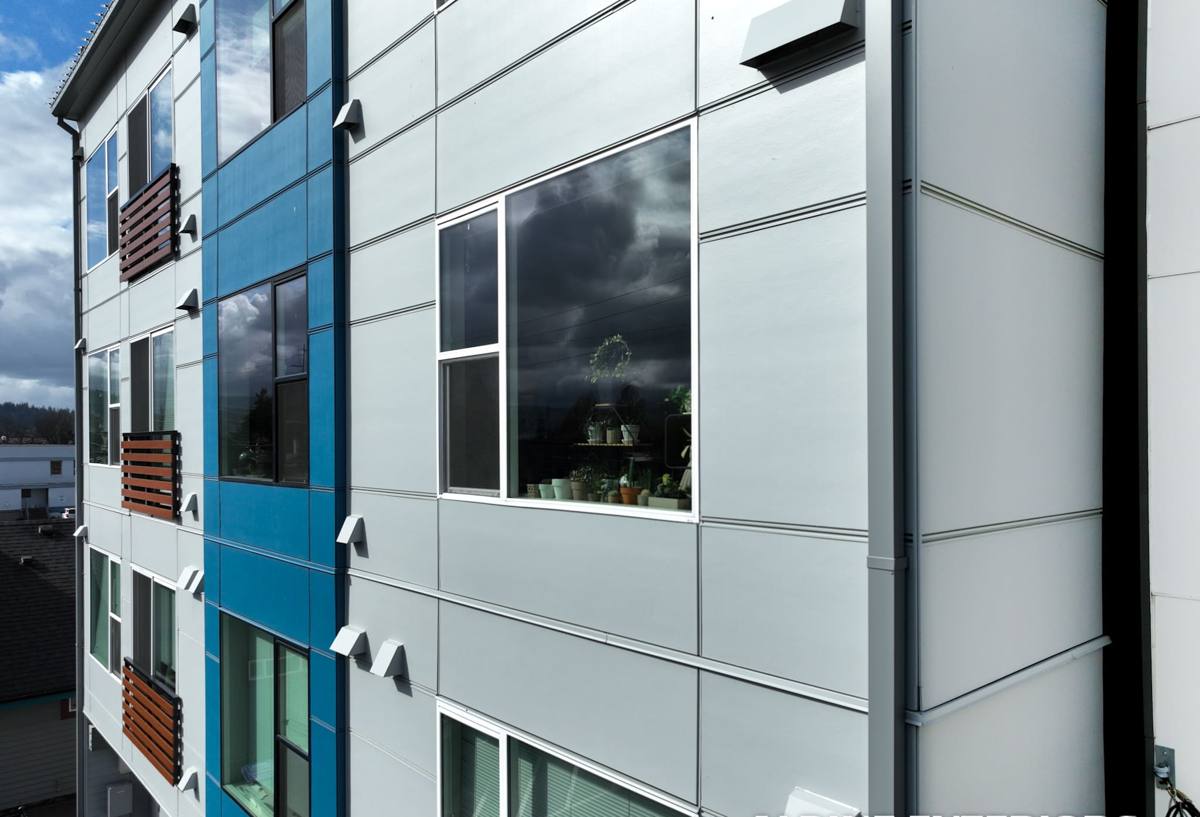
What "Correct" Actually Means for a Silver Beach Installation
A correctly installed window in this part of Whatcom County isn't just about the product — it's about how it's flashed, sealed, and integrated into the wall around it. We've seen plenty of expensive windows fail early simply because the installation didn't account for local weather. Here's what we consider non-negotiable:
- Proper flashing tape and a sloped sill pan so any water that gets past the exterior sheathing drains back out, not into the wall cavity
- Weather-resistant barrier integration that shingles correctly — upper layers overlapping lower ones, no reverse laps that trap water
- Backer rod and high-quality exterior sealant sized to the actual gap, not just a bead of caulk smeared over a joint
- Shimmed and squared installation so the sash operates smoothly and the weatherstripping seals evenly on all four sides
- Insulation in the gap between the frame and rough opening — not stuffed tight, which can bow the frame, and not skipped, which leaves a cold, drafty perimeter
Skip any one of these steps and you can end up with a premium window that still leaks, drafts, or fogs. The product matters, but the installation is what actually keeps water and air out.
Salt Air, Driving Rain, and Moss Season: The Three Things We Design Around
Salt and Coastal Air
Homes closer to the water deal with airborne salt that accelerates corrosion on hardware, screws, and lesser-grade metal components. We spec corrosion-resistant fasteners and hardware for windows going into any home with regular exposure to marine air, and we pay close attention to what's holding the frame together, not just what you can see from the street.
Wind-Driven Rain
Rain in Bellingham rarely falls straight down — it comes in sideways off Bellingham Bay and the Sound, which means water gets pushed into gaps that would stay dry in a calmer climate. This is why sill pan flashing and correctly lapped house wrap matter so much more here than in drier regions. A window that's "good enough" somewhere else often isn't good enough on a wind-exposed wall in Whatcom County.
Moss and Sustained Moisture
Shaded, tree-lined lots around Silver Beach hold moisture longer than open, sunny ones, and that's exactly the environment moss and mildew like. On wood-trimmed windows, sustained dampness is what starts rot — not a single storm, but months of a sill that never fully dries. We factor sun exposure and tree cover into material recommendations, because a window on a shaded north wall needs a different moisture strategy than one on a south-facing wall that gets afternoon sun.
Choosing Materials That Hold Up Locally
There's no single "best" window material — there's the best material for a given wall, exposure, and budget. Here's how the common options actually perform in this climate:
| Material | Moisture Performance | Maintenance | Typical Fit |
|---|---|---|---|
| Vinyl | Won't rot; seams and welds matter for long-term seal quality | Low — occasional cleaning | Budget-conscious replacements, rentals, most standard openings |
| Fiberglass | Very stable in wet-dry cycling, minimal expansion/contraction | Low | Higher-exposure walls, larger openings, long-term ownership |
| Wood (properly clad or finished) | Needs consistent maintenance to prevent moisture intrusion at joints | High — refinishing on a schedule | Historic or architectural homes where the wood look is the priority |
| Aluminum-clad wood | Good if the thermal break and cladding seams are done right | Moderate | Homes wanting a wood interior with lower-maintenance exterior |
We're honest about trade-offs. A painted wood window can look great, but on a shaded, damp lot it demands a maintenance schedule most homeowners don't want to keep up with. That's not a knock on wood — it's just what the material requires here, and we'd rather tell you that upfront than sell you something that needs more upkeep than you signed up for.
Signs Your Current Windows Are Losing the Battle
Because failure is gradual, most homeowners don't notice until it's fairly advanced. Watch for:
- Soft or spongy wood at the sill or bottom corners of the frame
- Fogging or condensation between panes on double- or triple-glazed units — a sign the seal has failed
- Visible moss or dark staining building up on sills and trim, even after cleaning
- Drafts you can feel with a hand near the frame on a windy day
- Windows that stick, won't latch flush, or have gaps you can see daylight through
- Paint that's bubbling or peeling specifically around the window opening, not the wall in general
Any one of these on its own might just need minor repair. Several together usually mean the window's ability to manage water and air has broken down and full replacement is the more cost-effective path.
Our Process for Silver Beach Homes
1. On-Site Assessment
We start by looking at the actual conditions on your property — sun exposure, tree cover, proximity to water, and the current state of your existing windows and trim. This is what shapes our material and installation recommendations, not a generic catalog pitch.
2. Straightforward Estimate
You get a clear breakdown of what's being replaced, what materials we're recommending and why, and what the installation involves. No pressure, no inflated urgency — just the information you need to decide.
3. Careful Removal
Old windows come out cleanly, and we inspect the rough opening for any hidden rot or water damage before anything new goes in. If we find a problem behind the old window, we tell you before we proceed, not after.
4. Correct Installation
Flashing, sealing, shimming, and insulating — done in the order and manner that actually keeps water out in this climate, as outlined above. This is where most of the long-term performance comes from.
5. Final Walkthrough
We check operation, seal quality, and finish work with you before calling the job done, and make sure you know what basic upkeep (if any) your new windows need going forward.
Cost Factors Worth Understanding
Every job is different, but a few things consistently move the price up or down: the number and size of openings, the material chosen, whether the rough opening needs repair work due to hidden rot, access difficulty (second-story or hard-to-reach windows), and whether you're doing a full-frame replacement versus an insert replacement into an existing, sound frame. We'll walk through which of these apply to your home during the estimate so there are no surprises later.
Why Local Experience Matters More Than It Seems
A crew that mostly works inland or in drier climates can install a technically correct window and still get it wrong for this environment, because the failure points here are different. Knowing how wind-driven rain moves across a wall, how much moisture a shaded lot holds onto, and which hardware actually resists salt-air corrosion isn't something you learn from a manual — it's something you learn from doing this work in Whatcom County, on homes with the same exposure yours has. That local pattern-recognition is what separates a window that lasts 20+ years from one that needs attention again in five.
Get a Straight Answer About Your Windows
If you're dealing with drafts, soft trim, foggy glass, or you're just planning ahead before those problems start, we're glad to take a look. We'll give you an honest read on whether repair or replacement makes sense, walk you through material options that fit your home's actual exposure, and provide a free, no-pressure estimate using the form below.