 Bellingham Exterior
 Why Roofs in Silver Beach Wear Differently
Silver Beach sits along Lake Whatcom's shoreline, under a heavy tree canopy that most Bellingham neighborhoods don't have to the same degree. That's part of what makes the area desirable — and part of what shortens the life of a roof if it isn't built and maintained with that setting in mind. Shaded lots stay damp longer after every rain. Needle and leaf litter collects in valleys and behind chimneys. And because Whatcom County sits close enough to Bellingham Bay for marine air to reach inland neighborhoods, that dampness carries a light salt content that speeds up corrosion on exposed metal fasteners, flashing, and vents.
Add in a driving-rain season that runs long here — often October through May — and you get roofs that see more wet-dry cycling than roofs a few miles east, away from the lake and the water. None of this means a roof in Silver Beach can't last its full rated life. It means the installation has to account for shade, moisture retention, and moss from day one, not treat it as an afterthought.
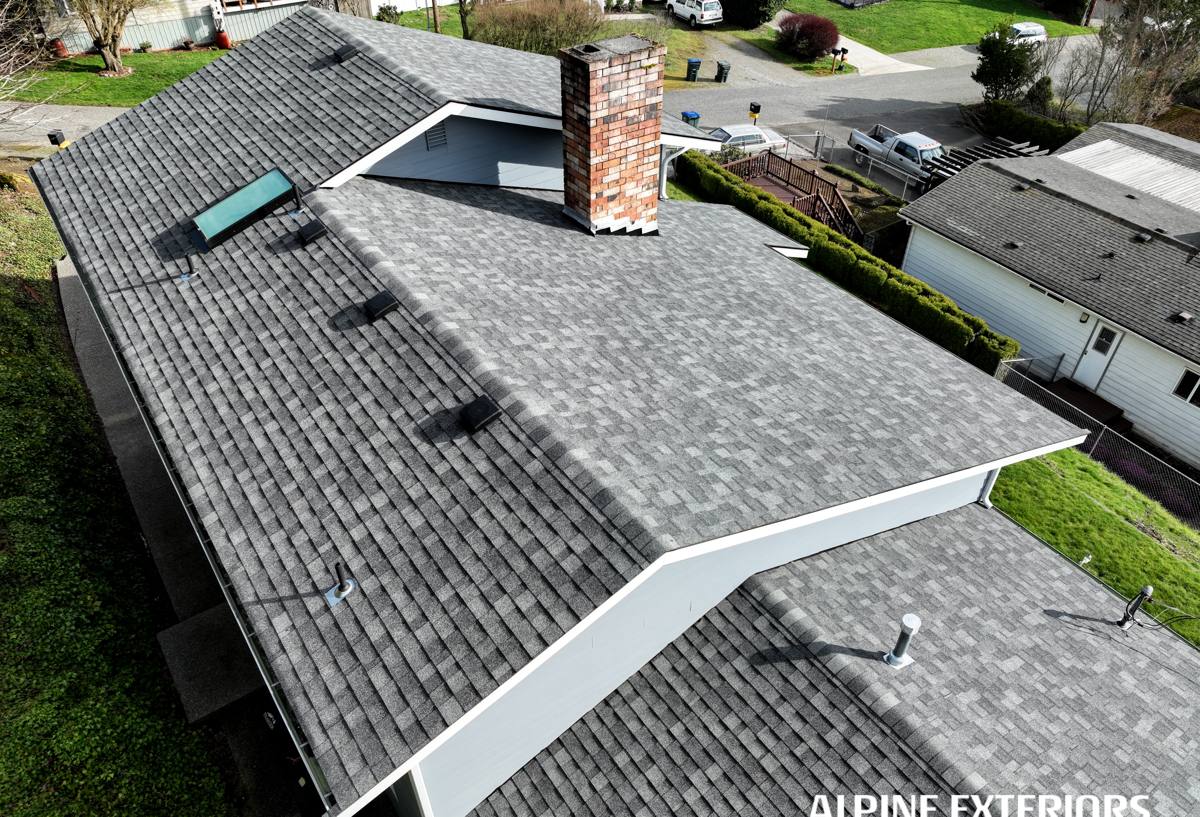
Signs a Silver Beach Roof Needs Full Replacement, Not a Repair
Homeowners often call us for a repair and find out the roof is past the point where patching makes sense. Some signs point clearly toward replacement:
- Granule loss heavy enough that you're finding grit in gutters and downspouts every season
- Moss that keeps returning within a year or two of cleaning, especially on north- and west-facing slopes shaded by trees
- Soft or spongy decking felt underfoot during an inspection — usually a sign moisture has been getting past the shingles for a while
- Daylight visible through the roof deck from inside the attic
- Curling, cupping, or cracked shingles across large sections rather than one isolated spot
- Repeated leaks in different locations after previous patch repairs
A single missing shingle or one damaged flashing point is a repair. Widespread wear, especially combined with soft decking, is a sign the underlying materials have been compromised and a patch will just move the problem, not solve it.
What a Correct New Roof Installation Actually Involves
A roof that's installed right for this neighborhood involves more than laying new shingles over what's there. Here's what we consider non-negotiable on every full replacement:
Full Tear-Off and Deck Inspection
We remove existing roofing down to the deck. This is the only way to actually see what's underneath — soft spots, rot around old flashing, or damage that's been hidden for years. Any compromised sheathing gets replaced before anything new goes down; installing over bad decking just guarantees an early failure.
Ice and Water Shield in Vulnerable Areas
Valleys, eaves, and areas around chimneys and skylights get self-adhering waterproof membrane, not just standard underlayment. On shaded, slow-to-dry roofs like many in Silver Beach, this is one of the details that matters most — it's the backup layer that keeps water out when moss, debris, or wind-driven rain get past the shingles themselves.
Flashing Done Right
Flashing around chimneys, walls, skylights, and roof-to-wall transitions is where most leaks actually start, not in the open field of shingles. We use new flashing on every replacement rather than reusing old pieces — corroded or poorly seated flashing is a common cause of the "mystery leak" calls we get on homes near the water.
Ventilation That Matches the Home
Balanced intake and exhaust ventilation keeps the attic dry and the roof deck at a stable temperature. On heavily shaded homes, poor ventilation traps moisture that never fully dries out, which is exactly the condition moss and rot need to take hold.
Choosing Materials for a Shaded, Wet Lot
Material choice matters more in Silver Beach than in drier, sunnier parts of Bellingham. The table below reflects how common roofing options actually perform under shade, moisture, and moss pressure — not just their upfront cost.
| Material | Moisture & Moss Behavior | Maintenance Burden | Typical Lifespan |
|---|---|---|---|
| Architectural asphalt shingles | Good with proper ventilation and algae-resistant granules; still needs periodic moss removal in heavy shade | Moderate — benefits from annual debris clearing | 25-30 years |
| Standing seam metal | Sheds moisture and debris well; moss struggles to establish on the smooth panel surface | Low | 40-50+ years |
| Cedar shake | Attractive but holds moisture longer in shaded conditions; requires diligent upkeep to avoid rot | High — not our recommendation for heavily shaded lots | 20-30 years with consistent maintenance |
| Composition/3-tab shingles | Lower cost but less resistant to prolonged moisture exposure than architectural grade | Moderate to high | 15-20 years |
We're not against cedar as a product — it has real appeal — but on a shaded, damp lot it asks for a level of ongoing maintenance most homeowners don't want to keep up with. For most Silver Beach homes, we steer clients toward architectural asphalt with algae-resistant granules or standing seam metal, depending on budget and the look they're after.
Ventilation and Moisture Control for Lakeside, Tree-Covered Lots
This deserves its own section because it's the detail most often skipped on lower-quality installations. A shaded roof that doesn't dry out quickly needs more ventilation capacity, not less, to compensate. We calculate intake and exhaust venting based on your attic's actual square footage and existing conditions, not a one-size formula. On homes with mature tree cover close to the roofline, we also talk through trimming back branches that keep sections of the roof in permanent shade — a low-cost step that meaningfully slows moss regrowth after a new roof goes on.
Our Installation Process
- On-site inspection and estimate — we walk the roof, check the attic, and give you an honest assessment of what's needed
- Material selection — we go over options suited to your home's exposure, budget, and how long you plan to stay in it
- Scheduling around weather — we plan installation windows to avoid the worst of the wet season whenever the calendar allows
- Tear-off and deck inspection — full removal down to sheathing, with any damaged decking flagged and replaced
- Underlayment, flashing, and ventilation installed — the layers that determine how the roof performs, not just how it looks
- New roofing installed to manufacturer specification — correct nailing patterns and exposure are what keep warranties valid
- Site cleanup and magnetic sweep — debris and stray fasteners cleared from the yard and driveway
- Final walkthrough — we go over the finished roof with you before calling the job done
What Affects Cost on a Silver Beach Re-Roof
| Factor | Why It Matters Here |
|---|---|
| Roof pitch and access | Steeper lakeside lots and limited driveway access can add labor and staging time |
| Decking condition | Homes with long-term moss or moisture exposure more often need sheathing replacement, which is priced once the old roofing is off and the deck is visible |
| Material choice | Metal and higher-grade architectural shingles cost more upfront but reduce moss-related maintenance over the roof's life |
| Ventilation upgrades | Homes with inadequate existing ventilation may need added intake or exhaust vents to meet code and protect the new roof |
| Tree cover and debris removal | Extra site protection or debris clearing around mature trees can add time to tear-off and cleanup |
Full roof replacements in this area commonly run from the high single digits to the low-to-mid five figures depending on size, material, and what the tear-off reveals — we won't give you a firm number without seeing the roof, but we'll always explain what's driving the price.
Why It Matters to Hire a Crew That Already Works This Neighborhood
A crew that's worked on Silver Beach roofs before knows to expect soft decking under moss-covered sections before they even start tear-off. They know which slopes on a shaded, lake-adjacent lot need extra ice and water shield, and they don't need to relearn how driving rain off the water behaves against a roofline. That familiarity shows up in fewer surprises mid-project and a roof that's built for the conditions it will actually face, not a generic install dropped onto a neighborhood with its own climate quirks.
Keeping a New Roof Performing After Installation
A well-installed roof still needs basic upkeep, especially under tree cover. A short annual routine goes a long way:
- Clear gutters and valleys of needles and leaves at least twice a year
- Have moss growth treated or removed before it spreads across a full slope
- Trim back branches that keep any part of the roof in constant shade
- Check attic ventilation isn't blocked by insulation or debris
- Have flashing around chimneys and skylights checked every few years
- Address any small leak or stain immediately rather than waiting for it to spread
If you're weighing a repair versus full replacement, or just want an honest read on where your roof stands, we're happy to take a look. Reach out for a free, no-pressure estimate using the form below.