 Bellingham Exterior
 Decks Built for Sudden Valley's Lake and Forest Setting
Sudden Valley sits tucked against Lake Whatcom, surrounded by tree cover that keeps yards shaded most of the year. That's part of why people love living there — but it's also exactly the kind of setting that's hardest on an outdoor deck. Shade means slower drying times after rain. Tree cover means more organic debris landing on deck boards. And the broader Whatcom County climate — steady moisture, driving rain off the Salish Sea, and salt-laden coastal air working its way inland — means fasteners, flashing, and finishes all take more punishment here than they would in a drier part of the state.
We build and repair decks specifically with that combination in mind, not a generic spec pulled from a national catalog. A deck that's correct for a dry, sunny lot somewhere else isn't automatically correct for a shaded lot near Lake Whatcom, and treating them the same is how decks in this neighborhood end up needing major repairs years before they should.
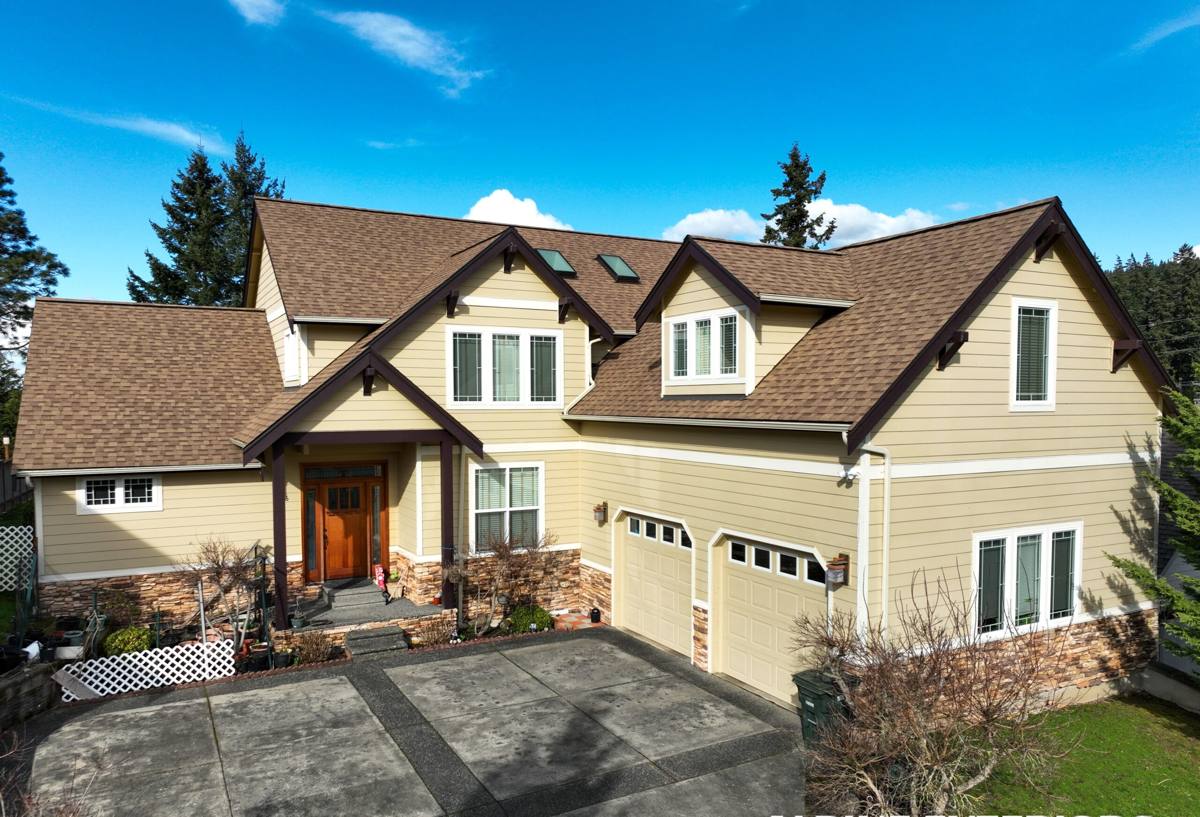
What a Sudden Valley Lot Actually Demands From a Deck
Shade and slow drying
Mature trees are one of the best parts of living in Sudden Valley, but they also mean a deck can stay damp for days after a storm passes. Wood that never fully dries between rain events is wood that's constantly at risk of rot, especially at joints, board ends, and anywhere two pieces of material meet flush.
Moss and organic buildup
A long moss season is part of life here. Moss holds moisture directly against the surface it's growing on, and on a deck that means accelerated wear on whatever coating or finish is protecting the wood — or, on composite decking, a surface that needs regular cleaning to stay safe and looking right. Left alone, moss-covered boards also get slick and genuinely dangerous underfoot.
Rain volume and wind-driven moisture
Driving rain doesn't just fall straight down — wind pushes it sideways, under railings, and into ledger connections and post bases that a fair-weather build might not account for. Flashing details that would be optional in a drier climate are not optional here.
Corrosion from coastal air
Even away from the immediate waterfront, the salt content in Whatcom County's coastal air accelerates corrosion on lower-grade fasteners, brackets, and hardware. Over years, that's the difference between a deck that stays structurally sound and one with hidden rust weakening its connections.
Choosing the Right Decking Material for This Climate
There's no single "best" decking material — there's a best material for a specific lot, budget, and maintenance appetite. Here's how the common options actually perform under Sudden Valley conditions:
| Material | How it handles shade & moss | Maintenance | Typical lifespan here |
|---|---|---|---|
| Pressure-treated wood | Needs regular sealing to resist moisture absorption; moss can hide surface rot | Annual cleaning, resealing every 1-3 years | 10-15 years with upkeep |
| Cedar | Naturally rot-resistant but still needs finish maintenance in constant shade | Cleaning plus periodic staining/sealing | 15-20 years with upkeep |
| Composite (capped) | Won't rot or absorb water like wood, but moss and algae still grow on the surface film | Periodic washing, no sealing needed | 25-30+ years |
| PVC decking | Fully synthetic, most resistant to moisture absorption | Occasional washing | 25-30+ years |
For heavily shaded Sudden Valley lots, we usually steer clients toward capped composite or PVC for the walking surface, simply because they don't give moisture anywhere to soak in. That's not a knock on wood — cedar in particular is a fine choice for owners who like the look and are willing to keep up with finishing. It's a matter of matching the material to how much upkeep you actually want to do.
What a Properly Built Deck Involves
The visible decking is the smallest part of what determines whether a deck lasts. Most of the failures we see in this area trace back to something underneath or behind the boards, not the boards themselves.
- Footings sized and set below frost depth, appropriate to the soil conditions on a given lot near the lake
- Ledger board attachment with proper flashing, so wind-driven rain can't work its way behind the house siding
- Joist spacing rated for the specific decking material chosen, not a generic 16-inch assumption
- Hidden or exposed fasteners rated for coastal exposure, resistant to the corrosion salt air accelerates
- Gaps and drainage slope that let water shed instead of pooling under shaded boards
- Post bases that keep wood off standing water and off direct soil contact
- Railings and stairs built to current code, which matters at resale and for insurance
Skip any one of these and the deck might look fine for a few seasons before a real problem shows up — usually right where it's hardest to see, at the ledger or under the first few boards near the house.
Our Process for a Sudden Valley Deck Project
We keep the process straightforward because a deck project shouldn't feel like a mystery to the homeowner paying for it.
- On-site walkthrough. We look at the lot's sun exposure, tree cover, drainage, and existing structure (if there is one) before talking materials.
- Honest material recommendation. Based on how shaded the site is and how much maintenance you want to take on, we recommend materials — and explain the trade-offs, not just the upsell.
- Design and written estimate. Layout, railing style, stairs, and any built-ins get worked out up front, with a clear price before anything starts.
- Permitting. We handle the permit process for the scope of work that requires it, so you're not chasing paperwork.
- Build. Framing and flashing details get done right the first time — this is the stage that determines how the deck ages, not just how it looks on day one.
- Final walkthrough. We go over the finished deck together and cover basic care specific to the material you chose.
Why Local Sudden Valley Experience Actually Matters
A crew that's worked in Sudden Valley before already knows the practical realities of building here: lots that slope toward the lake, driveways and access that can be tighter than a typical suburban street, tree roots that complicate footing placement, and an HOA or design review process for exterior work in parts of the community. None of that is exotic, but it's the kind of thing that slows down a crew unfamiliar with the area and can turn into unexpected delays or costs. We'd rather already know it going in.
We also know which details matter most given the shade and moisture pattern specific to this part of Whatcom County — where a lot near open water gets more direct wind-driven rain versus a lot buried deeper in tree cover, and how that should change flashing and material choices from one property to the next.
Cost Factors for a Sudden Valley Deck
Every deck is priced on its own specifics, but these are the factors that move the number most:
| Factor | Why it affects cost |
|---|---|
| Decking material | Pressure-treated is the lowest upfront cost; composite and PVC cost more up front but less over time |
| Size and shape | Multi-level decks, curves, or built-in seating add labor beyond simple square footage |
| Height and access | A deck built high off a sloped lot near the lake needs more substantial framing and stairs |
| Railing style | Cable, glass, or custom rail designs cost more than standard wood or composite balusters |
| Site access | Tight driveways or steep lots can affect equipment access and labor time |
| Demolition | Removing and disposing of an old, failing deck adds to the scope on replacement projects |
We give a written, itemized estimate so you can see exactly what's driving the price before committing to anything.
Keeping a Sudden Valley Deck Looking Good Between Projects
- Sweep leaves and debris off the surface regularly during fall and through moss season
- Rinse or gently scrub moss and algae growth before it gets a foothold, especially in permanently shaded corners
- Check that gaps between boards stay clear so water can actually drain through
- Inspect railing posts and stair connections once a year for movement or corrosion
- Reseal wood decking on the schedule appropriate to the product — don't wait until it visibly needs it
- Keep gutters and downspouts near the deck clear so overflow isn't adding extra moisture load
If you're planning a new deck, replacing one that's past its prime, or just want an honest read on whether yours needs attention, we're happy to come take a look. There's a free, no-pressure estimate form below — no obligation, just a straight answer about what your deck actually needs.