 Bellingham Exterior
 Why Sudden Valley's Setting Is Hard on Siding
Sudden Valley sits east of downtown Bellingham along Lake Whatcom, and that setting cuts both ways. The tree cover and lake proximity are exactly why people love living there, but they're also why siding takes a beating that a house in a more open, sun-exposed part of Whatcom County wouldn't see. Homes tucked into wooded lots stay shaded and damp longer after a storm passes. Lake-effect moisture and marine air moving in off the Salish Sea add a steady dose of salt-laden humidity. And the moss season here runs long — often eight months or more of the year in the shaded, north-facing walls that are common on sloped, tree-lined lots.
None of that is a reason to avoid siding your home well. It's a reason to be deliberate about the material, the installation details, and the crew doing the work. A siding job that would hold up fine in a drier, more open part of the county can fail early in Sudden Valley's microclimate if it's the wrong product or it's installed with shortcuts.
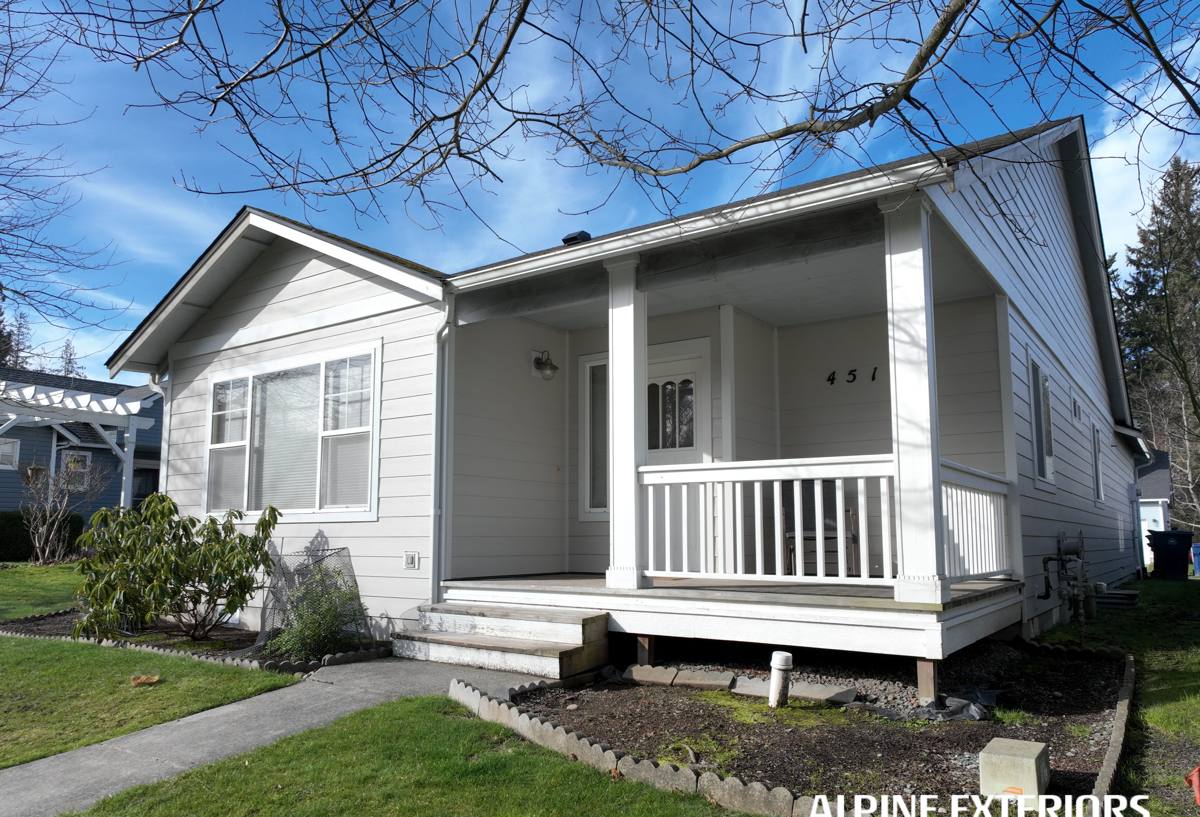
What Local Homes Actually Need From Their Siding
Three things matter more here than almost anywhere else in the Bellingham area:
- Moisture tolerance. Siding that swells, delaminates, or wicks water at the seams will show it faster under Sudden Valley's shade and humidity than it would in full sun.
- Rot and moss resistance. Wood-based products need a protective finish to hold off decay and moss growth. Once that finish is compromised, damp shaded siding is exactly the environment moss and rot organisms thrive in.
- Finish durability against driving rain and wind-blown moisture. Storms coming off the water can drive rain sideways into wall assemblies, especially on exposed lakefront-facing elevations. The siding and the trim details around it need to shed that water, not absorb it.
This is the core of why we install exclusively James Hardie fiber cement siding. It's a non-combustible product that doesn't rot, doesn't feed moss the way untreated or under-finished wood substrates can, and holds its factory-applied ColorPlus finish far longer than field-applied paint does in a shaded, damp climate like this one.
Why We Don't Install Alternatives on Sudden Valley Homes
We get asked about vinyl, LP SmartSide, and primed wood siding regularly, and we're upfront about why we don't put them on homes in this area. Vinyl is inexpensive and low-maintenance in dry climates, but it expands and contracts with temperature swings, and in a shaded, damp environment it doesn't offer the same rot resistance or fire performance as fiber cement — it also doesn't hold paint well if a homeowner ever wants to change the color. LP SmartSide and other engineered wood products use a treated wood-strand substrate that performs fine when detailing and maintenance stay perfect, but any breach in the factory coating — a nail pop, a cut edge left unsealed, a spot where caulking fails — gives moisture a path into a wood-based core, and that's a real risk under heavy tree cover with a long wet season. Primed cedar or spruce needs repainting on a cycle and is vulnerable to moisture and pests the moment that paint film starts to fail.
None of these are bad products used correctly in the right setting. They're just not what we'd put our name behind on a shaded, moisture-heavy lot near Lake Whatcom, which is why we standardized on Hardie fiber cement for every job we take on.
Signs Your Siding Needs Attention
Before deciding whether a full replacement or a targeted repair makes sense, walk your exterior and look for these:
- Soft or spongy spots when you press on the siding, especially near the bottom courses or below windows
- Persistent moss or algae staining that returns within weeks of cleaning
- Visible gaps, cupping, or warping in horizontal boards
- Paint that's peeling, bubbling, or chalking heavily on north- or lake-facing walls
- Dark staining at seams, corners, or below trim — a sign water is tracking behind the siding rather than off it
- Nail heads popping or visible fastener corrosion
- Interior signs like musty smells or peeling paint on walls that back up to exterior siding
Any one of these on its own might be minor. Several together, especially on the shaded or lake-facing sides of the house, usually mean moisture is getting past the surface and it's worth a proper inspection before it turns into sheathing damage.
What a Correct Installation Actually Involves
Siding is a system, not just a surface. The board itself is only one part of what keeps water out of the wall. A correct James Hardie installation in a climate like Bellingham's includes:
Weather-Resistive Barrier and Flashing
A properly lapped weather-resistive barrier behind the siding, with flashing at every window, door, and horizontal trim transition, is what actually stops driving rain from reaching the sheathing. This is the part of the job that doesn't show once it's finished — and it's also the part most likely to be rushed on a low-bid job.
Proper Fastening and Clearances
Hardie siding has specific fastening patterns and minimum clearances from grade, roofing, and decks. Getting these wrong voids the manufacturer warranty and creates entry points for moisture, even though the product itself is installed.
Caulking and Joint Treatment
Butt joints, corners, and penetrations need the right sealant and technique. In a shaded, damp environment, a joint that's caulked wrong is a joint that stays wet.
Ventilation Behind the Siding
A rainscreen gap or proper drainage plane lets any moisture that does get behind the siding dry out instead of sitting against the sheathing — important on walls that don't get much direct sun.
Our Process for Sudden Valley Projects
- On-site assessment. We look at sun exposure, tree cover, drainage around the foundation, and existing moisture damage before recommending anything.
- Tear-off and sheathing check. Old siding comes off and we inspect the sheathing underneath for rot or damage that needs repair before new siding goes on — this step matters more here than in drier parts of the county.
- Weather barrier and flashing installation. This is the layer that does the real water management work.
- Hardie panel or lap siding installation to manufacturer spec, with correct fastening, clearances, and joint treatment.
- Trim, caulking, and final detailing around windows, corners, and penetrations.
- Walkthrough so you understand what was done and what maintenance, if any, to expect going forward.
Choosing a Hardie Line and Finish
James Hardie makes several product lines, and the right one depends on your home's style and exposure:
| Product Line | Best For | Notes |
|---|---|---|
| HardiePlank Lap Siding | Most homes; traditional and modern styles | Available in smooth or cedar-textured finish; the most common choice |
| HardiePanel Vertical Siding | Modern designs, accent walls, gable ends | Often paired with lap siding for a mixed look |
| HardieShingle | Craftsman-style homes, accent areas | Mimics a shingled look without the maintenance of real wood shingles |
| HardieTrim | Window, corner, and fascia trim | Pairs with any of the above for a finished, consistent system |
All of these come in Hardie's ColorPlus finish, which is baked on at the factory rather than sprayed on site. That matters in a shaded, damp climate — factory-cured finishes resist fading, chipping, and moisture intrusion far better than field-applied paint, and Hardie backs the finish with its own warranty separate from the substrate warranty.
Cost Factors for a Sudden Valley Project
Every home is different, but the same handful of factors drive cost up or down on jobs in this area:
| Factor | Why It Matters Here |
|---|---|
| Existing sheathing condition | Homes with long-term moisture exposure sometimes need sheathing repair before siding goes on |
| Site access | Sloped, wooded, or lakefront lots can affect staging and material handling |
| Siding profile and finish | Panel vs. lap, smooth vs. textured, and trim complexity all affect material and labor |
| Trim and detail work | Homes with more windows, corners, or architectural detail take more time to flash and finish correctly |
| Tear-off scope | Full removal of old siding vs. a smaller repair-and-reside area |
We won't quote a number without seeing the home, but these are the variables that move the price — and they're also why two houses of similar size can have different project costs.
Why a Crew That Knows Sudden Valley Matters
A siding crew that mostly works flatter, sunnier neighborhoods elsewhere in Whatcom County can still do competent work on a Sudden Valley home — but they're solving a problem they don't see every day. Knowing which elevations take the worst of the driving rain, how long a shaded wall actually stays wet after a storm, and where moss tends to establish itself first isn't something you learn from a spec sheet. It's something you learn from doing the work in this specific setting repeatedly. That local pattern recognition shows up in small decisions during a job — where to add extra flashing attention, which joints need the most careful sealing, how much drying time to plan around — that don't show up on an estimate but do show up in how the siding performs five and ten years out.
After Installation: What to Expect
One of the real advantages of Hardie fiber cement in this climate is how little it asks of you afterward. There's no repainting cycle to plan around and no substrate to protect from moisture the way you would with wood-based siding. Normal upkeep is simple:
- Rinse the exterior periodically to keep moss and pollen from building up, especially on shaded walls
- Keep gutters clear so water isn't overflowing onto siding below the roofline
- Trim back vegetation that's holding moisture against the wall or blocking airflow
- Have caulking and trim joints checked every few years as part of general home maintenance
That's a much shorter list than what wood or vinyl siding typically requires in a shaded, high-moisture setting, and it's a big part of why we consider Hardie the right long-term investment for homes in this part of the county.
If you're weighing a siding project for your Sudden Valley home, we're happy to take a look and walk you through what your specific house needs — no pressure, no obligation. Use the form below to request a free estimate.